Samue and Jinbei: A Guide to Japanese Casual Loungewear
The Rise of Everyday Japanese Traditional Wear
When most people think of Japanese traditional clothing, the mind immediately jumps to the formal, intricate, and often expensive silk kimono. However, the true backbone of Japan's historical and contemporary everyday wardrobe lies in its casual, utilitarian garments. For centuries, commoners, artisans, and merchants required clothing that allowed for freedom of movement, breathability, and ease of care. Today, two garments dominate the space of everyday and casual traditional wear: the samue and the jinbei. Whether you are looking for comfortable remote-work attire, a unique loungewear set, or appropriate clothing for a Japanese summer festival, understanding these two garments is essential for any enthusiast of Asian traditions.
Understanding the Samue: The Artisan's Uniform
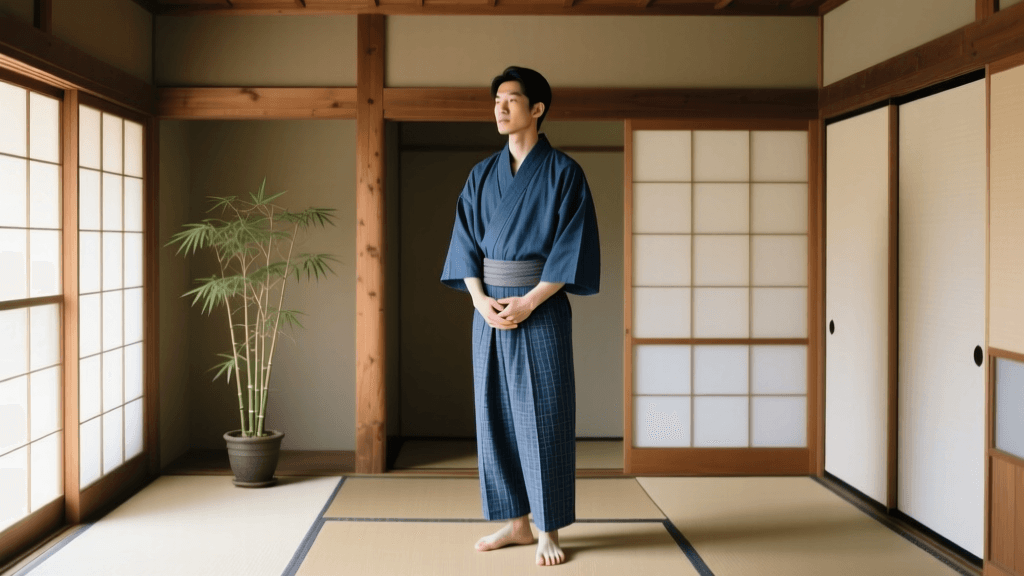
The samue (作務衣) translates literally to 'work clothes.' Its origins trace back to Zen Buddhist monks, who wore these garments while performing samu—the physical labor and daily chores required to maintain the temple grounds. Because monks needed to move freely while sweeping, chopping wood, or farming, the samue was designed with a loose, cross-over jacket and matching ankle-length trousers. Both pieces are secured with drawstrings or simple side-ties, eliminating the need for complex obi knots or restrictive tailoring.
In modern Japan, the samue has transcended its monastic roots. It is the unofficial uniform of traditional artisans, potters, chefs, and calligraphers. Recently, it has also seen a massive surge in popularity as premium loungewear and remote-work attire. The jacket's deep sleeves and relaxed fit provide unparalleled comfort, while the structured collar maintains a sense of dignity and neatness that standard sweatpants lack.
The Jinbei: Summer Festivals and Breezy Lounging
If the samue is the garment of the artisan, the jinbei (甚平) is the undisputed king of the Japanese summer. Originating from the jinbaori—a sleeveless surcoat worn by samurai over their armor—the jinbei evolved during the Edo period into a casual, two-piece summer outfit for commoners. It consists of a short-sleeved, side-tied top and a pair of loose, mid-thigh shorts.
The defining feature of a traditional jinbei is the woven, slotted paneling found at the shoulders and sides. These deliberate gaps allow for maximum airflow, making it an ingenious piece of pre-air-conditioning climate control. Today, the jinbei is synonymous with natsu matsuri (summer festivals) and hanabi taikai (fireworks displays). While yukata are often worn to these events, locals frequently opt for jinbei due to their superior comfort in high humidity. According to the Japan National Tourism Organization, summer festivals are a cornerstone of Japanese cultural tourism, and wearing a jinbei is one of the most authentic ways for visitors to participate in local community celebrations.
Samue vs. Jinbei: A Detailed Comparison
While both are two-piece casual garments, their seasonal applications and structural designs differ significantly. Below is a comparison chart to help you decide which garment suits your needs.
| Feature | Samue | Jinbei |
|---|---|---|
| Primary Season | Year-round (fabric dependent) | Strictly Summer |
| Bottoms | Ankle-length trousers | Mid-thigh shorts |
| Sleeve Length | Long or 3/4 length | Short sleeves |
| Ventilation | Standard fabric weave | Slotted side/shoulder panels |
| Fastening | Inner and outer side ties | Simple side ties (top), drawstring (bottoms) |
| Best Occasion | Lounging, working, temple visits | Festivals, fireworks, beach, sleeping |
Practical Buying Guide: Sizing, Fabrics, and Costs
Purchasing traditional Japanese casual wear requires an understanding of regional sizing and textile weights. Unlike Western clothing, Japanese garments often rely on a 'Free Size' (F) system or run significantly smaller than US/EU equivalents.
Sizing and Measurements
Most samue and jinbei are designed with a generous, relaxed fit. However, the critical measurement is the shoulder width and the inseam.
- Size M (or Free Size): Best for heights 165cm - 175cm (5'5" - 5'9"). Chest up to 100cm (39").
- Size L: Best for heights 175cm - 185cm (5'9" - 6'1"). Chest up to 110cm (43").
- Size LL / XL: Best for heights 180cm+ (5'11"+). Chest up to 120cm (47").
Pro-Tip: If you are buying a samue for winter layering, always size up to accommodate a thermal underlayer or a light haori jacket over the top.
Fabrics and Price Tiers
The cost of these garments varies wildly based on the textile used and the region of manufacture.
- Budget Tier ($25 - $45 USD): Usually made from standard cotton or cotton-polyester blends. Often mass-produced outside of Japan. Great for a first-time jinbei for a summer party.
- Mid-Range Tier ($60 - $120 USD): 100% Japanese cotton, often featuring wagara (traditional patterns) like seigaiha (waves) or asanoha (hemp leaf). These offer better breathability and durability.
- Artisan / Premium Tier ($150 - $300+ USD): Hand-woven regional textiles. This includes Kurume Kasuri (a highly prized indigo-dyed cotton from Fukuoka) or Washi (Japanese paper yarn), which is incredibly lightweight, antibacterial, and eco-friendly. The Ministry of Economy, Trade and Industry (METI) officially designates and protects many of these regional weaving techniques, ensuring that when you buy a certified Kurume Kasuri samue, you are investing in a protected cultural heritage craft.
Regional Textiles and Artisan Craftsmanship
To truly appreciate everyday Japanese traditional wear, one must look at the textiles. The Kurume Kasuri technique, originating in the Kurume region of Fukuoka Prefecture, is famous for its intricate, pre-dyed cotton patterns that yield a soft, slightly blurred geometric design. A samue made from Kurume Kasuri becomes softer with every wash, molding to the wearer's body over years of use. Similarly, in the Shiga Prefecture, Omi-jofu linen is woven to create high-end, breezy jinbei that wick moisture away from the skin instantly. Institutions like the Victoria and Albert Museum (V&A) frequently highlight these regional Japanese textiles in their Asian collections, noting how the intersection of agricultural necessity and aesthetic refinement created some of the world's most enduring casual fabrics.
Modern Styling and Footwear Pairings
Styling a samue or jinbei for contemporary life is remarkably easy, as the garments inherently bridge the gap between traditional and modern aesthetics.
Footwear
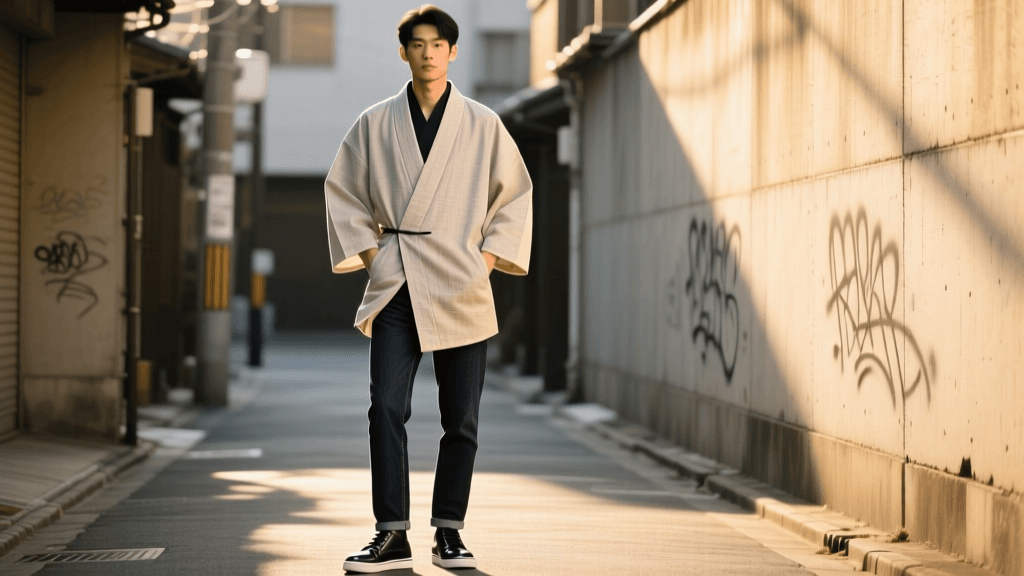
For a strictly traditional look, pair your jinbei with geta (wooden clogs) or setta (leather-soled sandals) worn with bare feet or tabi socks. However, for everyday modern wear, a clean pair of minimalist white sneakers or leather slip-ons pairs beautifully with the tapered ankle of a samue trouser.
Layering
In the cooler months, the samue serves as an excellent base layer. Drape a haori (a traditional hip- or thigh-length jacket) over the samue top for a sophisticated, intellectual silhouette perfect for working from home or hosting a casual dinner. In the summer, a simple cotton tenugui (hand towel) tied around the neck or head completes the artisan aesthetic while serving the practical purpose of wiping away sweat.
Care and Maintenance
One of the greatest advantages of samue and jinbei over formal silk kimono is their ease of care. However, to preserve the integrity of natural dyes (especially indigo) and woven panels, follow these rules:
- Washing: Hand wash in cold water with a mild, neutral detergent. If using a machine, always use a mesh laundry bag and select the delicate cycle.
- Drying: Never tumble dry. The high heat will shrink the cotton and warp the woven ventilation panels of the jinbei. Shake the garment out to remove wrinkles and hang it to dry in the shade. Direct sunlight will rapidly fade natural indigo and botanical dyes.
- Ironing: Use a low-to-medium heat setting and iron on the reverse side, or use a pressing cloth to avoid creating a synthetic shine on the cotton fibers.
By integrating samue and jinbei into your daily rotation, you are not just adopting a comfortable piece of loungewear; you are participating in a living, breathing tradition of Japanese functional design that values movement, climate adaptation, and understated elegance.