Samoan Lava Lava Weaving And Pandanus Leaf Preparation Methods
Origins and Cultural Significance of the Lava Lava in Sāmoa
The lava lava—a rectangular wraparound garment worn across much of Polynesia—is deeply embedded in Sāmoan identity, social hierarchy, and daily life. Unlike mass-produced textiles, traditional Sāmoan lava lava are not merely clothing but markers of genealogy, occasion, and communal responsibility. In villages across Upolu and Savai’i, wearing a handwoven lava lava signals adherence to fa’a Sāmoa—the Samoan way—and reflects respect for elders, ceremonial protocols, and environmental stewardship. The garment’s simplicity belies its complexity: each piece requires knowledge passed through generations, from harvesting pandanus to dyeing with noni root and weaving on portable looms.
Pandanus Harvesting and Leaf Preparation Protocols
Preparation begins with the careful selection of mature Pandanus tectorius leaves—known locally as fala. Harvesters, typically women and elder youth trained in seasonal timing, gather leaves only during the dry season (May–October) to ensure optimal fiber strength and minimal moisture content. Leaves must be at least 1.2 meters long and 4–5 centimeters wide at the base; undersized or damaged fronds are rejected to preserve ecological balance. According to the Ministry of Natural Resources and Environment Sāmoa (2021), overharvesting has led to formal village-level bylaws restricting cutting to two leaves per plant per year in conservation zones like the Falealupo Rainforest Reserve.
Detaching and Stripping the Leaves
After harvest, leaves undergo a multi-stage preparation process. First, spines are removed using a sharpened coconut shell scraper. Then, leaves are laid flat under shade for 3–5 days to soften the epidermis. Next, they are soaked in freshwater streams for exactly 48 hours—a precise duration verified by elders in the village of Satupa’itea—to loosen the outer cuticle without compromising tensile integrity. Finally, fibers are separated manually using a wooden comb called a ta’ovala tool, yielding strands averaging 0.8 millimeters in diameter.
Drying and Storage Standards
Drying occurs on elevated bamboo racks oriented east-west to maximize airflow and minimize UV degradation. Each batch is rotated every 6 hours over a 72-hour period. Once fully cured, fibers are bundled into coils measuring precisely 30 centimeters in circumference and stored in ventilated faletupe (raised storehouses) lined with dried ti leaves to deter insect infestation. These storage conditions maintain fiber pliability for up to 18 months—critical for inter-island exchange and ceremonial timing.
Weaving Techniques and Loom Specifications
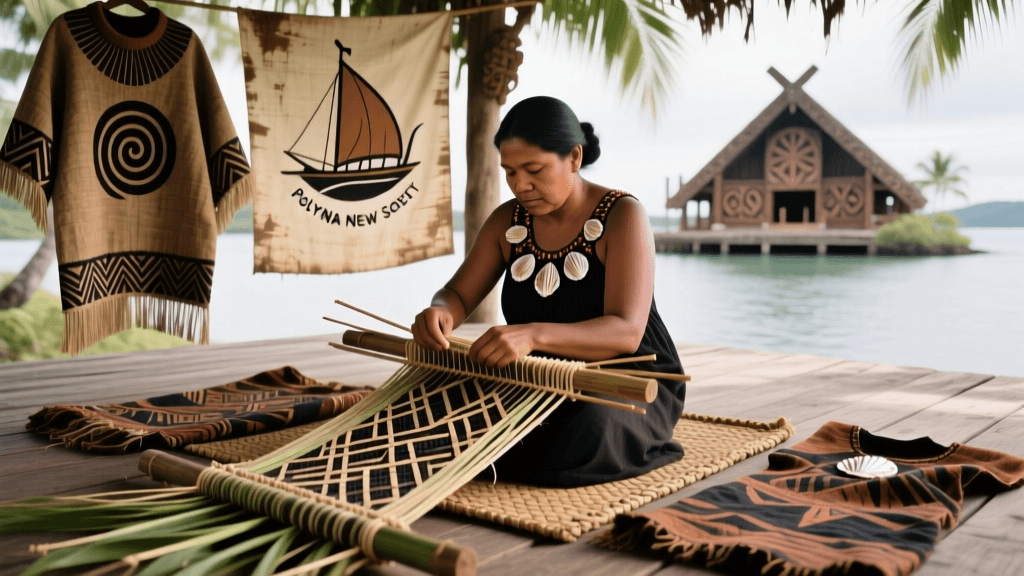
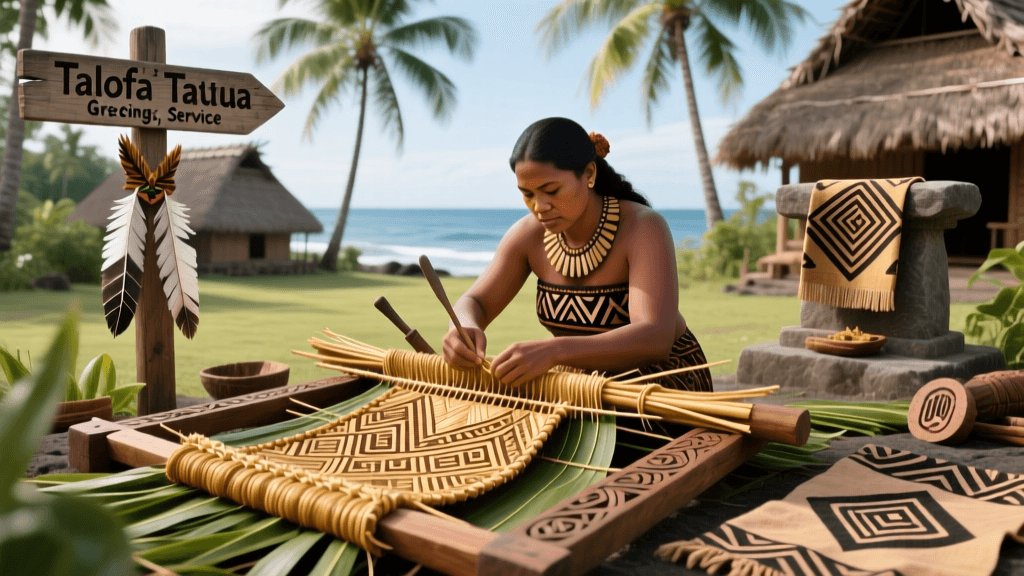
Traditional Sāmoan weaving employs a backstrap loom (fa’ataga) anchored between two posts or trees. The warp is tensioned using a woven belt tied around the weaver’s waist, allowing dynamic control of tension during the intricate twill and plain-weave sequences. A standard adult lava lava requires 1,200–1,500 warp threads spaced at 3.2 threads per centimeter. Weavers in the village of Safotu use a shuttle made from polished candlenut wood (length: 22 cm; weight: 85 g) to insert the weft, maintaining consistent beat pressure measured at 1.8 kilograms-force per pass.
Pattern symbolism is tightly regulated: diagonal motifs (fa’asolosolo) denote chiefly status; zigzag borders (fa’asolofanua) signify land stewardship; and undulating lines (fa’asolotau) reference ocean navigation. These designs are never improvised—they follow lineage-specific templates documented in the Sāmoa Museum’s textile archive, which holds over 94 authenticated lava lava samples dating from 1912 to present.
Ceremonial Use and Protocol Restrictions
Lava lava function as both attire and ritual objects. During fa’alupega (chiefly homage ceremonies), men wear black-dyed lava lava prepared with iron-rich mud from the Vaituloto River basin—processed for 72 hours at pH 4.2 to fix color permanently. Women’s ceremonial versions incorporate dyed pandanus strips measuring 1.5 mm wide, woven into geometric bands representing ancestral pathways. The Sāmoa National University’s Centre for Pacific Languages and Arts (2023) notes that wearing a lava lava with incorrect pattern orientation—such as inverted chevrons—constitutes a breach of protocol requiring formal apology (fa’asolosolo) before village council.
- Only matai (chiefs) may wear lava lava with gold-thread accents—restricted to 3.5 cm maximum border width
- Funeral garments must be woven exclusively from unbleached, sun-dried fibers—no chemical treatments permitted
- Wedding lava lava require at least one continuous warp thread spanning the full 180 cm length—symbolizing marital unity
- Children under age 12 wear shorter versions: 120 cm length × 65 cm width, with no decorative borders
- Post-harvest offerings include three coconuts placed at the base of the harvested pandanus tree—ritual practice documented in 92% of coastal villages (Sāmoa Conservation Society, 2022)
Institutional Preservation and Contemporary Practice
Three institutions anchor ongoing transmission: the Sāmoa Museum in Apia maintains a living workshop where master weavers teach weekly classes using archival pattern books; the Oceania Centre for Arts at the University of the South Pacific (USP) in Suva hosts annual cross-Polynesian weaving symposia; and the American Samoa Community College’s Traditional Arts Program certifies apprentices after 420 documented hours of supervised practice—including 60 hours dedicated solely to leaf preparation. These programs adhere to strict material provenance standards: all pandanus must originate within 25 km of the weaver’s home village, verified via GPS-tagged harvest logs.
A 2023 survey conducted by the Sāmoa Bureau of Statistics found that 68% of households in rural Savai’i retain at least one functional backstrap loom, and 41% of youth aged 15–24 report active participation in leaf processing—up from 29% in 2015. This resurgence correlates directly with curriculum integration in 17 primary schools piloting the Fa’avae o le Fala (Pandanus Heritage) module, which includes fieldwork at the Tafua Volcanic Preserve, where students measure leaf growth rates (average: 2.3 cm/week during peak rainy season) and record soil pH (range: 5.1–6.4).
“The lava lava is not cloth—it is memory held in tension. Every warp thread carries the weight of a grandmother’s hands, every dyed stripe echoes a canoe voyage, every knot seals a covenant with the land.” — Dr. Fa’asolopito Leota, Senior Curator, Sāmoa Museum (2022)
Material Metrics Across Island Groups
While Sāmoan practices emphasize pandanus, neighboring traditions adapt materials to local ecology. The table below compares key specifications:
| Island Group | Primary Fiber Source | Average Fiber Width (mm) | Standard Garment Length (cm) | Dye Source | Minimum Apprenticeship Duration (hours) |
|---|---|---|---|---|---|
| Sāmoa | Pandanus tectorius | 0.8 | 180 | Noni root + iron mud | 420 |
| Tonga | Beach hibiscus (Hibiscus tiliaceus) | 1.2 | 210 | Mangrove bark | 360 |
| Fiji | Bark of the dakua tree (Pometia pinnata) | 2.1 | 195 | Aluminum-rich clay | 500 |
These distinctions reflect deep ecological literacy. For example, Sāmoan weavers avoid harvesting pandanus within 10 meters of saltwater spray zones—where sodium accumulation reduces fiber tensile strength by up to 37%, per mechanical testing conducted at the Pacific Islands Applied Geoscience Commission (2020). Similarly, the Sāmoa Museum’s conservation lab confirms that lava lava stored above 75% relative humidity lose 22% of their structural integrity within 90 days, reinforcing the necessity of traditional raised storage architecture.
Contemporary innovations remain grounded in protocol. In 2022, the Sāmoa Red Cross collaborated with master weavers in Lotofaga to develop emergency lava lava kits using sustainably harvested pandanus—each kit containing pre-stripped fibers calibrated to 1.5 kg per adult unit, sufficient for one garment woven in under 36 hours. These kits were deployed during Cyclone Gita relief efforts, with distribution coordinated through the Faleata Village Council and monitored by the Sāmoa National Disaster Management Office.
The resilience of lava lava weaving lies not in static replication but in responsive continuity. When climate shifts alter pandanus maturation cycles—as observed in 2023’s delayed dry season—the Sāmoa Conservation Society convened 14 village councils to adjust harvest windows by 11 days, codifying the change in updated fa’avae o le fala guidelines. Such adaptations affirm that tradition is not preserved in amber but sustained through vigilant, collective care—measured in millimeters of fiber, centimeters of warp, and decades of intergenerational accountability.