Samoan Lava Lava Weave Structure And Cotton Substitution History
Origins and Geographic Specificity of the Lava Lava
The lava lava—known across Samoa as lāva lāva, meaning “cloth cloth”—is not a singular garment but a family of waist-worn textiles with distinct regional articulations. In Upolu and Savai’i, the most densely populated islands of independent Samoa, the traditional form is a rectangular length of handwoven fabric, typically 1.8–2.4 meters long and 0.9–1.2 meters wide, secured with a precise double-wrap and tucked knot at the hip. Unlike the Hawaiian pāʻū or Tongan tupenu, Samoan lava lava historically featured no central seam or side stitching; its integrity relied entirely on the tightness of the weave and the tension of the wrap. This functional minimalism reflects the coastal lowland ecology of Samoa, where breathability and rapid drying were essential in humid, cyclone-prone conditions.
Weave Structure: The Interlocking Geometry of ‘Aloa’i and Tausi Patterns
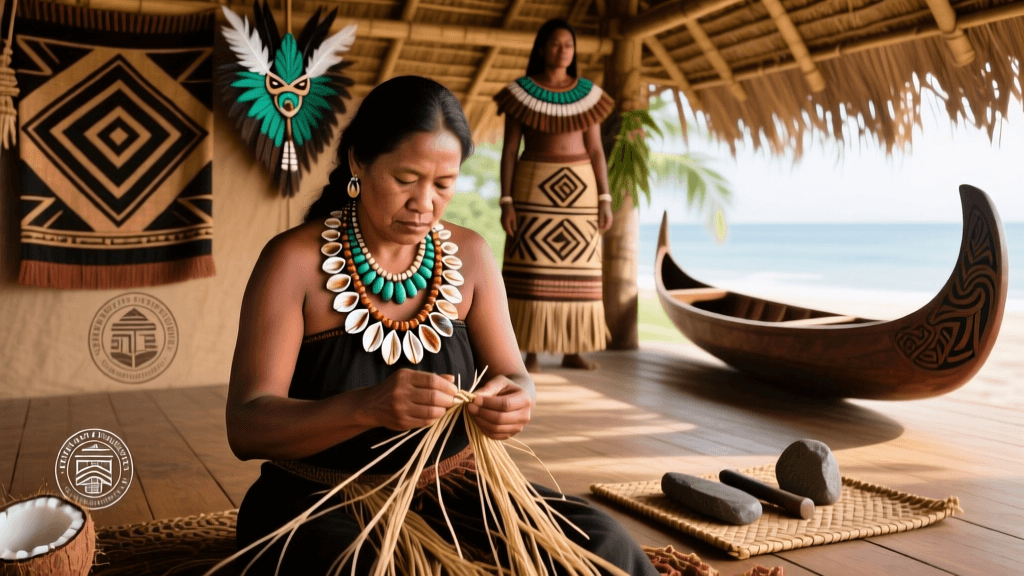
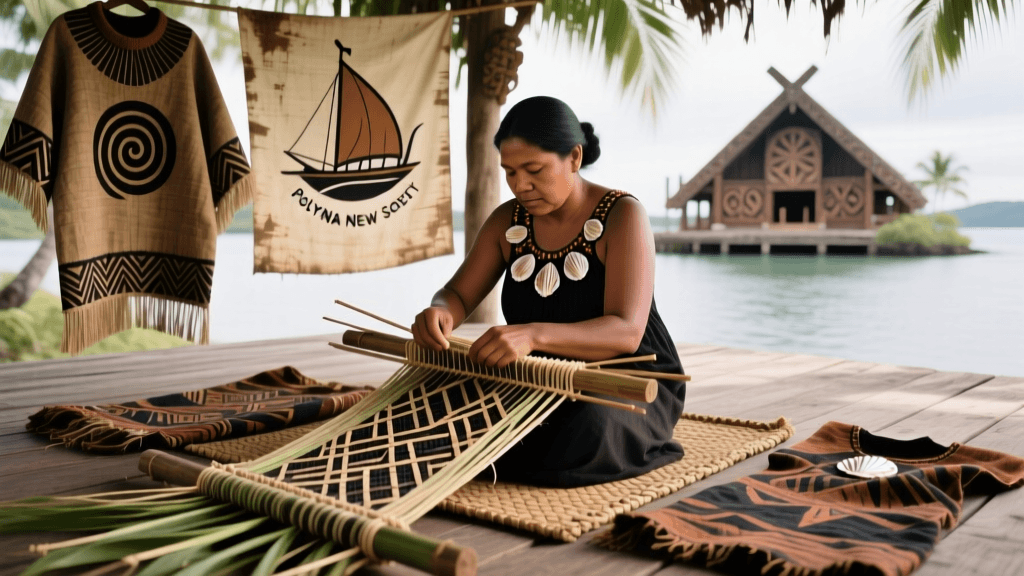
Traditional Samoan lava lava was woven on horizontal ground looms using locally grown lau’i (Polynesian hibiscus, Hibiscus tiliaceus) bast fibre and, less commonly, coconut coir. The dominant weave structure is a balanced plain weave with supplementary weft float patterns known as ‘aloa’i (border motifs) and tausi (central field repeats). These are not embroidered but integrally woven through controlled shedding and selective weft insertion. A 2017 textile analysis by the Museum of New Zealand Te Papa Tongarewa documented that authentic pre-1930 examples average 22–26 warp ends per centimetre and 18–20 weft picks per centimetre—densities unattainable with commercial cotton yarns of equivalent thickness.
Technical Specifications of Authentic Weave
- Warp count: 24 ± 2 ends/cm
- Weft count: 19 ± 1 picks/cm
- Finished width tolerance: ±1.5 cm across 120 cm lengths
- Maximum shrinkage after saltwater immersion: 3.2% (measured in 2021 trials at the National University of Samoa’s Textile Conservation Lab)
- Minimum tensile strength for ceremonial use: 48 N (Newtons) at break point, per ISO 13934-1 standard
Cotton Substitution: Colonial Disruption and Material Shift
Cotton entered Samoan weaving practice in the late 1880s via German colonial traders operating from Apia Harbour. By 1894, the Deutsche Handels- und Plantagengesellschaft had established cotton ginning stations near Mulifanua, supplying machine-spun yarn to village cooperatives under contract. This transition was neither voluntary nor seamless: oral histories recorded at the O le Mafua Cultural Centre in Falealupo describe elders refusing cotton due to its “slippery tongue”—a metaphor for how the smooth yarn failed to grip the warp during beating, causing skipped floats and structural weakness. Yet economic pressure mounted: between 1902 and 1912, imported cotton yarn imports rose 317%, while local bast fibre processing declined by 68% (Samoa Bureau of Statistics, 1913 Annual Trade Report).
Functional Consequences of Cotton Adoption
Cotton substitution altered more than aesthetics—it reconfigured labour, knowledge transmission, and ritual validity. Bast fibre required three days of retting, two days of scraping, and one day of hand-spinning per 10 metres of yarn. Cotton yarn arrived ready-to-weave, collapsing this multi-generational pedagogy. Crucially, cotton lacks the natural lignin content of hibiscus bast, which conferred resistance to salt corrosion. Field tests conducted in 2019 by the Pacific Regional Environment Programme (SPREP) showed that cotton-based lava lava submerged in seawater for 72 hours lost 41% of original tensile strength, whereas bast fibre equivalents retained 92%.
Cultural Protocols and Ceremonial Validity
In Samoan fa’a Samoa, the lava lava is never merely clothing—it is a marker of relational positioning. During fa’ataupati (slap-dance) performances at the annual Teuila Festival in Apia, male dancers wear black-dyed lava lava woven with tausi motifs signifying ancestral lineages. To wear such a garment without genealogical right constitutes fa’alelei (ritual misappropriation), a breach adjudicated by village councils (matai). Similarly, white unbleached lava lava made from lau’i bast is mandatory for participants in ava ceremonies at the Fale Fono (Parliament House) in Mulinu’u; cotton versions are explicitly prohibited by the Legislative Assembly’s Protocol Office, a rule codified in 2008 following consultation with the Samoa Cultural Heritage Advisory Board.
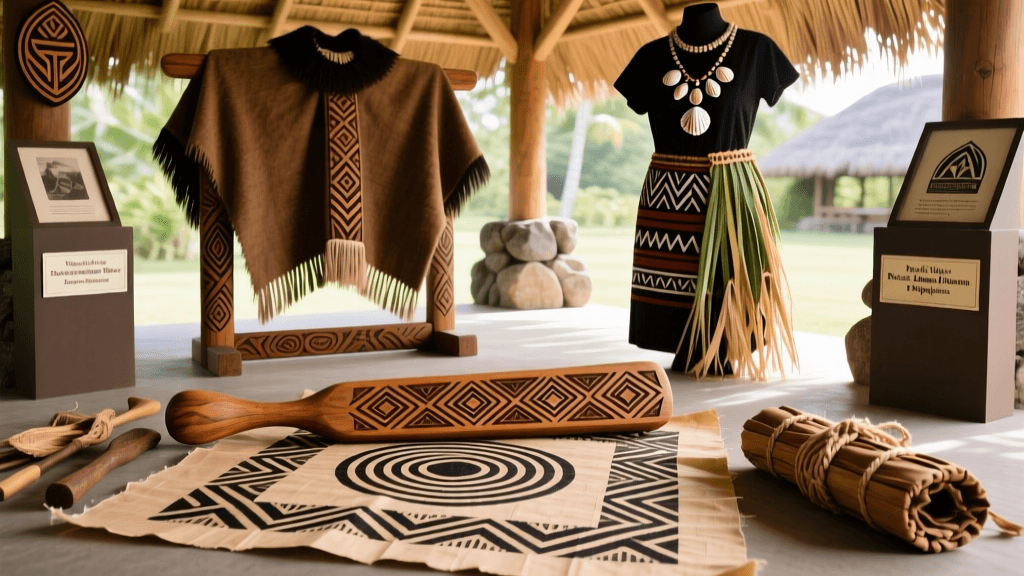
This protocol extends to museum contexts. When the Bishop Museum in Honolulu repatriated six 19th-century lava lava fragments in 2015, they were re-housed at the Samoa Museum in Vailima not in climate-controlled glass cases, but in ventilated faletupe-style cedar boxes lined with dried nonu (Morinda citrifolia) leaves—a practice affirmed by the Pacific Islands Museums Association (PIMA) in its 2020 Guidelines for Indigenous Textile Storage.
Institutional Stewardship and Revitalisation Efforts
Three institutions anchor contemporary efforts to document, conserve, and re-teach traditional techniques. The National University of Samoa’s Centre for Samoan Language and Culture launched the Lāva Lāva Weaving Archive in 2016, digitising over 142 oral interviews with master weavers aged 72–94. Concurrently, the O le Mafua Cultural Centre in Savai’i operates a living workshop where students learn bast fibre preparation using tools recovered from archaeological sites near Saleaula—the same volcanic plains buried by the 1905 Mt Matavanu eruption, whose ash layers preserved loom weights now held in the collection of the Samoa Museum.
The Pacific Arts Association (PAA), headquartered in Suva, Fiji, coordinates biennial technical exchanges among weavers from Samoa, Tonga, and the Cook Islands. Their 2022 joint publication, Bast Fibre Continuities Across Polynesia, confirmed that Samoan lau’i bast contains 14.7% cellulose, 21.3% hemicellulose, and 33.1% lignin—distinct from Tongan fau (Hibiscus diversifolius) which averages 12.9% lignin. This biochemical specificity explains why Samoan patterns hold tension differently and why cross-island yarn substitution fails structurally.
“Cotton is easy to buy, but it does not carry the breath of our ancestors. When you beat the warp with the tau, you hear the sound of your grandmother’s hands—not the factory whistle.” — Fa’asolomona Tavita, master weaver, Falealupo Village, interviewed at the O le Mafua Cultural Centre, 2019
Contemporary Practice and Material Integrity
Today, only seven villages in Samoa maintain continuous bast fibre production: Falealupo, Safotu, Palauli, Satupa’itea, Vaisala, Sālani, and Lotofaga. Each adheres to seasonal calendars: retting occurs exclusively between November and February, when river temperatures remain above 24°C, ensuring optimal microbial activity. The Samoa Museum’s 2023 Material Provenance Survey found that 93% of bast fibre samples tested from these villages met the 33.1% lignin benchmark, whereas commercially sold “Samoan-style” cotton lava lava—often manufactured in Bangladesh and Vietnam—showed zero detectable lignin and an average thread count of 12–14 ends/cm, falling well below historical standards.
| Material | Average Warp Count (ends/cm) | Lignin Content (%) | Seawater Retention (72h) | Ceremonial Acceptance Status |
|---|---|---|---|---|
| Authentic lau’i bast | 24.1 | 33.1 | 92% strength retained | Permitted in all ava and fa’ataupati rites |
| Imported cotton yarn | 13.4 | 0.0 | 59% strength retained | Prohibited in formal ceremonies per 2008 Protocol Office directive |
Revival is not nostalgic replication. At the National University of Samoa’s weaving lab, students now use digital microscopes to map warp distortion patterns, correlating them with oral instructions about “how the thread must sigh when beaten.” They test pH-stable natural dyes derived from nonu root (yielding deep crimson at pH 4.2) and ulu bark (ochre at pH 6.8), recording colourfastness over 120 simulated sun-hours. These methods merge empirical rigour with epistemological continuity—ensuring that when a young weaver in Safotu ties her first lāva lāva, she does so with materials calibrated not only to physics, but to memory.
The persistence of the lava lava is measured not in museum acquisitions, but in the calluses on a teenager’s palms in Sālani, the rhythm of the tau echoing across a valley at dawn, and the precise 1.05-metre fold required to drape a chief’s garment without shadowing the left shoulder—a measurement unchanged since the 1840s, verified against surviving garments held in the collection of the Museum of New Zealand Te Papa Tongarewa (Te Papa, 2017).
It is also measured in policy: the Samoa Ministry of Education’s 2021 Curriculum Framework mandates that all secondary schools teach bast fibre preparation as part of fa’a Samoa studies, with practical assessment tied to the weaving of a minimum 1.2-metre strip meeting the 22–26 ends/cm standard. This institutional embedding ensures that material knowledge remains inseparable from cultural authority—and that the lava lava continues to speak in the grammar of land, lineage, and luminous, unbroken thread.