Ceremonial vs Everyday Hanbok: 2026 Wardrobe Guide
The Evolution of Korean Dress in 2026
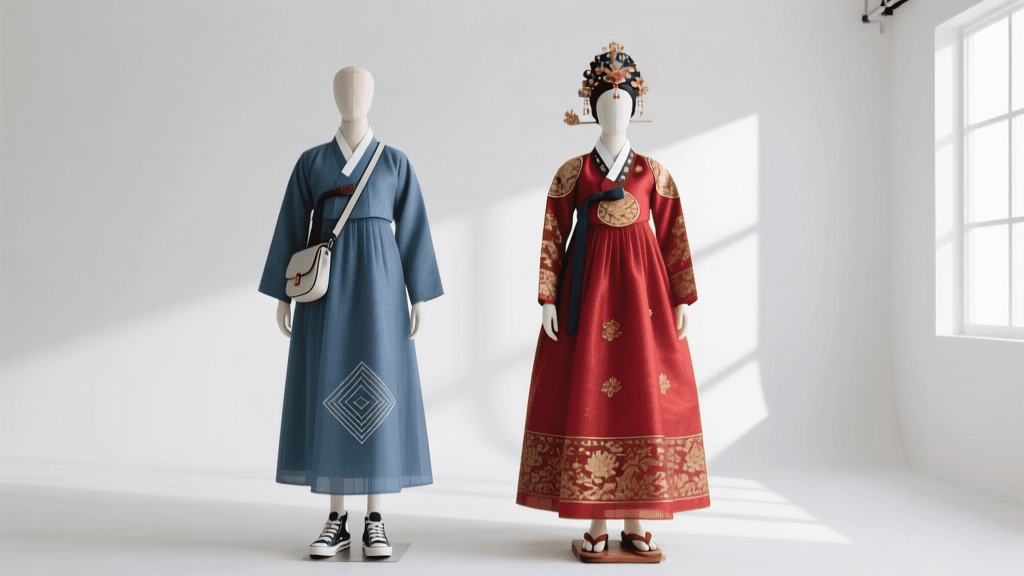
The Hanbok is far more than a static historical artifact; it is a living, breathing garment that has evolved dramatically to meet the demands of modern life. As we navigate through 2026, the distinction between ceremonial and everyday Korean traditional dress has never been more pronounced. On one end of the spectrum, we have the breathtaking, heavily structured ceremonial garments like the Hwalot (bridal robe) and Wonsam (court dress), which preserve centuries of meticulous craftsmanship. On the other end, the Saenghwal Hanbok (everyday living Hanbok) movement has revolutionized how Koreans and global fashion enthusiasts integrate traditional silhouettes into daily commutes, office wear, and casual weekend outings.
Understanding the structural, material, and functional differences between these two categories is essential for anyone looking to build an authentic, versatile Asian traditional wardrobe. According to Britannica's comprehensive guide to Korean dress, the Hanbok's defining characteristics—such as the vibrant colors and the simple lines of the jeogori (jacket) and chima (skirt)—remain intact, but the 2026 iterations have adapted to contemporary lifestyles through innovative textiles and ergonomic tailoring.
The Ceremonial Hanbok: Heritage, Heaviness, and Haute Couture
Ceremonial Hanbok is designed for moments of profound cultural and personal significance: weddings, ancestral rites (charye), and major milestone celebrations like the doljanchi (first birthday) or hwangap (60th birthday). The most iconic of these is the Hwalot, a heavily embroidered bridal robe that dates back to the Goryeo and Joseon dynasties.
Materials and Construction
In 2026, authentic ceremonial Hanbok continues to rely on premium, traditional textiles. Gapsa silk and Myeongju (a tightly woven silk) are the gold standards. These fabrics are prized for their stiff drape, which allows the garment to hold its architectural shape, and their luminous sheen under ceremonial lighting. The embroidery, often featuring peonies, butterflies, and white cranes, is still largely done by hand or by advanced computerized looms that mimic the irregularities of hand-stitching to preserve the artisanal feel.
Cost and Investment
Investing in a ceremonial piece is a significant financial commitment. As of early 2026, a custom-tailored, authentic silk Hwalot from a master artisan in Seoul's Bukchon Hanok Village typically ranges from 3,500,000 KRW to 5,000,000 KRW (approximately $2,600 to $3,700 USD). Even rental services for high-end bridal Hanbok packages have seen price adjustments, averaging around 800,000 KRW ($600 USD) for a weekend rental, reflecting the rising costs of raw silk and specialized dry-cleaning services.
Saenghwal Hanbok: The 2026 Everyday Revolution
While ceremonial wear commands awe, the Saenghwal Hanbok commands the streets. Translating to 'living' or 'everyday' Hanbok, this category prioritizes mobility, ease of care, and subtlety. The 2026 Seoul Fashion Week showcased a massive surge in 'quiet luxury' Hanbok—pieces that blend seamlessly with modern minimalist aesthetics while retaining the traditional V-shaped neckline and full, flowing skirts.
Modern Textiles and Ergonomics
The defining feature of the 2026 Saenghwal Hanbok is its fabric innovation. Designers are heavily utilizing Tencel, ramie-cotton blends, and washable polyesters that mimic the texture of raw silk but offer the durability of modern workwear. Furthermore, the structural limitations of the past have been engineered away. Modern chima skirts now frequently feature hidden elasticized waistbands, deep side-seam pockets for smartphones, and adjustable hemlines that prevent tripping on subway stairs.
Accessibility and Pricing
Everyday Hanbok is highly accessible. A high-quality, ready-to-wear jeogori and chima set from popular contemporary brands like Leesle or Sonjjang typically costs between 120,000 KRW and 180,000 KRW ($90 to $135 USD). This price point makes it feasible to own multiple sets for seasonal rotation, treating the Hanbok not as a once-in-a-lifetime costume, but as a staple of the modern capsule wardrobe.
Head-to-Head Comparison: Ceremonial vs. Everyday
To help you decide which garment suits your needs, we have compiled a detailed comparison chart based on 2026 market standards and textile data.
| Feature | Ceremonial (Hwalot / Wonsam) | Everyday (Saenghwal Hanbok) |
|---|---|---|
| Primary Fabrics | Gapsa Silk, Myeongju, Heavy Brocade | Tencel, Ramie-Cotton, Washable Poly |
| Weight & Drape | Heavy (3-5 kg), stiff, architectural | Lightweight (0.5-1 kg), fluid, breathable |
| Average Cost (2026) | $2,600 - $3,700+ USD (Custom) | $90 - $135 USD (Ready-to-wear) |
| Maintenance | Specialist dry-clean only, camphor storage | Machine washable (cold), steam iron |
| Mobility | Restricted, requires assistance to wear | High, features pockets and elastic waists |
| Footwear Pairing | Traditional Kkotsin (silk shoes) | Mary Janes, modern loafers, clean sneakers |
The 2026 Measurement and Sizing Guide
Whether you are commissioning a ceremonial piece or buying an everyday set online, understanding Hanbok measurements is critical. Unlike Western clothing, which focuses heavily on bust and hip circumference, Hanbok sizing revolves around length and width across the shoulders and sleeves.
Key Measurements Explained
- Hwa-jang (Sleeve Length): Measured from the base of the back of the neck, across the shoulder, and down to the wrist bone. For ceremonial wear, the hwa-jang is intentionally extended by 3 to 5 centimeters so the sleeves elegantly drape over the hands, hiding them as a sign of modesty. For everyday Saenghwal Hanbok, the hwa-jang is cut exactly to the wrist bone to allow for typing, cooking, and driving.
- Pum (Chest/Shoulder Width): This measures the distance from the outer edge of one shoulder to the other. Ceremonial jeogori feature a wider pum to accommodate the thick inner layers (sok-jeogori) worn underneath. Everyday versions have a narrower, more tailored pum to prevent the jacket from looking boxy over modern blouses or turtlenecks.
- Chima-jang (Skirt Length): Measured from the underarm (where the skirt ties) down to the ankle. A traditional ceremonial chima is designed to sweep the floor, requiring the wearer to hold the front hem slightly lifted when walking. The 2026 everyday standard for chima-jang is exactly 5 centimeters above the ankle bone, ensuring the hem stays clear of puddles and escalators.
Modern Care, Storage, and Maintenance
The longevity of your Hanbok depends entirely on how you treat the textiles. The care routines for ceremonial and everyday garments are diametrically opposed.
Caring for Ceremonial Silk
Never attempt to wash ceremonial silk at home. Water will permanently alter the stiff finish of Gapsa silk and cause the metallic embroidery threads to tarnish. After wearing, air the garment out in a shaded, well-ventilated room for 24 hours before storing. In 2026, conservationists recommend storing heavy silk Hanbok in custom-fitted camphor wood boxes rather than plastic garment bags, which can trap moisture and lead to mildew. Include traditional banghyang (herbal scent pouches) to deter insects without introducing harsh chemical odors to the silk fibers.
Caring for Everyday Saenghwal Hanbok
The beauty of modern Tencel and ramie blends is their resilience. Turn your jeogori inside out and wash it on a delicate cycle using cold water (maximum 30°C) and a neutral pH detergent. Avoid the tumble dryer entirely; the heat will warp the traditional collar (git) and shrink the ramie fibers. Instead, hang the garment on a padded hanger to air dry. To achieve the crisp, structured look of the collar and cuffs, use a handheld steamer rather than a traditional pressing iron, which can leave unwanted shine marks on synthetic blends.
2026 Styling: Bridging the Gap
The most exciting trend in 2026 is the 'hybrid styling' of Hanbok, where the boundaries between traditional and contemporary fashion are intentionally blurred. The Metropolitan Museum of Art's Hanbok collection highlights the historical adaptability of Korean dress, and modern stylists are pushing this adaptability to new heights.
Actionable Styling Tips for the Modern Wardrobe
- The Skirt and Sweater Combo: Pair a high-waisted, solid-colored everyday chima with a chunky, oversized knit sweater. Tuck the front hem of the sweater slightly into the waistband to define your silhouette while keeping the look relaxed and appropriate for autumn weather.
- Layering the Jeogori: Treat a lightweight, unlined jeogori as a cropped jacket. Wear it over a sleek, modern midi-dress or a high-necked sleeveless top and wide-leg trousers. The contrasting textures create a striking, avant-garde silhouette.
- Footwear Transitions: Ditch the uncomfortable traditional kkotsin for daily wear. In 2026, the preferred footwear for everyday Hanbok includes chunky loafers, minimalist white leather sneakers, or classic Mary Janes. The key is to match the shoe color to the goreum (the traditional ribbon tie) of your jeogori for a cohesive, intentional look.
- Accessory Minimalism: Ceremonial Hanbok requires elaborate hairpins (binyeo) and ornate pouches (norigae). For everyday wear, strip the accessories back. A simple pearl earring, a modern leather crossbody bag, and a sleek low bun are all you need to let the garment's architecture speak for itself.
Conclusion
The dichotomy between the ceremonial and everyday Hanbok in 2026 is not a clash of old versus new, but rather a beautiful symbiosis. The ceremonial garments anchor the culture, preserving the breathtaking artistry, heavy silks, and profound symbolism of Korea's past. Meanwhile, the Saenghwal Hanbok propels the tradition forward, proving that historical silhouettes can be lightweight, washable, and perfectly suited for the modern subway commute. By understanding the distinct measurements, fabric requirements, and styling nuances of both categories, you can curate a wardrobe that honors Asian traditions while seamlessly fitting into your contemporary life.