Everyday vs Ceremonial Hanbok in 2026: A Complete Guide
The Hanbok Renaissance of 2026
As we navigate the global fashion landscape of 2026, the appreciation for traditional Asian garments has evolved from mere historical preservation into a dynamic, living sartorial practice. Nowhere is this more evident than in the modern Korean hanbok. Once reserved strictly for major holidays and life milestones, the hanbok has undergone a radical transformation over the last decade. Today, the market is distinctly divided into two primary categories: Saenghwal Hanbok (everyday lifestyle hanbok) and traditional ceremonial hanbok. Understanding the nuances between these two styles is essential for anyone looking to integrate Korean heritage into their modern wardrobe, whether for a casual street-style look in Seoul or a formal family gathering.
The historical context of these garments is deeply rooted in the Joseon Dynasty, a legacy meticulously preserved and showcased by institutions like the National Museum of Korea. However, the 2026 consumer demands a blend of historical reverence and contemporary practicality. This comprehensive guide explores the structural, textile, and stylistic differences between everyday and ceremonial hanbok, providing actionable advice on how to wear, source, and care for these magnificent garments in the modern era.
Saenghwal Hanbok: The Everyday Essential
Saenghwal Hanbok, which translates to 'lifestyle hanbok,' is designed for the rigors of daily life. In 2026, this category dominates the online retail space and is a common sight in trendy neighborhoods like Seongsu-dong and Ikseon-dong. The primary philosophy behind Saenghwal Hanbok is mobility and ease of maintenance, achieved through strategic alterations to the traditional silhouette.
Structural Modifications for Modern Life
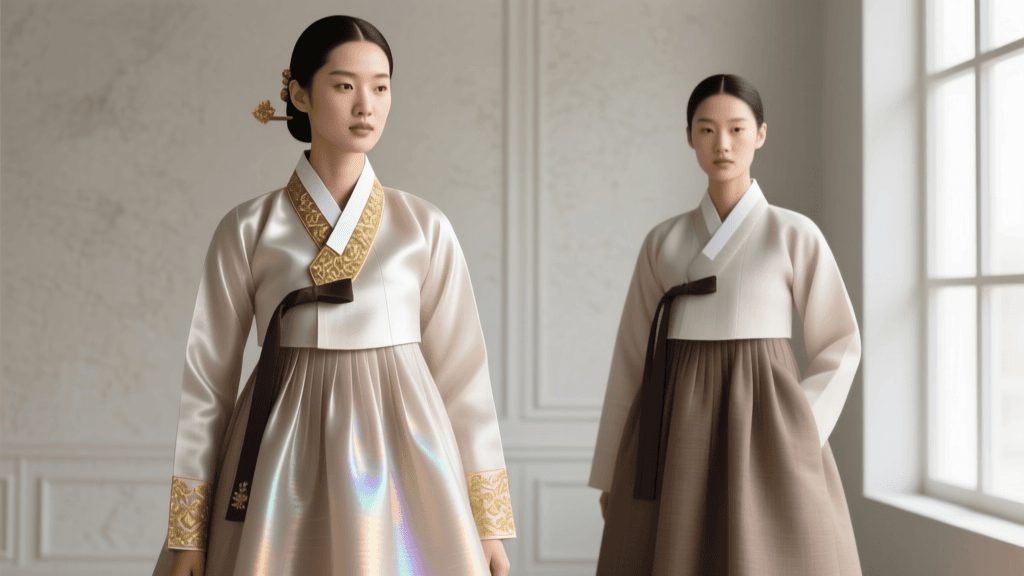
The most noticeable difference in everyday hanbok is the proportion of the jeogori (the upper jacket). While historical and ceremonial jackets often feature voluminous sleeves and a specific drape, the Saenghwal jeogori is tailored closer to the body with narrower sleeves to prevent catching on modern infrastructure like subway doors or office chairs. The chima (skirt) is frequently shortened to midi or tea-length, eliminating the risk of hemlines dragging on wet city streets. Furthermore, traditional silk ties (goreum) are often replaced or supplemented with hidden magnetic clasps, elasticized waistbands, and side-zippers, allowing the wearer to dress in minutes rather than requiring assistance.
Textiles and Dyes
Everyday hanbok relies heavily on advanced modern textiles. In 2026, the most popular fabrics include washable matte polyesters, organic cotton-linen blends, and sustainably dyed ramie. These materials are chosen for their breathability, wrinkle resistance, and machine-washability. The color palettes tend toward muted, earthy tones—such as sage green, dusty rose, charcoal, and cream—aligning with contemporary minimalist fashion trends rather than the high-contrast primary colors of antiquity.
Ceremonial Hanbok: Preserving Opulence and Heritage
Ceremonial hanbok is reserved for life's most significant milestones: Honrye (weddings), Doljanchi (a child's first birthday), Hwangap (60th birthday celebrations), and major lunar holidays like Chuseok and Seollal. When donning ceremonial attire, the goal is not convenience, but the projection of status, respect for ancestors, and visual splendor.
The Traditional Silhouette
Ceremonial garments strictly adhere to historical proportions. The chima is exceptionally voluminous, often requiring multiple layers of petticoats (sokchima) to achieve the iconic bell-like or A-line silhouette that floats gracefully around the wearer. The sleeves of the jeogori and the overcoats (durumagi) are wide and sweeping, designed to showcase the beautiful drape of luxury textiles when the wearer moves or bows. For formal weddings, brides often wear the hwarot or wonsam, elaborate robes featuring intricate embroidery of peonies, phoenixes, and clouds, while grooms wear the samogwandae ensemble, complete with a structured hat and leather boots.
Luxury Materials and Artisan Techniques
The textiles used in ceremonial wear are a testament to Korea's intangible cultural heritage, a field of craftsmanship championed globally by organizations documented on the UNESCO Intangible Cultural Heritage registry. Genuine myeongju (woven silk), mosi (fine ramie), and heavy brocades are the standard. These fabrics are frequently adorned with geumbak (gold leaf stamping), a painstaking artisan technique where adhesive is applied through carved wooden blocks and ultra-thin gold leaf is pressed into the fabric, creating shimmering motifs that catch the light during ceremonial dances and bows.
2026 Comparison Chart: Everyday vs. Ceremonial Hanbok
To help you make informed purchasing and styling decisions, refer to the comparison table below outlining the core differences between these two categories as of 2026.
| Feature | Saenghwal (Everyday) | Ceremonial (Myeongjeol/Honrye) |
|---|---|---|
| Primary Fabric | Cotton, linen, washable poly-blends | Pure silk (myeongju), brocade, gold-leaf stamped |
| Skirt Length (Chima) | Midi, tea-length, or ankle-grazing | Floor-sweeping, highly voluminous with petticoats |
| Sleeve Width | Narrow, tailored to the wrist | Wide, sweeping, traditional drape |
| Fastenings | Hidden zippers, magnets, snap-hooks | Traditional silk ties (goreum), elaborate knots |
| 2026 Price Range | 80,000 - 180,000 KRW ($60 - $135 USD) | 500,000 - 2,500,000+ KRW ($380 - $1,900+ USD) |
| Care Routine | Machine washable (gentle cycle), steam iron | Specialist dry clean only, hanji paper storage |
Modern Styling: Integrating Hanbok into a 2026 Wardrobe
Styling everyday hanbok in 2026 is all about juxtaposition. The rigid rules of traditional matching have been discarded in favor of personal expression. A popular trend this year involves pairing a structured, cropped Saenghwal jeogori with high-waisted modern denim or wide-leg linen trousers instead of the traditional chima or baji. Conversely, a plain Saenghwal chima can be styled with a contemporary knit turtleneck or a tailored blazer for a sophisticated office-appropriate look.
Footwear and accessories have also evolved. While traditional kkotsin (silk shoes) are mandatory for ceremonial wear, everyday hanbok is frequently paired with minimalist white sneakers, leather loafers, or ankle boots. For bags, structured leather totes or crossbody bags have replaced the traditional jumeoni (pouch), offering the utility required for smartphones, wallets, and daily commutes. In the winter months, layering a modernized, quilted durumagi (overcoat) over a standard wool coat provides both striking visual depth and essential warmth.
Fabric Care and Preservation Strategies
The longevity of your garments depends entirely on adhering to the correct care protocols for their specific category. The textile conservation experts at the Victoria and Albert Museum note that improper storage of natural Asian fibers is the leading cause of garment degradation.
Caring for Saenghwal Hanbok
- Washing: Use a mild, pH-neutral detergent on a delicate cold-water cycle. Place the garments in a mesh laundry bag to protect the seams.
- Drying: Never tumble dry. Hang the chima on a padded hanger and lay the jeogori flat to prevent the shoulders from stretching.
- Ironing: Use a handheld steamer to remove wrinkles. If using a flat iron, always use a pressing cloth and a low-heat setting to avoid creating a synthetic shine on poly-blends.
Caring for Ceremonial Hanbok
- Cleaning: Never attempt to wash ceremonial silk or gold-leafed garments at home. Take them to a dry cleaner who specializes in traditional ethnic garments and explicitly point out any geumbak (gold leaf) areas, as harsh chemicals will strip the gold.
- Storage: Do not store ceremonial hanbok on wire or plastic hangers, as the weight of the silk will distort the shoulders. Fold them carefully along their natural seam lines.
- Wrapping: Wrap the folded garments in hanji (traditional Korean mulberry paper) or unbleached cotton. Avoid plastic garment bags, which trap moisture and cause silk to yellow and mildew. Store in a cool, dark, climate-controlled cedar chest to repel moths naturally.
Sourcing and Shopping in 2026
For those looking to purchase everyday hanbok, online platforms like Musinsa and specialized indie brand storefronts offer the widest variety of contemporary cuts and sustainable fabrics. Brands such as Leesle and Sonjjang continue to lead the market in bridging the gap between historical accuracy and modern streetwear. For bespoke ceremonial garments, a visit to the specialized tailors in Seoul's Jongno District or Bukchon Hanok Village is highly recommended. Here, master tailors will take precise measurements and guide you through the selection of silk grades and gold-leaf motifs, ensuring your ceremonial garment is a true heirloom piece capable of being passed down through generations. Whether you are dressing for a morning coffee run or a once-in-a-lifetime wedding, understanding the distinct roles of Saenghwal and ceremonial hanbok ensures you honor the tradition while living fully in the present.