Ceremonial vs Everyday Hanbok: 2026 Buyer & Style Guide
The Evolution of Korean Traditional Dress in 2026
As we navigate the fashion landscape of 2026, the global appreciation for traditional Asian garments has evolved from mere historical fascination to a vibrant, living sartorial practice. Among the most dynamic of these traditions is the Korean Hanbok. However, for both seasoned collectors and newcomers to traditional Asian dress, a critical distinction must be understood: the vast divide between ceremonial Hanbok and everyday Hanbok, known locally as Saenghwal Hanbok (생활한복).
Understanding this dichotomy is essential for anyone looking to invest in, wear, or study Korean traditional garments today. While ceremonial wear preserves the meticulous, heavy, and highly structured silhouettes of the Joseon Dynasty and royal courts, everyday Hanbok has undergone a radical transformation. In 2026, the everyday market is defined by sustainable textiles, modular designs, and a seamless integration into modern urban wardrobes. This comprehensive guide will break down the structural, financial, and practical differences between these two categories, ensuring you make informed decisions for your traditional garment collection.
Ceremonial Hanbok: Heritage, Grandeur, and Strict Tradition
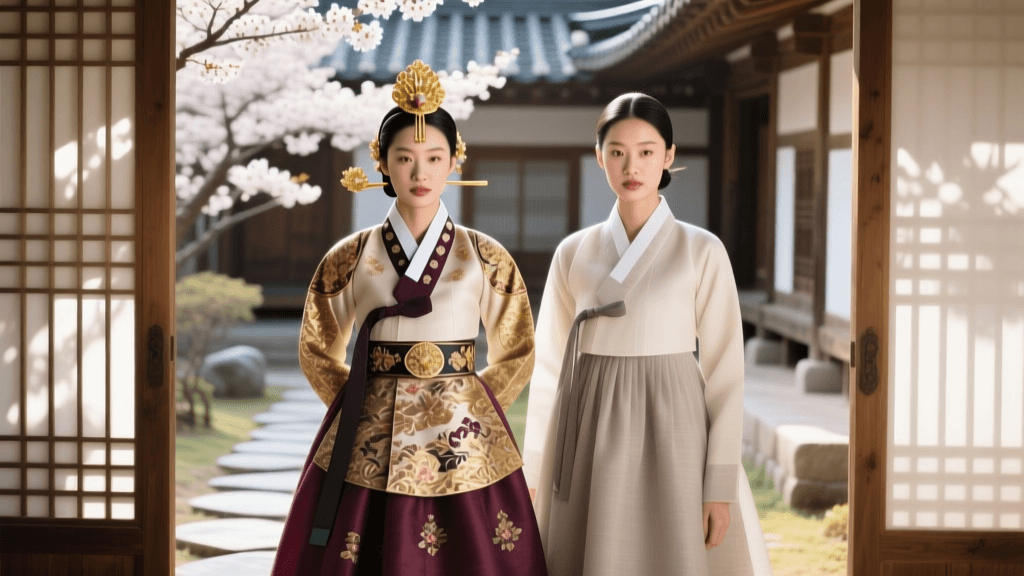
Ceremonial Hanbok encompasses garments reserved for significant life events and major holidays. This includes Hollyebok (wedding attire), Myeongjeol (Lunar New Year and Chuseok holiday wear), and Dolbok (attire for a child's first birthday). The primary objective of ceremonial wear is to project status, honor heritage, and adhere to strict historical color theories (Obangsaek).
Materials and Construction
In 2026, authentic ceremonial Hanbok continues to rely on premium, naturally dyed silks, heavily embroidered satins, and fine ramie. The chima (skirt) of a ceremonial set is exceptionally voluminous, often requiring multiple layers of underskirts (sokchima) to achieve the iconic bell-like silhouette. The jeogori (jacket) is tailored with precise, sweeping curves at the sleeves (baerae) and features elaborate geumbak (gold leaf stamping) or intricate hand-embroidery (jasu) depicting peonies, cranes, or dragons.
According to preservation data highlighted by the National Museum of Korea, the structural integrity of these garments relies on traditional flat-pattern cutting, which ensures that the fabric drapes dynamically around the body rather than conforming tightly to it. A full bridal set, including the wide-sleeved daesam robe and the ornate hwagwan (floral crown), can weigh upwards of four kilograms, demanding a specific posture and grace from the wearer.
2026 Pricing and Investment
Ceremonial Hanbok is an investment piece. As of early 2026, a high-quality, bespoke ceremonial wedding set from a master artisan in Seoul ranges from $1,800 to over $4,500 USD. Off-the-rack holiday sets for major festivals typically start around $400 and can reach $900 depending on the complexity of the silk brocade and the authenticity of the natural dyes used.
Saenghwal Hanbok: The 2026 Everyday Revolution
While ceremonial wear is locked in a respectful dialogue with history, Saenghwal Hanbok (literally 'living Hanbok') is in a constant state of modern evolution. Designed for daily wear, cafe visits, office environments, and casual travel, everyday Hanbok strips away the impracticalities of traditional court dress while retaining the foundational aesthetic markers of the culture.
Modern Adaptations and Smart Textiles
The 2026 Spring and Summer collections for Saenghwal Hanbok highlight a massive shift toward eco-friendly and technologically advanced fabrics. Designers are heavily utilizing temperature-regulating linen blends, washable organic cottons, and recycled polyester-silk hybrids. The UNESCO-recognized Hansan Ramie weaving techniques have been adapted by modern mills to create ultra-fine, breathable ramie fabrics that resist wrinkling, making them perfect for humid summer commutes.
Structurally, the everyday chima is significantly shortened, often falling at or just below the knee, or is entirely replaced by wide-legged, high-waisted trousers (baji). The traditional, sometimes cumbersome, front tie (goreum) is frequently replaced by hidden hooks, magnetic clasps, or simplified, shorter ribbon ties. Crucially, 2026's everyday designs almost universally feature deep, hidden side pockets—a practical addition that has driven the massive popularity of the style among younger demographics.
Accessibility and Market Pricing
Support from institutions like the Hanbok Advancement Center has helped standardize sizing and promote contemporary designers, making everyday Hanbok more accessible than ever. In 2026, a standard, high-quality everyday Hanbok set (top and skirt/trousers) costs between $90 and $250 USD. Modular pieces, such as standalone jeogori tops designed to be paired with Western denim or tailored slacks, can be purchased for as little as $60.
Feature Comparison: Ceremonial vs. Everyday Hanbok (2026)
To help you decide which garment type suits your needs, refer to the comprehensive comparison table below:
| Feature | Ceremonial Hanbok | Everyday (Saenghwal) Hanbok |
|---|---|---|
| Primary Occasion | Weddings, Lunar New Year, Chuseok, Doljanchi | Daily wear, office, casual dining, travel |
| Dominant Fabrics | Heavy silk, brocade, embroidered satin, fine ramie | Washable cotton, linen blends, smart-textiles |
| Skirt Length (Chima) | Floor-length, highly voluminous | Knee-length, midi, or replaced by trousers |
| Fastening Method | Traditional long ties (Goreum), intricate pins | Hidden zippers, hooks, magnetic clasps, short ties |
| Average Cost (2026) | $400 - $4,500+ USD | $60 - $250 USD |
| Maintenance | Specialist dry cleaning, careful airing | Machine washable (delicate), steam ironing |
| Garment Weight | Heavy (1.5kg to 4kg+ with layers) | Lightweight (0.3kg to 0.8kg) |
2026 Styling Guide: Mixing Tradition with Modernity
One of the most exciting aspects of the 2026 fashion landscape is the fluid styling of everyday Hanbok. The rigid rules of the past have given way to highly personalized, hybrid aesthetics. Here is how contemporary wearers are styling Saenghwal Hanbok this year:
- The Office-Ready Jeogori: A structured, mandarin-collar jeogori made from muted, matte-finish cotton is increasingly being worn over high-waisted, wide-leg wool trousers. This creates a silhouette that honors the traditional cropped jacket while providing the comfort and authority of modern business attire.
- Layering for Transition Seasons: During the brisk spring and autumn months, everyday Hanbok dresses are being layered under oversized, Western-style wool blazers or longline trench coats. The contrast between the sharp, structured outerwear and the soft, flowing lines of the Hanbok skirt creates a striking visual tension.
- Footwear Pairings: While traditional rubber shoes (kkotsin) are reserved for ceremonial wear, 2026 everyday styling favors chunky leather loafers, minimalist white sneakers, or low-heeled Mary Janes. These ground the flowing silhouette and make the garment practical for navigating city streets and public transit.
- Accessory Integration: Instead of the heavy, ornate hairpins (binyeo) used in weddings, modern wearers opt for subtle, contemporary metal hair cuffs or minimalist silk scrunchies that echo the colors of the garment's goreum.
Care, Storage, and Maintenance Protocols
The longevity of your garments depends entirely on adhering to the correct maintenance protocols, which differ wildly between the two categories.
Caring for Ceremonial Hanbok
Ceremonial garments, particularly those featuring gold leaf (geumbak) or delicate silk brocades, must never be exposed to water or standard dry-cleaning chemicals, as these will strip the gold and ruin the natural dyes. After wearing, the garment must be hung in a shaded, well-ventilated area for 24 hours to allow moisture and odors to dissipate. For long-term storage, fold the garment carefully along its natural seam lines and wrap it in a traditional cotton bojagi (wrapping cloth). Store in a cedar chest with natural camphor to deter insects, and refold the garment every six months to prevent permanent crease damage.
Caring for Everyday Saenghwal Hanbok
The beauty of the 2026 everyday Hanbok lies in its low-maintenance design. Most cotton and linen-blend sets can be machine washed on a gentle cycle using a neutral pH liquid detergent. Place the garments in a mesh laundry bag to protect the ties and delicate seams. Avoid high-heat tumble drying, which can warp the collar (git). Instead, hang the garments to air dry. A handheld steamer is the best tool for removing wrinkles; avoid pressing a hot iron directly onto the fabric, especially over any subtle embroidered details or reinforced collar bands.
Conclusion
The dichotomy between ceremonial and everyday Hanbok in 2026 is a testament to the resilience and adaptability of Asian traditional garments. Ceremonial Hanbok serves as a vital, breathtaking anchor to history, preserving ancient techniques and cultural philosophies in their purest forms. Meanwhile, Saenghwal Hanbok proves that traditional dress need not be relegated to museums or once-a-year holidays. By understanding the distinct purposes, fabrics, and care requirements of both, you can build a versatile, respectful, and deeply personal traditional wardrobe that bridges the gap between ancient heritage and modern life.