Ceremonial vs Everyday Hanbok: The 2026 Style Guide
The Evolution of the Hanbok in 2026
The hanbok, the traditional Korean garment, has experienced a remarkable renaissance over the last decade. As we navigate the fashion landscape of 2026, the dichotomy between ceremonial and everyday hanbok has never been more distinct or more celebrated. While historical preservation remains paramount, the modernization of the garment has allowed it to transcend its status as a purely ceremonial relic. According to the Cultural Heritage Administration of Korea, the preservation of traditional garment-making techniques is now balanced with a booming commercial sector dedicated to modernized, wearable iterations. For global enthusiasts and locals alike, understanding the structural, material, and stylistic differences between ceremonial hanbok and everyday 'Saenghwal' hanbok is essential for building a culturally respectful and highly functional wardrobe.
Ceremonial Hanbok: Hwalot, Wonsam, and Myeonbok
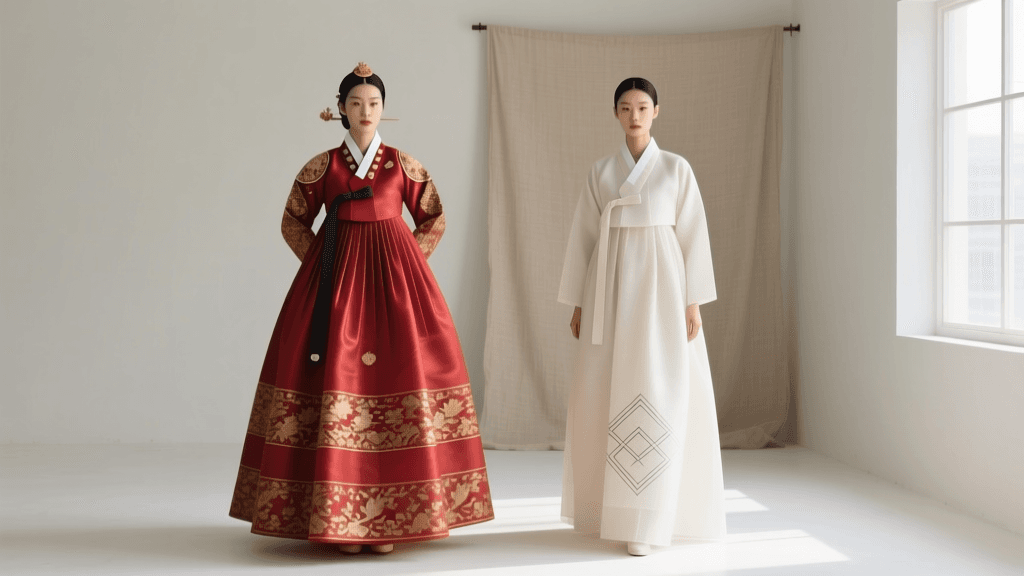
Ceremonial hanbok represents the zenith of traditional Korean textile arts. These garments are characterized by their voluminous silhouettes, heavy layering, and meticulous hand-embroidery. The most prominent examples include the Hwalot (a vibrant, heavily embroidered bridal and princess robe), the Wonsam (a formal court robe for high-ranking women), and the Myeonbok (the ritual attire worn by royalty and officials during ancestral rites).
In 2026, authentic ceremonial hanbok is rarely purchased for personal ownership due to its exorbitant cost and specialized maintenance requirements. A custom-tailored Hwalot, featuring genuine silk and hand-applied gold leaf (geumbak), typically starts at 3,500,000 KRW (approximately $2,600 USD) and can easily exceed 7,000,000 KRW for museum-quality embroidery. The silhouette is deliberately restrictive; the wide sleeves and floor-sweeping chima (skirt) dictate a slow, graceful gait that embodies the Confucian ideals of dignity and restraint. The fabrics used are predominantly heavy silk satins and brocades, which cannot be washed with water and require specialized, climate-controlled storage to prevent the degradation of the metallic threads and natural dyes.
The Rise of Saenghwal Hanbok: Everyday Elegance
In stark contrast to the rigid formality of ceremonial wear is the 'Saenghwal Hanbok' (생활한복), which translates to 'living' or 'everyday' hanbok. This movement, which has fully matured by 2026, reimagines the traditional two-piece structure—the jeogori (jacket) and chima (skirt) for women, and the jeogori and baji (trousers) for men—through the lens of contemporary practicality.
Saenghwal hanbok prioritizes mobility, comfort, and easy maintenance. Designers have introduced structural modifications such as elasticized waistbands, hidden side pockets, and adjustable goreum (ribbon ties). The chima length is frequently shortened to mid-calf or ankle-length to prevent tripping on modern urban streets and public transit. Furthermore, the jeogori sleeves are often tapered or shortened to accommodate typing on keyboards and using smartphones. As documented in comprehensive historical and cultural archives on the hanbok, while the fundamental geometry of the garment remains rooted in the Joseon Dynasty, the 2026 material palette has shifted dramatically. Today's everyday hanbok utilizes machine-washable cotton-linen blends, breathable ramie (mosi), and sustainable organic hemp (sambe), making them suitable for weekly wear, cafe visits, and office environments.
Feature Comparison: Ceremonial vs. Everyday Hanbok
To clearly delineate the boundaries between these two categories, the following table outlines the primary differences in construction, cost, and usage as of 2026.
| Feature | Ceremonial (Hwalot / Wonsam) | Everyday (Saenghwal Hanbok) |
|---|---|---|
| Primary Fabrics | Heavy silk satin, brocade, raw silk | Cotton, linen, ramie, tech-blends |
| Silhouette | Floor-length, wide sleeves, heavily layered | Midi/maxi length, tapered sleeves, streamlined |
| Maintenance | Professional dry clean only, climate-controlled storage | Machine washable (gentle cycle), air dry |
| Average Cost (2026) | $2,500 - $5,000+ USD | $80 - $250 USD |
| Key Additions | Hand-embroidery, gold leaf, intricate knots | Hidden pockets, elastic waists, snap buttons |
| Primary Occasions | Weddings, major holidays, ancestral rites | Daily wear, travel, casual dining, office |
2026 Styling Trends: Bridging the Gap
The most exciting development in 2026 K-fashion is the 'Hanbok-core' trend, where everyday hanbok pieces are seamlessly integrated with global streetwear and minimalist fashion. The rigid rules of the past have given way to highly personalized styling. Women are increasingly pairing a structured, cropped cotton jeogori with high-waisted contemporary denim or wide-leg linen trousers instead of the traditional chima. Conversely, the traditional baji (trousers) are being styled with modern oversized blazers and crisp white button-down shirts.
Layering is another critical styling technique. During the colder months, turtlenecks and lightweight merino wool sweaters are worn beneath the jeogori, providing warmth without disrupting the V-neckline created by the white dongjeong (collar). Korea.net cultural initiatives have frequently highlighted how young designers are utilizing color-blocking in Saenghwal hanbok, moving away from the highly saturated traditional five-color spectrum (obangsaek) toward muted, earthy tones like sage green, dusty rose, and charcoal, which are easier to incorporate into a modern capsule wardrobe.
Accessories and Footwear: Modernizing the Details
No hanbok ensemble is complete without its accompanying accessories, but the 2026 approach to these accents is decidedly minimalist. The norigae, a traditional pendant tied to the goreum (jacket ribbon) or waist, was historically a heavy, elaborate knot of silk and jade reserved for ceremonial wear. Today, everyday norigae feature sleek, geometric metalwork, small wooden beads, or even miniature modern charms that add a subtle nod to tradition without the swinging weight of the ceremonial versions.
Footwear has also undergone a radical transformation. While traditional kkotsin (flower shoes) made of silk and leather are still worn with ceremonial attire, they offer zero arch support and are easily ruined by rain. For everyday hanbok, modern consumers opt for leather loafers, Mary Janes, or even chunky minimalist sneakers. The juxtaposition of a flowing, traditional midi-skirt with a pair of pristine, modern white sneakers has become a defining silhouette of Seoul's street style in 2026, symbolizing the intersection of heritage and hyper-modernity.
Sourcing, Pricing, and Garment Care
For those looking to invest in a Saenghwal hanbok, the market is highly accessible. Online boutiques and specialized brands offer ready-to-wear sets ranging from 100,000 KRW to 300,000 KRW ($75 to $225 USD). These brands often provide detailed sizing charts that cater to international buyers, focusing on bust, waist, and shoulder measurements rather than traditional bespoke fittings. When purchasing, it is crucial to check the fabric composition; 100% natural fibers like linen and ramie are highly breathable for summer but require careful ironing, whereas cotton-polyester blends offer wrinkle resistance ideal for travel.
Caring for your everyday hanbok is straightforward but requires attention to detail to preserve the garment's structural integrity. Always fasten any hidden hooks or buttons before washing to prevent snagging. Use a mild, neutral detergent and select a gentle, cold-water cycle. Avoid the tumble dryer entirely; the heat can warp the delicate curves of the jeogori's armpit gussets and shrink the natural fibers. Instead, hang the garments to air dry in a shaded, well-ventilated area, and use a steam iron on a low setting to gently press the collar and sleeve cuffs, ensuring the crisp lines that define the hanbok's elegant geometry remain intact.
Conclusion
The division between ceremonial and everyday hanbok in 2026 is not a fracture of tradition, but rather a testament to its survival. By reserving the heavy, opulent silks of the Hwalot and Wonsam for moments of profound cultural significance, and embracing the practical, breathable, and adaptable nature of the Saenghwal hanbok for daily life, wearers ensure that this magnificent garment remains a living, breathing part of global fashion. Whether you are attending a formal ancestral rite or simply navigating a modern city, understanding these distinctions allows you to wear the hanbok with both respect and contemporary flair.