Ceremonial vs Everyday Hanbok: A 2026 Buyer's Guide
The Evolution of Korean Traditional Dress in 2026
The landscape of traditional Korean dress has undergone a remarkable transformation by 2026. While the Hanbok remains a potent symbol of Korean heritage and a cornerstone of Asian traditional garments, the way it is worn, purchased, and styled has bifurcated into two distinct categories: the grand, meticulously crafted ceremonial Hanbok and the pragmatic, stylish everyday Saenghwal (lifestyle) Hanbok. Understanding the nuances between these two styles is essential for anyone looking to invest in traditional East Asian fashion this year. Whether you are preparing for a traditional Pyebaek (wedding ceremony), attending a major cultural festival, or seeking a culturally resonant outfit for daily office wear, this 2026 guide breaks down the construction, cost, and care of both worlds.
The Grandeur of Ceremonial Hanbok (Myeongjeol & Hwalot)
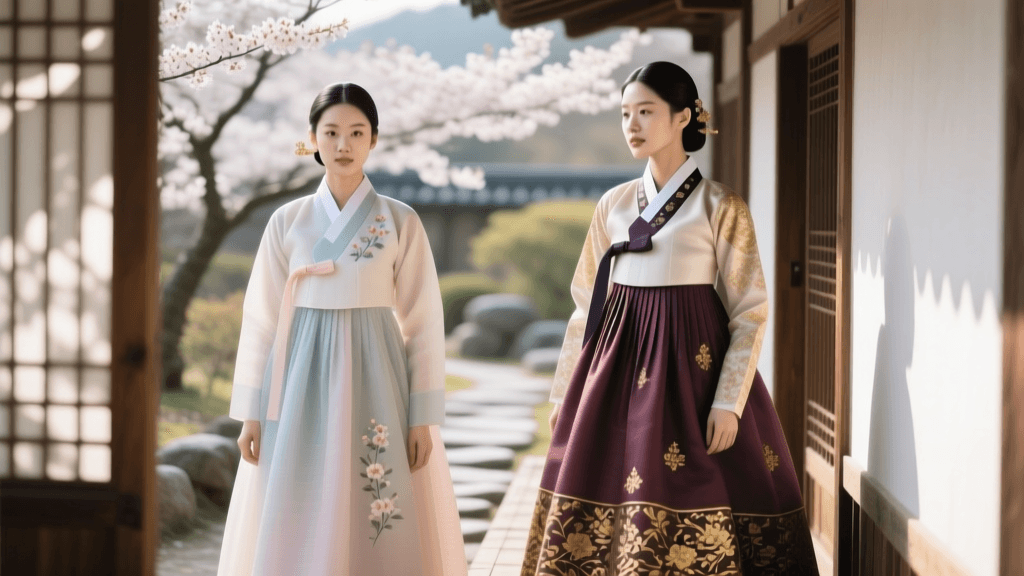
Ceremonial Hanbok is designed for high-stakes cultural events: weddings, ancestral rites (Jesa), and major holidays like Chuseok and Seollal. According to the National Folk Museum of Korea, the preservation of these elaborate garments is vital to maintaining the historical continuity of Korean textile arts. In 2026, authentic ceremonial wear continues to rely on centuries-old construction techniques, prioritizing volume, symbolism, and luxurious materials over practical mobility.
Materials and Construction
Traditional ceremonial garments, such as the bridal Hwalot or the court-style Wonsam, are constructed from heavyweight mulberry silk, fine ramie, and intricate brocades. The 2026 market has seen a resurgence in authentic geumbak (gold-leaf stamping) applied by master artisans, a technique that adds significant weight and cost to the garment. The silhouette is highly structured, requiring multiple under-layers (sokchima and sokjeoksam) to achieve the iconic, voluminous bell shape. Sleeves are often wide and sweeping (daesam), and the goreum (coat ties) are long, wide, and tied in precise, traditional bows.
Color Symbolism
Ceremonial Hanbok strictly adheres to the philosophy of Obangsaek (the five traditional colors). Red and blue represent the balance of yin and yang, often worn by brides and grooms, while yellow was historically reserved for royalty and remains a popular accent color for festive children's Hanbok. The embroidery on ceremonial skirts often features peonies for wealth, bats for good fortune, and cranes for longevity.
The 2026 Saenghwal (Everyday) Hanbok Revolution
On the other end of the spectrum is the Saenghwal Hanbok, a modernized iteration designed for daily life. As documented in contemporary cultural reports by Korea.net, the everyday Hanbok movement has matured from a niche trend into a staple of modern Korean streetwear and global slow-fashion. In 2026, leading brands like Danhaa, Leesle, and Sonjjang have perfected the balance between historical homage and modern utility.
Design Adaptations for Modern Life
Everyday Hanbok strips away the cumbersome layers of its ceremonial counterpart. The jeogori (jacket) is often shortened or tailored to fit closer to the body, while the chima (skirt) features hidden elastic waistbands, side zippers, and practical deep pockets. The complex, easily untied traditional goreum are frequently replaced by discreet snap-buttons, magnetic clasps, or simplified, thinner ties. The hemline of the skirt is often raised to the mid-calf or ankle to prevent dragging on urban streets and to accommodate modern footwear.
Fabric Technology in 2026
The most significant advancement in everyday Hanbok is fabric technology. While ceremonial wear demands delicate silks, 2026's everyday collections utilize bio-based Tencel, wrinkle-resistant linen blends, and machine-washable high-density cottons. These fabrics drape beautifully, mimicking the flow of silk, but can withstand the rigors of commuting, office environments, and casual dining. Furthermore, eco-friendly dyes and sustainable weaving practices have become standard for top-tier Saenghwal brands this year.
Feature Comparison: Ceremonial vs. Everyday Hanbok (2026)
To help you make an informed purchasing decision, refer to the comparison chart below detailing the core differences between the two styles as of 2026.
| Feature | Ceremonial Hanbok | Everyday (Saenghwal) Hanbok |
|---|---|---|
| Primary Occasion | Weddings, Chuseok, Seollal, Pyebaek | Daily wear, office, casual outings, travel |
| Typical Fabrics | Pure silk, ramie, brocade, organza | Cotton, linen, Tencel, poly-blends |
| Silhouette & Fit | Voluminous, multi-layered, wide sleeves | Streamlined, single-layer, tailored sleeves |
| Closure System | Traditional long Goreum (tied bows) | Hidden zippers, snaps, or simplified ties |
| 2026 Price Range | $800 - $4,500+ (Custom/Bespoke) | $80 - $350 (Off-the-rack/Made-to-order) |
| Maintenance | Professional dry clean, specialized storage | Machine wash cold, hang dry, steam iron |
Sizing, Measurements, and the 2026 Buying Process
Purchasing a Hanbok requires a different approach to sizing compared to Western clothing. Because traditional garments do not rely on darts or tailored seams to hug the body's curves, the fit is dictated by the shoulders, arm length, and waist placement.
How to Measure for Custom Ceremonial Hanbok
If you are commissioning a bespoke ceremonial piece, you will need to provide precise measurements to a tailor. Use a soft measuring tape and record the following:
- Hwa-jang (Arm Length): Measure from the base of the back of your neck, across the shoulder, and down to the wrist bone. This is critical for the jeogori sleeve length.
- Chest/Bust: Measure around the fullest part of your chest. The jeogori must overlap comfortably without pulling across the chest.
- Waist (Chima Placement): Traditional Hanbok skirts sit high, just below the bust line, not on the natural waist. Measure your under-bust circumference to ensure the skirt band fits securely without digging in.
- Skirt Length: Measure from the under-bust down to the desired hemline. For formal ceremonial wear, the skirt should graze the floor when wearing traditional kkotshin (floral shoes).
Buying Off-the-Rack Everyday Hanbok
Everyday Saenghwal Hanbok is typically sold in standard sizing (XS through XL). When shopping online in 2026, always check the brand's specific size chart, as the high-waisted skirts often feature elasticated backs that offer a 2-to-3-inch stretch. If you are between sizes, size up for the jeogori to maintain the traditional relaxed drape across the shoulders, but size down for the skirt to prevent the elastic waist from slipping during daily activities.
Styling and Accessories for Modern Contexts
Styling your Hanbok correctly bridges the gap between historical appreciation and modern fashion. The accessories you choose will dictate whether your outfit reads as strictly traditional or fashion-forward.
Footwear
For ceremonial events, traditional Hwa (embroidered boots) or Kkotshin (silk floral shoes) are mandatory. However, for everyday Saenghwal Hanbok, 2026 styling trends heavily favor modern contrasts. Pairing a linen Hanbok skirt with crisp white leather sneakers, chunky loafers, or minimalist ankle boots is currently the dominant street-style aesthetic in Seoul's cultural districts.
Jewelry and Hair Accessories
The Norigae, a decorative tassel hung from the goreum or the waistband, is a staple for both styles. For ceremonial wear, opt for heavy, multi-tiered jade or coral norigae. For everyday wear, choose minimalist metal or macramé norigae that won't catch on bags or desks. Hair accessories like the binyeo (ornamental hairpin) have also been modernized; contemporary versions feature matte metals and geometric shapes, perfect for securing a low bun in an office setting.
Care, Maintenance, and Storage Protocols
The longevity of your garment depends entirely on adhering to the correct care protocols, which differ vastly between the two categories.
Ceremonial Care
Never attempt to wash pure silk or gold-leaf stamped Hanbok at home. Water will permanently warp the fabric and dissolve the gold adhesives. Always take ceremonial pieces to a dry cleaner who specializes in traditional Asian garments. For storage, fold the garments along their original crease lines, pad the folds with acid-free tissue paper to prevent permanent creasing, and store them in a breathable cotton garment bag or a traditional cedar box to ward off moisture and pests.
Everyday Care
The beauty of the 2026 Saenghwal Hanbok is its low-maintenance nature. Most cotton and linen blends can be machine-washed on a gentle, cold-water cycle using a mild, pH-neutral detergent. Turn the jeogori inside out to protect the collar from friction. Never use a tumble dryer, as the heat will shrink the natural fibers and warp the hidden elastic waistbands. Instead, hang the garments to dry in the shade. Use a handheld steamer to remove wrinkles; this is much safer and faster than using a traditional iron, which can accidentally scorch delicate linen blends.
Conclusion
The dichotomy between ceremonial and everyday Hanbok in 2026 highlights the incredible adaptability of Asian traditional garments. While the ceremonial Hanbok serves as a vital, untouched link to Korea's regal and spiritual history, the everyday Saenghwal Hanbok proves that traditional silhouettes can evolve to meet the demands of contemporary life. By understanding the distinct fabrics, construction methods, and care requirements of both styles, you can confidently build a wardrobe that honors the past while fully participating in the present.