Mastering Romanian Ie Construction: Zero-Waste Patterns 2026
Introduction to the Romanian Ie and Geometric Cutting
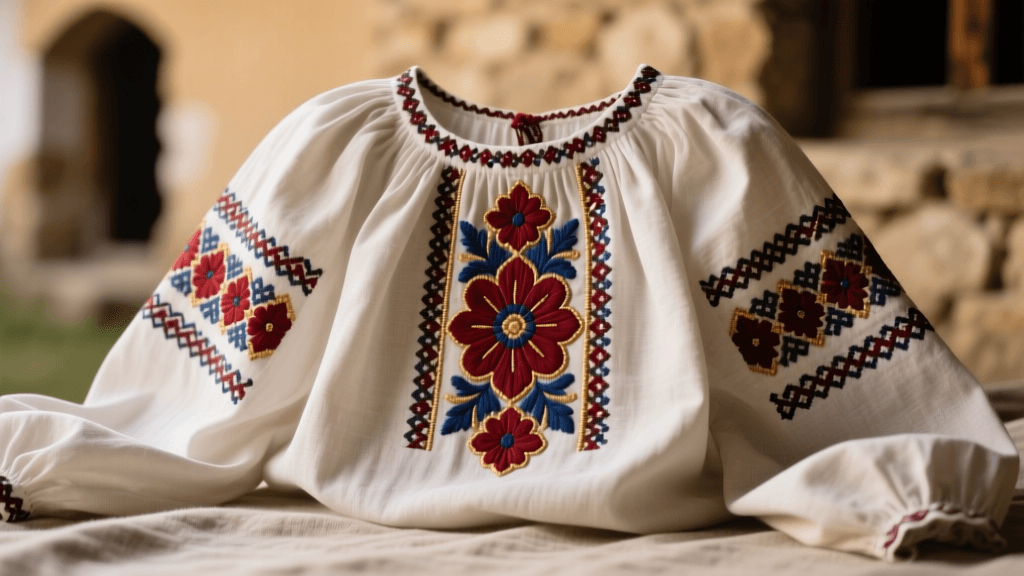
The traditional Romanian blouse, universally known as the ie (pronounced 'yeh'), is far more than a beautiful artifact of Eastern European folk dress. It is a masterclass in zero-waste pattern drafting and geometric construction. In 2026, as the global fashion industry faces mounting pressure to eliminate textile waste, the ancient Balkan and Slavic rectangular cutting methods are experiencing a massive renaissance among sustainable fashion designers and historical costumers alike. By utilizing straight lines and exploiting the natural drape of woven textiles, the ie achieves a complex, voluminous silhouette without generating a single scrap of waste fabric.
This comprehensive guide explores the structural anatomy of the Romanian ie, breaking down the mathematical precision required to draft its zero-waste pattern. Whether you are a historical reenactor, a sustainable fashion student, or a home sewist looking to expand your technical repertoire, mastering these 2026-updated construction techniques will fundamentally change how you approach garment creation.
The Philosophy of Zero-Waste Rectangular Construction
Historically, the ie was born out of necessity and profound respect for labor. Traditional weavers operated on narrow, warp-weighted, or horizontal floor looms, typically producing fabric bolts no wider than 40 to 60 centimeters. Because spinning and weaving yarn by hand took hundreds of hours, cutting curved armholes or tailored waistlines—which would leave unusable scraps on the cutting room floor—was unthinkable.
Instead, peasant tailors developed a sophisticated system of rectangular construction. The garment is composed entirely of rectangles, squares, and right-angled triangles. Volume and shaping are not achieved through curved darts or princess seams, but through strategic gathering, smocking, and the insertion of gussets. Today, this historical constraint is celebrated as the ultimate sustainable design practice. According to the Victoria and Albert Museum Textile Collections, studying historical zero-waste garments provides crucial blueprints for modern designers aiming to close the loop on textile production.
Essential Materials and Tools for 2026
To authentically recreate the drape and structure of the ie, your fabric choice is paramount. While historical blouses were woven from local hemp or flax, the 2026 textile market offers incredible organic alternatives that mimic the crispness and durability of traditional materials while supporting modern regenerative agriculture.
| Material | Origin & Certification | 2026 Avg. Cost (per meter) | Shrinkage | Best Use in Ie Construction |
|---|---|---|---|---|
| Organic European Linen | France/Belgium (GOTS Certified) | €28 - €35 | 5-7% | Main body panels and sleeves |
| Regenerative Hemp Blend | Eastern Europe (OEKO-TEX) | €22 - €26 | 8-10% | Heavy-duty everyday blouses |
| Handwoven Cotton Voile | Artisanal Mills (Romania) | €40 - €55 | 3-4% | Delicate summer ie, intricate smocking |
| Raw Silk Noil | Peace Silk (India/Europe) | €45 - €60 | 2-3% | High-end contemporary adaptations |
Pro-Tip for 2026 Makers: Always pre-wash and hot-iron your linen or hemp before drafting your pattern. Rectangular cutting relies on exact measurements; a 5% shrinkage post-assembly can distort the alignment of your geometric embroidery grids.
Step-by-Step Pattern Drafting for the Ie
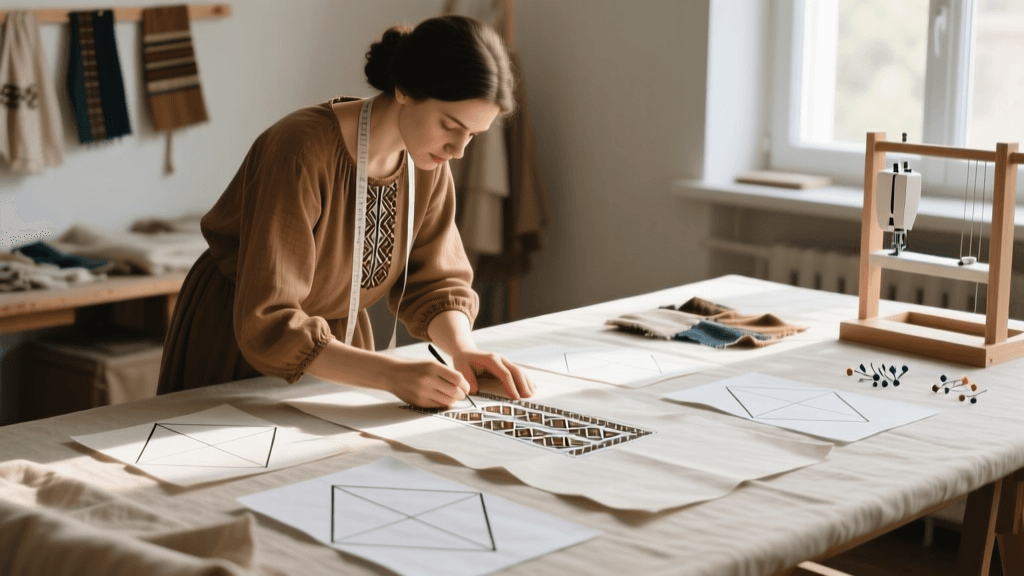
The beauty of the ie lies in its modularity. The pattern is drafted directly onto the fabric using a simple set of body measurements and geometric rules. There are no curved armholes or sloped shoulders.
1. The Core Measurements
- Bust Circumference: Determines the total width of the front and back panels.
- Neck-to-Wrist: Determines the total length of the sleeve rectangle.
- Underarm Depth: Determines the width of the sleeve and the size of the underarm gusset.
2. The Geometric Breakdown
The standard ie consists of the following geometric components:
- Front and Back Panels: Two identical rectangles. The width of each panel is exactly half of your total desired garment circumference (Bust + 15cm ease, divided by 2). The length runs from the shoulder to the desired hemline.
- Sleeves: Two massive rectangles. The length is the exact measurement from the base of the neck to the wrist. The width is determined by the desired volume at the bicep, often ranging from 60cm to over 100cm for heavily gathered festival blouses.
- The Gusset (Pavă): A square piece of fabric, typically 10cm x 10cm to 15cm x 15cm, inserted at the underarm intersection. This is the structural keystone of the garment, allowing the arm to lift without pulling the main body panels upward.
- The Insets (Cheițe): Narrow, lace-like or embroidered rectangular strips used to join the main panels together. They add width and decorative flair while maintaining the zero-waste ethos.
The Altiță: Embroidery as Structural Design
You cannot discuss the construction of the Romanian ie without addressing the altiță. In 2022, the art of the traditional blouse with embroidery on the shoulder was officially inscribed on the UNESCO Representative List of the Intangible Cultural Heritage of Humanity, a status that continues to drive its preservation and revival in 2026. You can explore the official registry via the UNESCO Intangible Cultural Heritage database.
The altiță is the dense, rectangular block of embroidery situated on the upper shoulder of the sleeve. Structurally, it serves a vital purpose: it reinforces the area of the sleeve that bears the most tension when the heavy fabric is gathered into the neckline and armholes. Below the altiță lies the increț (the gathering zone), and below that, the vertical rivers of embroidery known as râuri (rivers). When drafting your sleeve rectangle, you must mathematically allocate the top 15-20cm specifically for the altiță grid, ensuring your embroidery count perfectly matches the fabric's thread count.
Assembly Sequence and Sewing Techniques
Constructing the ie requires a specific order of operations to ensure the geometric shapes align flawlessly. In 2026, while we have access to advanced overlockers and computerized sewing machines, the most authentic and durable finishes are achieved using traditional hand-sewing techniques or meticulous machine equivalents.
Step 1: Embroidery First, Assembly Second
Never assemble the blouse before embroidering. The altiță and râuri must be worked on the flat, individual rectangular pieces. Hooping a massive, assembled sleeve will distort the geometric grid and ruin the tension of your cross-stitch or sabac (drawn thread work).
Step 2: Joining the Insets (Cheițe)
Attach the narrow decorative insets to the side edges of your front and back panels. Use a traditional faggoting stitch or a modern zig-zag seam to create a flexible, lace-like bridge between the solid fabric rectangles.
Step 3: The Sleeve and Gusset Integration
This is the most complex step in rectangular cutting. The square gusset (pavă) is sewn into a slit cut at the top corner of the side seam. The adjacent edges of the gusset are then joined to the bottom edge of the sleeve rectangle. This transforms the flat, cross-shaped layout into a three-dimensional, articulated joint.
Step 4: Neckline Gathering and Smocking
The front, back, and sleeve rectangles all extend far beyond the actual circumference of the human neck. To resolve this excess fabric, traditional makers use a technique called smocuri (honeycomb smocking) or dense cartridge pleating. A drawstring channel is often created at the neckline, allowing the wearer to adjust the volume and drape of the zero-waste rectangles to sit perfectly on the collarbone.
Adapting Historical Patterns for Modern Bodies
One of the most common challenges modern sewists face when transitioning from commercial patterns to historical zero-waste drafting is the lack of tailored waist shaping. The traditional ie is designed to be worn untucked, flowing freely over a skirt or trousers, and is often cinched externally with a woven belt or brâu.
If you are designing a contemporary adaptation for the 2026 wardrobe, resist the urge to add curved side seams, as this violates the zero-waste geometry. Instead, utilize the side insets (cheițe) to introduce adjustable internal drawstrings, or experiment with the width of your gussets to alter the underarm drape. By respecting the straight grain of the fabric and the mathematical purity of the rectangle, you honor the ingenuity of the original makers while participating in the vital, ongoing evolution of European folk dress.