Romanian Ie Blouse Patterns: Zero-Waste Cutting & Altca Smocking 2026
The Renaissance of Carpathian Zero-Waste Tailoring in 2026
As the global fashion industry intensifies its commitment to circularity and zero-waste design in 2026, modern patternmakers are increasingly looking to the past for sustainable solutions. Few historical garments exemplify waste-free construction quite like the traditional Romanian Ie (pronounced "yeh"). This iconic Carpathian blouse is not merely a triumph of regional folk art; it is a masterclass in geometric pattern drafting, mathematical precision, and textile conservation. By utilizing a system of strict rectangular cutting, traditional artisans ensured that not a single scrap of handwoven linen was wasted. Today, contemporary designers and heritage revivalists are adapting these centuries-old techniques to create modern, sustainable wardrobes that honor European folk dress traditions while meeting the ecological demands of the modern era.
Deconstructing the Traditional Romanian Ie
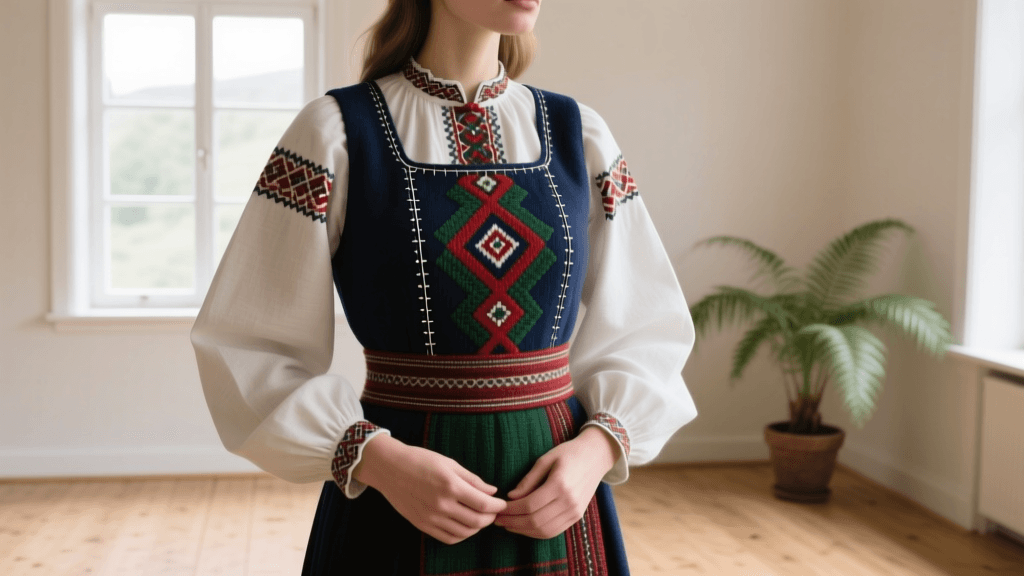
To understand the genius of Carpathian tailoring, one must first understand the anatomy of the Ie. Unlike modern garments that rely on curved armholes, princess seams, and complex darts, the traditional blouse is constructed entirely from straight-grain rectangles and squares. The primary components include:
- Stan (Bodice Panels): The front and back rectangles that form the core of the garment.
- Mânecă (Sleeves): Wide, rectangular sleeves that are gathered at the cuff.
- Altiță (Shoulder/Armpit Gusset): A square or rectangular piece connecting the sleeve to the bodice, serving as both a structural pivot point and the primary canvas for intricate embroidery.
- Pui (Side Gussets): Narrow rectangular strips inserted into the side seams to provide ease and volume through the hips.
This modular system means that the entire garment can be laid out on a single length of fabric using only straight cuts, eliminating the curved offcuts that plague modern pattern drafting.
The Mathematics of Rectangular Cutting
Historically, the zero-waste nature of the Ie was born out of necessity. Traditional wooden looms in rural Eastern Europe produced narrow cloth widths, typically ranging from 40 to 60 centimeters. Because weaving flax and hemp was an incredibly labor-intensive process that took months, wasting even an inch of fabric was unthinkable. In 2026, modern weavers and sustainable designers are returning to these narrow-loom constraints intentionally. By restricting themselves to 50cm wide fabric bolts, contemporary makers can replicate the historical zero-waste layplan, drastically reducing microplastic shedding from synthetic blends and minimizing textile waste in the cutting room.
The pattern drafting relies entirely on the wearer's measurements divided into proportional fractions. For example, the sleeve width is often exactly one-half the width of the bodice panel, allowing the pieces to interlock perfectly on the fabric grid like a jigsaw puzzle.
Drafting the Altiță (Shoulder and Armpit Gusset)
The Altiță is the beating heart of the Romanian blouse. Structurally, it replaces the modern curved armscye, allowing the arm to lift freely without pulling the bodice upward. Culturally, it is the focal point of the garment's identity, featuring the densest and most complex geometric embroidery. The importance of this specific technique was globally recognized when it was inscribed on the UNESCO Intangible Cultural Heritage registry, cementing its status as a vital piece of human textile history.
When drafting the Altiță for a modern fit, the square must be large enough to accommodate the underarm curve and the shoulder cap, but small enough to maintain the geometric integrity of the embroidery grid. Below is a standardized sizing chart adapted for 2026 contemporary sizing, utilizing 100% medium-weight linen.
| Modern Size (2026) | Bust Circumference | Altiță Width (Square) | Altiță Embroidery Grid | Gusset Drop Depth |
|---|---|---|---|---|
| XS / S | 84 - 92 cm | 14 cm x 14 cm | 28-count (4x4 threads) | 12 cm |
| M / L | 96 - 106 cm | 17 cm x 17 cm | 25-count (5x5 threads) | 15 cm |
| XL / 2XL | 110 - 124 cm | 20 cm x 20 cm | 22-count (6x6 threads) | 18 cm |
| 3XL+ | 128+ cm | 23 cm x 23 cm | 20-count (6x6 threads) | 21 cm |
The "Creți" Smocking and Gathering Technique
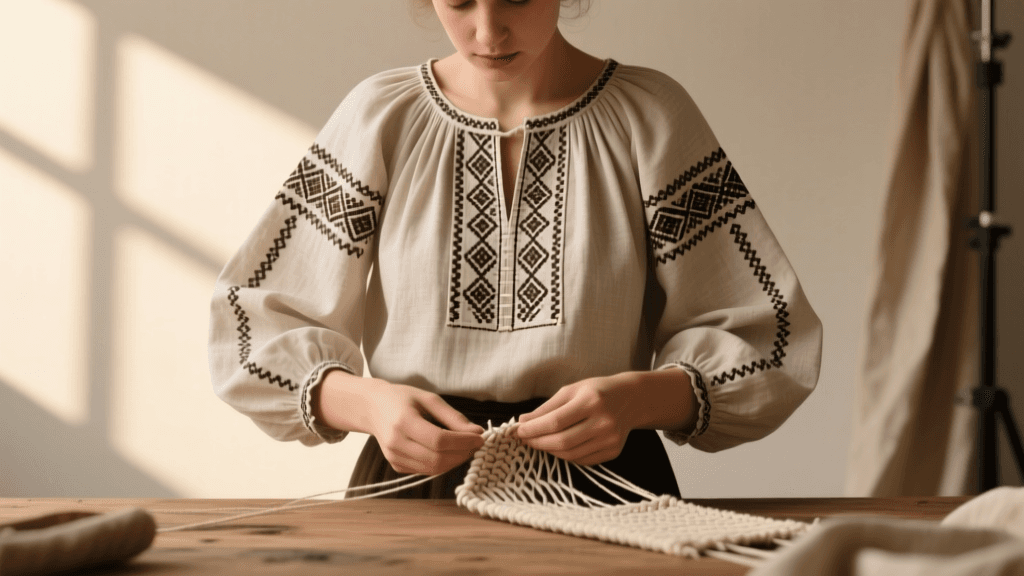
Because the bodice and sleeves are cut as wide rectangles to maximize fabric usage and allow for airflow, the excess fabric must be gathered to fit the neckline and cuffs. This is achieved through Creți, a traditional form of honeycomb smocking that predates modern elastic. In 2026, as the industry moves away from petroleum-based elastics, this historical smocking technique is experiencing a massive revival among bespoke tailors.
To execute the Creți technique, the artisan first marks a precise grid on the wrong side of the linen. Using a strong, waxed linen thread, a series of parallel running stitches are sewn horizontally across the top edge of the bodice panels and sleeves. Once the grid is stitched, the threads are pulled simultaneously, creating uniform, deep pleats. These pleats are then secured to a narrow woven band (the brezărău) using a secondary locking stitch that creates a distinct honeycomb or diamond pattern on the right side of the fabric. This method provides incredible elasticity and recovery without the use of rubber or synthetic spandex, ensuring the garment remains entirely biodegradable at the end of its lifecycle.
Sourcing Authentic Materials in 2026
The success of a zero-waste historical garment relies heavily on the stability of the fabric. Modern commercial linens often feature a high degree of drape and bias stretch, which can distort rectangular patterns. For authentic Ie construction, you must source "evenweave" linen with a high thread count and a crisp hand. According to conservation standards maintained by institutions like the Metropolitan Museum of Art's Costume Institute, historical Eastern European blouses were constructed from tightly woven, unbleached or naturally dyed flax fibers that provided structural rigidity.
For your 2026 projects, look for Eastern European heritage mills that have revived traditional flax retting processes. A 28-count or 32-count evenweave linen (weighing approximately 180-200 GSM) is ideal. The high thread count not only provides the necessary stability for flat-felled seams but also acts as a built-in grid for the cross-stitch embroidery that adorns the Altiță and cuffs.
Step-by-Step Assembly Guide: The Flat-Felled Seam
To finish the interior of the blouse without modern sergers or synthetic binding, traditional makers utilized the flat-felled seam. This technique encloses all raw edges, preventing fraying and ensuring the garment can withstand decades of rigorous wear and harsh lye washing. Follow these steps for historical accuracy:
- Offset the Seam: Place the wrong sides of your rectangular panels together, but offset the top layer by exactly 6 millimeters.
- First Pass: Sew a straight stitch along the edge, catching both layers.
- Trim and Fold: Trim the shorter seam allowance down to 3 millimeters. Fold the longer allowance over the trimmed edge, enclosing the raw edge completely.
- Press and Topstitch: Press the folded seam flat against the bodice and topstitch it down using a heavy linen thread. This creates a raised, decorative ridge on the outside of the garment that is a hallmark of authentic Carpathian construction.
Conclusion
The traditional Romanian Ie is a testament to the ingenuity of historical makers who viewed textile waste as an impossibility. By embracing rectangular cutting, the structural brilliance of the Altiță gusset, and the elastic-free Creți smocking technique, modern sewists can create garments that are deeply rooted in European folk history while perfectly aligned with the zero-waste imperatives of 2026. Whether you are drafting your first Carpathian blouse or refining your heritage embroidery skills, these ancient patterns offer a sustainable, beautiful path forward for the future of fashion.