2026 Guide: Constructing a 15th-Century Burgundian Houppelande
Introduction to the Burgundian Silhouette
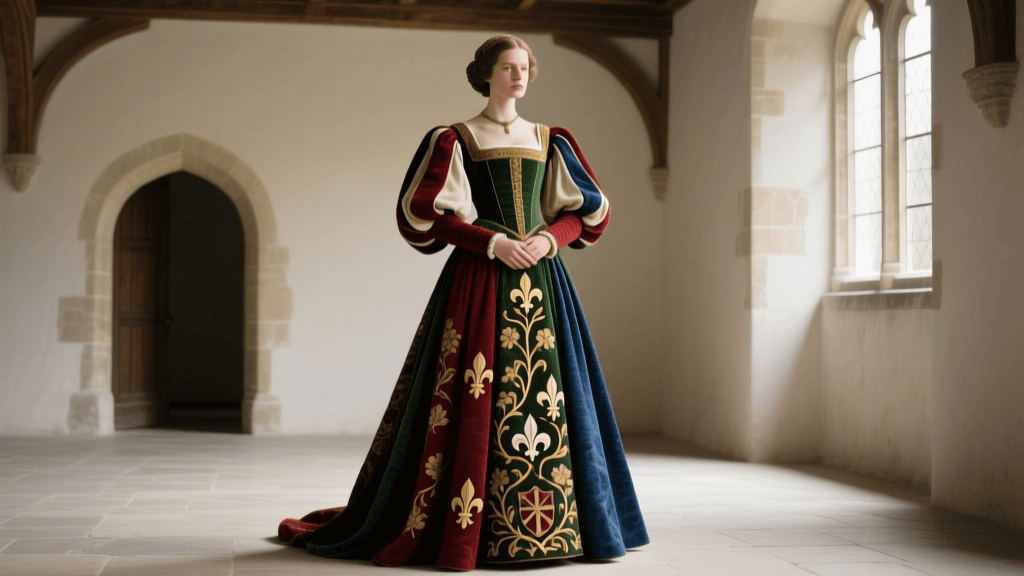
The late 14th and 15th centuries marked a pinnacle of sartorial extravagance in European courtly and regional dress, with the Burgundian court under the Valois dukes setting the ultimate standard for luxury. At the heart of this fashion revolution was the houppelande, a voluminous, sweeping outer garment that served as the ultimate status symbol for both men and women. Unlike the closely fitted cotehardies of the previous century, the houppelande relied on massive amounts of expensive fabric, deep pleating, and dramatic sleeves to project wealth and power. For modern historical costumers and reenactors in 2026, achieving an authentic Burgundian silhouette requires moving beyond theatrical approximations and embracing meticulous, research-driven construction techniques. This comprehensive guide will walk you through the anatomy, textile sourcing, pattern drafting, and advanced sewing methods required to build a museum-quality 15th-century houppelande today.
The Anatomy of the Garment
To understand the houppelande, one must first understand its structural extremes. The garment is characterized by a high, stiffened standing collar that frames the face, a deeply pleated bodice that gathers into a waistband or yoke, and a massively flared skirt that often pooled on the floor. The most iconic feature, however, is the sleeve. Depending on the specific decade between 1380 and 1450, sleeves ranged from the "poké" style (tight at the shoulder with a massive, bag-like drop) to the "bombard" style (a wide, trailing trumpet shape that swept the ground). According to the Medieval and Renaissance collections at the Victoria and Albert Museum, these garments were heavily lined, often with contrasting silks or fur, adding immense weight and structural drape to the final piece.
Sourcing Period-Accurate Textiles in 2026
As we navigate the historical costuming landscape in 2026, the community has seen a definitive shift away from synthetic brocades and polyester velvets. Modern reenactment standards heavily favor botanically dyed, naturally woven fibers that mimic the drape and light-refraction of medieval textiles. Sourcing the correct weight and weave is critical; a houppelande made from lightweight modern wool will collapse and look costumey, whereas heavyweight historical broadcloth will hold the deep, tubular pleats required for the silhouette.
| Material | Weave / Type | Weight (oz/yd) | Best Application | 2026 Est. Cost/Yard |
|---|---|---|---|---|
| Wool Broadcloth | Heavily Milled Twill | 20 - 24 oz | Primary Outer Shell | $45 - $65 |
| Silk Damask | Jacquard Weave | 12 - 16 oz | Collar & Cuff Linings | $85 - $120 |
| Heavy Linen | Plain Weave | 7 - 9 oz | Structural Interlining | $18 - $25 |
| Wool Fleece | Sheared Pile | 25+ oz | Winter Collar Trim | $50 - $75 |
When selecting your primary outer fabric, look for "melton" or heavily fulled wool broadcloth. In 2026, several specialized heritage mills in the UK and Italy have begun producing short-run, historically milled wools specifically for the reenactment market. These fabrics are woven with singles yarns and then heavily wet-finished to obscure the weave, creating a dense, weather-resistant cloth that drapes like liquid lead. For linings, avoid modern acetate satins; instead, use a medium-weight silk twill or a high-thread-count linen, which will allow the garment to slide over your underlying kirtle without creating static cling.
Pattern Drafting: The Circle and the Gore
Drafting a houppelande is an exercise in geometric excess rather than modern fitted tailoring. The base of the skirt is typically constructed from massive half-circles or full-circles of fabric, augmented by large triangular gores to achieve the necessary hem circumference. For a floor-length women's houppelande, expect to use between 8 and 12 yards of 60-inch-wide wool. The shoulder line is usually cut straight, with the massive volume of the fabric gathered down to fit the wearer's frame. Do not attempt to use modern princess seams or darts; the shaping of a medieval houppelande comes entirely from the tension of the belt and the density of the pleats.
Mastering Cartridge Pleats
The defining feature of the 15th-century houppelande is the deep, rounded tubular pleating (often referred to today as cartridge pleating or organ pleating) found at the waist and sometimes at the shoulder yoke. To achieve this, you must first finish the raw edge of your skirt panels. Then, mark a grid of dots along the wrong side of the fabric, spacing them about half an inch apart vertically and horizontally. Using a heavy, waxed linen thread, sew parallel rows of running stitches directly through the dots. When you pull the threads, the fabric will collapse into perfect, uniform tubes. These tubes are then individually whipped by hand to a sturdy, interfaced waistband. This process is incredibly time-consuming—a single waistline can take 30 to 40 hours of hand-stitching—but it is the only way to achieve the authentic, gravity-defying volume seen in Medieval European manuscript illuminations.
Constructing the Bombard Sleeve
The bombard sleeve is a marvel of medieval engineering. It is cut as a massive, sweeping curve that attaches to a relatively standard armscye but flares out dramatically past the elbow. The inner curve of the sleeve is often left open from the elbow to the wrist, allowing the wearer to slip their arms out of the heavy wool and let the sleeves hang decoratively from the shoulders. To prevent the edges of the sleeve from fraying and to add visual interest, the hem is often "dagged." While modern costumers might use pinking shears, an authentic 2026 approach involves using a sharp chisel and mallet to cut intricate scallops, castles, or leaf shapes into the fulled wool. Because properly milled broadcloth does not fray, these dagged edges will remain crisp and clean for decades.
The Stand Collar: Structure Without Synthetics
The high collar of the Burgundian houppelande must stand rigidly against the neck and jawline, often reaching up to the ears. Modern costumers frequently make the mistake of using plastic boning or heavy buckram to achieve this. Historically, this structure was achieved through heavy padding and quilting. To replicate this, cut your collar pieces from your outer wool and your lining silk. Sandwich a thick layer of raw wool batting or multiple layers of heavy linen between them. Quilt the collar in tight horizontal or diagonal channels. This dense padding provides the necessary rigidity to hold the collar upright while remaining historically accurate and remarkably comfortable against the skin.
Natural Dyes and 2026 Reenactment Standards
In 2026, the upper echelons of the historical reenactment community heavily prioritize botanically dyed textiles. The Burgundian court was famous for its deep, saturated colors, which were incredibly expensive to produce. If you are commissioning custom-dyed fabric for your houppelande, request madder root for rich brick-reds and crimsons, woad or indigo for deep blues, and weld or buckthorn for vibrant yellows. Black, the ultimate flex of Burgundian wealth, was achieved through complex overdyeing of woad and madder, or by using iron-tannin reactions with oak galls. A naturally dyed wool broadcloth will possess a depth of color and a subtle, living variation that synthetic acid dyes simply cannot replicate under natural sunlight.
Essential Accessories
No houppelande is complete without the proper accessories to anchor the silhouette. For women, the garment is typically belted high, just under the bust, using a wide leather belt with an ornate cast pewter or gilt-bronze buckle. The belt should be long enough to hang down past the hips, terminating in a decorative metal chape. For headwear, the houppelande is almost always paired with a towering hennin (the iconic steeple hat with a flowing veil) or a padded bourrelet roll. Men of the era would pair their shorter, knee-length houppelandes with a complex draped chaperon hat and pointed leather poulaine shoes. By paying equal attention to these extremities, you ensure that your 15th-century Burgundian ensemble is cohesive, historically grounded, and visually breathtaking.