Authentic Chiton Draping & Fabric Guide For 2026 Reenactors
The Enduring Legacy of the Chiton in 2026
As historical reenactment, Hellenic polytheism, and classical living history communities continue to expand in 2026, the demand for historically accurate ancient Mediterranean garments has never been higher. The chiton, a quintessential garment of ancient Greece and Rome, represents far more than a simple piece of draped cloth; it is a masterclass in proportion, geometry, and textile manipulation. Unlike modern tailored clothing, which relies on complex pattern cutting and sewn seams, the chiton achieves its elegant silhouette entirely through the strategic folding, pinning, and belting of rectangular woven fabrics. For modern enthusiasts participating in the 2026 reenactment season, understanding the nuances of these ancient garments is essential for achieving an authentic and respectful historical silhouette. This comprehensive guide will walk you through the structural differences between the primary styles of the chiton, how to source appropriate textiles in today's market, and the precise mathematics required to drape them flawlessly.
Decoding the Silhouettes: Doric vs. Ionic
When studying classical dress, it is vital to distinguish between the two primary variations of the garment: the Doric chiton (often referred to as the peplos when worn by women) and the Ionic chiton. According to the World History Encyclopedia, these styles reflect not only regional preferences but also the evolution of textile production and cultural exchange across the Mediterranean basin.
The Doric Chiton and Peplos
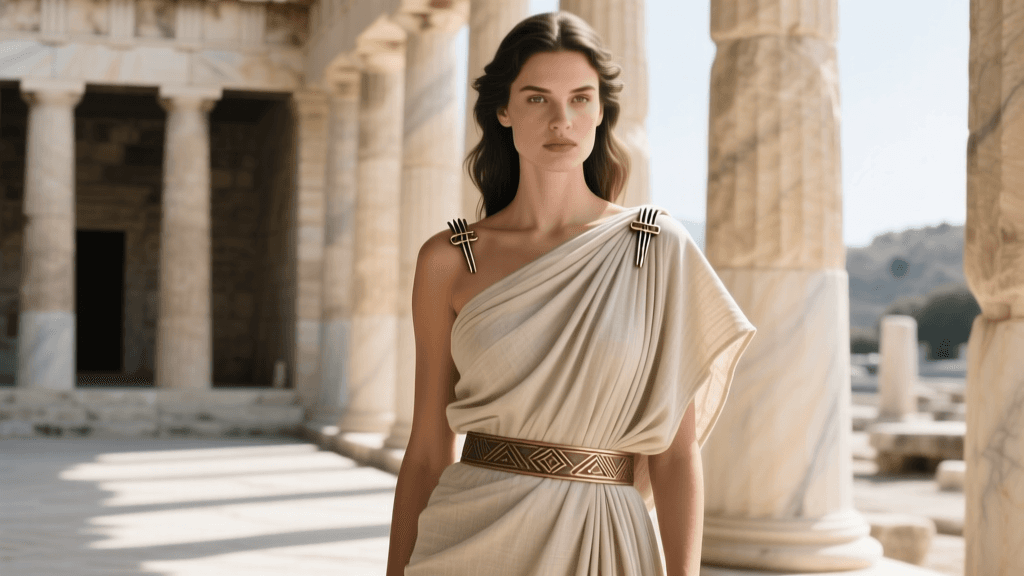
The Doric style is the older, heavier, and more structured of the two. Traditionally woven from wool, the Doric peplos features a distinctive overfold known as the apoptygma. This overfold is created by folding the top edge of the fabric down before draping it over the body, resulting in a layered, sculptural look that provides both warmth and a striking visual weight. The garment is typically fastened at the shoulders with heavy, ornate pins and is often left open along the right side of the body, allowing for freedom of movement and a glimpse of the wearer's form, which was a celebrated aesthetic in classical sculpture.
The Ionic Chiton
In contrast, the Ionic chiton emerged later and is characterized by its lighter, more fluid drape. Woven from fine linen or lightweight silk, the Ionic style lacks the heavy apoptygma overfold. Instead, it utilizes a much wider piece of fabric that is gathered into numerous small pleats and fastened at intervals along the arms, creating the illusion of sleeves. This style became immensely popular across the Hellenistic world and was later adopted and adapted by Roman citizens as the chiton poderes or worn as an undergarment beneath the toga and stola. The Ionic chiton requires a more delicate touch and a higher yardage of fabric to achieve its signature cascading folds.
Sourcing Historical Textiles in the Modern Market
Achieving an authentic drape in 2026 requires abandoning modern, synthetic-blend fabrics in favor of natural, historically appropriate fibers. The weight, weave, and selvedge of your chosen textile will dictate how well the garment holds its pleats and responds to gravity.
Linen for the Ionic Style
For the Ionic chiton, medium-to-lightweight linen is mandatory. In 2026, the European linen market has seen a surge in sustainably grown, long-staple flax from Belgium and France, which perfectly mimics the fine, semi-translucent weaves of antiquity. Look for linen in the 4.5 to 6.0 ounces per square yard range. Avoid heavily stiffened or chemically treated modern linens; you want a fabric with a soft, fluid hand that will collapse into tight, natural pleats. Expect to pay between $35 and $55 per yard for high-quality, garment-dyed historical linen from specialized heritage mills.
Wool for the Doric Style
The Doric peplos demands a fabric with structural integrity. A lightweight to medium-weight wool tabby or twill weave is ideal. The natural elasticity and 'grip' of wool fibers allow the heavy overfold to stay in place without excessive slipping. In 2026, heritage breed wools, such as those sourced from Shetland or Gotland sheep, offer the slightly textured, uneven weave that perfectly replicates ancient hand-loomed textiles. Prices for authentic historical wool currently range from $45 to $80 per yard.
The Mathematics of the Drape: Measurement Chart
Unlike modern sewing patterns, the chiton is not cut to fit the body; the body is wrapped in the cloth. However, calculating the correct dimensions of your fabric rectangle is crucial. The following table provides the foundational measurements for an average adult female figure (approx. 5'6' tall). Adjust the length based on your specific height and desired kolpos (blousing) depth.
| Garment Type | Recommended Fabric | Width of Rectangle | Height of Rectangle | Overfold (Apoptygma) |
|---|---|---|---|---|
| Doric Peplos | Medium Wool | Height x 1.2 | Height + 18 inches | 12 to 15 inches |
| Ionic Chiton | Lightweight Linen | Height x 2.5 to 3.0 | Height + 12 inches | None |
| Roman Tunic Base | Linen/Wool Blend | Height x 1.8 | Height + 10 inches | None |
Step-by-Step Draping Instructions
Mastering the drape requires patience and a full-length mirror. Below is the definitive method for draping the iconic Doric peplos, a staple for any serious classical reenactor.
- Prepare the Overfold: Lay your wool rectangle flat. Fold the top edge down by 12 to 15 inches to create the apoptygma. This fold should face outward.
- Wrap the Body: Hold the top corners of the fabric behind your back, with the folded edge resting at the small of your back or slightly higher, depending on your torso length.
- Secure the First Shoulder: Bring the two top corners (the front corner and the back corner) over your left shoulder. Pin them together using a heavy bronze or iron penannular fibula. Ensure the pin catches both layers securely.
- Adjust the Side Seam: Wrap the remaining fabric around your right side. The right side of the peplos is traditionally left open, but you can loosely stitch the bottom half or use small weights sewn into the hem to keep it from flying open in the wind.
- Secure the Second Shoulder: Bring the remaining top corners over your right shoulder and pin them together, matching the tension of the left side so the neckline sits evenly.
- Apply the Zone (Belt): Tie a woven wool or leather cord around your natural waist, over the apoptygma.
- Create the Kolpos: Reach beneath the belt and pull up a loop of fabric to create the kolpos (blousing). The overfold should completely hide the belt, and the bloused fabric should hang gracefully over it, adjusting the hemline to just above the ankles.
Essential Accessories: Fibulae, Zonai, and Himations
No chiton is complete without its supporting hardware and outer layers. The Metropolitan Museum of Art Collection showcases thousands of surviving bronze and silver fibulae that highlight the importance of these functional brooches in classical dress. In 2026, artisan metalworkers specializing in historical reproductions offer incredibly accurate omega-shaped and disc fibulae cast in bronze. Avoid modern steel safety pins; they lack the tensile strength to hold heavy wool and will ruin the historical illusion. A proper bronze fibula uses a coiled spring and a catchplate that securely locks the pin in place.
Belts, or zonai, were often woven from brightly dyed wool or crafted from tooled leather. For outerwear, the himation (a large rectangular cloak) was draped over the chiton for warmth and modesty. Draping a himation requires roughly 4 to 5 yards of heavy wool fabric, thrown over the left shoulder, wrapped around the back, and draped over the left arm, leaving the right arm free.
Maintenance and Care for Natural Fibers
Caring for un-tailored, draped garments requires a different approach than modern laundry routines. Wool peplos garments should rarely be washed; instead, air them out in the sunlight and use a soft bristle brush to remove dust and dirt. When washing is absolutely necessary, hand-wash in cool water with a pH-neutral wool detergent and lay flat to dry to prevent felting and shrinkage. Linen Ionic chitons can be machine washed on a gentle, cold cycle, but they must be removed while slightly damp and ironed on a high-heat setting to restore the crisp, structured pleats that define the garment's elegant, columnar silhouette. By investing in high-quality 2026 heritage textiles and mastering these ancient draping techniques, you ensure that the legacy of classical European folk dress continues to be worn with accuracy, dignity, and profound historical appreciation.