Romanian Ie Blouse Revival: 2026 Contemporary Styling Guide
The Renaissance of the Romanian Ie in 2026
The intersection of heritage and modernity has never been more vibrant than it is in 2026. Across the European folk dress revival movement, consumers and designers alike are moving past mere costume replication into sophisticated, everyday integration. At the absolute forefront of this cultural reclamation is the Romanian Ie (the traditional peasant blouse). Once relegated to museum archives and rural festivals, the Ie has been radically reimagined for the contemporary wardrobe, standing as a cornerstone of the 2026 sustainable, slow-fashion economy.
Today’s revival is not about wearing a historical replica; it is about translating centuries-old artisanal techniques into modern silhouettes. According to the National Museum of the Romanian Peasant, the preservation of these textile traditions relies heavily on their adaptation for daily wear. By integrating the Ie into contemporary streetwear, corporate attire, and evening wear, modern fashion enthusiasts are actively participating in the safeguarding of intangible cultural heritage.
Decoding the Anatomy of the Ie
To style the Ie effectively, one must first understand its architectural brilliance. The traditional blouse is constructed from rectangular pieces of hand-woven fabric, minimizing textile waste—a zero-waste pattern-making technique that 2026 eco-conscious designers heavily praise. The garment is defined by three primary embroidered zones:
- Altiniță: The decorative band on the upper shoulder and sleeve. In 2026 minimalist styling, the altiniță is often scaled down to a single, striking geometric row.
- Increț: The intricate gathering at the neckline, which creates the blouse's signature volume and drape.
- Râuri: The vertical motifs flowing down the sleeves. Translating to "rivers," these guide the eye and elongate the arm, making them highly flattering for modern layering.
Regional variations dictate the motif and color palette. Blouses from Vrancea feature bold, contrasting geometric patterns in deep blacks and reds, while those from Argeș showcase delicate, tonal floral embroidery. Understanding these regional distinctions allows the modern wearer to curate a highly specific, story-driven wardrobe.
2026 Contemporary Styling Masterclass
Integrating a voluminous, heavily embroidered heritage piece into a modern 2026 wardrobe requires a balance of proportions. The key is to let the Ie serve as the statement piece while anchoring it with sharp, contemporary tailoring.
The Corporate Office: Structured Minimalism
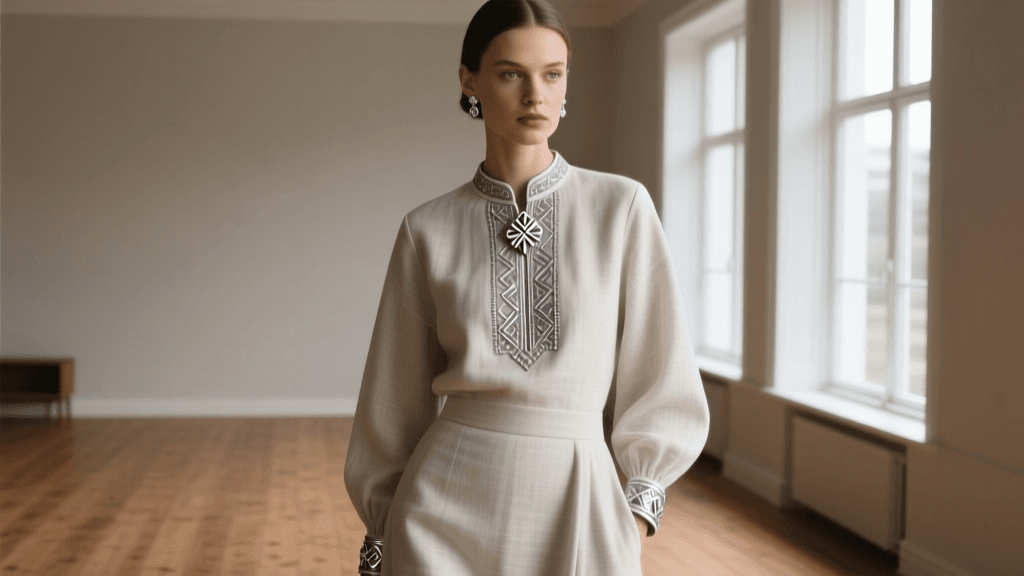
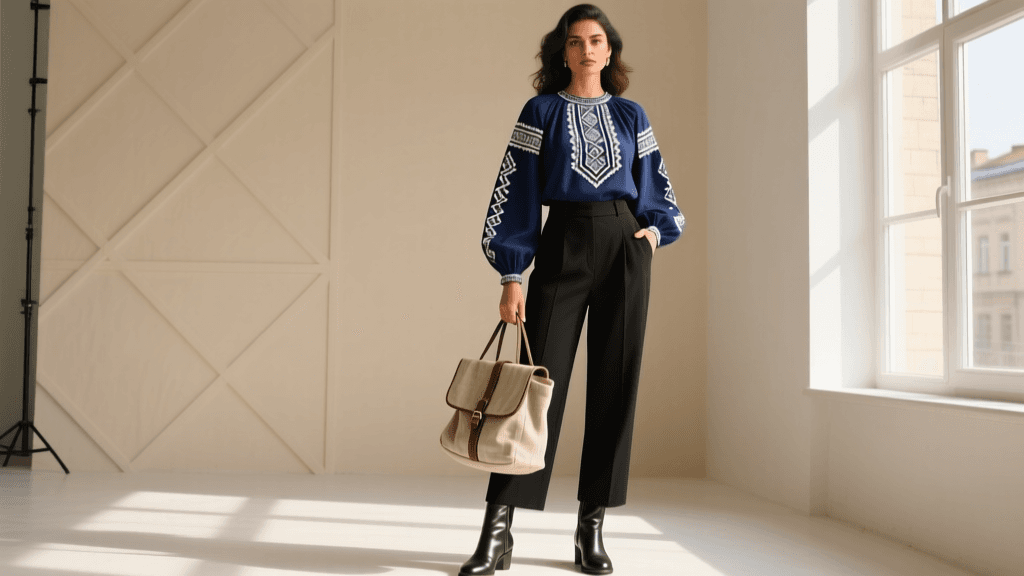
For the modern workplace, opt for a monochrome Ie crafted from lightweight organic hemp or high-count cotton. A black-on-black or navy-on-navy embroidery pattern offers a subtle, sophisticated texture that complies with strict corporate dress codes while showcasing artisanal craftsmanship.
Actionable Pairing: Tuck the blouse into high-waisted, wide-leg wool trousers. Look for trousers with a 12-inch front rise and a 32-inch inseam to create a continuous, elongated vertical line. The leg opening should be around 14 inches to drape cleanly over a pointed-toe leather boot. Cinch the waist with a sleek, 1.5-inch leather obi belt to manage the blouse's natural volume and create a sharp, professional silhouette.
Evening and Gala: Ethereal Organza
The 2026 evening wear scene has embraced the romanticism of the Ie through the use of silk-organza and metallic thread embroidery. Artisans in Sibiu and Vălenii de Munte are currently weaving blouses using fine silk blends that catch the light beautifully, elevating the folk garment to black-tie status.
Actionable Pairing: Pair a sheer, silk-blend Ie featuring gold or silver râuri with a structured, high-waisted midi skirt. A 28-inch length cotton-sateen or velvet A-line skirt provides the necessary opacity and weight to ground the ethereal top. Finish the look with minimalist metallic drop earrings and a sleek, low chignon to keep the focus entirely on the neckline and shoulder embroidery.
Weekend Streetwear: Raw Heritage
Streetwear in 2026 heavily favors tactile, raw materials and oversized silhouettes. An unbleached, raw-hemp Ie with a drop-shoulder fit perfectly bridges the gap between traditional European folk dress and contemporary urban aesthetics.
Actionable Pairing: Wear the oversized blouse untucked over vintage, heavy-weight selvedge denim. Cuff the denim to hit just above the ankle, and ground the outfit with chunky, lug-sole leather boots featuring a 2-inch platform. This juxtaposition of delicate, centuries-old hand-embroidery against rugged, industrial hardware is a hallmark of the 2026 neo-folk aesthetic.
Sourcing Authentic Artisanal Pieces
As the demand for the Ie has surged, so has the market for mass-produced, fast-fashion imitations. Supporting the true revival means investing in authentic cooperatives. Organizations recognized by UNESCO's Intangible Cultural Heritage frameworks emphasize that purchasing directly from artisanal guilds ensures the survival of traditional techniques and provides fair wages to rural female artisans.
When sourcing an authentic piece in 2026, expect to invest between €350 and €850 for a fully hand-embroidered blouse. This price reflects the 40 to 120 hours of meticulous hand-stitching required per garment. Look for natural, historically accurate dyes: drobocină (weld) for vibrant yellows, madder root for deep reds, and onion skins for rich oranges. Avoid pieces that use synthetic, neon-colored threads, as these are immediate indicators of machine-made knockoffs.
Material & Styling Comparison Chart
To help you navigate the 2026 market, refer to the table below comparing the three primary variations of the contemporary Ie.
| Style Variant | Primary Material | Embroidery Density | 2026 Price Range (EUR) | Best Use Case |
|---|---|---|---|---|
| Contemporary Minimalist | Organic Hemp / Fine Cotton | Low (Tonal, localized to cuffs/neck) | €250 - €400 | Corporate Office, Daily Layering |
| Traditional Museum Replica | Hand-woven Linen | High (Full sleeve and bodice coverage) | €600 - €950 | Cultural Festivals, Archival Collecting |
| Avant-Garde Evening | Silk Organza / Chiffon | Medium (Metallic threads, strategic placement) | €450 - €800 | Gala Events, High-Fashion Streetwear |
Modern Care for Heritage Textiles
Proper maintenance is critical to preserving the structural integrity and vibrancy of natural dyes. The Europeana Cultural Heritage Archive provides extensive documentation on the fragility of early 20th-century natural dyes, and the same principles apply to modern artisanal recreations.
Never machine-wash a hand-embroidered Ie. Instead, submerge the garment in a basin of cool water (maximum 30°C) mixed with a pH-neutral, enzyme-free detergent designed for delicate textiles. Gently agitate the water with your hands, avoiding any twisting or wringing of the fabric, which can distort the increț (neckline gathering). Rinse thoroughly in cool water and roll the blouse in a clean, dry towel to absorb excess moisture. Always dry the garment flat, away from direct UV sunlight, to prevent the natural plant dyes from fading. When ironing, turn the blouse inside out and use a low-heat steam setting, placing a cotton press cloth over the embroidery to protect the raised stitches from being crushed.
Conclusion
The 2026 revival of the Romanian Ie proves that European folk dress is not a static relic of the past, but a dynamic, living textile tradition. By understanding its anatomy, styling it with modern intentionality, and sourcing it ethically, you do more than elevate your personal wardrobe—you become an active custodian of cultural history.