2026 Guide to 14th-Century Cotehardie Natural Dye Sourcing
The Renaissance of Authenticity in 2026 Medieval Reenactment
As we navigate the 2026 historical reenactment and heritage festival circuit, the demand for uncompromising authenticity in European folk dress has never been higher. The days of relying on synthetic blends and chemical dyes to mimic medieval garments are firmly in the past. Today's artisans, historians, and dedicated reenactors are turning back to the earth, utilizing heritage breed wools, handwoven linens, and botanically derived pigments to recreate the past. At the forefront of this movement is the 14th-century cotehardie, a quintessential medieval garment that requires both precise tailoring and historically accurate coloration.
This comprehensive 2026 guide will walk you through the intricate process of sourcing, dyeing, and constructing a historically accurate cotehardie. Whether you are preparing for the strict authenticity standards of the upcoming 2026 European heritage festivals or simply wish to master traditional textile arts, understanding the intersection of medieval history and modern sustainable sourcing is essential.
Understanding the 14th-Century Cotehardie
The cotehardie emerged in the mid-14th century as a revolutionary shift in European fashion. Moving away from the loose, flowing tunics of the early medieval period, the cotehardie introduced a tailored, fitted silhouette that emphasized the natural form. According to the extensive archives at Medievalists.net, this garment was characterized by its tight-fitting torso, buttoned front or side closures, and snug sleeves that often extended past the wrist or featured decorative tippets (streamers) hanging from the elbows.
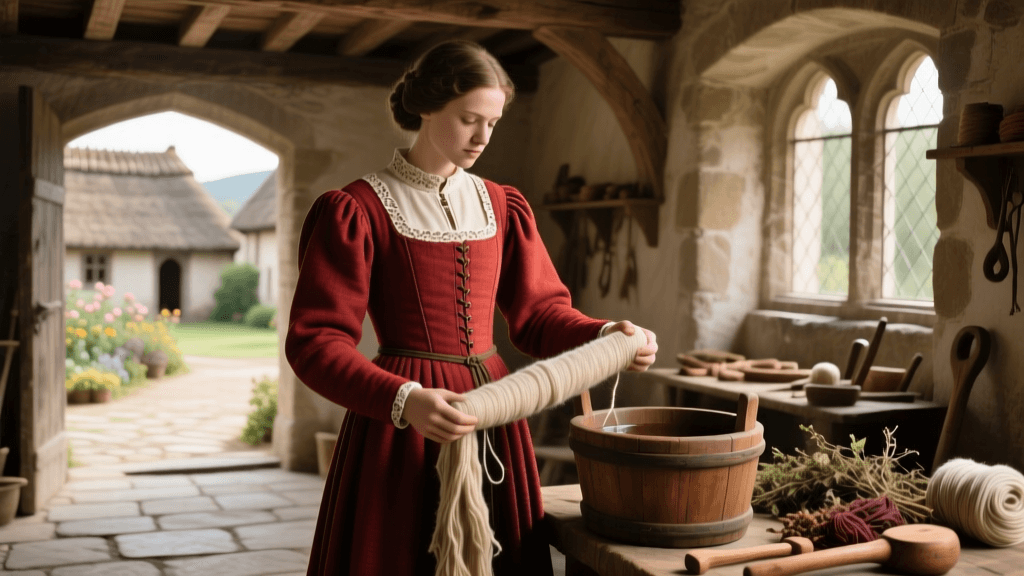
For men, the cotehardie typically ended at the mid-thigh or hip, worn over braies and chausses (hose). For women, it was a full-length, form-fitting gown with a flared skirt achieved through the insertion of triangular gores. The fabric choice was paramount: while the peasantry utilized undyed or woad-dyed coarse wools, the nobility favored fine, heavily fulled wools dyed in vibrant reds, deep greens, and rich yellows. To achieve these colors authentically in 2026, we must look to the natural dye pots of the medieval era.
Sourcing Heritage Wool and Linen in the 2026 Market
The foundation of any authentic medieval garment is the textile. In 2026, the global supply chain for heritage textiles has matured, allowing artisans to access historically accurate fabrics more easily than ever before. Modern commercial wool is often too fine, too white, and heavily processed, lacking the lanolin-rich, slightly irregular texture of medieval broadcloth.
When sourcing wool for a winter or autumn cotehardie, look for heritage breeds such as Gotland, Shetland, or Cheviot. These breeds retain the staple length and crimp that mimic medieval spinning techniques. For the linen undergarments (the chemise or smock worn beneath the cotehardie), seek out long-staple flax linen woven in Eastern Europe or Normandy, where traditional retting and scutching methods are still practiced. Expect to pay a premium in 2026; high-quality, historically accurate handwoven linen currently averages between €45 and €60 per meter, while heritage wool broadcloth ranges from €55 to €80 per meter depending on the weave and mill.
The Natural Dye Palette: Madder, Weld, and Woad
The medieval dyer's palette was governed by sumptuary laws, geographic availability, and the complex chemistry of mordants. To recreate the vibrant hues of a high-status 14th-century cotehardie, three primary botanical sources dominate the artisan's workshop:
- Madder Root (Rubia tinctorum): The undisputed king of medieval reds. Madder requires a meticulous extraction process and an alum mordant to achieve the deep, blood-red hues favored by the 14th-century nobility.
- Weld (Reseda luteola): The primary source of brilliant, lightfast yellows in Europe before the introduction of quercitron. Weld is highly sensitive to heat and must be dyed at lower temperatures to preserve its vibrant color.
- Woad (Isatis tinctoria): The European indigo. Woad requires a complex alkaline fermentation vat to produce its signature blues, ranging from pale sky to deep navy.
For broader historical context on how these colors dictated medieval European social silhouettes and class distinctions, the Encyclopedia Britannica's section on Medieval dress remains an essential, authoritative reference for understanding the sociological impact of these dyes.
2026 Supplier Comparison for Natural Dyes and Heritage Textiles
Sourcing high-quality, organic botanical dyes is critical for achieving historical accuracy. The table below outlines top-tier suppliers available to artisans in 2026, comparing their specialties and current pricing structures.
| Supplier Name | Specialty | 2026 Price Range (per 100g) | Origin & Certifications |
|---|---|---|---|
| Botanical Colors | Madder, Weld, Tannins | $12.00 - $28.00 | Global sourcing, GOTS certified organic |
| Aurora Silk | Heritage Wools, Raw Silk | $18.00 - $35.00 | US-based heritage breeds, undyed |
| The Woolgatherers | Woad, Mordants (Alum) | $15.00 - $22.00 | UK-based, traditional vat recipes |
| Normandy Flax Mill | Handwoven Linen | €48.00 / meter | France, dew-retted, shuttle-woven |
Step-by-Step Dyeing Process for the Modern Artisan
Dyeing a cotehardie's worth of wool (typically 3 to 4 meters, weighing roughly 1.5 kilograms) is a significant undertaking. Modern artisans rely on resources like Botanical Colors' natural dyeing guides to master the chemistry of extraction and colorfastness. Here is the standard protocol for achieving a rich madder red in 2026.
Mordanting the Fibers
Natural dyes will not bind permanently to protein fibers like wool without a mordant. For madder, a combination of aluminum potassium sulfate (alum) and cream of tartar is the historically accurate and chemically reliable choice. Scour your wool thoroughly using a pH-neutral soap and hot water to remove any spinning oils or dirt. Dissolve 15% alum and 6% cream of tartar (by weight of the dry fiber) in hot water. Simmer the wool in this mordant bath at 85°C (185°F) for one hour, then let it cool completely in the bath overnight. This slow cooling ensures the mordant penetrates the core of the wool fiber.
The Madder Bath Technique
Extracting the red pigment from madder root requires patience. Use 100% madder root extract for a more concentrated, predictable dye bath, or 75% dried madder roots for a more traditional, slightly mottled finish. Heat the dye bath to exactly 70°C (158°F). Crucial Note: If the temperature exceeds 75°C, the brown pigments in the madder root will release, muddying your vibrant red into a dull brick or orange-brown. Maintain the 70°C temperature for two hours, gently agitating the wool. Rinse in lukewarm water until the runoff is clear, and hang to dry out of direct sunlight.
Tailoring and Finishing Your Cotehardie
Once your naturally dyed heritage wool is dry and rested, the tailoring begins. The 14th-century cotehardie relies on the drape and bias of the fabric rather than complex darts. Use a draped pattern-making technique, pinning the fabric directly onto a dress form or the wearer to achieve the signature tight fit through the torso and arms.
All seams should be finished by hand to maintain historical integrity. The running stitch, reinforced with a backstitch at stress points (like the armholes and waist), is standard. For the buttonholes, use a dense buttonhole stitch with heavily waxed linen thread. Buttons in the 14th century were often made of cloth (self-fabric buttons) or cast pewter. In 2026, several specialized historical hardware artisans offer museum-quality pewter button blanks that you can finish yourself, ensuring your cotehardie meets the strictest reenactment guild standards.
Furthermore, the insertion of gores into the skirt panels requires precise geometric cutting. A standard women's cotehardie utilizes four to eight gores, starting from the hip or waistline, to create a dramatic flare that pools elegantly at the floor. The edges of these gores must be flat-felled to prevent fraying and to provide a clean interior finish, a hallmark of high-quality medieval tailoring that modern fast-fashion entirely ignores.
Preservation and Care in 2026
Caring for naturally dyed, heritage wool garments requires a departure from modern laundry habits. Never machine wash a naturally dyed cotehardie. The agitation and modern enzymatic detergents will strip the botanical pigments and felt the wool irreparably. Instead, embrace the medieval practice of airing out the garment. Spot clean with a damp cloth and a mild, lanolin-based soap. If a full wash is necessary, submerge the garment in a bathtub filled with tepid water and a specialized wool wash, gently pressing the water through the fibers without wringing or twisting. Roll the garment in heavy towels to press out excess moisture, and lay it flat to dry.
By adhering to these historically grounded techniques and utilizing the best 2026 sustainable suppliers, your 14th-century cotehardie will not only look authentic but will possess the soul, texture, and longevity of true European folk dress. The revival of these ancient textile arts ensures that the vibrant history of medieval Europe continues to be worn, understood, and celebrated for generations to come.