Mastering Romanian Ie Blouse Altita Geometric Patterning 2026
claire fontaine·
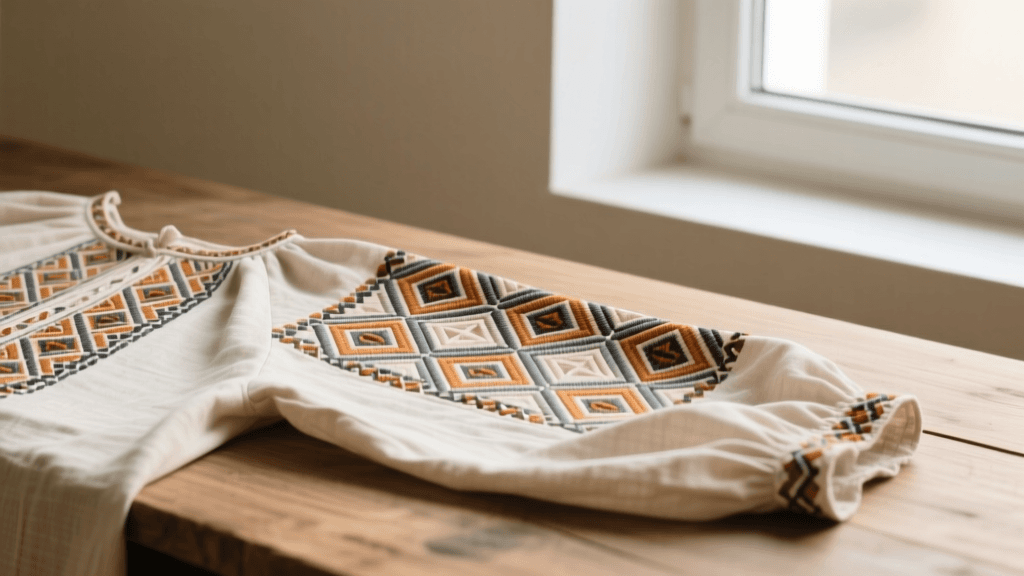
The Romanian ie (traditional blouse) stands as one of the most structurally complex and visually striking garments in the European folk dress canon. At the heart of its construction is the altiță, the densely embroidered geometric shoulder panel that dictates the drape, fit, and cultural narrative of the entire garment. As we navigate the textile landscape of 2026, the revival of these historical construction techniques has moved beyond mere costume replication into a sophisticated study of zero-waste geometric patterning, sustainable material sourcing, and mathematical smocking. This guide provides a comprehensive, actionable breakdown of the altiță sleeve construction, offering modern makers the precise measurements and techniques required to draft this masterpiece.
The Anatomy of the Altita: Geometry and Heritage
The altiță is not merely a decorative afterthought; it is the structural anchor of the ie sleeve. Historically, the geometry of the altiță was governed by the strict grid of the handwoven linen, known as pânză de casă. Every cross-stitch, drawn-thread work, and surface embroidery technique relied on the warp and weft intersections of the fabric. In late 2022, the cultural significance of this technique was globally solidified when the arts of the traditional blouse with embroidery on the shoulder were inscribed on the UNESCO Representative List of the Intangible Cultural Heritage of Humanity. Today, in 2026, this recognition has catalyzed a new generation of pattern drafters who are applying modern geometric modeling to these ancient grids, ensuring the structural integrity of the sleeve while honoring historical proportions.Sourcing 2026 Materials: Linen, Hemp, and Thread
The foundation of any authentic ie is the fabric. The geometric embroidery of the altiță requires an even-weave textile to maintain the mathematical precision of the patterns. In 2026, the most sought-after materials are heritage linen and hemp-linen blends produced by specialized Eastern European mills that have revived traditional retting and scutching processes.- Fabric Count: For a traditional altiță, a 16-count to 18-count even-weave linen is ideal. This provides a grid where each intersection is approximately 1.4mm to 1.6mm apart, allowing for dense, durable embroidery without puckering the base fabric.
- Thread Selection: While mid-20th-century makers often relied on commercially available mercerized cotton, the 2026 standard for high-end revival garments is hand-dyed, long-staple linen thread or high-twist silk. These fibers offer a natural luster and tensile strength that withstands the tension of the smocking process.
- Stabilizers: Modern makers in 2026 frequently utilize water-soluble, eco-friendly starch sprays to temporarily stiffen the linen grid during the complex drawn-thread phases of the altiță construction, replacing the harsh chemical stabilizers of the past decade.
Drafting the Geometric Grid: The Math of the Sleeve
The sleeve of the ie is constructed from a single, massive rectangle of fabric, embodying the zero-waste cutting techniques that defined historical European peasant dress. The structural complexity of this zero-waste approach is a subject of ongoing study, with institutions like the Victoria and Albert Museum textile archives highlighting how historical makers maximized every inch of handwoven cloth. The sleeve is divided into three distinct geometric zones: the altiță (shoulder panel), the încreț (smocked gathering), and the râuri (vertical flowing bands).Calculating the Încreț (Smocking) Ratio
The încreț is the transitional smocked section located immediately below the altiță. Its purpose is to reduce the wide circumference of the sleeve rectangle into a narrower dimension that fits the bicep, while creating a highly textured, three-dimensional geometric surface. Calculating the smocking ratio is critical for a proper fit. In 2026, digital pattern drafting tools allow makers to simulate the încreț compression, but the foundational math remains rooted in traditional ratios. A standard historical smocking ratio for the încreț is 3:1 or 4:1. This means that for every 1 centimeter of finished smocked width, you must draft 3 to 4 centimeters of flat fabric width.Table: Standard Regional Altita and Sleeve Proportions
| Region | Altita Depth (Shoulder to Încreț) | Încreț Depth | Râuri (Vertical Bands) | Smocking Ratio |
|---|---|---|---|---|
| Muscel | 18 - 22 cm | 4 - 6 cm | 3 to 5 bands | 3.5:1 |
| Vâlcea | 15 - 18 cm | 3 - 5 cm | 2 to 4 bands | 3:1 |
| Neamț | 20 - 25 cm | 5 - 8 cm | 4 to 6 bands | 4:1 |
| Banat | 12 - 15 cm | 2 - 4 cm | Dense all-over | 2.5:1 |
Step-by-Step Sleeve Construction and Smocking
To construct the sleeve in a modern studio setting while maintaining historical accuracy, follow this precise sequence. The integration of 2026 sewing technology, such as laser-cut smocking templates and precision tension gauges, can significantly reduce the margin of error in the încreț phase.- Grid Mapping: Before cutting, use a water-soluble fabric marker to map the exact grid of the altiță. The standard altiță rectangle measures approximately 20 cm in depth and spans the full width of the fabric (usually 60 cm to 80 cm on traditional loom-width linen).
- Embroidering the Altita: Execute the geometric cross-stitch and drawn-thread patterns. The motifs are strictly bounded by the grid, often featuring solar symbols, hooks, and stylized flora. Ensure your thread tension is uniform; uneven tension will distort the geometric alignment of the subsequent smocking.
- Drafting the Încreț Channels: Below the altiță, mark horizontal channels for the smocking threads. In traditional construction, these channels are created using a running stitch of strong, waxed linen thread. In 2026, many makers use a specialized smocking pleater machine to ensure perfectly uniform micro-pleats across the 60 cm width.
- Pulling and Setting the Smocking: Pull the gathering threads to achieve the calculated ratio (e.g., reducing 60 cm to 15 cm for a 4:1 ratio). Secure the threads around tension pins. Use a steam iron with a specialized Teflon shoe to set the pleats without crushing the three-dimensional geometry of the încreț.
- Executing the Râuri: The vertical bands (râuri) flow from the bottom of the încreț down to the cuff. These must align perfectly with the geometric nodes established in the altiță above. Any misalignment in the vertical axis will break the visual continuity of the garment.
The Cheiță: Geometric Joining Seams
Once the sleeves and bodice panels are fully embroidered and smocked, they are joined using the cheiță. The cheiță is a highly decorative, lace-like joining stitch that serves a dual purpose: it connects the structural panels while allowing the garment to stretch and move with the wearer. Historically, the cheiță was worked entirely by hand using a needle-weaving technique that mimicked the structure of the woven fabric itself. In 2026, while hand-execution remains the gold standard for museum-quality replicas, advanced makers are experimenting with programmable embroidery machines to baste the complex cheiță guidelines, ensuring perfect symmetry before the final hand-finishing. The geometric patterns of the cheiță—often resembling interlocking diamonds or zig-zags—must mathematically mirror the angles found in the altiță grid to maintain visual harmony across the entire bodice.Finishing, Washing, and Blocking
The final stage of the ie construction is the blocking process, which is critical for zero-waste rectangular garments. Because the ie relies on gathering and smocking rather than curved darts or tailored seams to fit the body, the final wash and block set the permanent memory of the linen fibers.- Submerge the completed garment in lukewarm water with a pH-neutral, enzyme-free textile wash to remove the water-soluble grid markers and starches.
- Gently press out excess water without wringing, which could distort the încreț smocking.
- Block the garment flat on a rust-proof mesh screen, pinning the altiță panels to their exact drafted dimensions. Allow to air dry completely. The linen will shrink slightly, tightening the smocking and locking the geometric patterns into their final, three-dimensional form.