Norwegian Bunad Silver Jewelry & Headwear Guide 2026
The Resurgence of Norwegian Bunad Accessories in 2026
As we navigate the cultural renaissance of 2026, European folk dress has transcended museum displays and historical reenactments, firmly establishing itself in contemporary wardrobes and global festival circuits. Among the most intricate and highly valued of these traditions is the Norwegian Bunad, a regional folk costume that relies heavily on specialized accessories to complete its silhouette. While the woven wool garments and embroidered vests are visually striking, it is the heavy silver jewelry (sølv) and meticulously crafted headwear that carry the deepest historical, spiritual, and financial weight. For collectors, cultural enthusiasts, and those attending Scandinavian heritage festivals this year, understanding the nuances of Bunad accessories is essential. This guide explores the authentic craftsmanship, regional variations, and 2026 market realities of Norwegian silver and traditional headwear.
The Soul of the Bunad: Understanding Sølv (Silver)
In Norwegian folk tradition, silver was never merely decorative; it was a vital store of wealth and a talismanic shield. Historically, the amount of silver a woman wore indicated her family's prosperity and social standing. More importantly, the reflective nature of the polished metal was believed to ward off evil spirits, trolls, and the 'huldra' (mythical forest creatures) during vulnerable transitions such as weddings and christenings. According to the Norsk institutt for bunad og folkedrakt (The Norwegian Institute of Bunad and Folk Costume), the strict adherence to historical silver patterns remains a cornerstone of Bunad authenticity today, with master silversmiths continuing to use centuries-old casting and filigree techniques.
The Brudesølje and Halssølje: Anchoring the Garment
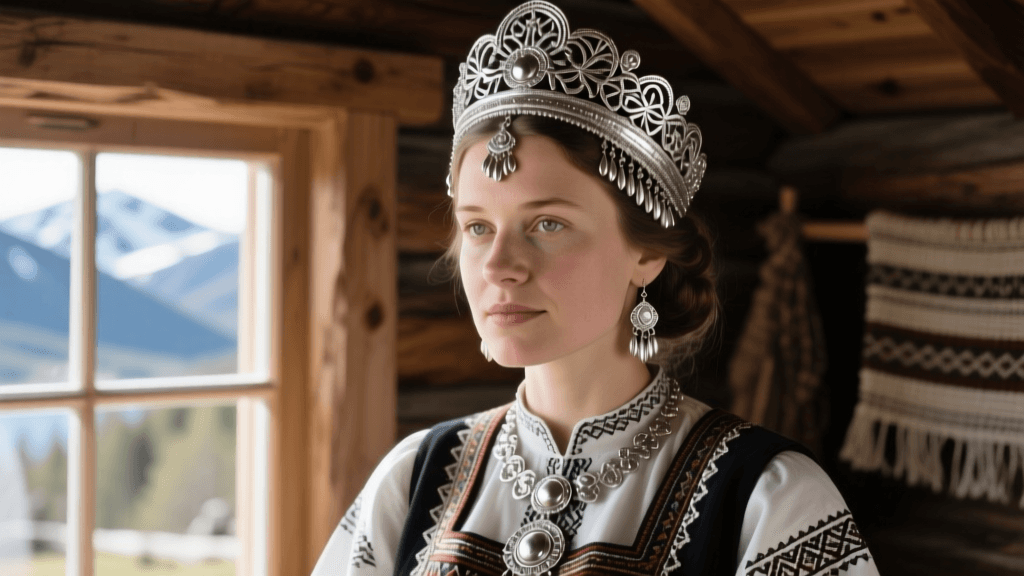
The most prominent piece of jewelry in a woman's Bunad is the sølje (brooch). The halssølje (neck brooch) sits at the collar of the linen shirt, often featuring a central motif surrounded by hanging spoon-like pendants or small bells. However, the true centerpiece is the brudesølje (bridal brooch). Worn on the chest, these magnificent pieces can measure anywhere from 8 to 12 centimeters in diameter. In 2026, a master-crafted Hardanger brudesølje featuring traditional filigree work and hanging 'spoons' (skjeer) remains one of the most sought-after items in European folk jewelry, often taking a silversmith over 80 hours to complete by hand.
Grovsmelt: The Enamel Mastery of Telemark
While the Hardanger region favors intricate silver filigree, the Telemark Bunad is famous for its grovsmelt (enamel) work. This technique involves melting crushed glass or vitreous enamel into deep silver recesses, creating striking, opaque pools of black, deep blue, or crimson red. The contrast between the oxidized blackened silver and the vibrant enamel is a hallmark of Telemark jewelry. In the current 2026 market, authentic grovsmelt pieces are highly regulated to ensure the enamel is traditionally fired, rather than painted or filled with modern synthetic resins, which are common in mass-produced tourist replicas.
Traditional Headwear: Skaut, Krone, and Hovudbunad
Headwear in Norwegian folk dress is strictly codified by marital status, region, and the specific occasion. Unlike the relatively standardized silver, headwear varies wildly in material and construction, ranging from stark white linen to towering, jewel-encrusted crowns.
The Hardanger Skaut: A Masterclass in Linen Folding
The skaut of the Hardanger region is a striking, horn-like white headdress worn by married women. It is constructed from a single, large piece of fine, high-thread-count linen. The magic of the skaut lies not in tailoring, but in the folding and pinning technique. The linen is heavily starched and ironed into precise, sharp pleats that fan out at the back of the head, creating a silhouette that resembles a white crest. In 2026, heritage weavers in Western Norway are producing specialized 'skaut-lin' using heritage flax seeds, ensuring the fabric holds the aggressive starching required for the structural folds without snapping or yellowing over time.
The Telemark Bridal Crown (Konekrone)
For unmarried women and brides in Telemark and surrounding valleys, the headwear often takes the form of a krone (crown) or hovudbunad. The traditional bridal crown is a towering, intricate piece of metalwork, often made of silver or brass, adorned with hanging ornaments that chime softly as the bride moves. Modern reproductions for the 2026 festival season often utilize lightweight silver alloys to reduce the physical strain on the wearer, as historical solid-silver crowns could weigh upwards of two kilograms. Following the wedding, the bride transitions from the crown to a dark, embroidered silk or velvet cap, signifying her new marital status.
2026 Market Guide: Authentic vs. Replica Silver
With the surge in global interest in European folk dress, the market has been flooded with overseas replicas. For serious collectors and cultural practitioners, distinguishing between authentic Norwegian-made silver and imported replicas is crucial. The Norges Husflidslag (The Norwegian Folk Art and Craft Association) maintains strict guidelines and authorized retail networks to protect these heritage crafts. Below is a comparative breakdown of the 2026 market landscape for Bunad silver accessories.
| Accessory Type | Authentic 925S Norwegian Silver (2026 Est. Price) | Imported Silver-Plated Replica (2026 Est. Price) | Identifying Marks & Quality Indicators |
|---|---|---|---|
| Hardanger Brudesølje (10cm) | $950 - $1,400 USD | $80 - $150 USD | Stamped '925S', registered maker's mark, heavy hinge pin, Husfliden certification tag. |
| Telemark Grovsmelt Neck Brooch | $650 - $900 USD | $60 - $120 USD | Fired glass enamel (feels like glass, not plastic), deep silver recesses, natural oxidation. |
| Silver Belt Buckle (Beltespenne) | $350 - $550 USD | $45 - $90 USD | Solid cast backplate (not hollow), robust clasp mechanism, consistent weight distribution. |
| Cufflinks (Mansjettknapper) | $180 - $250 USD (per pair) | $25 - $50 USD (per pair) | Secure toggle backs, seamless soldering on the filigree domes, high-polish finish. |
Preservation and Care for Heritage Silver
Investing in authentic Bunad silver requires a commitment to proper preservation. The techniques used to clean modern jewelry can easily destroy historical folk pieces. For filigree silver (such as the Hardanger sølje), ultrasonic cleaners are strictly forbidden. The high-frequency vibrations can easily snap the delicate, hand-twisted silver wires that form the intricate patterns. Instead, experts recommend using a soft, natural-bristle brush with a mild, phosphate-free silver polish, carefully working between the wires.
For Telemark grovsmelt pieces, chemical silver dips must be avoided entirely. These harsh chemicals can seep into the microscopic pores between the silver and the fired enamel, causing the glass to cloud, crack, or detach from the metal backing over time. A simple polishing cloth designed specifically for precious metals, used gently around the enamel pools, is the safest method to maintain the brilliant contrast of the piece. When storing these items between festival seasons, wrap each piece individually in anti-tarnish flannel cloth and store them in a climate-controlled environment to prevent the sulfur in the air from accelerating oxidation.
Conclusion
The accessories of the Norwegian Bunad are far more than mere embellishments; they are wearable archives of Scandinavian history, metallurgy, and social custom. Whether you are admiring the crisp, architectural folds of a Hardanger skaut or the protective, chiming spoons of a master-forged brudesølje, these pieces demand respect and careful study. As the European folk dress community continues to grow in 2026, prioritizing authentic craftsmanship and historical accuracy ensures that these profound textile and metalwork traditions will endure for generations to come.