Authentic Romanian Ie & Ukrainian Vyshyvanka: 2026 Guide
The Resurgence of Eastern European Heritage Textiles in 2026
The global resurgence of Eastern European folk dress in 2026 is not merely a passing fashion trend; it is a profound reclamation of cultural identity and artisanal craftsmanship. As modern consumers pivot decisively towards sustainable, slow-fashion garments, the traditional embroidered blouses of the Balkans and Eastern Europe have taken center stage in the global textile market. Specifically, the Romanian Ie and the Ukrainian Vyshyvanka represent the pinnacle of this movement. However, the 2026 market is increasingly saturated with both museum-quality masterpieces and mass-produced, overseas imitations. This comprehensive guide will help you navigate the nuanced world of Slavic and Balkan embroidery, ensuring your investment supports authentic heritage artisans and integrates seamlessly into a contemporary wardrobe.
The Romanian Ie: Anatomy and Regional Nuances
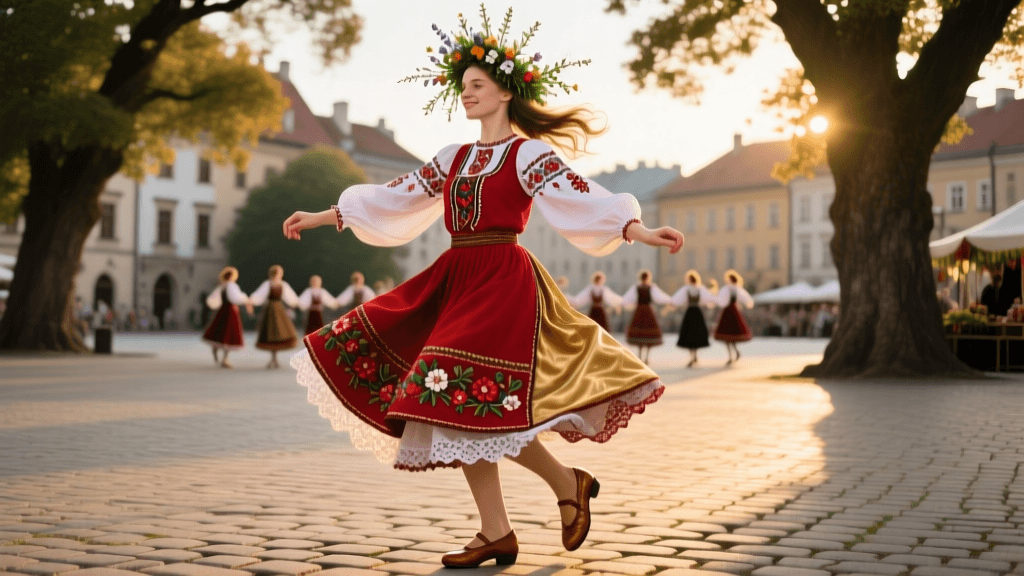
The Romanian Ie is a masterclass in symbolic geometry, natural dyeing, and structural tailoring. Recognized for its profound cultural significance, the art of the Romanian blouse with shoulder embroidery was officially inscribed on UNESCO's Intangible Cultural Heritage list, cementing its status as a protected global treasure. The defining feature of the Ie is the altiță (the shoulder band), which is the most densely embroidered part of the garment. Historically, this thick band of geometric motifs was designed to protect the wearer's joints and spirit from negative energies.
Below the altiță lies the increț (a delicate gathering of fabric) and the râuri (rivers), which are vertical or diagonal bands of embroidery that flow down the sleeves like waterways. In 2026, authentic artisans from the Argeș, Olt, and Suceava regions are experiencing a massive revival of ancestral techniques. They are returning to hand-spun hemp and linen, utilizing natural dyes extracted from walnut husks, madder root, woad, and indigo. A genuine, hand-embroidered Ie from a recognized heritage cooperative in the Carpathian foothills now commands between $450 and $1,400 in 2026, accurately reflecting the 120 to 300 hours of meticulous cross-stitch, chain-stitch, and tiuitură (hemstitching) required to complete a single piece.
The Ukrainian Vyshyvanka: Regional Codes and Cutwork
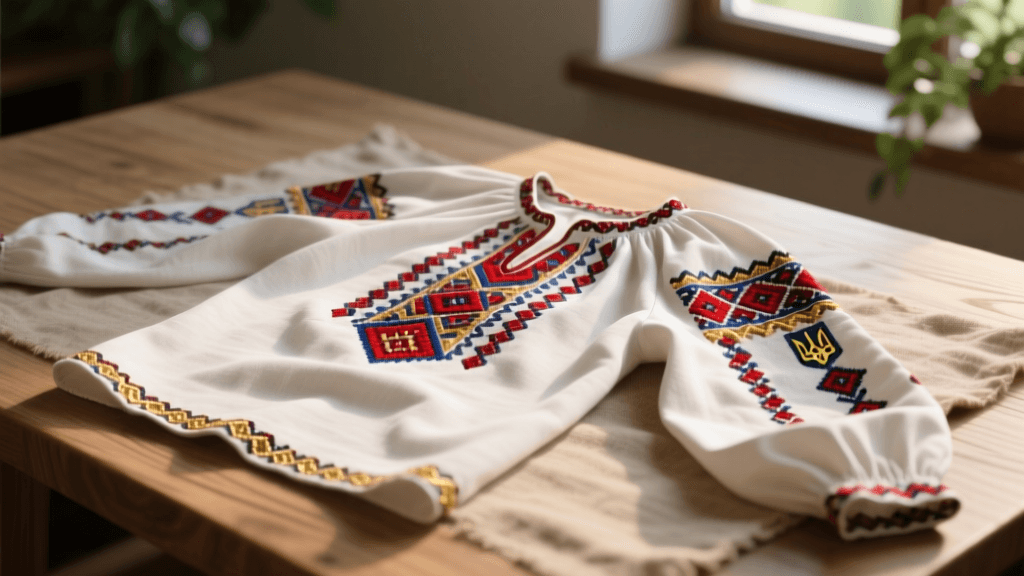
While the Romanian Ie is celebrated for its flowing sleeves and shoulder-centric motifs, the Ukrainian Vyshyvanka is defined by its highly localized regional codes and structural embroidery techniques. As documented by the Encyclopedia of Ukraine, the embroidered shirt serves as a wearable textile map of the nation, with motifs varying drastically from the western mountains to the eastern steppes.
The Poltava region in central Ukraine is world-renowned for its ethereal "white-on-white" embroidery (bila po bilomu). This technique relies on complex cutwork, drawn-thread work, and satin stitches that create a subtle, sculptural play of light and shadow on raw linen. Conversely, the Hutsul region in the Carpathian Mountains favors dense, vibrant geometric cross-stitch in black, red, and gold threads, often incorporating seed beads and metallic elements to mimic the opulence of Byzantine art. In 2026, the demand for hand-woven samorobne (homespun) linen has skyrocketed. Artisans in the Bukovyna and Galicia regions are blending traditional openwork (zalyshva) with sustainable, locally sourced flax, pushing the price of authentic, bespoke Vyshyvankas to the $600 to $1,800 range, depending on the density of the stitch count and the rarity of the natural dyes used.
Decoding the Motifs: Symbolism Across Borders
Understanding the symbolism behind the embroidery is crucial for any serious collector or enthusiast in 2026. While both cultures share Indo-European agrarian roots, their visual languages diverge in fascinating ways:
- The Rhombus (Sown Field): Present in both traditions, the rhombus divided into four smaller squares with dots represents fertility, the sown field, and agricultural prosperity. In Ukrainian Hutsul work, it is often rendered in sharp, contrasting cross-stitch, while in Romanian Muntenian blouses, it may be softened with curved chain-stitches.
- The Rosette (Sun/Life): A six- or eight-petaled star representing the sun, life force, and cosmic order. Ukrainian artisans often use this as a central chest motif to protect the heart, whereas Romanian artisans frequently integrate it into the flowing râuri on the sleeves.
- The Tree of Life: Stylized floral and arboreal motifs that connect the underworld, the earthly realm, and the heavens. This is particularly prominent in the Bukovyna region, bridging both Ukrainian and Romanian aesthetic traditions with lush, red-and-black floral vines.
2026 Sourcing and Authentication Guide
Distinguishing between a genuine heritage garment and a factory-made replica is critical in today's market. Advanced digital printing and automated multi-head embroidery machines can mimic the look of folk art, but they lack the structural integrity and soul of handwork. Use this checklist when authenticating your 2026 purchase:
- Inspect the Reverse Side: Hand-embroidered traditional pieces, particularly in Ukrainian cross-stitch and Romanian chain-stitch, are famously neat on the reverse. Machine embroidery leaves a chaotic web of connecting threads, bobbin loops, and synthetic stabilizers.
- Evaluate the Fabric Weave: Authentic garments use uneven, hand-woven linen or hemp. If the fabric is perfectly uniform, lightweight, and lacks the slight slubs characteristic of natural flax, it is likely commercial cotton or a poly-blend.
- Check Thread Composition: Heritage artisans strictly use mercerized cotton, wool, or silk threads, often naturally dyed. An unnatural, plastic-like sheen is an immediate red flag for synthetic polyester threads.
Market Comparison: Artisan vs. Commercial (2026 Data)
| Feature | Authentic Artisan Heritage Piece | Mass-Produced Commercial Replica |
|---|---|---|
| Price Range (2026) | $450 - $1,800+ | $35 - $90 |
| Production Time | 120 - 400+ hours | 15 - 30 minutes (machine) |
| Base Fabric | Hand-woven linen, hemp, or nettle | Factory-milled cotton or polyester blend |
| Embroidery Back | Nearly identical to the front (neat) | Messy, with visible bobbin threads |
| Dyes & Threads | Natural dyes, wool, silk, mercerized cotton | Synthetic polyester, chemical azo dyes |
Styling and Care for the Modern Wardrobe
Integrating these historic garments into a 2026 wardrobe requires a balance of cultural respect and modern aesthetics. The key is to let the textile be the focal point. Pair a delicate Poltava white-on-white Vyshyvanka with tailored, wide-leg linen trousers and minimalist leather mules for a sophisticated, breathable summer ensemble. The Romanian Ie, with its dramatic, voluminous sleeves, pairs beautifully with high-waisted, structured raw denim or a sleek, solid-colored midi skirt, allowing the altiță to command attention without competing with other patterns.
Care and conservation are paramount for preserving these investment pieces. Never machine wash heritage textiles. Hand wash them gently in cool water using a pH-neutral detergent specifically formulated for delicate natural fibers and botanical dyes. Do not wring or twist the fabric; instead, roll it in a clean, dry towel to absorb excess moisture. Reshape the garment while damp and dry it flat away from direct sunlight to prevent the fading of natural madder and indigo dyes. When ironing, always work on the reverse side of the fabric using a damp pressing cloth. This prevents crushing the three-dimensional texture of the embroidery and protects the integrity of the hand-spun threads.
Conclusion: Investing in Living History
Purchasing a genuine Romanian Ie or Ukrainian Vyshyvanka in 2026 is an investment in living history. By understanding the regional nuances, demanding authentic materials, and supporting the cooperatives that keep these ancestral techniques alive, you become a custodian of Eastern European heritage. Whether you are drawn to the stark, sculptural elegance of Poltava cutwork or the vibrant, protective geometry of the Carpathian altiță, these garments offer a profound connection to the past, beautifully tailored for the future.