Authentic Polish Kraków Folk Costumes for Wianki Festivals 2026
The Living Heritage of the Strój Krakowski
The Wianki festival, celebrated annually on the banks of the Vistula River during the Midsummer solstice, remains one of Poland’s most vibrant cultural gatherings. As we approach the 2026 Wianki celebrations, the intersection of traditional European folk dress and dynamic folk dance has never been more relevant. The Strój Krakowski (Kraków folk costume) is not merely a static museum artifact; it is a living, breathing garment system engineered for movement, specifically designed to accommodate the vigorous, syncopated rhythms of the traditional Krakowiak dance. For dancers, cultural enthusiasts, and festival-goers in 2026, understanding the construction, sourcing, and functional mechanics of this iconic Lesser Poland (Małopolska) attire is essential for an authentic and comfortable festival experience.
According to cultural documentation provided by the Adam Mickiewicz Institute, the Kraków costume evolved from the everyday workwear of 19th-century peasants in the villages surrounding Kraków, such as Bronowice and Mogiła. Today, it serves as the definitive visual and functional uniform for Polish folk dance troupes and cultural preservationists attending summer solstice events.
Anatomy of the Kraków Folk Costume for Dance
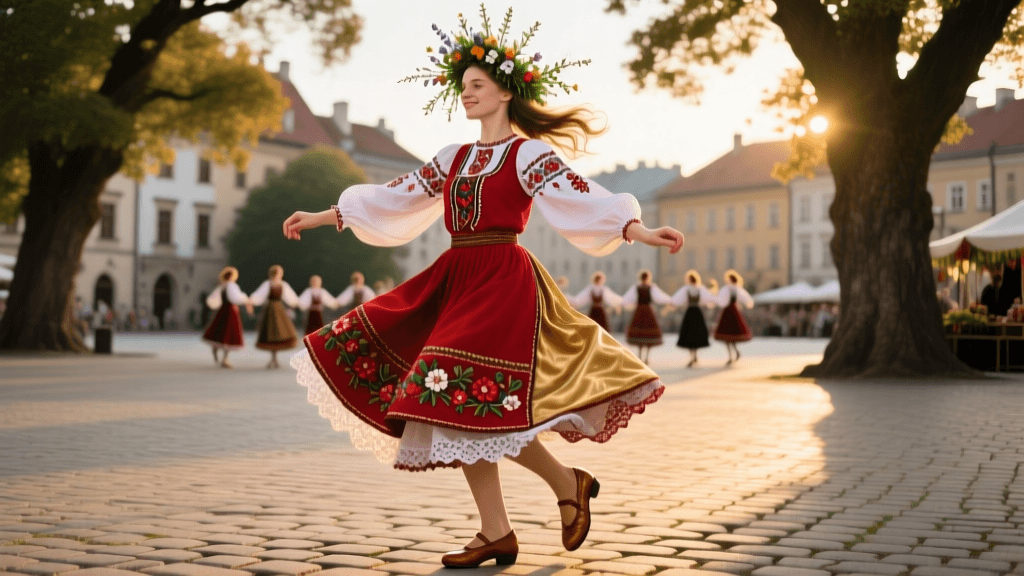
To dance the Krakowiak effectively at the 2026 Wianki festival, every layer of the costume must work in harmony. The traditional female ensemble consists of several highly specific components, each serving both an aesthetic and kinetic purpose.
The Koszula (Blouse)
The foundation of the outfit is the koszula, a crisp, white linen blouse. For dance purposes, the sleeves must be cut with a generous gusset under the arm and feature a slight puff at the shoulder, tapering down to a cuffed wrist. This specific sleeve construction allows for the high arm extensions and rapid clapping sequences inherent to the Krakowiak without restricting the dancer’s shoulder joints. The neckline and cuffs are typically adorned with subtle white-on-white embroidery (broderie anglaise) or delicate hand-stitched floral motifs.
The Gorset (Corset)
Worn over the blouse, the gorset is the most visually striking element of the Strój Krakowski. Traditionally made from dark velvet, brocade, or high-quality wool, the corset is heavily embellished with silk thread embroidery, spangles, and sequins. For the 2026 festival season, authentic artisans are favoring deep navy and black velvets adorned with vibrant red roses, blue cornflowers, and yellow poppies. Crucially, a dance-grade gorset must end exactly at the natural waistline. If it extends too far over the hips, it will severely restrict the lateral hip movements and deep squats (przysiady) required in folk choreography. The corset is laced tightly at the front with a thick silk ribbon, providing essential lumbar support during high-impact jumping sequences.
The Spódnica (Skirt)
The spódnica is a mid-calf length skirt, typically crafted from floral-printed cotton, batiste, or lightweight wool. For folk dance, the circumference of the skirt is paramount. A proper dance skirt requires a minimum of three to three-and-a-half meters of gathered fabric. This massive volume creates the spectacular centrifugal flare when the dancer executes rapid pivot turns, while the mid-calf hemline ensures the dancer's intricate footwork remains visible to the audience. In 2026, traditional textile weavers in Małopolska are reproducing historical 1920s floral block-print patterns specifically for festival skirts, ensuring historical accuracy without sacrificing the lightweight drape needed for summer dancing.
The Fartuch (Apron)
Tied securely over the skirt is the fartuch, a pristine white linen apron. It is usually slightly shorter and narrower than the skirt itself, featuring matching white embroidery along the bottom hem. The apron acts as a visual anchor, highlighting the rhythmic bouncing of the dancer's torso and providing a bright contrast against the dark corset and colorful skirt.
Footwear: Czarne Trzewiki
Dancers wear czarne trzewiki, traditional black leather ankle boots with a modest, sturdy heel and a slightly pointed toe. The leather must be supple enough to allow the foot to articulate during heel-clicks (obijanie), yet the sole must be rigid enough to produce a sharp, percussive sound when stamping against the wooden stages or paved squares of Kraków.
Engineering the Costume for the Krakowiak Dance
The Krakowiak is a fast-paced dance in 2/4 time, characterized by its proud posture, sudden stops, and explosive jumps. The Strój Krakowski is essentially a piece of performance engineering. The heavy gathering of the skirt acts as a counterbalance during rapid spins, while the structured corset enforces the upright, regal posture that defines the dance's character. According to event guidelines published by the City of Kraków Official Portal, performers at major municipal festivals like Wianki are increasingly required to wear historically accurate, non-synthetic materials to maintain the integrity of the intangible cultural heritage being showcased.
2026 Sourcing and Pricing Guide
Sourcing an authentic Strój Krakowski in 2026 requires navigating a market divided between master artisans and mass-produced stage suppliers. Below is a comparative breakdown of what to expect when investing in a festival-ready ensemble this year.
| Costume Tier | Materials & Construction | Embroidery Quality | Estimated 2026 Price (USD) | Dance Suitability |
|---|---|---|---|---|
| Master Artisan (Bespoke) | 100% natural linen, silk velvet, hand-woven wool | Hand-stitched silk thread, authentic glass spangles | $1,800 - $3,200 | Excellent; tailored for specific choreography |
| Semi-Traditional (Atelier) | Cotton-linen blends, cotton velvet | Machine-embroidered with hand-finished details | $750 - $1,400 | Very Good; standard dance cuts |
| Stage/Mass-Produced | Polyester blends, synthetic velvets | Machine-embroidered, plastic sequins | $150 - $350 | Poor; restricts movement, poor breathability |
Accessories and Jewelry for Wianki 2026
No Kraków folk costume is complete without its traditional accessories, which also play a role in the visual rhythm of the dance.
- Korale (Coral Beads): Married women and older dancers traditionally wear multiple strands of genuine red coral beads. The beads rest against the white blouse and bounce in time with the dancer's steps, adding a subtle visual percussion. In 2026, ethically sourced Mediterranean coral and high-grade glass replicas are the standard for festival wear.
- Wianek (Flower Wreath): Unmarried women and young dancers wear a wianek, a wreath of fresh or high-quality silk wildflowers interwoven with ribbons. For the Wianki festival, the wreath often features long, trailing ribbons that catch the wind and accentuate head movements during the dance.
- Obojek (Choker): A stiff, beaded collar worn tightly around the neck, often featuring intricate seed-bead weaving that frames the face and draws attention to the dancer's expressions.
Practical Preparation for the 2026 Festival Season
If you are planning to dance or participate in the cultural parades at the 2026 Wianki festival, proper preparation of your garments is vital. Follow these actionable steps to ensure your costume performs as beautifully as it looks:
- Corset Fitting and Breathability: Have your gorset fitted by a professional while wearing your exact dance blouse. Ensure there is a two-finger gap between the corset and your ribs when fully laced to allow for deep diaphragmatic breathing during high-cardio routines.
- Skirt Weighting: Summer evenings in Kraków can be breezy. To prevent the skirt from blowing up inappropriately during spins, sew a discreet, flexible lead-free drapery weight tape into the bottom hem of the spódnica. This adds momentum to your turns while keeping the fabric grounded.
- Footwear Break-In: Purchase your leather trzewiki at least eight weeks before the festival. Wear them with thick wool socks during practice sessions to mold the leather to your instep and soften the heel counter, preventing blisters during repetitive stamping sequences.
- Garment Care: Never machine-wash a traditional velvet corset or floral wool skirt. Spot clean with a damp cloth and use a specialized textile steamer to remove wrinkles. The white linen blouse and apron can be hand-washed in cold water with a mild, pH-neutral detergent and laid flat to dry to preserve the structural integrity of the embroidery.
Conclusion
The Strój Krakowski is a masterclass in functional folk design, seamlessly blending the rich agricultural heritage of Lesser Poland with the demanding physical requirements of traditional dance. As the 2026 Wianki festival approaches, investing in authentic, well-constructed garments not only ensures your personal comfort and mobility but also actively supports the master artisans keeping European textile traditions alive. Whether you are executing the rapid heel-clicks of the Krakowiak or simply participating in the vibrant Midsummer parades along the Vistula, wearing a properly engineered Kraków folk costume connects you directly to centuries of living history.