Ancient Greek Chiton Guide 2026: Doric vs Ionic Draping
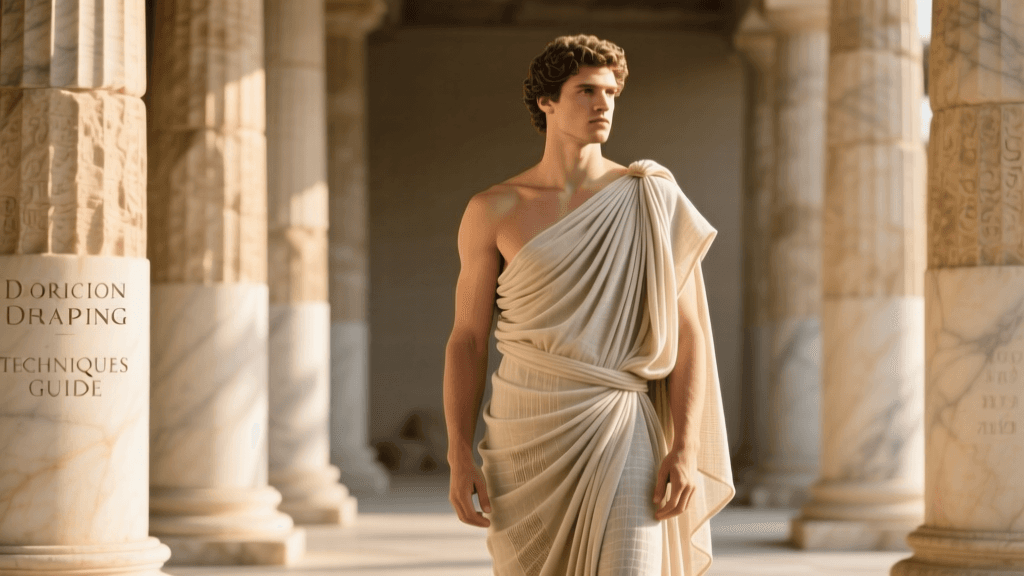
The Enduring Legacy of the Chiton in 2026
As the global slow fashion movement reaches new heights in 2026, contemporary designers and historical reenactors alike are turning back to antiquity for inspiration. The ancient Greek chiton—a masterclass in zero-waste, untailored garment construction—has seen a massive resurgence. Unlike modern clothing that relies on complex pattern cutting and sewn seams, the chiton is formed entirely through the strategic draping, folding, and pinning of rectangular textiles. This approach not only honors the sustainable practices of the ancient Mediterranean but also offers a versatile, universally flattering silhouette that adapts to any body type.
Whether you are preparing for an immersive historical festival, designing a modern capsule wardrobe inspired by Hellenic aesthetics, or simply studying the evolution of European folk and classical dress, understanding the mechanics of the chiton is essential. According to the The Metropolitan Museum of Art, the genius of ancient Greek dress lay in its reliance on the natural drape of the fabric and the human form, rather than rigid tailoring. In this comprehensive guide, we will break down the two primary styles of the chiton—the Doric and the Ionic—and provide exact measurements, fabric recommendations, and step-by-step draping instructions for the modern practitioner.
Doric vs. Ionic Chiton: A Comprehensive Comparison
Before you begin cutting your fabric, it is crucial to understand the historical and structural differences between the two main variations of the chiton. The Doric chiton (often associated with the peplos) and the Ionic chiton emerged from different cultural influences and require distinct draping techniques.
| Feature | Doric Chiton (Peplos) | Ionic Chiton |
|---|---|---|
| Primary Fabric | Medium to heavy-weight wool or linen | Lightweight, finely woven linen or silk |
| Sleeve Construction | Sleeveless or open-armhole | Multiple pins create fitted, elbow-length sleeves |
| Overfold (Apoptygma) | Yes, folded down over the chest | No, typically worn without a deep overfold |
| Fastening Method | Single large fibula (brooch) per shoulder | Multiple small pins or buttons along the arm |
| Historical Era | Archaic to Early Classical (c. 600–450 BCE) | Classical to Hellenistic (c. 500–30 BCE) |
Sourcing Authentic Textiles in 2026
The success of your chiton relies entirely on the quality and weight of your fabric. In 2026, the market for heritage textiles has expanded, making it easier than ever to source authentic materials. For a Doric chiton, you want a fabric with enough body to hold the structured overfold (apoptygma) and deep vertical pleats. Look for 100% European flax linen in the 5.3 oz/yd² to 7 oz/yd² range, or a lightweight merino wool blend. For the Ionic chiton, the fabric must be fluid and sheer enough to gather into multiple sleeve pins without creating excessive bulk at the shoulders. Opt for handkerchief-weight linen (around 3.5 oz/yd²) or a modern cupro-viscose blend if you require a vegan silk alternative with historical drape.
When purchasing, remember that ancient garments were woven to the exact width needed, meaning the selvedge edges were often left intact and visible. To replicate this authentically, avoid hemming the side edges; instead, use a frayed or fringed finish to mimic ancient loom techniques.
Step-by-Step Draping: The Doric Chiton
The Doric chiton is robust, architectural, and relatively simple to construct. It is defined by its deep overfold, which creates a layered, tunic-like appearance over the torso.
Measurements and Preparation
- Width: Measure your wingspan (fingertip to fingertip with arms outstretched) and add 12 inches. For an average adult, this is roughly 75 to 85 inches.
- Height: Measure from your shoulder to the floor, then add 12 to 15 inches to allow for the overfold and the blousing effect (kolpos) over the belt.
The Draping Process
- Create the Overfold: Lay the fabric flat. Fold the top edge down by 12 to 15 inches. This folded section will drape over your chest and back.
- Wrap the Body: Hold the fabric behind your back, with the top edge (the fold line) sitting just below your shoulder blades. Bring the two side edges around to the front.
- Pin the Shoulders: Gather the front and back layers of the fabric at your shoulders, about 4 inches from the edge of the fabric. Secure them using a heavy-duty bronze or silver fibula (brooch). The side of the garment will remain open from the thigh down, allowing for ease of movement.
- Belt and Blouse: Tie a woven wool or leather belt (zonē) around your waist. Pull the fabric up and over the belt to create the kolpos—a bloused pouch of fabric that hides the belt and adjusts the hemline to your desired length.
Step-by-Step Draping: The Ionic Chiton
As noted by the World History Encyclopedia, the Ionic chiton was introduced to mainland Greece from Ionia (modern-day coastal Turkey) and represented a shift toward lighter, more intricate garments. It requires significantly more fabric and a more complex pinning strategy.
Measurements and Preparation
- Width: You will need a much wider piece of fabric. Measure your wingspan and multiply by 1.5 or 2. This can result in widths of 100 to 130 inches.
- Height: Measure from the shoulder to the floor and add 6 inches for blousing. No overfold is required.
The Draping Process
- Position the Fabric: Drape the wide rectangle of fabric behind your back, holding the top corners in your hands.
- Pin the First Shoulder Joint: Bring the front and back edges together at the edge of your left shoulder. Pin them together at 3 to 4-inch intervals along the arm, stopping at the elbow. This creates the left sleeve.
- Secure the Neckline: Bring the remaining fabric across your chest and back. Pin the front and back layers together at the right shoulder, again using multiple pins spaced 3 to 4 inches apart to form the right sleeve.
- Adjust the Drape: The space between the pins will naturally fall open, revealing the arm and creating the illusion of a tailored, slit sleeve. Adjust the tension of the pins to ensure the neckline sits comfortably without choking.
- Belt the Garment: Tie a belt at the natural waist or high under the bust (Empire silhouette). Pull the fabric up to blouse over the belt, ensuring the hem falls evenly around the ankles.
Essential Accessories: Fibulae and the Zonē
No ancient Greek garment was complete without its hardware and belting. In 2026, artisan metalworkers have made it incredibly accessible to acquire historically accurate reproductions of ancient accessories.
- Fibulae: These ancient safety pins are the structural linchpins of the chiton. For a Doric chiton, you need large, heavy bow-fibulae capable of holding thick layers of wool or linen. For the Ionic chiton, opt for smaller, decorative rosette or turtle brooches that can be pinned in a series without weighing down the delicate fabric.
- The Zonē (Belt): Belts were essential for managing the excess length of the chiton. Leather straps with bronze buckles were common for men and active women, while woven wool sashes or braided linen cords were preferred for formal wear. The way you belt your chiton completely changes its silhouette, allowing one garment to serve multiple wardrobe functions.
The Himation: Completing the Silhouette
While the chiton served as the primary undergarment or indoor tunic, stepping outside in the ancient Mediterranean required the himation—a heavy, rectangular woolen cloak. The himation was typically draped diagonally across the body, wrapping around the back, under the right arm, and over the left shoulder, leaving the right arm entirely free. In cooler 2026 climates, pairing a lightweight linen Ionic chiton with a heavy, fulled wool himation provides a highly practical, layered look that is both historically authentic and thermally efficient.
Modern Care for Historical Fibers
Maintaining the integrity of your chiton requires stepping away from modern laundry habits. Ancient Greeks cleaned their woolen garments using fuller's earth and natural oils, while linens were beaten in rivers. Today, you should hand-wash your linen and wool chitons in cold water using a pH-neutral detergent designed for delicate natural fibers. Never wring or twist the fabric, as this destroys the natural drape and causes severe wrinkling. Instead, roll the garment in a clean towel to press out excess water, then lay it flat to dry in the shade. Ironing should only be done on a low-heat setting with a pressing cloth, and for wool, steaming is highly preferred to maintain the loft of the fibers.
Conclusion
The chiton remains one of the most elegant, sustainable, and adaptable garments in the history of human dress. By mastering the distinct techniques of the Doric and Ionic draping styles, you connect directly with a textile tradition that has influenced Western fashion for millennia. Whether you are sourcing heritage linens for a summer wardrobe or crafting heavy wool peploi for autumn reenactments, the timeless geometry of the chiton proves that true style requires nothing more than exceptional fabric and an understanding of the human form.