Romanian Ia Blouse Construction: Altita Patterns & Techniques 2026
The Anatomy of the Romanian Ia: Focus on the Altiță
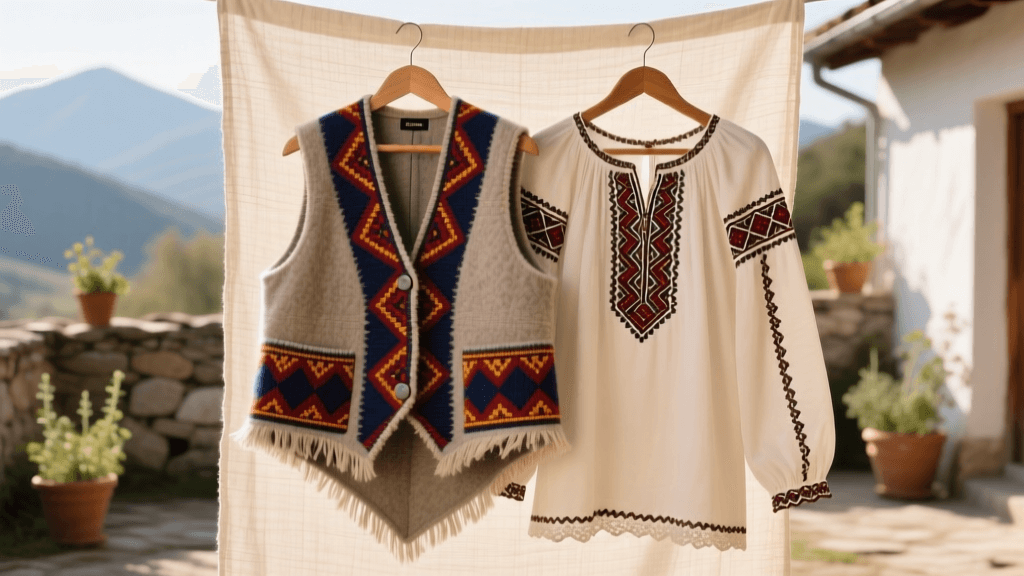
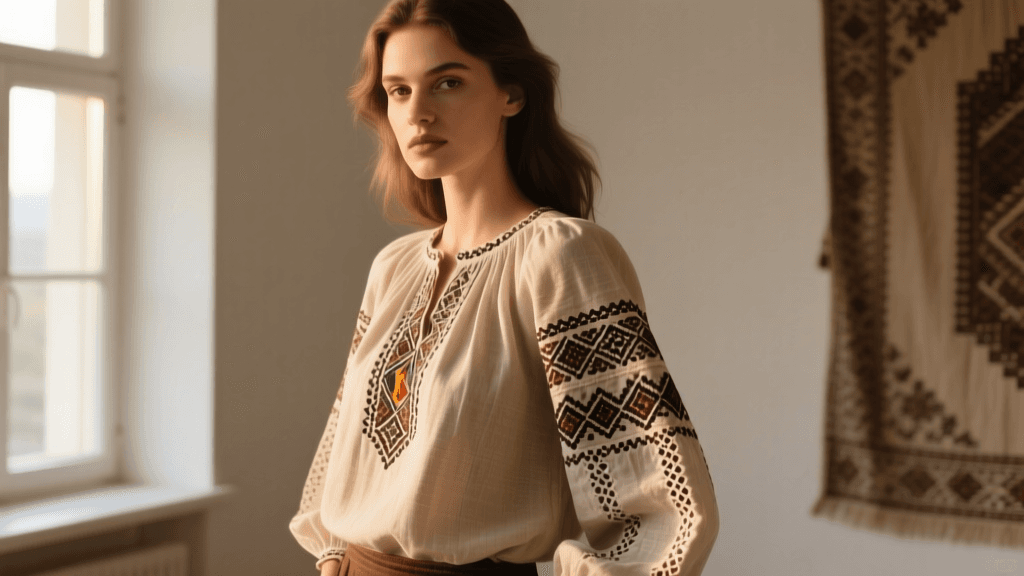
The Romanian ie (plural ii) is widely considered one of the most intricate and visually striking garments in Eastern European folk dress. While the entire blouse is a testament to regional identity, the true focal point of its construction is the altiță—the dense, ornate band of embroidery located on the upper sleeve. In late 2022, the art of the traditional blouse with embroidery on the shoulder was inscribed on the UNESCO Representative List of the Intangible Cultural Heritage of Humanity, sparking a massive revival in authentic construction techniques that continues to dominate textile workshops in 2026.
Unlike mass-produced festival wear, a genuine ie is constructed using precise geometric mathematics, hand-woven natural fibers, and specific regional stitch patterns. This guide details the exact construction patterns, material sourcing, and embroidery techniques required to build an authentic Romanian blouse with a traditional altiță sleeve in 2026.
According to the UNESCO Intangible Cultural Heritage registry, the altiță is not merely decorative; it serves as a complex visual language conveying the wearer's regional origins, social status, and marital status through specific geometric motifs and color palettes.
Sourcing Authentic Materials in 2026
The foundation of any authentic ie is the fabric. Historically, this was pânză de casă (homespun cloth) woven from hemp, flax, or a blend of both. As of 2026, the sustainable textile movement has revitalized small-batch weaving cooperatives in regions like Maramureș and Bukovina.
Fabric Selection and Pricing
- Hand-woven Hemp-Cotton Blend: The most popular choice for 2026 revivalists. It offers the structural integrity of hemp with the softness of cotton. Expect to pay between €45 and €65 per meter from certified artisan cooperatives.
- Pure Flax Linen: Lighter and more breathable, ideal for summer festival wear. High-quality, evenly spun European flax linen costs approximately €35 to €50 per meter.
- Fabric Count: For precise cross-stitch and counted-thread embroidery, the fabric must have a visible, even weave. A count of 18 to 22 threads per centimeter is optimal for the altiță.
Thread and Embellishments
Modern constructors favor mercerized cotton threads (such as Anchor or specialized Romanian brands like Atelierul de Pânză) for their colorfastness and slight sheen. In 2026, a complete thread kit for a heavily embroidered altiță (using up to 8 colors) costs around €25 to €40. Traditionalists may also incorporate metallic threads or small glass beads, though these are strictly regulated by the specific regional pattern being replicated.
Drafting the Pattern: Measurements and Geometry
The Romanian ie is constructed from rectangular panels, minimizing fabric waste—a hallmark of historical European folk dress construction. There are no curved armholes or tailored darts; the shape is achieved entirely through strategic gathering and the insertion of gussets.
Standard Measurements (European Size 38/40)
- Front and Back Panels: Two identical rectangles, each measuring 55 cm in width and 65 cm in length.
- Sleeve Panels: Two rectangles, each 45 cm wide and 60 cm long. The altiță is positioned exactly at the shoulder drop, typically spanning 8 to 12 cm in width across the top of the sleeve.
- Gussets (Pavă): Diamond-shaped inserts measuring 12 cm by 12 cm, placed under the arm to allow for mobility.
- Neckline Gathering: The front, back, and sleeves are gathered into a narrow neckband. The total circumference of the gathered neckline is usually 40 cm, secured with a braided cotton cord (șnur).
Embroidery Techniques: Executing the Altiță Band
The altiță is worked before the garment is assembled. It requires intense concentration, as a single miscounted thread can distort the geometric symmetry of the entire sleeve. According to archival research supported by the National Museum of the Romanian Peasant, the motifs within the altiță are traditionally divided into horizontal registers.
The Three Sections of the Sleeve Embroidery
- The Altiță (Shoulder Band): The thickest, most complex section. It features dense geometric patterns like rhombuses, stylized suns, and interlocking crosses. It is worked primarily in satin stitch (punctul plat) and cross-stitch (punctul în cruciulițe).
- The Spăcușor (The Separator): A narrow, often single-row band of stitching that separates the altiță from the flowing vertical patterns below. It acts as a visual palate cleanser.
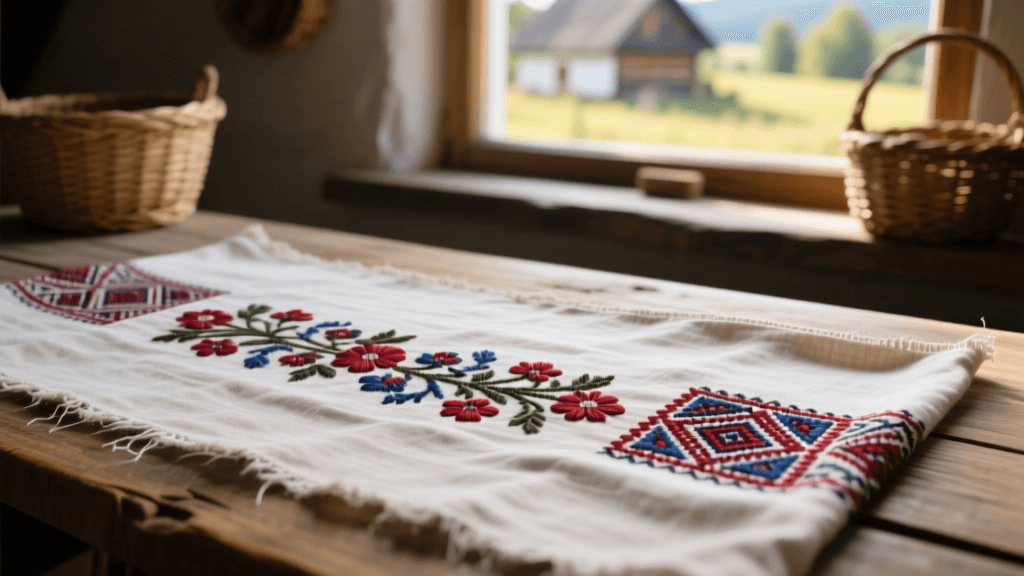
- The Râuri (The Rivers): Vertical or diagonal bands of embroidery that flow down the sleeve to the cuff. These are lighter and more spaced out than the altiță, often featuring floral or geometric vine motifs.
Stitch Execution
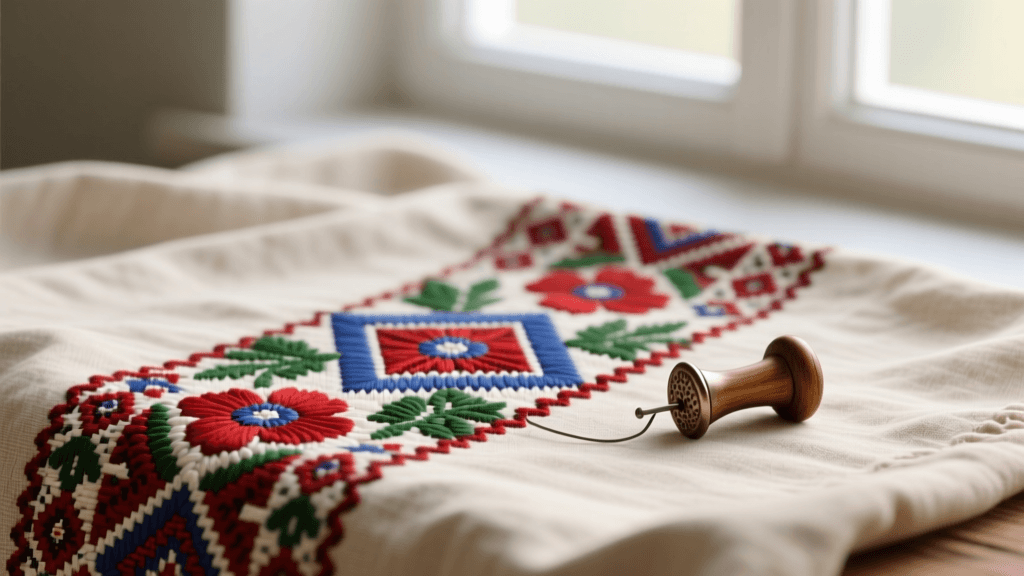
For the altiță, the punctul plat (satin stitch) is paramount. Stitches must be laid perfectly parallel, covering the fabric completely without puckering. In 2026, master embroiderers recommend using a size 24 tapestry needle and working with a single strand of 6-strand mercerized cotton to ensure a smooth, flat finish. The tension must be consistent; pulling too tight will warp the hand-woven linen, while leaving it too loose will result in snagging.
Construction Data: Time, Thread, and Complexity
Constructing an authentic ie is a significant investment of time. The table below outlines the estimated labor and material requirements for different levels of altiță complexity, based on 2026 artisan benchmarks.
| Motif Complexity Level | Fabric Count (threads/cm) | Primary Stitch Type | Estimated Hours (Altiță Only) | 2026 Material Cost (EUR) |
|---|---|---|---|---|
| Basic (Single color, simple crosses) | 18 threads/cm | Cross-stitch | 25 - 35 hours | €15 - €20 |
| Intermediate (Two colors, rhombuses) | 20 threads/cm | Satin & Chain stitch | 50 - 70 hours | €25 - €35 |
| Master (Multi-color, dense interlocking) | 22 threads/cm | Complex Satin & Goldwork | 110 - 150 hours | €60 - €90 |
Note: These estimates cover only the embroidery of the two shoulder bands. Complete blouse embroidery, including the râuri, chest panels, and cuffs, typically triples the total time investment.
Assembly and the Art of Cheițe (Lace Inserts)
Once the embroidery is complete and the fabric has been gently blocked and pressed, the assembly begins. The rectangular panels are not simply sewn together with a standard seam. Instead, they are joined using cheițe (meaning 'little keys'), which are intricate, hand-crocheted lace inserts.
Crafting the Cheițe
The cheițe serve both a structural and decorative purpose. They bridge the gap between the front panel and the sleeves, adding a delicate, openwork contrast to the heavy, dense embroidery of the altiță. In 2026, constructors typically use a 0.75mm or 1.00mm steel crochet hook with fine cotton thread (size 30 or 40) to create these lace bridges.
The process involves crocheting a narrow strip of lace, usually no wider than 2 cm, and simultaneously whipping it to the raw edges of the linen panels. Popular 2026 patterns for the cheițe include the 'spiderweb' and the 'wheat ear' motifs. This technique requires the linen edges to be meticulously prepared with a blanket stitch or a tightly rolled hem before the lace is attached, ensuring the garment can withstand washing and wear without fraying.
Contemporary Revival and 2026 Workshops
The construction of the Romanian ie has evolved from a domestic necessity to a celebrated artisanal practice. In 2026, digital pattern drafting tools and high-resolution archival scans have made historical regional patterns more accessible than ever. However, the physical execution remains strictly manual. Online communities and in-person workshops across Europe are now emphasizing 'slow fashion' principles, encouraging makers to embrace the meditative, time-intensive process of counted-thread embroidery.
Whether you are drafting a pattern for a personal heritage project or studying the structural ingenuity of Eastern European folk dress, mastering the altiță offers a profound connection to centuries of textile history. By sourcing ethical, hand-woven linens and adhering to the precise geometric rules of the sleeve band, contemporary makers ensure that this UNESCO-recognized art form continues to thrive in the modern wardrobe.