Norwegian Bunad Folk Dance Costumes: 2026 Festival Guide
The Intersection of Heritage and Movement in 2026
When the summer sun stretches across the Norwegian fjords, the vibrant festival season comes alive with the sounds of the Hardanger fiddle and the rhythmic stomping of traditional folk dance. Known locally as bygdedans, these regional dances are not merely performances; they are living, breathing expressions of local history. At the heart of this cultural revival is the bunad, Norway’s meticulously reconstructed folk costume. As we navigate the 2026 festival circuit—from the bustling streets of Bergen during the local cultural days to the prestigious Landskappleiken national folk music and dance festival—the intersection of historical authenticity and physical mobility has never been more relevant.
For dancers and enthusiasts, wearing a bunad is a profound statement of identity. However, executing the vigorous leaps of the Halling or the rapid, spinning pivots of the Springar requires a garment that accommodates extreme physical exertion while strictly adhering to historical guidelines. In 2026, the conversation among costumers, dancers, and heritage organizations heavily focuses on how to balance the rigid, historically accurate construction of the bunad with the biomechanical demands of competitive and recreational folk dancing.
The Demands of Bygdedans on Traditional Garments
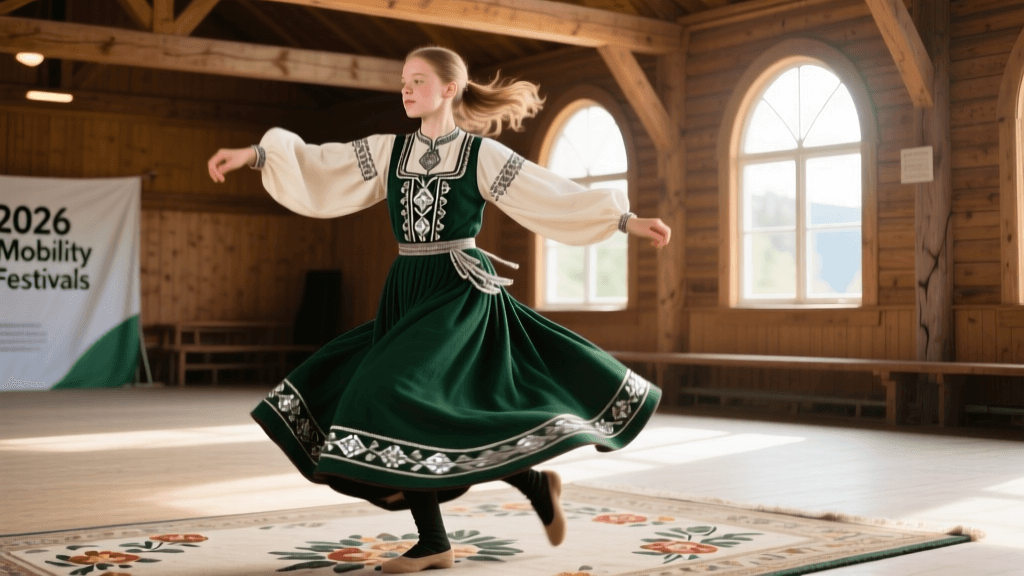
Norwegian folk dances are notoriously demanding on textiles and tailoring. The Springar, a couples dance in 3/4 time, involves continuous turning, intricate footwork, and sudden changes in momentum. The Halling, traditionally a solo male dance (though increasingly performed by all genders in modern 2026 interpretations), requires high kicks, deep squats, and acrobatic leaps. A standard, rigidly tailored historical dress or suit would tear at the seams or restrict blood flow under such conditions.
Therefore, a dance-ready bunad must be engineered with specific allowances. The armholes must be cut higher and tighter to allow the bodice to move with the torso rather than riding up. The skirts require substantial circumference to create the iconic bell-shape during spins, while the bodices must be reinforced with natural materials that provide support without the use of modern synthetic boning. According to guidelines continually updated by the Norsk institutt for bunad og folkedrakt (Norwegian Institute of Bunad and Folk Costumes), maintaining historical accuracy in these structural elements is paramount, even when the garment is destined for the dance floor.
Choosing the Right Regional Bunad for Dance Mobility
Not all bunads are created equal when it comes to dance mobility. Norway boasts over 400 distinct regional variations, each with its own silhouette, weight, and textile composition. For a dancer attending the 2026 summer festivals, selecting a region that aligns with both their heritage and their dance style is crucial.
| Bunad Region | Skirt Circumference | Bodice Flexibility | Overall Dance Suitability |
|---|---|---|---|
| Hardangerbunad | Very Wide (up to 4 meters) | High (Laced front) | Excellent for spinning dances |
| Telemarksbunad | Wide (approx. 3 meters) | Moderate (Structured) | Very Good for Springar |
| Trønderbunad | Moderate (2.5 meters) | Low (Stiff wool/velvet) | Fair; better for walking dances |
| Vest-Agder Bunad | Moderate (2.5 meters) | Moderate (Wool broadcloth) | Good for varied regional dances |
The Hardangerbunad is widely considered the gold standard for female folk dancers. Its heavily pleated, exceptionally wide skirt creates a breathtaking visual effect during the rapid turns of the Springar. Furthermore, the front-lacing bodice allows for micro-adjustments in fit, which is essential when a dancer's ribcage expands during heavy cardiovascular exertion. Conversely, the Trønderbunad, while stunning and historically rich, features heavier velvets and a more restrictive bodice, making it better suited for processional dances or formal festival dinners rather than the competitive dance floor.
Textile Innovations and the Importance of Undergarments
In 2026, there is a renewed emphasis on the foundational layers of the bunad, which are just as critical as the outer garments for a dancer's comfort. The traditional linen shift (serk or skjorte) serves as the primary moisture-wicking layer. Modern festival dancers are increasingly seeking out hand-woven linen from specialized Nordic weavers who use heritage flax varieties. These natural fibers breathe exceptionally well, preventing the heavy outer wool skirts from becoming damp and uncomfortably heavy during hours of dancing.
Wool stockings are another non-negotiable element. While some contemporary fashion adaptations might substitute modern tights, serious folk dancers adhere to the use of hand-knitted or tightly woven wool stockings. Wool naturally regulates temperature and provides a slight compression effect that aids in muscle recovery during multi-day festivals. Furthermore, the friction between the wool stockings and the traditional leather shoes provides a secure grip, preventing slips on the wooden floors of festival dance halls or the uneven grass of outdoor venues.
Footwear and Silver: Securing the Details
The traditional bunadssko (bunad shoe) is a low-heeled, leather shoe often featuring a decorative silver or pewter buckle. For the 2026 folk dance season, specialized cobblers have begun offering dance-specific modifications to these historical designs. While the external appearance remains strictly traditional, the internal structure now often includes reinforced steel shanks and high-density cork footbeds. This provides the necessary arch support for the repetitive ball-of-the-foot stomping required in the Halling, absorbing shock without compromising the historical silhouette.
Jewelry, specifically the intricate silver filigree brooches known as sølje, presents a unique challenge for dancers. A standard Hardanger bunad can feature multiple pieces of silver, including necklaces, cufflinks, and a large breastplate. During vigorous dancing, the centrifugal force can cause heavy pendants to swing wildly, potentially damaging the delicate embroidery of the bodice or causing injury. Experienced dancers in 2026 utilize hidden, historically appropriate linen ties or specialized silver-safe pins to secure the lower elements of the sølje to the underlying linen shift, ensuring the jewelry remains safe and the dancer remains unencumbered.
Sourcing and Fitting Your Dance-Ready Bunad in 2026
Acquiring a bunad is a significant investment of both time and capital. As of 2026, the average cost of a fully assembled, historically accurate women’s bunad, including hand-embroidered shirts, silver, and custom shoes, ranges from 45,000 to 75,000 NOK (approximately $4,200 to $7,000 USD). Men’s bunads, while featuring less embroidery, require expert tailoring for the wool breeches and vests, often costing between 35,000 and 55,000 NOK.
For those intending to dance at the major summer festivals, the fitting process must account for movement. A static fitting in a tailor's shop is insufficient. Dancers are encouraged to bring their dance shoes to fittings and to perform basic Springar steps while the tailor pins the bodice and skirts. This dynamic fitting ensures that the armholes do not bind and that the skirt hem clears the floor even when the knees are deeply bent. Organizations like FolkOrg frequently host workshops and networking events where novice dancers can connect with master tailors who specialize in dynamic, movement-friendly historical garments.
Preserving the Legacy on the Dance Floor
The Norwegian bunad is far more than a static museum piece; it is a dynamic garment meant to be lived, breathed, and danced in. As the 2026 festival season approaches, the dedication of dancers, tailors, and heritage institutions ensures that the bygdedans continues to thrive. By respecting the historical construction methods while thoughtfully adapting the fit for human movement, today’s folk dancers honor their ancestors not just in spirit, but in every rhythmic stomp, leap, and spin across the festival floors of Norway.