Romanian Ie Blouse Revival: Styling Altita Embroidery in 2026
The Renaissance of the Romanian Ie in 2026
The landscape of European traditional garments has shifted dramatically as we navigate 2026. No longer confined to museum archives, regional heritage pieces are experiencing a profound renaissance, transitioning from ceremonial costumes to highly coveted elements of contemporary, sustainable wardrobes. At the forefront of this movement is the Romanian Ie (pronounced 'yeh'), a masterfully hand-embroidered blouse that has captivated global fashion houses and mindful consumers alike. In 2026, the modern wearer is not looking to don a head-to-toe historical replica; rather, the goal is to integrate heritage craftsmanship into everyday life through intentional, modern styling.
This revival is deeply rooted in cultural preservation. According to the UNESCO Intangible Cultural Heritage registry, the traditional art of the blouse with embroidery on the shoulder (altița) represents generations of encoded knowledge, social identity, and artistic expression. Today, wearing an authentic Ie is a statement of sartorial respect and a commitment to slow fashion, standing in stark contrast to the ephemeral trends of the past decade.
Understanding the Altita: The Soul of the Blouse
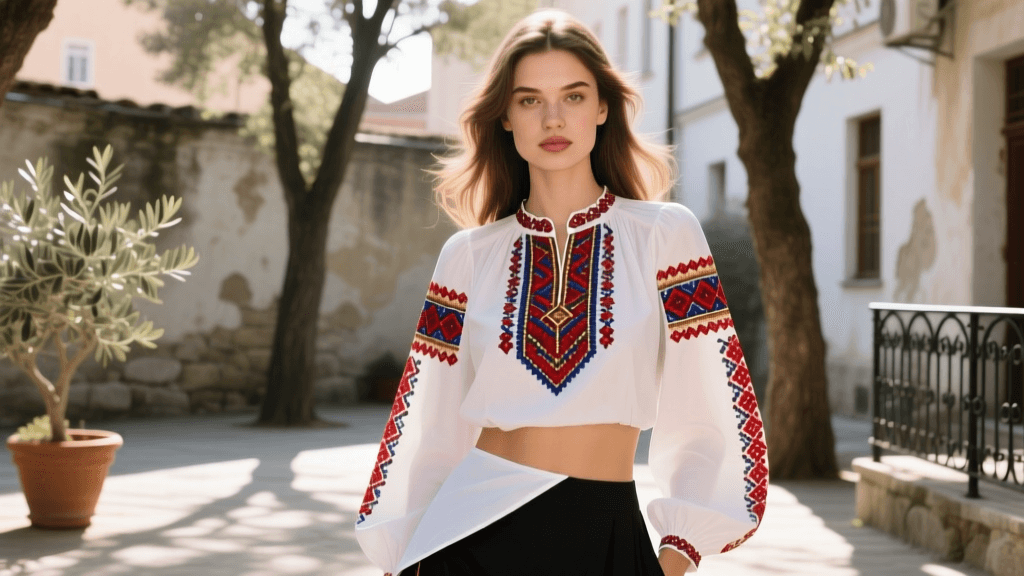
To style the Ie correctly, one must first understand its anatomy. The blouse is not merely decorated; it is structurally and symbolically engineered. The most critical component is the altita, the rectangular, heavily embroidered panel that sits squarely on the shoulder. Historically, the altita was designed to protect the wearer from malevolent spirits, acting as a spiritual shield. It features dense, complex geometric or solar motifs.
Directly beneath the altita lies the incret, a smocked, gathered band that provides structural elasticity and a visual breather between the dense shoulder pattern and the rest of the sleeve. Finally, the rauri (meaning 'rivers') are the vertical bands of embroidery that flow down the sleeve and the bodice, guiding the eye and mimicking the natural flow of water. When styling the Ie in 2026, the golden rule is to ensure the altita remains visible and unobstructed by outerwear or bag straps.
Sourcing Authentic Pieces in the 2026 Market
As the demand for folk-inspired garments has surged, so too has the market for mass-produced imitations. However, the implementation of the European Union's 2026 Digital Product Passport (DPP) for textiles has revolutionized how consumers verify provenance. When sourcing an authentic Ie today, buyers can scan the DPP via QR code to trace the garment's linen origin, verify the use of natural dyes (such as madder root for reds or woad for blues), and confirm the artisan cooperative responsible for the hand-stitching.
Institutions like the Romanian Peasant Museum have been pivotal in educating the public on distinguishing genuine heritage pieces from factory-made costumes. An authentic, hand-woven linen Ie with silk-thread embroidery requires anywhere from two to six months to complete and typically ranges from €350 to €800 in 2026. While this is a significant investment, it aligns perfectly with the modern ethos of 'cost per wear' and heritage preservation.
Regional Color Symbolism and Modern Pairings
The color palette of the Ie is deeply tied to its region of origin, and understanding these palettes is key to contemporary styling.
- Argeș and Muscel (Red and Black): The striking contrast of black and crimson on white linen is bold and graphic. In 2026, this palette pairs beautifully with stark monochrome tailoring, such as a sharp black wool suit or wide-leg charcoal trousers.
- Vrancea (White-on-White): Known for its ethereal, textural embroidery using white silk on white hemp. This subtle, tonal approach is perfect for the 'quiet luxury' aesthetic, pairing seamlessly with cream, beige, and oatmeal-toned linen suits or cashmere knits.
- Olt (Blue and Indigo): The deep, calming blues of the Olt region are incredibly versatile. They act as a neutral in a modern wardrobe, looking exceptionally chic when paired with raw selvedge denim or navy silk midi skirts.
Contemporary Styling Guide: Wearing the Ie Today
The key to integrating the Ie into a 2026 wardrobe is juxtaposition. Because the blouse is inherently voluminous, romantic, and heavily textured, it must be grounded with structured, modern, or minimalist pieces to avoid looking like a theatrical costume.
1. The Corporate Minimalist
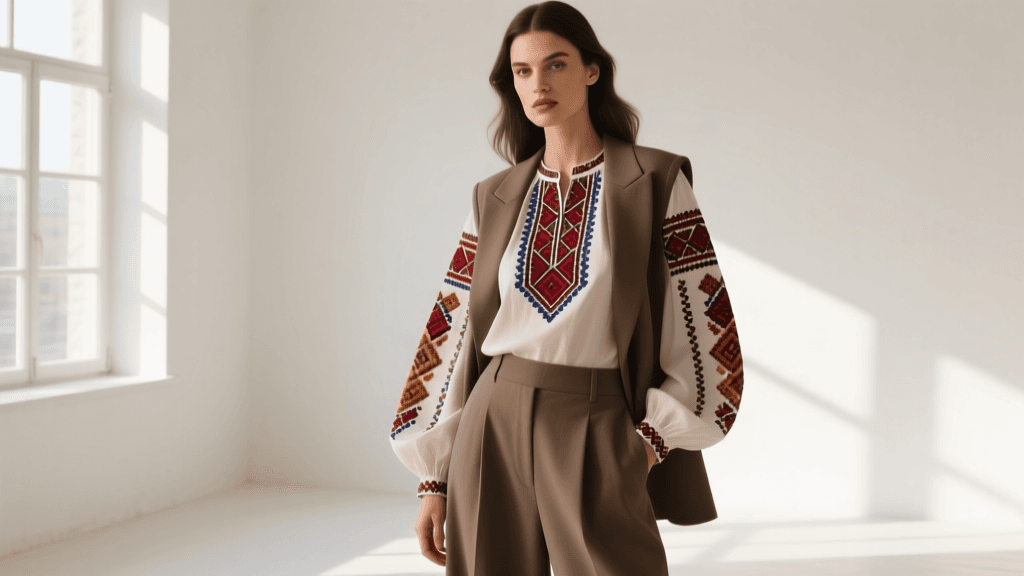
For the modern workplace, the voluminous sleeves of the Ie can be balanced with sharp, architectural tailoring. Tuck the blouse into a pair of high-waisted, wide-leg wool trousers. The structured waistband will contain the fabric's volume, while the altita rests perfectly on the shoulder, visible above the collar of a sleek, collarless blazer. Finish the look with pointed-toe leather loafers and a structured leather tote. Ensure your handbag is carried by the top handle rather than slung over the shoulder, which would crush the delicate shoulder embroidery.
2. Elevated Weekend Streetwear
Streetwear in 2026 heavily favors the mixing of heritage textiles with utilitarian or upcycled elements. Pair a relaxed-fit Ie with heavy, vintage-wash denim or a structured, oversized utility jacket. The contrast between the delicate, hand-loomed linen and the rugged, industrial feel of modern streetwear creates a dynamic, fashion-forward silhouette. Cinch the waist with a contemporary leather belt featuring minimalist matte hardware to give shape to the blouse's natural billowing fit.
3. Evening Elegance and Formal Wear
For evening events, lean into the romanticism of the garment. A dark, black-and-gold embroidered Ie from the Olt region looks breathtaking when paired with a bias-cut, floor-length silk slip skirt. The fluidity of the silk mirrors the 'rauri' (rivers) of the embroidery. Keep the neckline clean by opting for an Ie with a subtle V-neck or a delicate drawstring collar, and let the intricate sleeve cuffs rest elegantly over your wrists.
Accessorizing: Bridging Heritage and Modernity
Traditional Romanian folk accessories, such as heavily beaded necklaces (mărgele) or woven wool vests (pieptar), are beautiful but can overwhelm a contemporary outfit. In 2026, the styling approach favors modern, sculptural jewelry that echoes the geometric patterns found in the altita. Opt for matte-gold or oxidized silver cuff bracelets, minimalist geometric drop earrings, and sleek leather footwear. The goal is to let the blouse remain the undisputed focal point of the ensemble.
Comparison Chart: Artisan vs. Commercial Blouses
When shopping for an Ie, it is crucial to understand the differences between authentic heritage garments and commercial approximations.
| Feature | Authentic Artisan Ie (2026) | Mass-Produced Commercial Blouse |
|---|---|---|
| Fabric Base | Hand-woven hemp, linen, or cotton | Machine-woven cotton-polyester blend |
| Embroidery Thread | Natural silk, wool, or cotton thread | Synthetic rayon or polyester thread |
| Dye Source | Natural botanical dyes (madder, woad, walnut) | Chemical synthetic dyes |
| Construction Time | 2 to 6 months of hand-stitching | Machine-embroidered in under an hour |
| Price Range (2026) | €350 - €800+ | €40 - €90 |
Care and Maintenance for Hand-Embroidered Linen
Owning an authentic Ie is an exercise in mindful garment care, aligning with the Ellen MacArthur Foundation's principles of circular fashion and textile longevity. Hand-woven linen and natural dyes require specific maintenance to ensure they last for generations.
- Washing: Never machine wash an authentic Ie. Hand wash the garment in cool water using a pH-neutral, eco-friendly detergent. Avoid harsh agitation, which can distort the smocked incret and pull the embroidery threads.
- Drying: Never wring out the linen, as this will break the fibers. Instead, gently press the water out by rolling the blouse in a clean, dry towel. Lay the garment flat to dry in the shade; direct sunlight will rapidly fade natural botanical dyes.
- Ironing: Iron the blouse while it is still slightly damp, using a medium-hot steam setting. Always iron on the reverse side to protect the raised texture of the altita embroidery. Place a clean cotton pressing cloth between the iron and the fabric.
- Storage: Store the Ie folded in a breathable cotton garment bag. Avoid wire hangers, which can stretch the delicate shoulder seams. Place sachets of dried lavender in the storage area to naturally repel textile pests without the use of harsh chemical mothballs.
Conclusion
The contemporary revival of the Romanian Ie is a testament to the enduring power of European folk dress. By understanding the profound symbolism of the altita, sourcing ethically from artisan cooperatives, and styling these masterpieces with modern intentionality, we ensure that this incredible textile tradition continues to thrive in 2026 and beyond. Wearing the Ie is no longer just about honoring the past; it is about weaving heritage into the very fabric of our sustainable future.