Chiton & Stola Sourcing Guide 2026: Authentic Reenactment Tips
Introduction to Classical Garments in Modern Reenactment
The revival of ancient Mediterranean dress has reached new heights of historical accuracy in 2026. Whether you are preparing for a classical antiquity festival, participating in a university-sponsored historical reenactment, or designing for a theater production, understanding the nuances of the Greek chiton and the Roman stola is essential. Modern enthusiasts no longer rely on the inaccurate, synthetic costumes of the past. Today, the focus is on authentic draping, historically accurate textile weights, and traditional natural dyeing methods. This comprehensive guide will walk you through the anatomy, sourcing, and construction of these foundational garments, ensuring your classical wardrobe meets the rigorous standards of the 2026 historical costuming community.
The Anatomy of the Chiton and Stola
To accurately recreate ancient Mediterranean clothing, one must first understand that these garments were rarely tailored or sewn into complex shapes. Instead, they were masterclasses in draping, relying on the strategic use of rectangular fabrics, pins, and belts to create elegant silhouettes. According to the Metropolitan Museum of Art's Heilbrunn Timeline of Art History, the beauty of ancient Greek dress lay in its fluidity and the way it interacted with the human body in motion.
The Doric vs. Ionic Chiton
The chiton was the fundamental garment for both men and women in ancient Greece, but it evolved into two distinct styles:
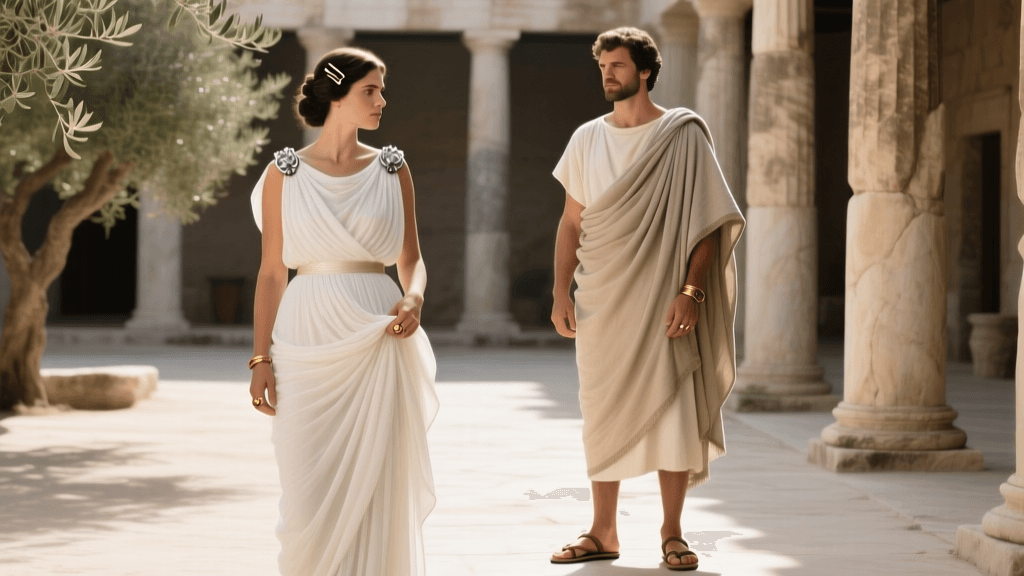
- The Doric Chiton (Peplos): Originating earlier, this garment was typically made of heavier wool. It was folded over at the top to create an apoptygma (an overfold that draped over the chest and back) and was pinned at the shoulders with large, often ornate fibulae. The Doric style is characterized by its structured, columnar drape and heavier fabric weight.
- The Ionic Chiton: Emerging later and crafted from lighter, finer linens, the Ionic chiton featured wide sleeves created by pinning the fabric at multiple intervals along the arms. As detailed by the World History Encyclopedia, the Ionic chiton required significantly more fabric and created a flowing, layered appearance that was highly prized in the Hellenistic period.
The Roman Stola and Social Significance
While the Greeks favored the chiton, the Roman matron’s signature garment was the stola. Worn over a base layer tunic (the tunica intima), the stola was a symbol of respectability and marital status. It was typically sleeveless, held up by shoulder straps or small pins, and featured a distinctive flounce at the hem known as the instita. The stola was almost always belted high under the bust, creating a bloused effect that allowed for ease of movement while maintaining a modest, dignified profile.
Fabric Selection and 2026 Textile Market Trends
The most critical mistake modern reenactors make is choosing the wrong fabric weight. In 2026, the historical costuming community has heavily pivoted toward organic, heritage textiles. Synthetic blends, polyesters, and overly processed modern cottons are strictly avoided, as they lack the necessary drape and historical authenticity.
Linen: The Summer Standard
For the Ionic chiton and the Roman stola, linen is the undisputed champion. However, not just any linen will do. You must seek out 'handkerchief' or 'feather' weight linen (typically between 3.0 and 4.0 oz per square yard). As of early 2026, premium heritage linen from European mills, such as those in Lithuania and Northern Italy, averages $45 to $65 per yard. These linens possess a natural slub and a crisp drape that softens beautifully with wear, mimicking the fabrics depicted in classical frescoes.
Wool: The Doric Necessity
For the Doric chiton or cooler weather reenactments, lightweight tropical wools or heritage wool flannels are required. Look for fabrics in the 6 to 8 oz range. Modern tailoring wools are often too stiff; instead, source 'melton' or lightly fulled wools that can hold a pleat when pinned but will still move with the body.
Natural Dyes and Color Accuracy
The myth that the ancient world was entirely clad in stark white has been thoroughly debunked. While undyed, off-white, and natural ecru fabrics were common for the lower classes, the elite wore vibrant colors. In 2026, artisan dyers are utilizing historically accurate botanical dyes. Look for garments dyed with madder root (for deep reds and terracottas), weld or saffron (for brilliant yellows), and woad (for rich blues). Purchasing naturally dyed yardage from specialized historical textile cooperatives will instantly elevate the authenticity of your garment.
Step-by-Step Draping and Construction Guide
Unlike modern clothing, the chiton and stola are essentially large rectangles of fabric. The 'construction' happens directly on the body.
Measuring for the Perfect Drape
To determine the correct dimensions for your fabric rectangle, follow these actionable measurements:
- Width: Measure your full wingspan (from wrist to wrist with arms outstretched). For an Ionic chiton, use this exact measurement. For a Doric chiton, subtract 12 to 18 inches, as it requires less width.
- Length: Measure from the highest point of your shoulder down to the floor, then add 12 to 18 inches. This extra length is crucial for creating the kolpos—the bloused overhang that occurs when the garment is belted.
- The Apoptygma (Overfold): If making a Doric chiton, add an additional 15 to 20 inches to the top of your length measurement to allow for the chest fold.
Pinning and Belting Techniques
Use high-quality, historically accurate reproduction fibulae (brooches) to secure the shoulders. For the Ionic chiton, space your pins or small sewn stitches every 3 to 4 inches along the top edge to create the signature sleeves. Once the shoulders are secured, tie a woven wool or linen cord belt around the waist. Pull the fabric up and over the belt to create the kolpos. For a Roman stola, the belt is placed higher, directly under the bust, and the blousing is kept neat and even across the torso.
Garment Comparison Chart
To help you decide which garment best suits your specific reenactment persona or historical focus, consult the comparison table below:
| Garment Type | Era & Origin | Primary Fabric | Fastening Method | Key Accessories |
|---|---|---|---|---|
| Doric Chiton (Peplos) | Archaic/Classical Greece | Heavyweight Wool | Large Shoulder Fibulae | Wool cord belt, heavy wool himation (cloak) |
| Ionic Chiton | Classical/Hellenistic Greece | Fine, Lightweight Linen | Multiple small pins or sewn arm seams | Leather or woven belt, light linen himation |
| Roman Stola | Roman Republic & Empire | Linen or Lightweight Wool | Shoulder straps or small pins | Instita (hem flounce), high under-bust belt, palla (shawl) |
| Base Tunica | Roman (Worn by all classes) | Wool (Winter) / Linen (Summer) | Sewn shoulder seams, belted at waist | Leather belt, bulla (amulet for children) |
Accessorizing the Classical Look
A chiton or stola is never worn entirely alone; accessories provide the necessary context and complete the silhouette. According to extensive research on Roman Clothing and Fashion, the layers and adornments communicated a vast amount of social data.
- The Himation and Palla: The outermost layer for a Greek woman was the himation, a massive rectangular cloak draped intricately over the left shoulder and across the body. The Roman equivalent, the palla, served the same function and was essential for modesty when stepping outside the home. These should be made of slightly heavier wool or densely woven linen.
- Footwear: Avoid modern leather sandals. Source or commission reproduction krepides (Greek strapped sandals) or Roman soleae (indoor sandals) and calcei (enclosed outdoor shoes). In 2026, several bespoke cobblers specialize in vegetable-tanned, hand-stitched historical footwear that perfectly matches classical statuary.
- Jewelry and Hair: Classical hairstyles were elaborate. Invest in bone or wooden hairpins (acus) and practice period-accurate braiding and updos. Gold or bronze reproduction fibulae, snake bracelets, and simple hoop earrings will authenticate your look without appearing overly theatrical.
Caring for Natural Fiber Antiquities
Investing in heritage linens and natural dyes requires proper maintenance. Never machine wash your historically accurate garments on modern, aggressive cycles. The agitation will destroy the delicate fibers and cause natural dyes to bleed or fade prematurely.
Instead, hand wash your chitons and stolas in cool water using a pH-neutral, lanolin-based soap or a specialized delicate textile wash. Gently press the water out—never wring or twist the fabric, as this will distort the weave. Lay the garment flat on a drying rack out of direct sunlight to prevent UV fading. Once dry, use a steam iron on the appropriate setting to press the hems and edges, but allow the body of the garment to retain its natural, soft drape. Properly cared for, a high-quality linen chiton will last for decades of reenactment seasons, softening and improving in drape with every wear.
Conclusion
Mastering the chiton and the stola is a rewarding journey into the heart of ancient Mediterranean culture. By prioritizing historically accurate fabric weights, utilizing natural dyes, and mastering the art of the drape, you can achieve a level of authenticity that honors the ingenuity of classical antiquity. As the 2026 reenactment season unfolds, let your garments tell a story of elegance, precision, and deep historical respect.