2026 Guide: Styling the Romanian Ie in Modern Capsule Wardrobes
The Renaissance of the Romanian Ie in 2026
The traditional Romanian blouse, universally known as the Ie, has transcended its pastoral origins to become a cornerstone of the 2026 sustainable fashion movement. As global consumers pivot away from micro-trends and fast fashion, the demand for heritage garments that tell a story has skyrocketed. In 2026, integrating folk dress into a contemporary capsule wardrobe is no longer just a niche hobby for textile historians; it is a mainstream styling strategy embraced by minimalists, eco-conscious professionals, and high-fashion enthusiasts alike. The Ie offers a masterclass in slow fashion, combining zero-waste pattern cutting with breathtaking hand-embroidery that takes dozens of hours to complete.
The UNESCO Recognition and the 2026 Revival
The global appreciation for this garment was cemented when the traditional blouse with shoulder embroidery was inscribed on the UNESCO Representative List of the Intangible Cultural Heritage of Humanity. This vital recognition sparked a massive revival, protecting the intricate geometric and floral codes from cultural appropriation and mass-market dilution. Today, in 2026, wearing an authentic Ie is a statement of cultural respect and sartorial intentionality. The revival is not merely about preserving the past; it is about adapting these ancestral techniques to modern lifestyles. Artisans across the Carpathian Mountains and the Republic of Moldova are now collaborating with contemporary designers to ensure the blouse remains a living, breathing garment rather than a museum relic. Institutions like the Romanian Peasant Museum continue to serve as the gold standard for authentic motifs, guiding a new generation of creators who refuse to compromise on traditional integrity.
Anatomy of the Authentic Ie
To style the Ie correctly, one must understand its unique architecture. Unlike modern blouses that are cut and darted to fit the body, the Ie is constructed from rectangular panels of hand-woven linen, hemp, or cotton. This ancient zero-waste pattern cutting minimizes fabric waste, a principle that aligns perfectly with 2026 eco-conscious fashion standards. The defining feature of the blouse is the altita, the heavily embroidered rectangular panel on the shoulder. Below the altita lies the incret, a gathered section that allows for movement and creates a beautiful drape. Flowing down the sleeves are the rauri, or rivers, which are vertical or diagonal bands of embroidery that guide the eye and elongate the arm. The neckline, or guler, is often gathered with a drawstring, allowing the wearer to adjust the silhouette from a modest high neck to an elegant off-the-shoulder drape.
Decoding the Embroidery: Top 5 Traditional Motifs
The embroidery on an Ie is never random; it is a complex visual language. When curating your 2026 capsule wardrobe, understanding these symbols adds a layer of profound meaning to your daily uniform:
- The Sun (Soarele): Often depicted as a rosette or a geometric star, the sun represents life, energy, and the cyclical nature of time. It is a powerful motif for those seeking vitality and optimism in their daily wear.
- The Tree of Life (Arborele Vietii): A vertical motif symbolizing the connection between the underworld, the earthly realm, and the heavens. It represents longevity, wisdom, and deep spiritual roots.
- The River (Raul): Flowing down the sleeves, the river motifs represent the continuous flow of life, time, and the journey of the human soul. They bring a sense of fluidity and grace to the garment.
- The Wheat Spike (Spicul de Grau): A symbol of prosperity, fertility, and the harvest. This motif is deeply tied to the agrarian roots of the culture and represents abundance and hard work.
- The Diamond (Rombul): Often used in geometric patterns, the diamond represents the earth, femininity, and fertility. Interlocking diamonds create a protective shield across the fabric.
Building a 2026 Capsule Wardrobe Around the Ie
The beauty of the Ie lies in its versatility. While it is traditionally paired with heavy wool skirts and woven sashes, the 2026 approach to folk dress revival focuses on juxtaposition. By pairing the delicate, voluminous embroidery of the Ie with sharp, modern tailoring, you create a look that is both grounded in history and fiercely contemporary. Below is a comparison of traditional pairings versus modern capsule integrations.
| Garment Element | Traditional Pairing (Pre-1950) | 2026 Contemporary Capsule Pairing |
|---|---|---|
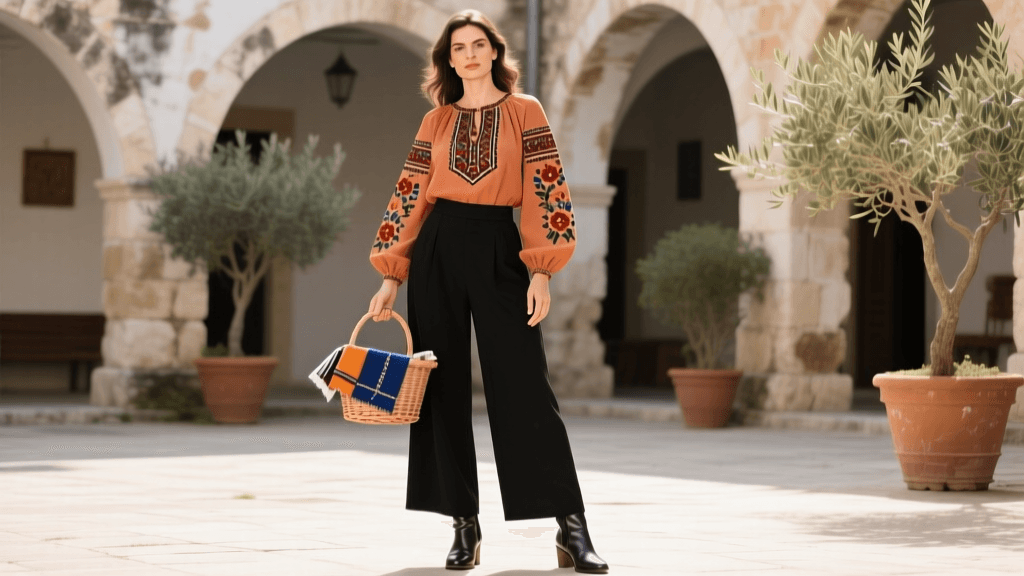
| Ie Blouse Silhouette | Hand-woven wool fota (wrap skirt) | High-waisted, wide-leg structured linen trousers |
| Embroidered Sleeves | Heavy sheepskin vest (cojoc) | Oversized, sharp-shouldered vegan leather blazer |
| Waistline Definition | Woven wool sash (brau) | Minimalist leather obi belt or chain-link hardware |
| Footwear | Leather moccasins (opinci) | Chunky lug-sole loafers or sleek pointed-toe boots |
| Outerwear | Thick woolen shawl | Tailored camel-hair topcoat or cropped denim jacket |
Office-Appropriate Elegance
For the modern workplace in 2026, the Ie can serve as a powerful alternative to the standard silk button-down. Choose an Ie with a more subdued color palette, such as cream linen with black or navy geometric embroidery. Tuck the blouse into a pair of tailored, wide-leg trousers in a deep charcoal or navy. The voluminous sleeves of the Ie provide a striking contrast to the clean lines of the trousers. Finish the look with a structured blazer draped over the shoulders and a pair of minimalist leather loafers. This ensemble commands respect while showcasing a deep appreciation for global textile heritage.
Weekend Minimalist Streetwear
For weekend wear, lean into the effortless, bohemian roots of the garment but keep the styling sharp. An off-the-shoulder Ie with vibrant red and black floral motifs pairs beautifully with vintage-inspired, straight-leg raw denim jeans. In 2026, the trend of mixing heritage textiles with utilitarian workwear is at its peak. Add a wide leather belt to define the waist and ground the outfit. Complete the look with chunky lug-sole boots and a crossbody bag crafted from upcycled materials. This look is perfect for gallery hopping, casual brunches, or traveling through European capitals.
Sourcing Authentic Pieces in 2026
As the demand for authentic folk dress has grown, so has the market for cheap, machine-made imitations. In 2026, conscious consumers must be vigilant. True artisan-crafted Ie blouses are made entirely by hand, from the weaving of the hemp or linen to the final stitch of the embroidery. A single blouse can take anywhere from forty to over one hundred hours to complete. Consequently, authentic pieces are an investment, with current market prices in 2026 ranging from 250 to 600 Euros, depending on the complexity of the altita and the rarity of the natural dyes used.
To ensure you are supporting the actual revival of the craft, seek out certified artisan cooperatives and platforms aligned with the La Blouse Roumaine global movement. This community has been instrumental in educating buyers on how to spot authentic hand-stitching versus machine embroidery. Look for the slight irregularities on the reverse side of the fabric; true hand-embroidery will never be perfectly uniform on the back, whereas machine embroidery will show a dense, uniform web of threads. Investing in an authentic piece not only elevates your wardrobe but directly sustains the rural artisans who are the guardians of this intangible heritage.
Caring for Hand-Embroidered Heritage Textiles
An authentic Ie is an heirloom meant to be passed down through generations, but it requires specific care to maintain its structural integrity and vibrant colors in a modern setting.
- Washing: Never machine wash an authentic Ie. Hand-wash the garment in cool water using a pH-neutral, eco-friendly detergent designed for delicate natural fibers. Avoid wringing or twisting the fabric, as this can distort the rectangular panels and damage the embroidery threads.
- Drying: Lay the blouse flat on a clean, dry towel and roll it up to gently press out excess water. Unroll and reshape the garment, laying it flat to dry away from direct sunlight, which can fade the natural dyes over time.
- Ironing: Iron the blouse while it is still slightly damp. Always iron on the reverse side of the fabric, placing a clean cotton cloth between the iron and the embroidery to prevent crushing the three-dimensional texture of the altita and rauri.
- Storage: Store your Ie in a breathable cotton garment bag. Avoid plastic covers, which can trap moisture and lead to mildew. Place natural cedar blocks or dried lavender sachets in the storage area to deter moths without exposing the delicate fibers to harsh chemical repellents.
Conclusion
The integration of the Romanian Ie into a 2026 capsule wardrobe is a testament to the enduring power of slow fashion. By choosing to wear these meticulously crafted garments, we do more than just elevate our personal style; we participate in a global movement that values human craftsmanship, sustainable materials, and cultural preservation. Whether paired with a sharp blazer for the boardroom or raw denim for a weekend stroll, the Ie remains a profound, beautiful, and deeply relevant piece of European folk dress for the modern era.