Viking Smokkr Apron Dress Guide 2026: Patterns & Textiles
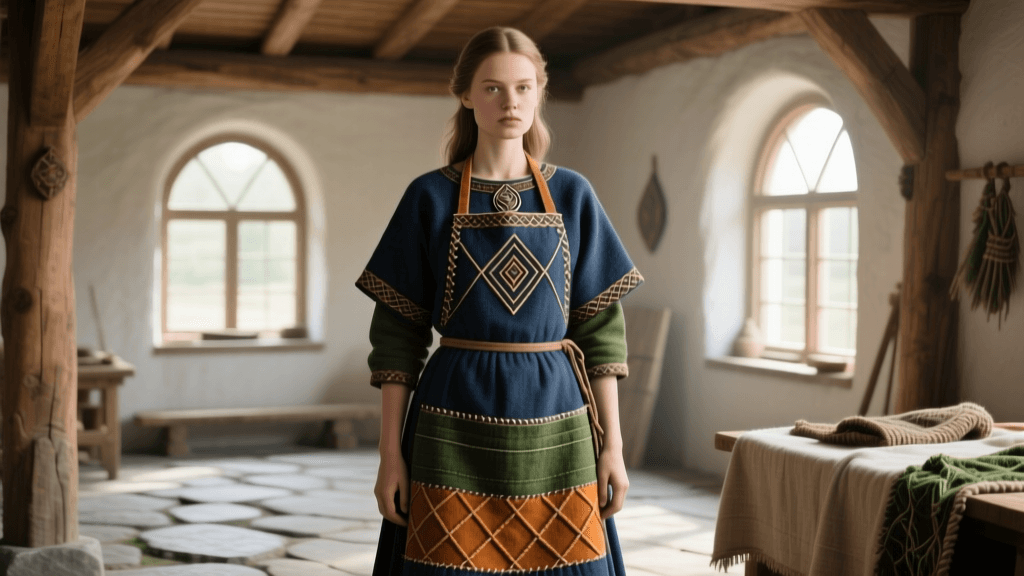
The Viking Age smokkr, commonly known as the apron dress, remains one of the most iconic and fiercely debated garments in European folk dress. As we navigate the heritage crafting and historical reenactment landscape in 2026, the demand for archaeological accuracy has never been higher. Modern enthusiasts and textile historians are moving away from the simplified, commercialized costumes of the early 2000s, focusing instead on meticulous reconstructions based on surviving textile fragments from Scandinavia, the British Isles, and Eastern trade routes. This comprehensive guide explores the anatomy, textile selection, and construction techniques required to build an authentic Norse smokkr today.
The Archaeological Evidence
Our understanding of the smokkr is largely derived from a handful of remarkable archaeological finds, most notably the fragments discovered in the harbor of Hedeby (modern-day Germany) and the grave site at Køstrup in Denmark. According to the National Museum of Denmark, these textile remnants provide crucial insights into the garment's structure. The Køstrup find, dating to the late 10th century, features a pleated front panel and elaborate tablet-woven trim, suggesting that high-status women utilized the smokkr as a canvas for displaying wealth and trade connections. Conversely, the Hedeby fragments indicate a more tailored approach, with evidence of darts and shaped seams designed to fit the contours of the body. In 2026, experimental archaeologists are using advanced 3D photogrammetry to re-examine these fragile fragments, revealing new stitch patterns and selvedge finishes that inform modern reproduction techniques.
Selecting Authentic Textiles for 2026 Reenactments
The foundation of any accurate smokkr is the fabric. The Norse relied heavily on wool, specifically woven in diamond twill or herringbone patterns. The Icelandic vaðmál, a standardized woolen cloth used as currency and trade goods, is the quintessential material for the main body of the dress. For contemporary reenactors, sourcing authentic diamond twill requires connecting with specialized artisan weavers. In 2026, heritage sheep breeds such as the Norwegian Spelsau and Swedish Gotland are highly prized for their dual-coated fleece, which provides both a soft undercoat (þel) and a long, water-resistant outer coat (tog). When spun and woven, this creates a remarkably durable and weather-resistant fabric that mimics the archaeological record. Avoid modern, commercially milled wools that feature synthetic blends or unnatural, chemically dyed neon hues.
Pattern Drafting and Measurements
Constructing a smokkr requires an understanding of the warp-weighted loom, which dictated the width and length of historical fabrics. Unlike modern sewing patterns that rely on curved armholes and complex tailoring, the Viking apron dress was primarily constructed from rectangular and triangular gores to minimize fabric waste. Below is a standard measurement and yardage guide for constructing a mid-10th-century style tubular smokkr.
| Garment Component | Recommended Fabric | Average Yardage (Modern) | Historical Equivalent |
|---|---|---|---|
| Main Tube Body | Diamond Twill Wool | 2.5 - 3.5 yards | Woven to width |
| Front Panels / Gores | Herringbone Wool | 1.5 yards | Off-cuts / smaller loom |
| Shoulder Straps | Tablet-Woven Wool/Linen | 0.5 yards | Narrow band loom |
| Trim / Embellishment | Silk or Fine Linen | 0.25 yards | Imported trade goods |
The Tubular vs. Open-Front Debate
One of the most enduring discussions in Norse textile history is whether the smokkr was a closed tube or an open-front wrap. Current consensus in 2026 leans heavily toward the closed tubular design for the majority of Scandinavian finds, supported by the placement of the iconic oval tortoise brooches. These brooches were used to pin the front and back straps together, a mechanical function that requires the tension of a closed tube to sit correctly on the shoulders. However, open-front designs are still considered plausible for specific regional variations or earlier periods, particularly when influenced by Slavic or Baltic garment traditions.
The Foundation: The Linen Serk
The smokkr was never worn directly against the skin. It was layered over a serk, a lightweight underdress typically made from linen or finely spun hemp. The serk featured long sleeves and a high neckline, often gathered with a simple drawstring or fastened with a small bead or bone pin at the throat. Sourcing authentic, unbleached linen is crucial for this base layer. Modern heritage flax farmers in Eastern Europe and the Baltics are currently producing exceptional, hand-scutch linens that perfectly replicate the slightly slubby, uneven texture of Viking Age undergarments. Pairing a naturally dyed wool smokkr with a well-fitted, hand-sewn linen serk ensures both historical accuracy and practical comfort during long days of historical interpretation or outdoor festivals.
Natural Dyes and Color Symbolism
Color in the Viking Age was a marker of status, wealth, and regional identity. The use of natural dyes was a complex, labor-intensive process. Woad (Isatis tinctoria) was cultivated extensively across Scandinavia to produce vibrant blues, while madder (Rubia tinctorum) was imported or locally grown to yield rich reds and oranges. Yellow was frequently achieved using weld or onion skins, and deep browns were derived from walnut hulls. The Viking Ship Museum in Roskilde frequently highlights how maritime trade routes brought exotic dye stuffs and mordants, such as alum, to Northern Europe. When dyeing your own wool for a smokkr project, utilizing traditional vat-dyeing methods with wood ash lye and fermentation processes will yield the most historically accurate, colorfast results.
Hardware, Trims, and Tablet Weaving
No smokkr is complete without its hardware and embellishments. The oval brooches, typically cast in bronze or silver, served both a functional and decorative purpose. As noted by the historical education resource Hurstwic, these brooches were often strung with beads of glass, amber, and carnelian, creating a swag that denoted the wearer's familial wealth and travel connections. To finish the edges of the garment, Norse women employed tablet weaving. The intricate geometric patterns found in the Køstrup band, featuring dyed wool and imported silk threads, can be replicated today using 3D-printed or bone tablets. In 2026, the revival of historical tablet weaving drafts has allowed crafters to recreate complex motifs like the Snartemo pattern, adding a layer of profound authenticity to the garment's hems and necklines.
Historical Sewing Stitches
When assembling your smokkr, the stitches you use are just as important as the fabric. Archaeological evidence shows that the Norse primarily utilized the running stitch for long seams, often doubling back to create a stronger bond. For areas subjected to high tension, such as the strap attachments and gore insertions, a tight backstitch was employed. To prevent the raw edges of the wool from fraying, historical garments were either woven with reinforced selvedges or finished with a whip stitch or blanket stitch using a contrasting, naturally dyed thread. In 2026, hand-sewing these seams using beeswax-coated linen or wool thread is highly recommended for reenactors seeking museum-quality accuracy, as it dramatically alters the drape and historical silhouette of the finished garment compared to modern machine sewing.
Conclusion
Reconstructing the Viking smokkr is more than a sewing project; it is an immersive journey into the material culture of the Norse people. By prioritizing historically accurate diamond twill wools, natural dye palettes, and traditional tablet-woven trims, modern artisans keep the legacy of Viking Age craftsmanship alive. Whether you are preparing for a high-level historical immersion event or simply seeking to connect with your European heritage, the meticulous creation of the smokkr offers a deeply rewarding connection to the past.