Viking Apron Dress & Tortoise Brooch Guide For 2026 Reenactors
The Archaeological Reality of the Smokkr
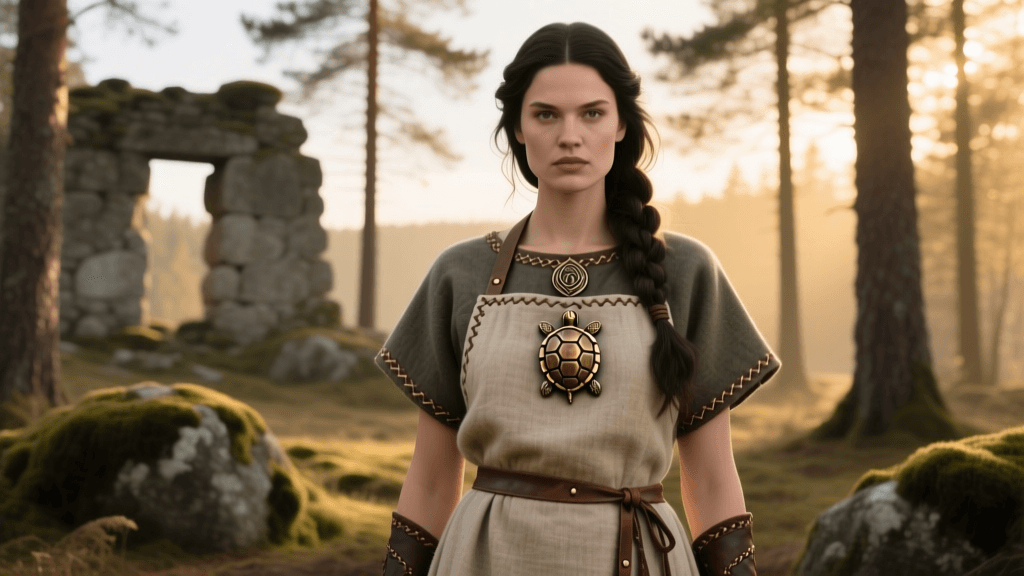
As the 2026 European heritage festival season approaches, the demand for archaeological accuracy in Viking Age reenactment has never been higher. Gone are the days of fantasy-inspired leather bodices and anachronistic corsetry. Today, serious reenactors and historical garment enthusiasts are turning to the smokkr—the iconic Viking Age apron dress. Worn primarily by Norse women from the late 8th to the 11th centuries, the smokkr is a fascinating garment that bridges the gap between practical daily wear and profound expressions of wealth and status.
Our understanding of the smokkr comes from several pivotal archaeological finds, most notably the textile fragments preserved in the graves of Birka (Sweden), Hedeby (modern-day Germany), and Køstrup (Denmark). According to the National Museum of Denmark's extensive research on Viking Age clothing, these garments were not simple wrap-arounds but carefully tailored, tubular or semi-tubular dresses suspended from the shoulders by woven straps and secured by a pair of oval brooches. For the 2026 reenactor, understanding these regional variations is the first step toward building an authentic Norse wardrobe.
Sourcing Historically Accurate Textiles in 2026
The foundation of any accurate smokkr is the fabric. Viking Age weavers were masters of the warp-weighted loom, producing textiles that were remarkably durable and beautifully textured. When sourcing fabric for your apron dress this year, avoid modern, uniformly milled commercial wools. Instead, seek out diamond twill, herringbone, or broken twill weaves.
In 2026, specialized historical textile mills across the UK, Baltics, and Scandinavia are offering reproduction wools that closely mimic the thread counts of the Hedeby finds. Look for a thread count of approximately 16 to 20 threads per centimeter in both the warp and weft. The weight of the wool should be medium to heavy (around 350-450 g/m²) to ensure the dress drapes correctly and can withstand the rigors of outdoor encampments.
Color is equally critical. While the popular imagination often paints Vikings in drab browns and greys, chemical analysis of grave textiles reveals a vibrant palette. Madder (yielding rich reds), woad (producing deep blues), and weld (for bright yellows) were highly prized. A high-status smokkr from the late 9th century might feature a deep woad-blue diamond twill, trimmed with silk samite bands imported from the Byzantine Empire via the Eastern trade routes.
The Linen Serk: Foundation of the Norse Wardrobe
The smokkr was never worn directly against the skin. It was layered over a serk (underdress), typically made of linen or, in some regions, fine worsted wool. The 2026 consensus among textile historians favors a loose-fitting, long-sleeved linen serk with a keyhole neckline. The neckline was often closed with a small, woven linen tie or a simple bronze ring pin, and the cuffs and hem were occasionally adorned with tablet-woven bands.
When constructing your serk, use unbleached or naturally dyed linen. Avoid stark, chemically bleached white linens, as they are entirely anachronistic. Sun-bleached or onion-skin dyed linen provides a beautifully authentic, soft golden hue that contrasts perfectly with a darker wool smokkr.
Oval Brooches: The Hardware of the Viking Age
No smokkr is complete without its defining hardware: the pair of oval brooches, colloquially known as 'tortoise brooches' due to their domed, carapace-like shape. These brooches were not merely decorative; they were the structural linchpins of the female Norse wardrobe, holding the shoulder straps of the apron dress in place while simultaneously displaying the wearer's wealth and cultural connections.
The National Museum of Denmark notes that Viking jewellery served as both portable wealth and a marker of social identity. Oval brooches were typically cast in bronze, though high-status examples were gilded, silver-plated, or inlaid with silver wire. For the modern reenactor, sourcing high-quality, sand-cast bronze replicas is essential. Mass-produced, machine-stamped 'Viking' jewelry from generic costume shops will immediately break immersion and fail the strict authenticity checks at premier 2026 events like the Moesgaard Viking Moot or the Lofotr Viking Festival.
Brooch Style Comparison Chart
Choosing the correct brooch style is vital for matching your specific regional and temporal persona. Below is a guide to the dominant art styles found on oval brooches:
| Art Style | Historical Period | Key Motifs | Best Reenactment Persona |
|---|---|---|---|
| Borre | Late 9th - Mid 10th C. | Ring chains, gripping beasts, geometric masks | Early Viking Age settlers, Eastern expansion (Rus/Baltic) |
| Jellinge | 10th Century | S-shaped, ribbon-like animals, interlacing figure-eights | Mid-Viking Age, Danelaw settlers, Danish royalty |
| Urnes | 11th - Early 12th C. | Elegant, greyhound-like beasts, thin figure-eight loops | Late Viking Age, Christian transition, Swedish/Uppland elites |
| Plant Motifs | 10th - 11th C. | Vine scrolls, acanthus leaves (Western influence) | Anglo-Scandinavian, post-Danelaw integration |
Step-by-Step Construction and Fitting
Constructing a smokkr requires an understanding of geometric cutting to minimize fabric waste, a hallmark of historical garment construction. The most widely accepted pattern for the 2026 season is the 'tube' dress with side gores, based on the Hedeby fragments.
- Measurements: Measure your bust and hips. The tube of the dress should be roughly 10-15 cm larger than your largest measurement (usually the hips) to allow for ease of movement and the bulk of the underlying serk.
- Cutting the Panels: Cut two main rectangular panels (front and back) that reach from the armpit to the mid-calf or ankle. To allow for walking, insert triangular gores into the side seams starting from the hip or waist down to the hem.
- The Køstrup Pleat: If you are portraying a high-status Danish woman from the 10th century, consider adding a pleated front panel. The Køstrup find features a section of finely pleated wool attached to the top front of the dress, likely held in place by the tension of the brooches and straps.
- Straps: Woven tablet bands or simple folded wool tubes make excellent straps. Loop them through the hinges of the tortoise brooches. Ensure the straps are short enough to hold the dress securely above the bust but long enough to allow you to raise your arms comfortably.
- Accessories: Suspend a string of glass and amber beads between the two brooches. According to experimental archaeology data from the Viking Ship Museum in Roskilde, textile and bead arrangements were highly individualized, often including practical tools like a weaving sword, shears, or a needlecase suspended from the right-hand brooch.
Navigating 2026 Heritage Festival Regulations
As historical reenactment continues to grow in popularity, major European festivals have updated their safety and authenticity guidelines for 2026. When wearing a smokkr and tortoise brooches to events like the Moesgaard Viking Moot in Denmark or the York Viking Festival in the UK, be mindful of pin safety.
Authentic oval brooches utilize a long, sharp iron or bronze pin that passes through the fabric and hooks into a catchplate. In crowded market areas, an exposed pin point can be a hazard. Many 2026 event organizers now require that the pin point be fully seated within the catchplate and, if necessary, capped with a small piece of leather or wax when walking through dense public crowds. Furthermore, ensure that any tools suspended from your brooches (such as seax knives or sharp shears) are peace-tied or blunted if you are not in a designated craft demonstration zone.
By prioritizing archaeological evidence over pop-culture mythology, you not only honor the incredible textile skills of Viking Age women but also elevate the educational value of the living history community. Whether you are weaving your own tablet bands or commissioning a master bronzesmith for a custom set of Urnes-style brooches, the smokkr remains a timeless, elegant, and deeply historical garment ready for the 2026 festival season.