2026 Romanian Hora Festivals: Authentic IA Blouse Guide
The Resurgence of the Authentic Ie in 2026 Festival Culture
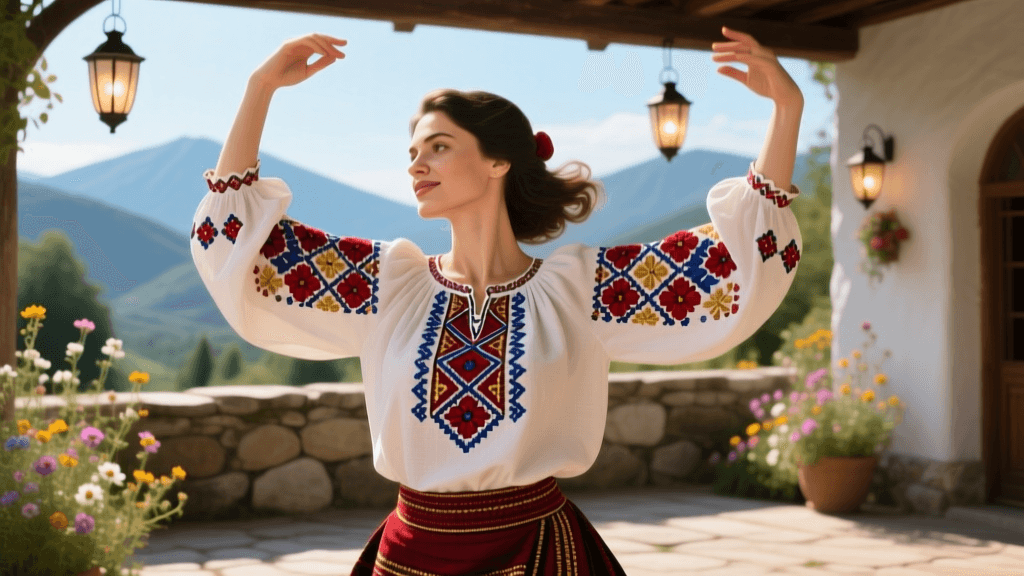
As the 2026 European summer festival season approaches, the traditional Romanian Ie (pronounced yee-eh) is experiencing a profound renaissance. Far from being a static museum relic, this iconic embroidered blouse is the living, breathing heart of Romania’s folk dance culture. At village squares and mountain clearings across the Carpathians, the Hora—the traditional Romanian circle dance—demands a garment that is as structurally engineered for movement as it is visually stunning. For cultural travelers, textile collectors, and folk dance enthusiasts attending the 2026 festivals, understanding the anatomy, regional variations, and proper sourcing of an authentic Ie is essential. The modern fast-fashion market is flooded with synthetic, mass-produced imitations, but the 2026 revival movement, championed by artisan cooperatives and cultural heritage organizations, is fiercely protecting the centuries-old techniques that make the genuine Ie a masterpiece of European folk dress.
Anatomy of a Dance-Ready Ie: Engineered for the Hora
The Hora is a communal circle dance characterized by syncopated footwork, linked arms, and rhythmic raising and lowering of the hands. A blouse worn for the Hora cannot simply be decorative; it must accommodate extreme mobility across the shoulders and torso. The authentic Ie achieves this through a highly specific, zero-waste geometric cutting technique that utilizes the entire width of the handwoven fabric loom.
The Crucial Underarm Gusset: Puișor
The secret to the dance-ready Ie lies in the puișor (literally "little chicken"), a diamond-shaped underarm gusset. According to textile archives at the Romanian Peasant Museum, this gusset is not merely a tailoring trick; it is a structural necessity. When dancers raise their arms during the crescendo of a Hora, the puișor expands, preventing the delicate linen or hemp bodice from tearing while allowing the heavy, embroidered sleeves to drape beautifully without restricting the dancer's range of motion. In 2026, authentic artisans in regions like Vâlcea and Gorj continue to hand-stitch these gussets, a hallmark of quality that machine-made festival replicas entirely lack.
The Architecture of Embroidery
The embellishment of the Ie follows a strict, ancestral hierarchy that maps perfectly onto the dancer's body:
- Altiță: The dense, rectangular band of embroidery covering the shoulder. When dancers raise their hands to the sky during the Sânziene (Midsummer) rituals, the altiță catches the sunlight, serving as a visual beacon of regional identity.
- Încreț: A lighter, often geometric gathering stitch located just below the altiță. It serves to transition the rigid shoulder band into the flowing fabric of the sleeve.
- Râuri: Meaning "rivers," these are the vertical streams of embroidery that flow down the length of the sleeve. During the spinning motions of the Hora, the râuri create a mesmerizing, kinetic blur of color and texture.
Regional Variations and Festival Mobility
Romania’s diverse topography has birthed distinct regional styles of the Ie, each adapted to the local climate and the specific tempo of regional folk dances. As you plan your 2026 festival itinerary, recognizing these regional markers will deeply enhance your appreciation of the performances.
Moldova and Bucovina: The Heavyweights
In the northeastern regions, the Ie is characterized by dense, polychromatic beadwork and heavy woolen thread woven into thick cotton or hemp. The colors are vibrant—deep crimsons, forest greens, and golds. While visually spectacular, these blouses are heavier, making them more suited to the slower, more deliberate Hora dances of the mountainous autumn festivals rather than the rapid-fire summer dances.
Oltenia and Muntenia: The Geometric Masters
Moving south, the blouses of Oltenia feature striking geometric patterns, predominantly using black, red, and occasionally metallic silver thread on ultra-fine, lightweight linen. This fabric choice is highly breathable, making it the premier choice for the sweltering July and August 2026 festival dates in the southern plains. The lighter weight allows for the rapid, energetic arm movements required in the Sârba, a faster, more aggressive cousin of the Hora.
Transylvania: Subtle Elegance
Transylvanian blouses often feature tighter cuffs and more subdued, earthy color palettes, with intricate black-on-black or dark blue-on-white embroidery. The tighter sleeve construction is practical for the cooler mountain air and prevents the fabric from catching on the elaborate, heavy woven aprons (catrințe) worn over the skirts during the dance.
2026 Sourcing Guide: Artisan Cooperatives vs. Commercial Market
Sourcing an authentic Ie in 2026 requires navigating a market heavily diluted by overseas mass-producers. The Romanian Cultural Institute has been instrumental in funding and promoting verified artisan cooperatives that preserve traditional looming and embroidery techniques. When purchasing a blouse for festival wear, it is vital to understand the tiers of the current market.
| Category | Material & Technique | 2026 Avg. Price (EUR) | Lead Time | Dance Suitability |
|---|---|---|---|---|
| Artisan Handmade | Hand-loomed hemp/linen, natural dyed threads, hand-stitched puișor. | €350 - €600+ | 3 - 6 Months | Excellent (Heirloom quality, perfect mobility) |
| Boutique Semi-Handmade | Commercial linen, machine-embroidered altiță, hand-finished seams. | €120 - €250 | 2 - 4 Weeks | Good (Durable, but lacks historical drape) |
| Mass-Produced Import | Synthetic blends, serged seams, printed or machine-chain-stitch patterns. | €30 - €60 | Immediate | Poor (Restrictive, traps heat, tears easily) |
Note: For the 2026 festival season, many authentic cooperatives in Gorj and Argeș require pre-orders placed in early spring due to the immense time required to complete the altiță shoulder bands by hand.
Key 2026 Romanian Folk Dance Festivals
To witness the Ie in its natural habitat, timing your visit to align with traditional agrarian and solstice festivals is crucial.
- Sărbătoarea Sânzienilor (Midsummer / Universal IA Day): Celebrated around June 24, 2026. This is a mystical, pre-Christian festival tied to the summer solstice. Villages across the Carpathians host twilight Hora dances where the white linen Ie glows against the bonfires. It is also globally recognized as Universal IA Day, a grassroots movement that has successfully reclaimed the blouse from high-fashion cultural appropriation.
- Hora de la Prislop: Held annually in August high in the Rodna Mountains. This is one of the oldest and most authentic pastoral festivals in Europe. The Hora dances here are robust, and the heavy Transylvanian and Maramureș folk costumes are on full display, layered against the alpine chill.
- Festivalul Internațional de Folclor (Sibiu): Usually scheduled for late summer, this curated festival brings together elite folk dance ensembles. While more theatrical, it is an unparalleled opportunity to study the kinetic movement of regional Ie variations under professional stage lighting.
Garment Care for Festival-Tested Textiles
An authentic, hand-embroidered Ie is an investment in European textile heritage. The natural dyes and hand-spun threads used by 2026 artisans require meticulous care, especially after being exposed to festival dust, sweat, and summer heat. Never machine-wash an authentic Ie. Instead, soak the garment in cool water with a pH-neutral, enzyme-free detergent. Gently agitate by hand, avoiding any twisting or wringing that could distort the încreț gathering or snap the delicate metallic threads found in Oltenian variants. Lay the blouse flat on a clean, dry towel, reshaping the puișor gussets and sleeves to their original geometric dimensions, and allow it to air dry in the shade to prevent UV fading of the natural botanical dyes. When ironing, always press from the reverse side over a thick, damp cloth to preserve the three-dimensional relief of the altiță embroidery.
Conclusion
The Romanian Ie is far more than a beautiful garment; it is a masterclass in functional, dance-specific textile engineering. As you step into the circle for the Hora during the 2026 festival season, wearing or observing the authentic blouse connects you to an unbroken lineage of Carpathian artisans. By prioritizing genuine craftsmanship over commercial replicas, we ensure that the rhythmic blur of the râuri and the structural brilliance of the puișor continue to define the vibrant landscape of European folk dress for generations to come.