Venetian Tabarro & Heritage Velvet Brands: 2026 Buyer Guide
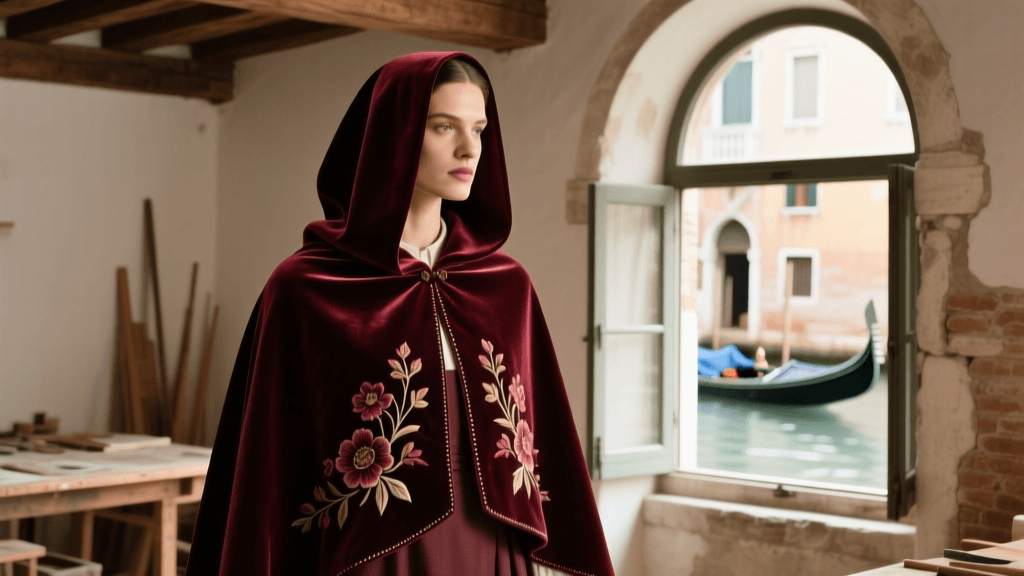
The Resurgence of the Venetian Tabarro in 2026
When discussing Italian regional traditional garments, few pieces command the quiet authority and historical weight of the Venetian tabarro. Unlike the highly structured, corseted gowns of the Renaissance, the tabarro is a masterclass in draped elegance—a semi-circular, sweeping cloak that served as the universal outerwear of the Venetian Republic. In 2026, we are witnessing a profound renaissance of this garment. Driven by a global shift toward slow fashion, artisanal heritage, and historically accurate regional dress, modern collectors and cultural enthusiasts are bypassing mass-produced carnival costumes in favor of bespoke, museum-quality cloaks crafted by Italy’s oldest textile houses.
The 2026 Venice Carnival and the year-round cultural festivals across the Veneto region have seen a record number of participants donning authentic tabarri. This surge in demand has revitalized historic weaving mills, pushing heritage brands to expand their bespoke services while adhering to modern sustainability and ethical sourcing standards. For the serious collector or cultural preservationist, understanding the anatomy, textile origins, and commissioning process of the tabarro is essential.
Anatomy of the Traditional Venetian Cloak
The tabarro is deceptively simple in appearance but highly complex in its tailoring. It is constructed from a single, continuous semi-circle of heavy fabric, known as the ruota (wheel). There are no side seams, and the garment hangs from the shoulders, fastened at the neck. The defining features include:
- The Bavero (Collar): Traditionally, the collar was the only area where overt displays of wealth were permitted under Venetian sumptuary laws. In 2026, while traditional astrakhan or mink collars are still available via vintage or certified antique sourcing, heritage brands are increasingly utilizing premium Italian shearling, upcycled historical furs, and heavy silk-satin to create striking, ethical alternatives.
- The Alamares (Frog Fastenings): Hand-braided silk or metallic cord fastenings that secure the cloak at the throat. These are often custom-dyed to match the soppanno (the inner lining).
- The Soppanno (Lining): A high-quality silk or lightweight velvet lining that provides structural integrity and a flash of color when the cloak billows in the Venetian wind.
According to archival records preserved by the Fondazione Musei Civici di Venezia, the tabarro was historically worn by all classes of Venetian society, with strict sumptuary laws dictating the exact type of velvet, lining, and collar permitted based on one's social standing and profession.
Top Heritage Velvet and Silk Brands in 2026
The soul of the tabarro lies in its textile. Authentic Venetian cloaks require soprarizzo, a highly specialized, double-pile silk velvet that is incredibly labor-intensive to produce. Today, only a handful of heritage brands in Italy maintain the original 18th-century handlooms required to weave this fabric. Below is a comparison of the premier heritage brands supplying the market in 2026.
| Heritage Brand | Founded | Specialty Textile | 2026 Avg. Price (per meter) | Best Application |
|---|---|---|---|---|
| Rubelli | 1858 | Soprarizzo Velvet | €450 - €800 | Heavy winter Tabarro, formal evening cloaks |
| Fortuny | 1921 | Printed Silk Velvet | €300 - €600 | Soppanno (lining), lighter spring cloaks |
| Tessitura L. Bevilacqua | 1499 | Hand-loom Velour | €500 - €950 | Museum-grade bespoke pieces, historical reenactment |
Rubelli: The Standard of Soprarizzo
Rubelli remains the undisputed king of Venetian upholstery and apparel velvets. Their 2026 collection features historically accurate pomegranate and artichoke motifs, woven on original Jacquard looms. A tabarro crafted from Rubelli’s heavy silk velvet offers unparalleled wind resistance and a luxurious, light-absorbing matte finish that is impossible to replicate with modern synthetic blends.
Fortuny: Master of the Printed Lining
While Fortuny is globally renowned for its Delphos gowns, their printed silk velvets and heavy cotton-silk blends are the premier choice for the soppanno (lining) of a tabarro. In 2026, Fortuny’s proprietary, eco-friendly pigment printing processes yield rich, metallic-infused linings that provide a stunning contrast when the cloak is thrown over the shoulder.
Tessitura Luigi Bevilacqua: The Living Museum
Operating since 1499, Tessitura Luigi Bevilacqua utilizes 18th-century handlooms that require two weavers to operate simultaneously. Commissioning a tabarro using Bevilacqua velvet is a multi-month process, as the fabric is woven to order. The resulting textile is a true investment piece, often passed down through generations as a family heirloom.
How to Measure and Commission a Bespoke Tabarro
Because the tabarro lacks sleeves and side seams, the fit relies entirely on the drape from the shoulders and the placement of the neck fastening. If you are commissioning a bespoke piece from a Venetian tailor in 2026, you will need to provide the following precise measurements:
- Neck Circumference: Measured at the base of the neck where the collar will sit. Crucial for the placement of the alamares.
- Shoulder Drop (Neck to Shoulder Edge): Determines where the heavy velvet will begin to cascade. An incorrect measurement here will cause the cloak to pull uncomfortably at the throat.
- Total Desired Length: Measured from the base of the neck down the spine. Traditional lengths are mezza gamba (mid-calf, approx. 105-115 cm) for walking, or lungo (ankle, approx. 135-145 cm) for formal, stationary wear.
- Armhole Placement: Though sleeveless, traditional tabarri feature hidden vertical slits lined with silk to allow the wearer to reach their pockets or hold a mask without disturbing the drape of the ruota.
2026 Pricing and Investment Value
The cost of an authentic, heritage-brand Venetian tabarro has risen in 2026, reflecting the scarcity of raw silk and the specialized labor required. A ready-to-wear tabarro made from commercial wool blends may cost between €800 and €1,200. However, a fully bespoke garment utilizing Rubelli or Bevilacqua silk velvet, lined with Fortuny printed silk, and finished with a premium shearling collar, typically ranges from €3,800 to €6,500.
Despite the high initial outlay, these garments hold their value exceptionally well. The 2026 luxury resale market shows that well-maintained heritage velvet cloaks from recognized Venetian mills retain up to 75% of their retail value, functioning as both wearable cultural artifacts and tangible textile investments.
Caring for Heritage Silk Velvet
Silk velvet is notoriously delicate and requires meticulous care to maintain its pile and structural integrity. To ensure your tabarro lasts for decades, adhere to the following maintenance protocols:
- Storage: Never fold a silk velvet tabarro, as this will permanently crush the pile and create irreversible creases. Always hang it on a custom-molded, wide wooden hanger that supports the weight of the heavy collar.
- Environment: Store in a breathable cotton garment bag in a climate-controlled room (ideally 18-20°C with 50% humidity). Use natural cedar blocks to deter moths; never use chemical mothballs, which will degrade the silk proteins and strip the velvet's natural luster.
- Cleaning: Spot cleaning is strictly forbidden. If the garment becomes soiled, it must be taken to a specialist textile conservator or a dry cleaner certified in handling historic silks and soprarizzo velvets. Standard dry cleaning solvents used in 2026 are much gentler than in the past, but the mechanical tumbling of standard machines will destroy the velvet pile.
- Reviving the Pile: If the velvet becomes crushed from wear, hang the cloak in a steam-filled bathroom for 20 minutes. The ambient moisture will allow the silk fibers to relax and stand back up. Never apply an iron or direct heat to the face of the fabric.
Conclusion
The Venetian tabarro is far more than a historical curiosity; it is a living, breathing element of Italian regional dress that continues to evolve. By investing in heritage brands like Rubelli, Fortuny, and Bevilacqua, modern wearers are not only acquiring a masterpiece of 2026 slow fashion but are actively funding the preservation of centuries-old weaving techniques. Whether worn to a grand ball at the Palazzo Pisani Moretta or kept as a treasured piece of cultural history, a bespoke silk velvet tabarro remains the ultimate expression of Venetian elegance.