Romanian Ie Blouse Styling 2026: Modern Sustainable Outfits
The Renaissance of the Romanian Ie in 2026
The global fashion landscape of 2026 has decisively pivoted away from hyper-accelerated micro-trends, embracing instead the profound narratives of heritage garments and slow fashion. At the forefront of this European folk dress revival is the traditional Romanian Ie (pronounced 'ee-yeh'), a masterfully embroidered blouse that has transcended its rural Carpathian origins to become a cornerstone of contemporary, sustainable wardrobes. Unlike the mass-produced 'peasant blouse' approximations that flooded fast-fashion markets in the early 2010s, the 2026 styling movement demands authenticity, ethical sourcing, and a deep respect for regional textile traditions.
Recognized globally for its intricate craftsmanship, the traditional Romanian blouse with embroidery on the shoulder was officially inscribed on the UNESCO Representative List of the Intangible Cultural Heritage of Humanity. This prestigious designation has catalyzed a new wave of sartorial appreciation, prompting modern designers and vintage curators to integrate authentic Ie blouses into everyday streetwear and high-end sustainable fashion. Today, wearing an Ie is not merely a stylistic choice; it is an act of cultural preservation and a commitment to ethical consumption.
Anatomy of the Ie: Understanding Heritage Construction
To style the Ie effectively in 2026, one must first understand its complex architectural construction. The blouse is not simply a garment; it is a canvas of symbolic geometry and ancestral coding. The traditional Ie is constructed from hand-woven linen, hemp, or cotton, utilizing a zero-waste rectangular cutting technique that ensures no fabric is discarded during the tailoring process.
The Three Pillars of Embroidery
- Altiță: The most defining feature of the Ie, the altiță is the dense, rectangular block of embroidery located on the upper shoulder. Historically, the complexity and color palette of the altiță indicated the wearer's social status, age, and specific village of origin.
- Increț: Directly beneath the altiță lies the increț, a delicate gathering or pleating of the fabric that provides structural volume and allows the blouse to drape elegantly over the body. This section often features a contrasting, narrower geometric motif.
- Râuri: Translating to 'rivers,' these are the vertical or diagonal bands of embroidery that flow down the sleeves and the bodice. The râuri guide the eye and create a sense of movement, mimicking the flowing water of the Carpathian landscapes.
Regional Variations: A Palette of Heritage
When sourcing an Ie for your 2026 wardrobe, recognizing regional variations is crucial for authentic styling. The Romanian Peasant Museum archives highlight distinct regional palettes that pair beautifully with different modern aesthetics:
- Muscel and Argeș: Characterized by striking black and gold embroidery on white linen. This high-contrast palette is ideal for pairing with sleek, monochromatic 2026 tailoring or dark, upcycled denim.
- Olt Region: Famous for its vibrant, geometric patterns utilizing deep reds, blacks, and metallic threads. The bold nature of the Olt Ie makes it a perfect statement piece for minimalist, neutral-toned outfits.
- Suceava and Bucovina: Features delicate, polychrome floral and geometric motifs with soft greens, yellows, and blues. These blouses integrate seamlessly into bohemian or soft-grunge contemporary styling.
Contemporary Styling: Bridging Folk and Modern Streetwear
Integrating a centuries-old garment into a 2026 wardrobe requires a balance of proportions and textures. The voluminous nature of the traditional Ie demands careful styling to avoid looking costumey. Here are three actionable styling frameworks for the modern revivalist.
1. The Upcycled Denim Contrast
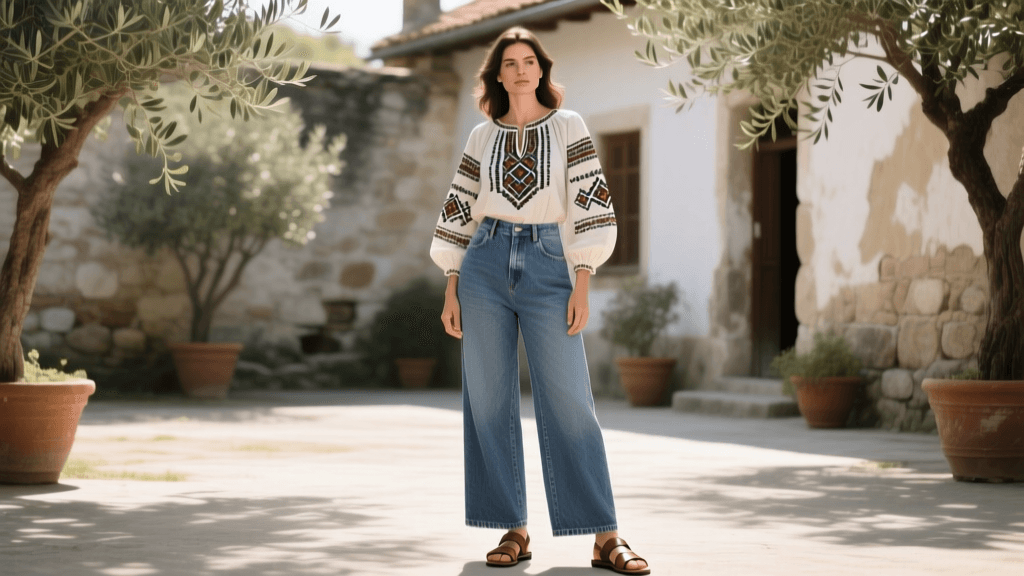
The most prominent trend in 2026 sustainable streetwear is the juxtaposition of delicate heritage textiles with heavy, structured workwear. Pair a white linen Ie featuring black and gold altiță embroidery with high-waisted, wide-leg upcycled denim. The rigidity of the raw denim grounds the ethereal volume of the blouse. Tuck the front of the blouse into the waistband to define the silhouette, and finish the look with chunky, plant-based leather boots. This combination honors the agrarian roots of the garment while firmly planting it in contemporary urban fashion.
2. Layering over Biodegradable Slip Dresses
For transitional spring and autumn weather, utilize the Ie as an oversized, open layer. Wear a finely woven hemp or Tencel slip dress in a muted, earthy tone—such as sage green or terracotta. Leave the Ie unbuttoned, allowing the râuri on the sleeves to cascade down the arms. Secure the look with a modern, vegan leather corset belt or a contemporary interpretation of the traditional brâu (woven wool belt). This styling method highlights the intricate sleeve embroidery while maintaining a fluid, modern silhouette.
3. Elevated Evening Minimalism
For evening wear, contrast the intricate hand-stitching of the Ie with severe, minimalist tailoring. A deeply embroidered blouse from the Olt region, featuring heavy metallic threads, looks exceptionally striking when tucked into a pair of high-waisted, tailored trousers made from regenerative wool. Keep accessories minimal—perhaps a single pair of modern geometric brass earrings—allowing the altiță to serve as the focal point of the ensemble.
Sourcing Authentic Pieces: A 2026 Buyer's Guide
As the demand for authentic European folk dress has surged in 2026, so too has the market for machine-made counterfeits. True revivalists must prioritize ethical sourcing, ensuring that the artisans keeping these traditions alive are fairly compensated. Institutions like the Textile Museum of Canada frequently emphasize the importance of provenance and ethical acquisition when building a heritage textile collection.
| Sourcing Channel | 2026 Price Range (USD) | Authenticity Level | Sustainability & Ethics Rating |
|---|---|---|---|
| Rural Artisan Cooperatives (Direct) | $250 - $800 | 100% Authentic, Handmade | Excellent (Direct artisan support) |
| Verified Vintage Platforms | $150 - $450 | Authentic (Mid-20th Century) | High (Circular fashion model) |
| Contemporary Ethical Fashion Brands | $300 - $1,200 | High (Modern interpretations) | Good to Excellent (Depends on brand) |
| Fast-Fashion 'Boho' Retailers | $30 - $80 | Low (Machine-made replicas) | Poor (Cultural appropriation, high waste) |
Pro-Tip for 2026 Buyers: When purchasing vintage or antique Ie blouses, examine the reverse side of the embroidery. Authentic hand-stitched pieces will show slight irregularities and a nearly identical pattern on the back, whereas machine-embroidered replicas will have a messy underside with visible connecting threads and uniform, synthetic stitching.
Preservation and Care for Hand-Embroidered Textiles
Owning an authentic Ie comes with the responsibility of proper textile preservation. The natural dyes used in traditional embroidery—such as madder root for reds and woad for blues—are highly sensitive to modern chemical detergents and UV exposure.
- Washing: Never machine wash an authentic Ie. Hand wash the garment in cold water using a pH-neutral, bio-enzymatic detergent specifically formulated for heritage textiles in 2026. Avoid wringing the fabric; instead, gently press the water out and lay it flat on a clean, dry towel to air dry away from direct sunlight.
- Ironing: Always iron the blouse on the reverse side using a low-heat steam setting. Place a clean cotton pressing cloth between the iron and the fabric to protect the raised embroidery threads from being crushed or scorched.
- Storage: Store your Ie folded in acid-free tissue paper inside a breathable cotton garment bag. Avoid wire hangers, as the weight of the wet embroidery during washing or the stress of gravity over time can distort the delicate increț gathering at the neckline and shoulders.
Conclusion
The integration of the Romanian Ie into 2026 contemporary wardrobes represents a triumph of slow fashion and cultural reverence. By understanding the intricate anatomy of the blouse, respecting its regional variations, and styling it with modern, sustainable textiles, we ensure that this European folk dress tradition remains a living, breathing art form. Whether paired with upcycled denim for a day in the city or layered over ethical hemp for an evening gathering, the Ie continues to weave the past into the fabric of the future.