Romanian Ie Blouse Revival: Contemporary Styling Guide 2026
The Heritage Luxury Movement of 2026
As the global fashion landscape shifts away from fleeting micro-trends and synthetic fast fashion, 2026 has firmly established 'heritage luxury' as the cornerstone of contemporary wardrobes. At the forefront of this European folk dress revival is the Romanian ie (pronounced 'yeh'), a traditional peasant blouse that has transcended its rural origins to become a highly sought-after garment in modern capsule wardrobes. Characterized by its intricate hand-embroidery, natural fibers, and historical symbolism, the ie offers a masterclass in sustainable, slow fashion. For contemporary stylists and heritage enthusiasts in 2026, integrating this centuries-old garment into modern tailoring requires an understanding of its anatomy, regional variations, and the delicate balance between traditional volume and modern silhouettes.
The Anatomy of the Authentic Ie
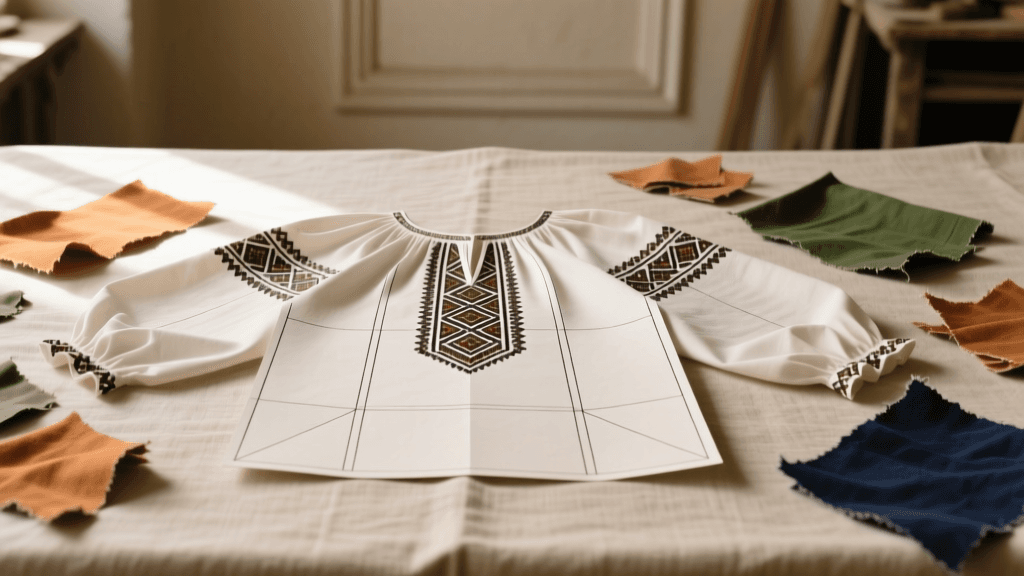
To style the ie effectively, one must first understand its structural components, which have remained largely unchanged for centuries but are being reinterpreted by modern artisans. According to the archives at the Romanian Peasant Museum, the classic cămașă cu altiță (blouse with shoulder embroidery) consists of four distinct decorative zones:
- Altița: The heavily embroidered rectangular band on the upper shoulder. In 2026, contemporary designers are using the altița as a focal point, pairing it with minimalist lower garments to let the shoulder craftsmanship shine.
- Increț: The gathered neckline, traditionally tied with a woven cord. Modern iterations often feature subtle silk ribbons or adjustable linen drawstrings for a more refined finish.
- Râuri: Meaning 'rivers,' these are the vertical embroidery motifs that flow down the sleeves, guiding the eye and elongating the arm.
- Chei: The lace-like joining seams that connect the front, back, and sleeve panels, often featuring geometric cutwork.
Regional Variations and 2026 Color Trends
The revival of the ie in 2026 is heavily influenced by regional authenticity. Collectors and sustainable fashion buyers are increasingly seeking out specific regional styles to match their personal color palettes and aesthetic preferences.
Muscel and Argeș
Originating from the southern Carpathian foothills, the Muscel ie is renowned for its sophisticated use of gold and black silk thread on pristine white linen or hemp. In 2026, the 'quiet luxury' trend has made the Muscel style a favorite for corporate and evening wear, as the metallic threads catch the light without overwhelming the outfit's overall minimalism.
Olt
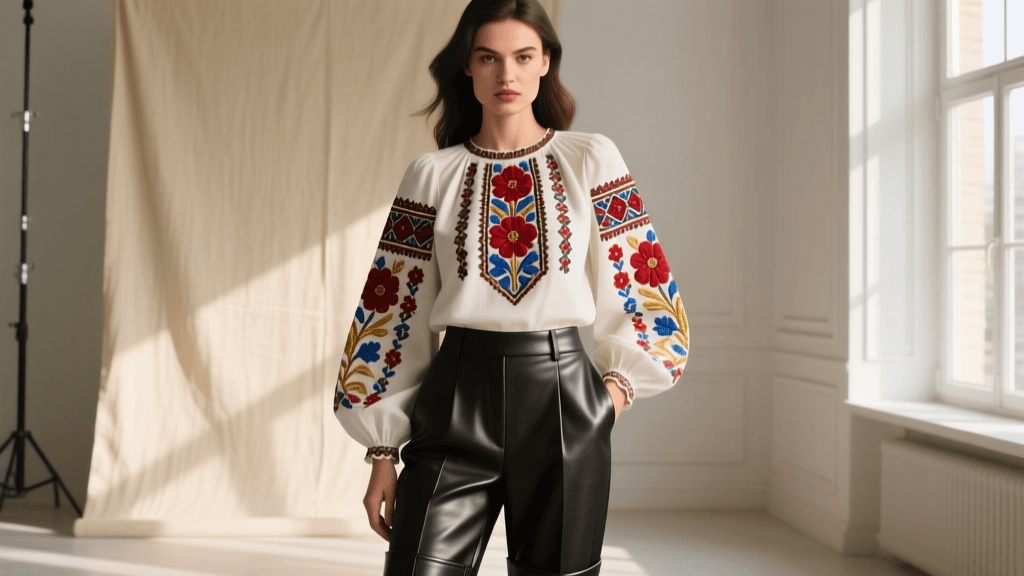
The Olt region is famous for its dense, vibrant floral motifs, predominantly featuring crimson red, deep burgundy, and occasional metallic silver threads. This style is heavily favored in contemporary streetwear, where the bold reds provide a striking contrast against dark, upcycled denim or charcoal wool.
Vrancea
Considered one of the most archaic and historically significant styles, the Vrancea ie relies on strict geometric patterns and earthy, natural dyes. Walnut husks, madder root, and woad provide a muted palette of ochres, rusts, and indigos that align perfectly with the 2026 'eco-brutalist' fashion aesthetic.
Sourcing Authentic Artisan Pieces in 2026
The market for authentic European folk dress has matured significantly. In 2026, a genuine, hand-embroidered hemp ie produced by a certified artisan cooperative averages between €280 and €550, reflecting the hundreds of hours of hand-stitching required. Consumers are moving away from mass-produced, machine-embroidered imitations and are instead supporting platforms that connect buyers directly with rural artisans. When sourcing, always look for the 'handmade' irregularities on the reverse side of the embroidery—a hallmark of true craftsmanship that the UNESCO Intangible Cultural Heritage frameworks actively seek to protect and promote.
Contemporary Styling: Pairing the Ie with Modern Tailoring
The traditional ie is inherently voluminous, featuring drop shoulders, billowing sleeves, and a boxy torso. The key to styling it in 2026 is contrast: balancing the historical volume with sharp, structured, or sleek modern pieces. Below is a guide to integrating the ie into various contemporary scenarios.
1. The Corporate Contrast
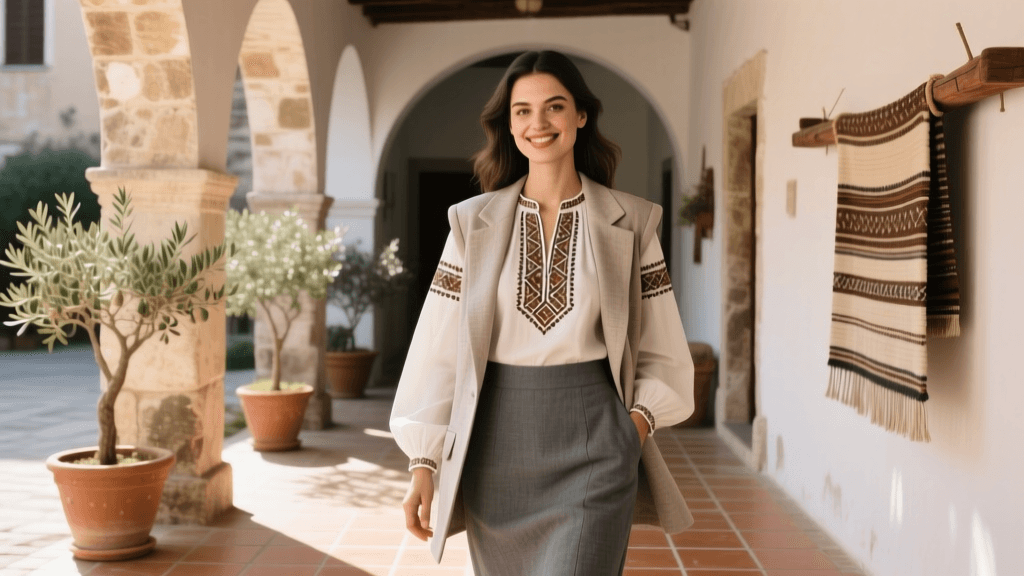
For the modern office, pair a white linen Muscel ie (with subtle gold altița) with high-waisted, wide-leg wool trousers in charcoal or navy. Tuck the blouse in at the front to define the waist while allowing the back to drape softly. Add a structured, oversized blazer draped over the shoulders. The sharp lapels of the blazer will frame the intricate neckline gathering (increț) beautifully.
2. Elevated Evening Minimalism
Transition the ie into evening wear by pairing a sheer, silk-blend Vrancea blouse with a bias-cut satin midi skirt. The juxtaposition of the matte, textured embroidery against the fluid sheen of the satin creates a sophisticated, high-fashion silhouette. Keep jewelry minimal—perhaps a single, sculptural gold cuff—to avoid competing with the sleeve motifs.
3. Heritage Streetwear
For weekend wear, lean into the Olt region's bold crimson florals. Wear the blouse untucked over straight-leg, raw-hem selvedge jeans. Cinch the waist with a vintage-inspired leather belt featuring brass hardware. Complete the look with chunky, lug-sole leather boots. This styling method roots the garment in utilitarian, contemporary street culture while honoring its peasant origins.
2026 Ie Styling Matrix
To help visualize these pairings, refer to the styling matrix below, which outlines the best fabric weights, garment pairings, and footwear for different occasions.
| Occasion | Ie Fabric & Weight | Modern Pairing | Footwear & Accessories |
|---|---|---|---|
| Corporate / Office | Medium-weight Linen (Muscel style) | High-waisted tailored wool trousers, structured blazer | Pointed-toe leather loafers, minimalist gold watch |
| Evening / Formal | Sheer Silk-Linen Blend (Vrancea style) | Bias-cut satin midi skirt, tailored wool overcoat | Strappy leather heels, sculptural metallic cuff |
| Streetwear / Casual | Heavyweight Hemp (Olt style) | Raw-hem selvedge denim, cropped leather moto jacket | Chunky lug-sole boots, wide leather belt |
| Resort / Summer | Lightweight Open-weave Cotton | Linen tailored shorts, woven tote bag | Leather gladiator sandals, woven straw hat |
Garment Care and Preservation
Owning an authentic piece of European folk dress requires a commitment to proper garment care, especially given the delicate nature of natural dyes and hand-spun threads. In 2026, the standard for heritage garment maintenance relies on eco-friendly, pH-neutral conservation methods.
- Washing: Never machine wash an authentic ie. Hand wash in cold water (below 20°C) using a specialized, pH-neutral detergent designed for delicate natural fibers.
- Drying: Do not wring or twist the fabric, as this can distort the chei (seams) and cause the linen to pucker. Gently press out excess water and lay the garment flat on a clean, dry towel away from direct sunlight to prevent the natural dyes from fading.
- Ironing: Iron the garment while it is still slightly damp. Always iron on the reverse side of the embroidery, placing a thick cotton towel underneath to protect the three-dimensional texture of the altița and râuri from being crushed.
- Storage: Store the blouse folded in acid-free tissue paper inside a breathable cotton garment bag. Avoid wire hangers, which can stretch the delicate drop-shoulder seams over time.
The Future of Folk Dress in Modern Wardrobes
The integration of the Romanian ie into 2026 contemporary fashion is more than a stylistic choice; it is a conscious rejection of homogenized global fashion in favor of cultural storytelling and artisanal preservation. As noted by textile historians at the Victoria and Albert Museum, the survival of traditional embroidery techniques relies entirely on their continued relevance in daily life. By pairing these historical masterpieces with modern tailoring, today's fashion enthusiasts are not merely wearing a garment—they are actively participating in the living, breathing evolution of European folk heritage.
Whether you are drawn to the subtle metallic gleam of the Muscel shoulder bands or the bold, earthy geometry of Vrancea, styling the ie requires a respectful balance of old and new. As we move through 2026, the message is clear: true luxury is not found in mass production, but in the meticulous, time-honored stitches of the past, thoughtfully woven into the fabric of the future.