Romanian Ie Blouse Revival: 2026 Styling & Authentic Sourcing Guide
The 2026 Renaissance of the Romanian Ie
The global fashion landscape of 2026 is defined by a radical return to heritage, authenticity, and slow craftsmanship. As consumers increasingly reject the homogenization of fast fashion, European folk dress has emerged from the archives and into the contemporary wardrobe. At the absolute forefront of this revival is the Romanian ie (traditional blouse), a garment that masterfully bridges the gap between ancestral textile art and modern sustainable styling.
Following its monumental inscription on the UNESCO Representative List of the Intangible Cultural Heritage of Humanity in late 2022, the cultural and legal protections surrounding the ie have matured significantly. By 2026, a robust framework of European Union geographical indications and intellectual property safeguards—championed by organizations like the World Intellectual Property Organization (WIPO)—has empowered local artisan cooperatives. This means that today’s conscious consumer can source authentic, ethically produced folk garments with unprecedented transparency, effectively starving the fast-fashion knockoff market.
Anatomy of the Altita: More Than Just Embroidery
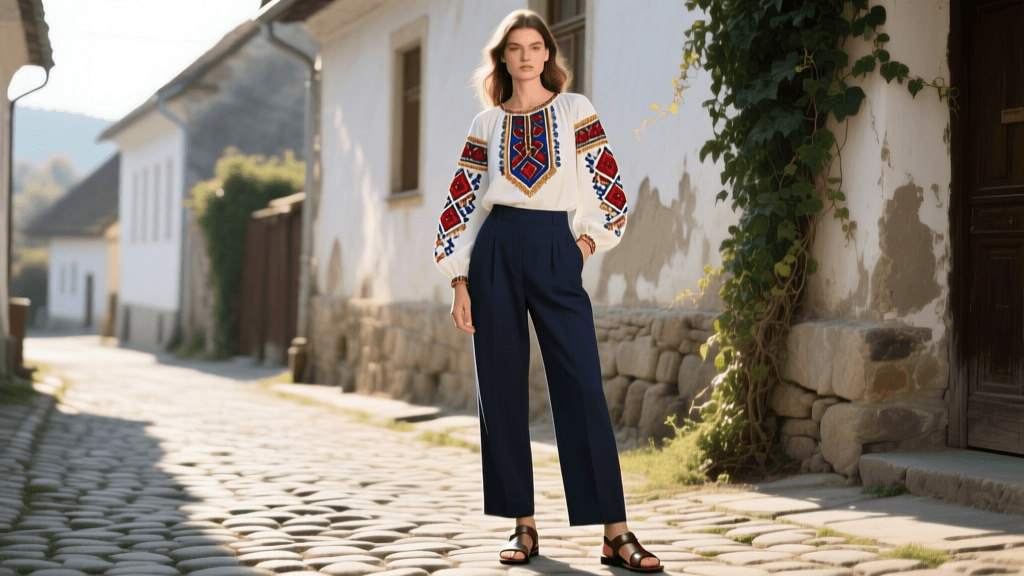
To style the ie effectively, one must first understand its architecture. The defining feature of the authentic Romanian blouse is the altiță (the heavily embroidered shoulder panel). According to the archives at the National Museum of the Romanian Peasant, the altiță is not merely decorative; it is a complex semiotic code.
- Altița (The Shoulder): The focal point of the garment, featuring dense, geometric, or floral motifs that historically indicated the wearer's region, marital status, and social standing.
- Încreț (The Gathering): A decorative band just below the altiță, originally designed to conceal the structural gathers of the fabric, now serving as a transitional visual element.
- Râuri (The Rivers): Vertical or diagonal stripes of embroidery flowing down the sleeves, symbolizing the flowing rivers of the Carpathian landscape and guiding the eye down the arm.
Regional Variations to Watch in 2026
Contemporary stylists are increasingly sourcing specific regional variations to match modern minimalist aesthetics. The Olt region offers stark, high-contrast geometric patterns in black and deep crimson on white hemp, perfect for sharp, corporate styling. Conversely, the Muscel region is famous for its opulent use of metallic gold and silver threads interwoven with silk, ideal for evening wear. The Vrancea region features highly symbolic, nature-inspired motifs in earthy tones, which pair beautifully with contemporary streetwear and raw denim.
Sourcing Authentic Garments: The 2026 Market Guide
Navigating the market requires a discerning eye. In 2026, the textile industry has standardized three distinct tiers of folk dress production. When investing in an ie, it is crucial to understand what you are paying for.
| Category | Production Method | 2026 Price Range (USD) | Materials | Ethical & Cultural Rating |
|---|---|---|---|---|
| Artizanal (Authentic) | 100% hand-woven and hand-embroidered by rural artisans. | $450 - $1,200+ | Handspun hemp, cotton, silk, metallic thread. | 5/5 (Directly supports heritage preservation) |
| Atelier (Semi-Handmade) | Machine-woven fabric, but hand-embroidered by trained seamstresses. | $180 - $400 | Commercial cotton/linen blends, cotton floss. | 4/5 (Supports local workshops) |
| Comercial (Mass-Produced) | Fully machine-embroidered, often produced outside of Romania. | $40 - $120 | Synthetic blends, polyester thread. | 1/5 (Cultural appropriation, fast fashion) |
Pro Tip for 2026 Buyers: Always look for the digital authenticity tag introduced by the Romanian Ministry of Culture in 2025. Scanning the QR code on an Artizanal garment will reveal the name of the artisan, the village of origin, and the exact number of hours spent on the embroidery (often exceeding 150 hours per blouse).
Contemporary Styling Masterclass: Integrating the Ie
The key to wearing the ie in 2026 is juxtaposition. The blouse is inherently romantic and voluminous; therefore, it must be grounded with structured, modern, or avant-garde pieces to avoid looking like a theatrical costume. Here are four highly actionable styling formulas for the modern wardrobe.
1. The Corporate Edge (Boardroom Ready)
Swap out the traditional silk camisole for a monochromatic Olt region ie featuring subtle black-on-black or deep navy embroidery. Tuck the blouse into high-waisted, wide-leg tailored wool trousers. Cinch the waist with a minimalist leather belt featuring a subtle geometric buckle. Finish with pointed-toe leather ankle boots. The volume of the sleeves provides a powerful, architectural silhouette that commands respect in professional settings.
2. Elevated Streetwear (Weekend Casual)
Take a lightweight, vintage cotton Vrancea ie and layer it over a fitted, ribbed black turtleneck. Pair this with raw, selvedge denim jeans and chunky, sustainable leather sneakers. To modernize the traditional gathered neckline, leave the ties undone and layer a delicate, modern gold chain necklace over the fabric. This look bridges the gap between heritage craft and urban utility.
3. Evening Elegance (Gala & Events)
For formal events, source a Muscel ie woven with metallic gold or silver thread. Tuck it into a floor-length, high-slit silk skirt in a complementary jewel tone (such as emerald or sapphire). Ditch the traditional woven belt for a sleek, metallic corset belt that echoes the embroidery. The metallic threads will catch the ambient light, offering a breathtaking alternative to the standard sequined evening gown.
4. The Transitional Layer (Autumn/Spring)
Use the ie as a statement mid-layer. Wear a fitted turtleneck underneath, the ie over it, and top it with a structured, oversized blazer or a longline wool trench coat. Allow the intricate altiță on the shoulders and the gathered cuffs to peek out from beneath the tailored outerwear. This creates a rich, textured look that highlights the craftsmanship without overwhelming the wearer.
Textile Preservation: Caring for Heritage Garments
An authentic, hand-embroidered ie is an investment piece that, with proper care, will outlive you. The 2026 standards for textile preservation emphasize eco-friendly, non-toxic care routines that protect both the fibers and the environment.
- Washing: Never machine wash an authentic ie. Hand wash in cold water using a pH-neutral, plant-based detergent designed for delicate natural fibers. Do not wring or twist the fabric; instead, gently press the water out and roll the garment in a clean, dry towel to absorb excess moisture.
- Drying: Lay the blouse flat on a mesh drying rack in a shaded, well-ventilated area. Direct sunlight will rapidly fade the natural dyes used in traditional embroidery, particularly the deep reds and yellows.
- Ironing: Turn the garment inside out. Place a clean, damp cotton press cloth between the iron and the embroidery to prevent crushing the three-dimensional texture of the altiță. Use a low-heat steam setting.
- Storage: Store the blouse flat in an acid-free archival box lined with unbleached cotton muslin. If hanging is necessary, use a padded, wide-shoulder hanger to prevent stress on the delicate shoulder seams, and cover it with a breathable cotton garment bag.
The Future of Folk Dress in the Modern Wardrobe
The revival of the Romanian ie in 2026 is not a fleeting trend; it is a permanent recalibration of how we value clothing. By choosing to wear authentic European folk dress, we are participating in a global movement that prioritizes human hands over machines, cultural integrity over plagiarism, and enduring quality over seasonal disposability. Whether you are styling it for a high-stakes business meeting or a casual weekend outing, the ie remains a profound testament to the enduring power of heritage craftsmanship in the modern world.