The Romanian Ie Blouse: 2026 Authentic Revival & Styling
The Renaissance of the Romanian Ie in 2026
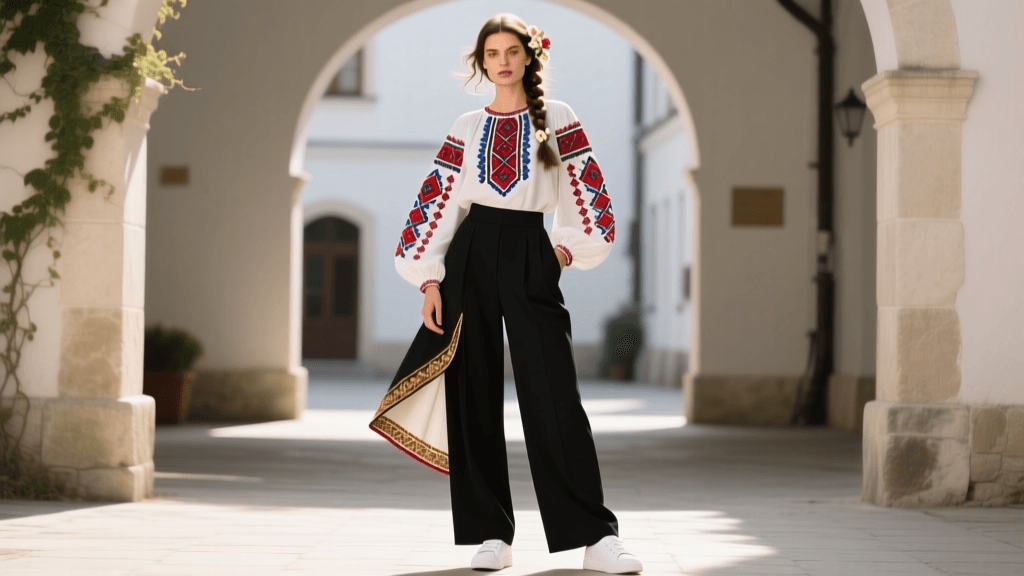
The global fashion landscape of 2026 has experienced a definitive pivot towards heritage utility, slow fashion, and culturally significant garments. At the absolute forefront of this European folk dress revival is the Romanian ie (peasant blouse). Far from being a relic confined to museum archives, the ie has been reclaimed by contemporary designers, streetwear enthusiasts, and heritage craft advocates. Since its celebrated inscription on the UNESCO Intangible Cultural Heritage list, the garment has seen a massive resurgence, transitioning from a symbol of rural agrarian life to a staple of high-fashion and elevated urban wardrobes.
However, the 2026 revival brings a critical challenge: distinguishing between genuine, artisanal heritage pieces and mass-produced, culturally diluted knockoffs. This comprehensive guide explores the anatomy of the authentic ie, how to source genuine textiles this year, and actionable strategies for integrating this masterpiece of Eastern European folk dress into your contemporary 2026 wardrobe.
The Anatomy of an Authentic Ie: Decoding the Embroidery
To style the ie with intention, one must first understand its architecture. The traditional blouse is not merely a piece of clothing; it is a coded textile manuscript that historically communicated the wearer's age, marital status, and regional origins. According to the Romanian Peasant Museum, the construction of a genuine ie relies on three distinct embroidered zones, each carrying profound symbolic weight.
1. The Altiță (The Shoulder)
The altiță is the most complex and visually striking element of the blouse, located on the upper shoulder and sleeve. In 2026, contemporary textile artisans are reviving the intricate geometric and solar motifs of the altiță using hand-spun hemp and silk threads. This section traditionally features the densest embroidery, serving as a protective talisman and a display of the weaver's supreme technical skill.
2. The Încreț (The Neckline Gather)
Beneath the altiță lies the încreț, a decorative band that bridges the shoulder embroidery with the vertical stripes of the sleeve. Historically, the încreț featured a contrasting color palette, often utilizing muted yellows, golds, or deep indigos. In modern 2026 revivals, the încreț is celebrated for its textural contrast, providing a subtle break in the garment's visual rhythm that pairs beautifully with minimalist modern tailoring.
3. The Râuri (The Rivers)
Flowing down the sleeve and the bodice are the râuri (rivers). These vertical or diagonal bands of embroidery dictate the movement and drape of the blouse. The spacing of the râuri is crucial; authentic pieces feature meticulously calculated negative space that allows the natural linen or hemp fabric to breathe and billow, creating the signature romantic silhouette of the garment.
Sourcing Authentic Pieces in the 2026 Market
As the demand for European folk dress has skyrocketed, so has the influx of fast-fashion imitations. In 2026, an authentic, hand-embroidered ie crafted by rural cooperatives or master artisans typically ranges from €350 to €900, reflecting the hundreds of hours of meticulous hand-stitching required. Mass-produced versions, often featuring machine-stitched polyester threads on synthetic blends, flood the market at the €40 to €80 price point.
To ensure you are supporting the true revival of this craft, look for certifications from heritage cooperatives and platforms aligned with the La Blouse Roumaine movement. The UNESCO Intangible Cultural Heritage framework has been instrumental in 2026 for establishing strict geographical indication (GI) tags for authentic regional blouses, particularly those originating from Argeș, Vâlcea, and Suceava.
Contemporary Styling: Integrating the Ie into 2026 Wardrobes
The key to styling the ie in 2026 is contrast. The blouse is inherently romantic, voluminous, and heavily textured. To prevent the look from veering into costume territory, contemporary stylists recommend anchoring the piece with structured, utilitarian, or avant-garde modern garments. Below are three highly actionable styling frameworks for the current year.
Look 1: The Urban Minimalist (Heritage Meets Quiet Luxury)
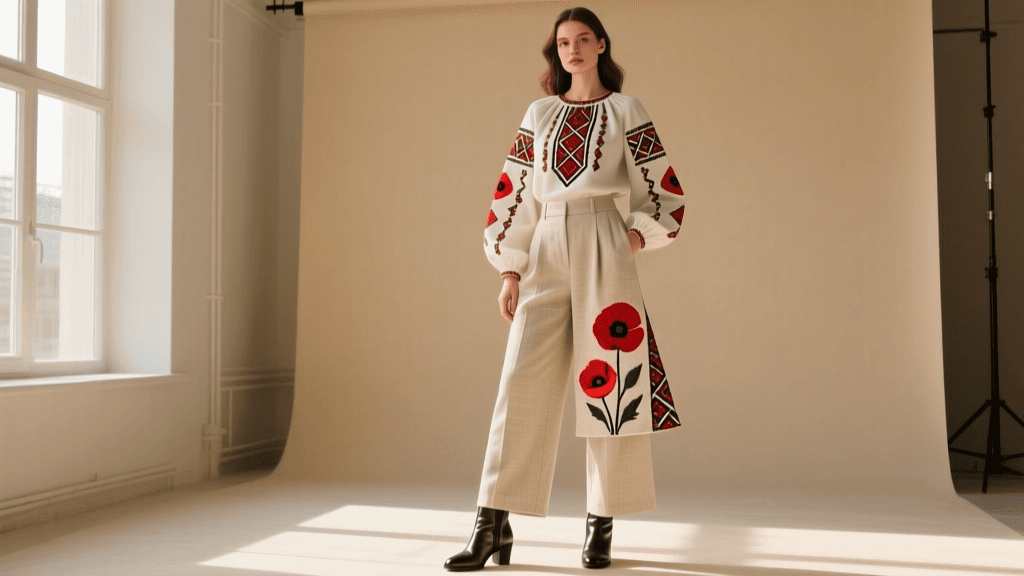
For a sophisticated, day-to-evening look, pair a white linen ie featuring monochromatic black or deep navy râuri with high-waisted, wide-leg tailored trousers in a heavy wool or structured crepe.
- The Silhouette: Tuck the blouse in completely to define the waist, allowing the altiță to sit prominently on the shoulders.
- Footwear: Pointed-toe leather ankle boots or sleek, minimalist loafers.
- Accessories: A single, sculptural metallic cuff bracelet and a structured leather top-handle bag. Avoid excessive beading or bohemian jewelry, which clashes with the intricate embroidery.
Look 2: Neo-Grunge Layering (Textural Dissonance)
The 2026 streetwear scene has embraced the 'textural dissonance' trend, and the ie is the perfect candidate. Take a slightly sheer, vintage-style hemp ie and layer it over a sleek, bias-cut silk slip dress in a deep jewel tone (such as emerald or oxblood).
- The Silhouette: Wear the blouse untucked, belted loosely at the hips with a distressed leather belt to create a blouson effect over the slip dress.
- Footwear: Heavy-soled combat boots or chunky platform derbies.
- Outerwear: An oversized, dropped-shoulder leather bomber jacket or a cropped shearling moto jacket.
Look 3: Avant-Garde Proportions (High-Fashion Heritage)
For fashion-forward individuals attending gallery openings or creative industry events, play with extreme proportions. Select an ie with exaggerated, balloon sleeves (a hallmark of the Olt region) and pair it with a structured, architectural leather midi skirt.
- The Silhouette: The volume should be concentrated on the top half. The skirt should be rigid and A-line or pencil-cut to ground the outfit.
- Footwear: Knee-high leather stiletto boots or sculptural heel mules.
- Styling Trick: Use the blouse's traditional bentiță (drawstring neckline) to create a deep, dramatic V-neck or an off-the-shoulder bardot effect, modernizing the traditional modest cut.
Artisan vs. Mass-Market: The 2026 Buyer's Comparison
When investing in European folk dress, understanding the material and structural differences is vital for longevity and ethical consumption. The Victoria and Albert Museum's textile conservation guidelines emphasize that natural fibers and traditional dyes age beautifully, whereas synthetic alternatives degrade rapidly.
| Feature | Authentic Artisan Ie (2026) | Mass-Produced Fast Fashion Ie |
|---|---|---|
| Base Fabric | Hand-woven linen, hemp, or raw cotton | Polyester blends, synthetic rayon, or chemically treated cotton |
| Embroidery Thread | Silk, wool, or mercerized cotton; naturally dyed | Synthetic acrylic or polyester threads; chemically dyed |
| Stitching Technique | Hand-stitched; reverse side is nearly as neat as the front | Machine-embroidered; messy backing with loose threads and stabilizers |
| Price Range (2026) | €350 - €900+ | €35 - €85 |
| Longevity | Generational; increases in value as a vintage textile | 1-3 seasons; prone to pilling, fading, and seam tearing |
Textile Care and Preservation for Heritage Blouses
Owning an authentic ie requires a commitment to proper textile care. The natural fibers and organic dyes used in 2026 artisanal revivals are highly sensitive to modern washing conventions.
The Golden Rule of Heritage Care: Never subject a hand-embroidered ie to a washing machine, harsh detergents, or direct sunlight. Treat the garment as you would a museum artifact.
Washing and Drying
Hand wash the blouse in cold water using a pH-neutral, specialized textile soap. Do not wring or twist the fabric, as this will distort the încreț and damage the tension of the râuri embroidery. Instead, gently press the water out and roll the garment in a clean, dry cotton towel to absorb excess moisture. Lay it flat on a drying rack away from direct UV light, which can cause natural indigo and walnut dyes to fade prematurely.
Ironing and Storage
Iron the blouse while it is still slightly damp, always on the reverse side, using a low-to-medium heat setting. Place a clean cotton pressing cloth between the iron and the embroidery to prevent crushing the three-dimensional stitches. For long-term storage, never use wire hangers, which will stretch the delicate shoulder seams. Fold the ie with acid-free tissue paper to cushion the embroidered folds, and store it in a breathable cotton garment bag in a cool, dry environment.
Conclusion: Wearing History with Intention
The 2026 revival of the Romanian ie is more than a fleeting fashion trend; it is a profound reclamation of European textile heritage. By understanding the intricate anatomy of the altiță, încreț, and râuri, and by committing to ethical, artisanal sourcing, you participate in the preservation of a centuries-old craft. Whether styled with structured tailoring for a minimalist aesthetic or layered with grunge elements for streetwear edge, the authentic ie remains a powerful, versatile, and deeply meaningful addition to the contemporary wardrobe.