Mastering Romanian Ie Altita Smocking Patterns in 2026
Introduction to the Romanian Ie and the Altiță
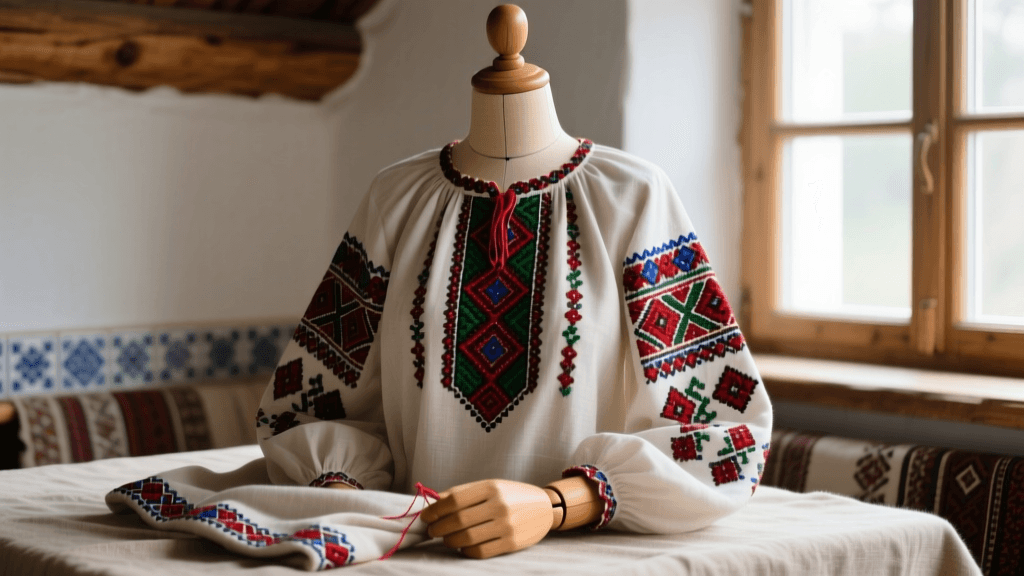
The traditional Romanian Ie (peasant blouse) is a masterpiece of Eastern European textile heritage, but its most structurally complex and visually striking element is the Altiță. The Altiță is the heavily embroidered, smocked rectangular panel that sits squarely on the shoulder, connecting the bodice to the sleeve. Recognized for its profound cultural significance, the traditions surrounding the Ia were inscribed on the UNESCO Intangible Cultural Heritage list, cementing its status in global textile history.
In 2026, the revival of European folk dress has evolved beyond simple cross-stitch reproduction. Contemporary heritage crafters and historical costumers are now focusing on the structural engineering of these garments. The Altiță relies on a precise mathematical grid and advanced smocking techniques—specifically honeycomb and diamond smocking—to create a three-dimensional, textured shoulder piece that allows for freedom of movement while supporting the heavy embroidery of the sleeve. This guide details the exact construction patterns, drafting techniques, and material requirements for building an authentic Altiță in the modern 2026 crafting landscape.
Essential Materials and 2026 Tool Recommendations
Constructing a historically accurate Altiță requires specific textile weights and thread compositions. The structural integrity of the smocking depends entirely on the base fabric's ability to hold sharp, permanent pleats without tearing under the tension of the embroidery threads.
Fabric Selection for the Modern Revival
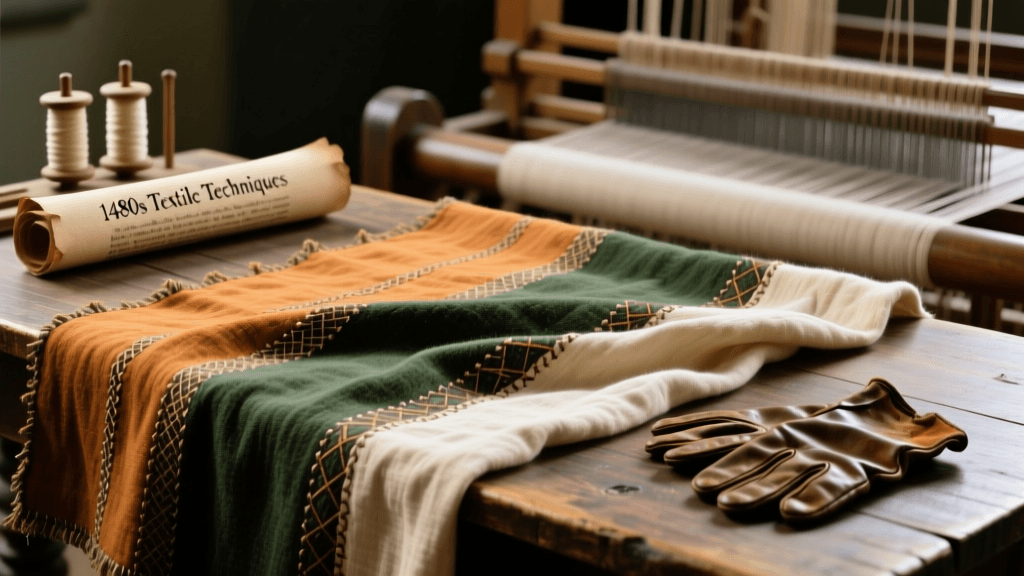
Historically, the Altiță was constructed on hand-woven hemp or flax. In 2026, the gold standard for heritage revival is 28-count or 32-count 100% evenweave linen. Brands like Zweigart and Permin of Copenhagen dominate the 2026 market, offering heritage linens that mimic the slight irregularity of hand-woven cloth while providing the mathematical precision required for grid-based smocking. Expect to pay approximately $55 to $70 USD per yard for high-quality 28-count evenweave linen in 2026. You will need a minimum of 60 cm (24 inches) of fabric width to achieve the necessary 3:1 gathering ratio for a standard 18 cm wide shoulder panel.
Thread, Needles, and Marking Tools
For the gathering threads, use a strong, waxed polyester or heavy-duty cotton basting thread that will not snap when pulled tightly. For the visible smocking and embroidery, the 2026 consensus among master artisans is to use DMC Retors Mat or Anchor Marlitt cotton threads. These threads possess a slight sheen and high tensile strength, preventing fraying during the repetitive passes required for honeycomb smocking. Use a size 22 or 24 tapestry needle with a blunt tip to avoid piercing and splitting the linen warp and weft threads. For grid marking, water-soluble fabric pens with a 0.5mm tip or miniature laser grid projectors (a popular 2026 haberdashery tool) ensure perfect 6mm dot spacing.
Drafting the Geometric Altiță Pattern
The Altiță is not merely gathered; it is mathematically mapped. The geometric patterns seen in regions like Argeș and Vâlcea rely on a strict underlying grid. Before a single stitch is placed, the cloth must be drafted.
The Mathematics of the Smocking Grid
The standard Altiță grid utilizes a 6mm (1/4 inch) spacing between dots, both horizontally and vertically. This creates a perfect square grid. To achieve the signature dense, textured look of the Romanian shoulder piece, the fabric must be gathered at a ratio of 3:1 or 4:1. This means that to create a finished Altiță that is 15 cm wide, you must draft and mark a grid that is 45 cm to 60 cm wide.
- Row 1 to 4: The top gathering rows, which will eventually be hidden beneath the neckline casing or collar.
- Row 5 to 12: The primary Altiță smocking zone, where the honeycomb and diamond structural stitches are executed.
- Row 13 to 20: The transition zone, where the smocking gradually releases into the flat, heavily embroidered surface of the upper sleeve.
Step-by-Step Altiță Smocking Construction
Executing the Altiță requires patience and an understanding of fabric manipulation. According to the Royal School of Needlework, mastering foundational smocking stitches is critical before attempting complex regional variations. The Romanian technique builds upon these foundations to create dense, raised geometric nodes.
Step 1: Preparing the Grid and Gathering
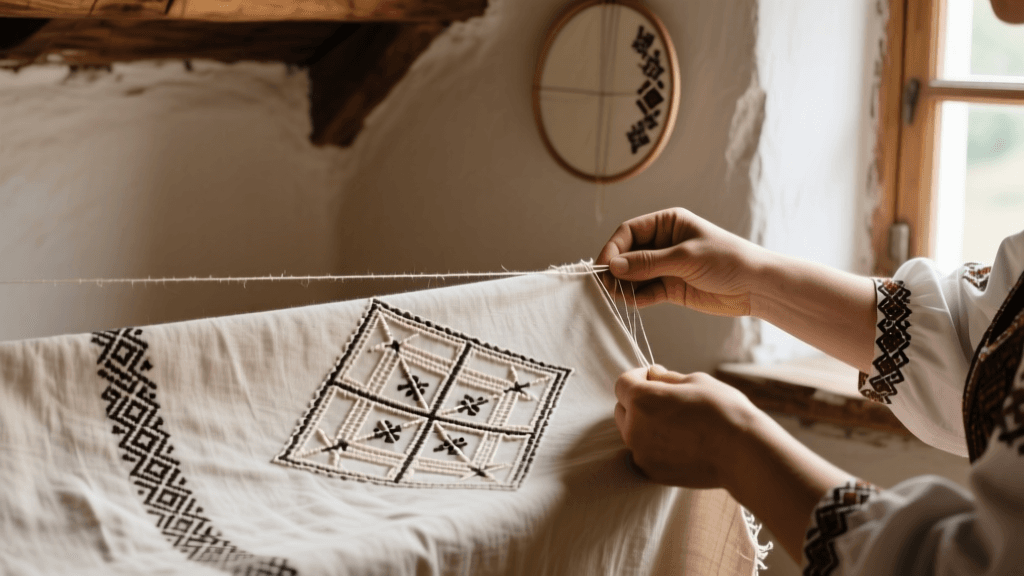
Begin by threading a long needle with your heavy basting thread. Knot the end and start at the bottom right dot of your grid. Pick up exactly 6mm of fabric (the distance to the next dot) and pull the thread through. Continue across the row, picking up a stitch at every single marked dot. Do not pull the thread tight yet; leave a long tail at the end of the row. Repeat this for all 20 horizontal rows.
Once all rows are threaded, gently pull the gathering threads simultaneously from the left side. Use your fingers to stroke the pleats downward, encouraging the linen to fold into crisp, even accordion pleats. Tie the gathering threads off in pairs at the left edge to lock the 3:1 ratio in place. The fabric should now resemble a tightly corduroy-textured block.
Step 2: Executing the Honeycomb and Diamond Stitches
The structural core of the Altiță is the honeycomb stitch, which locks the pleats together while allowing lateral stretch. Thread your tapestry needle with the DMC Retors Mat cotton.
- Anchor the Thread: Start at the top left dot of Row 5. Hide the knot inside the pleat.
- The First Pass: Bring the needle up through the top left dot (Row 5). Reach across to the second dot (Row 6) and take a small stitch, pulling the two pleats tightly together. Wrap the thread around the needle and pull through to create a tight knot locking the two pleats.
- The Diagonal Shift: From this locked position, slide the needle down the inside of the second pleat and bring it up at the third dot on Row 5. Lock this to the fourth dot on Row 6.
- Completing the Row: Continue this alternating diagonal locking pattern across the entire width of the Altiță. This creates the classic 'V' shaped honeycomb texture.
- Diamond Accents: In traditional Vâlcea patterns, every fourth honeycomb cell is filled with a contrasting diamond stitch, where the thread wraps around the exterior of the pleat rather than locking the interior, creating a raised, 3D geometric node.
Traditional vs. 2026 Modern Revival Techniques
While the visual output remains historically faithful, the methodology for constructing the Altiță has been refined with modern haberdashery tools. The table below compares historical village methods with the optimized techniques used by 2026 heritage garment makers.
| Feature | 19th-Century Traditional | 2026 Heritage Revival |
|---|---|---|
| Base Fabric | Hand-woven hemp or coarse flax | 28-count Zweigart evenweave linen |
| Grid Marking | Charcoal rubbings and thread counting | Water-soluble 0.5mm pens & laser grid projectors |
| Thread | Hand-spun, naturally dyed wool/silk | DMC Retors Mat & Anchor Marlitt cotton |
| Gathering Method | Hand-rolled running stitch | Precision hand-gathering or mechanical pleating boards |
| Avg. Material Cost | Subsistence / Barter economy | $85 - $140 USD per blouse (2026 pricing) |
Troubleshooting Common Smocking Tension Issues
Even experienced embroiderers face challenges when constructing the Altiță. The most common issue in 2026 workshops is 'pleat splaying,' where the bottom of the smocked panel flares out wider than the top. This occurs when the gathering threads at the bottom rows are pulled tighter than the top rows. To fix this, always measure the width of the gathered block with a rigid quilting ruler before tying off your gathering threads. The block must be perfectly rectangular.
Another frequent issue is thread snapping during the honeycomb stitch. The 28-count linen creates sharp, abrasive folds. If your cotton thread snaps, switch to a thread conditioner or beeswax. Running your embroidery thread through a small block of organic beeswax before stitching coats the fibers, reducing friction against the linen and significantly increasing tensile strength without altering the historical matte appearance of the finished garment.
Sourcing Authentic Materials in 2026
Sourcing the correct materials is vital for a successful Altiță. In 2026, specialized online heritage haberdasheries have made authentic Eastern European textile supplies globally accessible. When purchasing linen, always request a 'hard finish' or 'sizing-intact' evenweave. Soft, pre-washed linens will not hold the crisp pleats required for the geometric smocking grid. For threads, avoid standard 6-strand embroidery floss; it is too flat and lacks the structural volume needed to lock the heavy linen pleats together. Stick to twisted, matte-finish cottons specifically designed for smocking and canvas work.
Conclusion
Constructing the Romanian Altiță is a rigorous exercise in textile geometry and structural sewing. By understanding the mathematical grid, utilizing the correct 2026 heritage materials, and mastering the honeycomb locking stitch, modern makers can faithfully recreate this iconic element of European folk dress. The Altiță is more than just a decorative shoulder piece; it is an engineering marvel of traditional garment construction that provides both beauty and dynamic movement, ensuring the legacy of the Romanian Ia continues to thrive in the modern era.