Authentic Ukrainian Vyshyvanka Guide 2026: Regional Patterns & Sourcing
The Enduring Legacy of the Vyshyvanka in 2026
In 2026, the Eastern European folk dress renaissance has reached new heights, with the Ukrainian vyshyvanka standing at the forefront of this global movement. Far more than a mere garment, the vyshyvanka is a woven manuscript of Slavic history, identity, and resilience. As contemporary fashion increasingly pivots toward slow fashion, heritage craftsmanship, and meaningful storytelling, the traditional embroidered shirt of Ukraine and neighboring Slavic regions has transitioned from a regional ceremonial staple to a highly sought-after piece of global sartorial art.
For collectors, cultural enthusiasts, and those seeking to integrate authentic Eastern European folk dress into their modern wardrobes, understanding the nuances of regional embroidery is essential. The mass market is currently flooded with machine-made imitations, making the ability to identify genuine, hand-embroidered heritage pieces a vital skill in 2026. This comprehensive guide explores the distinct regional patterns, authentic sourcing methods, and proper textile preservation techniques for the vyshyvanka.
Decoding Regional Embroidery Techniques and Motifs
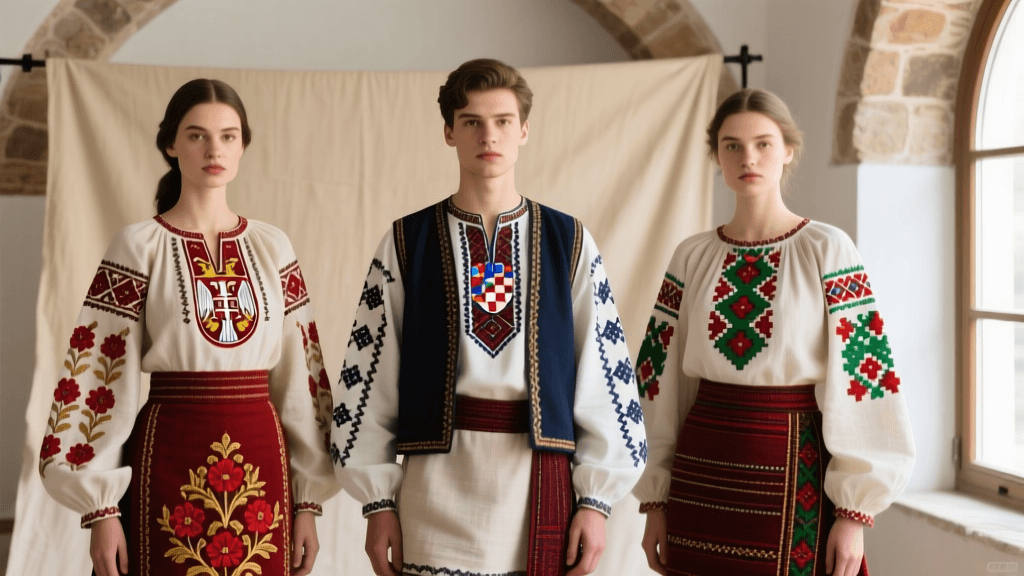
The beauty of the Slavic and Balkan folk dress tradition lies in its hyper-localized nature. Historically, a person's village, marital status, and even their family's trade could be deciphered from the geometric and floral codes stitched into their garments. According to research highlighted by Britannica's comprehensive archives on folk art, these textile traditions served as both protective talismans and community identifiers.
Poltava: The Elegance of White-on-White
The Poltava region is world-renowned for its bil po bilomu (white-on-white) embroidery. This technique relies on texture rather than color, utilizing intricate cutwork, drawn-thread work, and overcast stitching to create shadow and light on natural linen. In 2026, authentic Poltava shirts are considered the pinnacle of minimalist luxury in Eastern European folk dress, often commanding premium prices due to the hundreds of hours required to complete a single collar and cuff set.
Hutsul: Carpathian Geometry and Vibrant Hues
Originating from the Carpathian Mountains, Hutsul embroidery is instantly recognizable by its dense geometric patterns and bold color palettes. Traditional Hutsul pieces heavily feature red, black, and yellow threads, often augmented with metallic threads, brass spangles, and glass beads. The primary stitch used here is the nyzynka, a surface darning stitch that creates a woven, tapestry-like effect on the face of the fabric, while the reverse side remains remarkably neat.
Bukovyna: Cross-Stitch and Floral Abundance
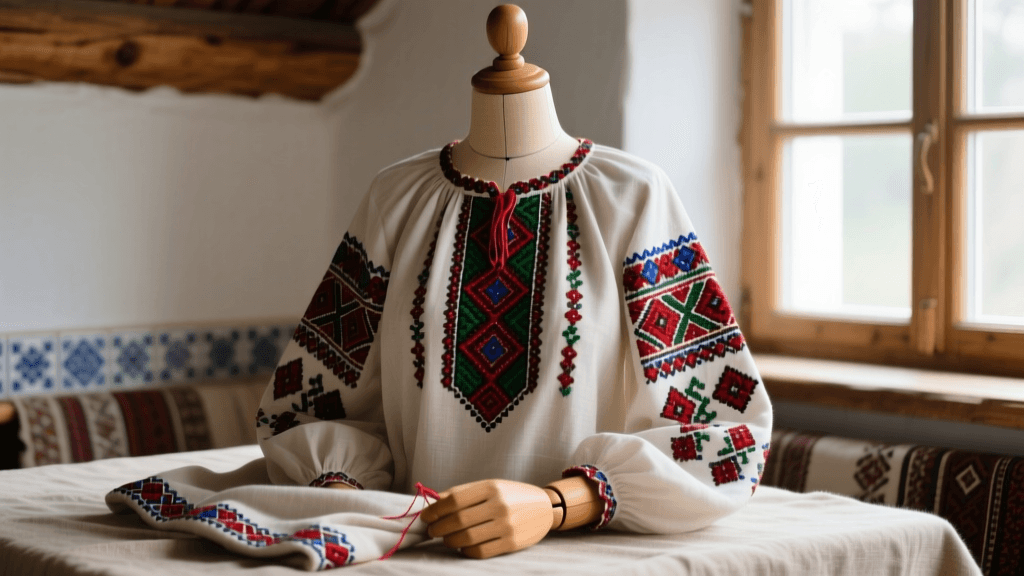
Bukovynian folk dress bridges the gap between strict Slavic geometry and the flowing floral motifs of neighboring Balkan traditions. The region favors the cross-stitch technique, allowing for highly detailed, curvilinear designs featuring stylized roses, oak leaves, and viburnum berries. The color palette is rich and earthy, frequently incorporating deep burgundies, forest greens, and gold.
Volyn: Minimalist Red and Black
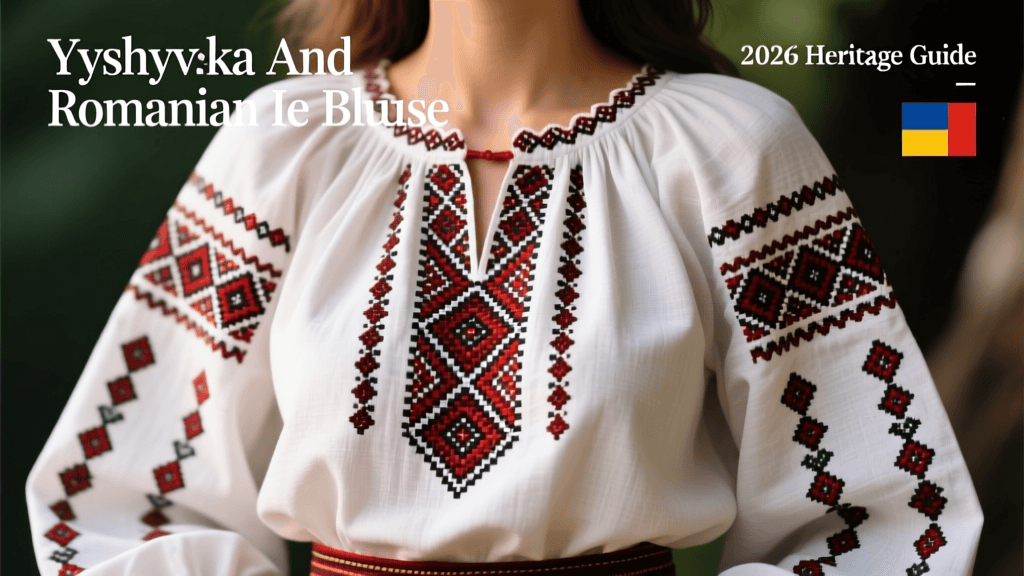
The Volyn region in the northwest favors a more restrained aesthetic. The embroidery is typically executed in red and black threads on white or unbleached linen. The motifs are largely geometric, featuring diamonds, crosses, and eight-pointed stars, applied in narrow, precise bands along the seams, cuffs, and necklines.
Regional Vyshyvanka Comparison Chart
| Region | Primary Colors | Key Technique | Motif Focus | 2026 Market Rarity |
|---|---|---|---|---|
| Poltava | White, Cream | Cutwork, Drawn-thread | Textural geometry, Stars | Very High |
| Hutsul | Red, Black, Yellow, Gold | Nyzynka, Beadwork | Dense geometry, Rhombuses | Moderate |
| Bukovyna | Burgundy, Green, Gold | Cross-stitch | Florals, Oak, Viburnum | High |
| Volyn | Red, Black | Running stitch, Satin | Minimalist geometry | High |
Sourcing Authentic Pieces in 2026: Avoiding Mass-Produced Fakes
As the demand for Eastern European folk dress has surged globally, so has the proliferation of factory-made replicas. In 2026, a genuine, hand-embroidered vyshyvanka is an investment in human labor and cultural preservation. Here is how to ensure you are purchasing an authentic artifact or a newly commissioned artisan piece.
The Reverse-Side Test
The most definitive way to authenticate hand-embroidery is to examine the reverse side of the fabric. Machine embroidery typically leaves a chaotic web of connecting threads and jump stitches on the back. Traditional hand techniques, particularly nyzynka and zavolikannia, are executed with such precision that the back of the garment is almost as neat and legible as the front. If the back is messy, it is machine-made.
Pricing Expectations for 2026
Understanding current market valuations is crucial for buyers. Based on 2026 artisan cooperative data and heritage textile market trends:
- Machine-Embroidered (Mass Market): $40 – $90. These are suitable for casual wear or costumes but hold no cultural or collector value.
- Hand-Embroidered (Artisan Cooperatives): $250 – $600. These pieces are stitched by skilled artisans using traditional methods and high-quality linen or cotton. They represent excellent value for those seeking authentic folk dress.
- Master-Crafted & Vintage Heritage Pieces: $800 – $2,500+. Vintage pieces from the early-to-mid 20th century, or newly commissioned pieces utilizing rare techniques like Poltava white-on-white cutwork, command premium prices due to the hundreds of hours of labor involved.
Styling the Vyshyvanka for Contemporary Wardrobes
Integrating a traditional Slavic garment into a 2026 wardrobe requires a balance of respect for the textile and modern styling sensibilities. The vyshyvanka is inherently versatile. For a refined, contemporary look, pair a white linen Hutsul shirt with tailored, wide-leg wool trousers and minimalist leather footwear. The intricate embroidery provides all the visual interest needed, allowing the garment to act as the focal point of the outfit.
For cultural festivals, heritage events, or folk dance gatherings, the vyshyvanka can be worn in its traditional context. Women often pair the blouse with a plakhta (a traditional woven wrap skirt), a krayka (woven sash), and a vinok (flower wreath). Men traditionally wear the shirt untucked over wide linen trousers, secured with a leather or woven belt. When styling, avoid pairing highly ornate, heavily beaded Bukovynian pieces with competing patterns; let the folk dress speak for itself.
Caring for Heritage Textiles and Linen
Authentic Eastern European folk dress is typically crafted from natural fibers like linen, hemp, and cotton, adorned with wool, silk, or metallic threads. Proper preservation is essential to maintain the integrity of these garments for future generations. The Textile Society of America provides extensive guidelines on the conservation of historical and ethnic textiles, emphasizing the importance of gentle handling and appropriate storage.
- Washing: Never machine-wash a hand-embroidered vyshyvanka. Hand-wash the garment in cool water using a mild, pH-neutral detergent specifically formulated for delicate textiles. Do not wring or twist the fabric; instead, gently press out excess water and lay it flat on a clean towel to dry.
- Ironing: Iron the garment while it is still slightly damp. Always iron on the reverse side of the embroidery, placing a clean cotton pressing cloth between the iron and the fabric to prevent crushing the stitches or melting any metallic threads or beads.
- Storage: Store the vyshyvanka flat in a cool, dark, and dry environment. Fold the garment using acid-free tissue paper to cushion the folds and prevent permanent creasing or fiber breakage. Avoid wire hangers, which can distort the shoulder seams and stress the embroidered neckline.
Preserving Intangible Cultural Heritage
The revival of the vyshyvanka and broader Eastern European folk dress is about more than aesthetics; it is an act of cultural preservation. Organizations like UNESCO recognize that traditional craftsmanship and the knowledge passed down through generations are vital components of our global intangible cultural heritage. By choosing to source authentic, ethically made garments in 2026, collectors and fashion enthusiasts directly support the rural artisans and cooperatives keeping these ancient Slavic and Balkan techniques alive.
Whether you are drawn to the stark, textural elegance of Poltava cutwork or the vibrant, protective geometry of the Carpathian Hutsul mountains, the vyshyvanka remains a profound testament to the enduring power of Eastern European textile traditions. Treat each piece with the reverence it deserves, and it will serve as a wearable archive of history for decades to come.