Ancient Greek Chiton & Roman Toga Guide 2026: Draping & Fabrics
The Revival of Classical Garments in 2026
The year 2026 has ushered in a remarkable renaissance in historical reenactment, theater, classical education, and Mediterranean heritage festivals. As living history groups and costume designers strive for unprecedented authenticity, the demand for accurate European folk dress and ancient garments has surged. Moving away from the cheap, synthetic costumes of the past, today's enthusiasts prioritize historically accurate textiles, precise draping techniques, and authentic accessories. Whether you are preparing for a university classics symposium, a theatrical production, or a regional Roman heritage festival this summer, mastering the ancient Greek chiton and the Roman toga requires an understanding of historical construction, fabric behavior, and the art of draping. This comprehensive 2026 guide will walk you through the exact measurements, material sourcing, and step-by-step draping methods required to bring classical antiquity to life.
The Greek Chiton: Doric vs. Ionic Variations
According to the World History Encyclopedia, the chiton was the foundational garment for both men and women in ancient Greece. Unlike modern clothing, the chiton was rarely cut or sewn into a specific shape; instead, it was a large rectangular piece of fabric draped around the body and fastened at the shoulders. There are two primary styles you must understand for accurate reconstruction: the Doric and the Ionic.
The Doric Chiton (Peplos)
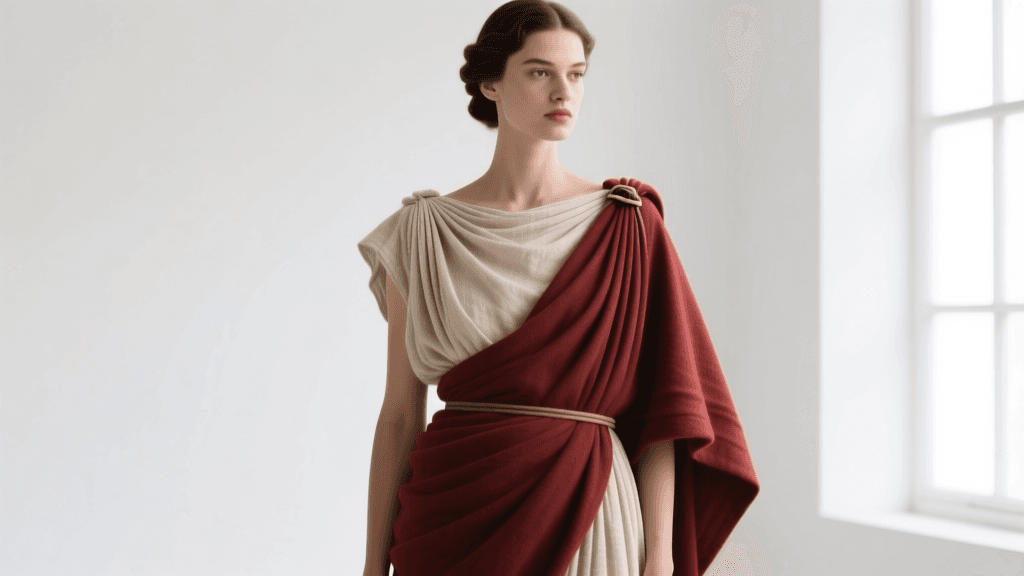
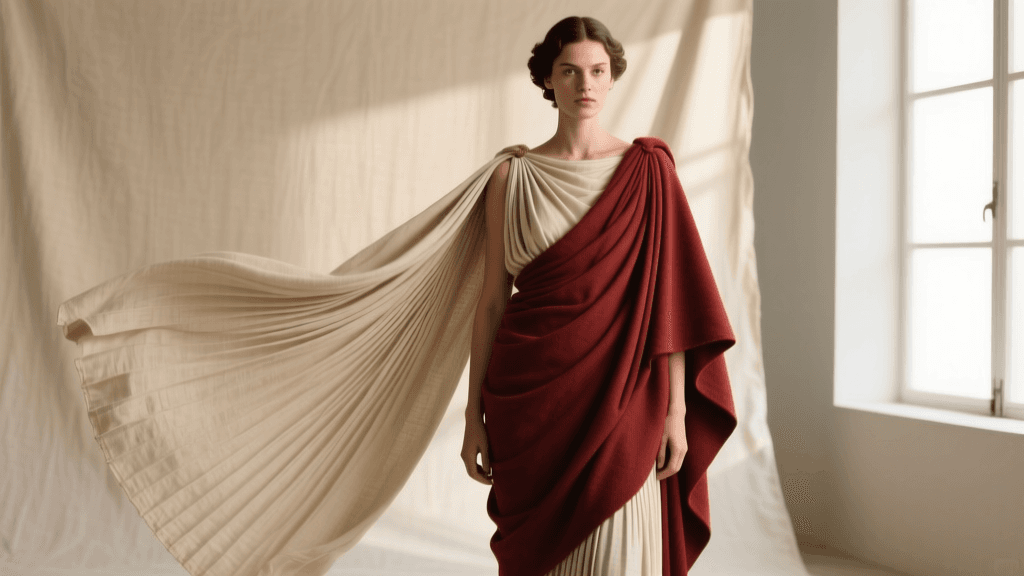
The Doric chiton, often referred to as a peplos when worn by women, is the older and heavier of the two styles. It is traditionally made from a single, large rectangular piece of heavyweight wool or thick linen. The defining feature of the Doric chiton is the apoptygma—an overfold at the top of the garment that drapes down over the chest and back, creating a layered, structured look. The garment is pinned at the shoulders using fibulae (ancient brooches) and belted at the waist. For a modern 2026 reconstruction, a fabric width of at least 60 inches is recommended to achieve the proper volume and overfold depth.
The Ionic Chiton
In contrast, the Ionic chiton is lighter, wider, and features sleeves. Made from fine, lightweight linen or even imported silk in later periods, the Ionic chiton uses significantly more fabric—often two to three times the wearer's arm span. Instead of a heavy overfold, the top edge is gathered or pleated and pinned at multiple points along the arms, creating elegant, flowing sleeves. The World History Encyclopedia notes that the Ionic style became highly popular in Athens during the 5th century BCE, favored for its graceful drape and suitability for warmer Mediterranean climates.
The Roman Toga and Stola: Symbols of Citizenship and Status
Transitioning from Greek to Roman traditions, the toga remains the most iconic and complex garment of classical antiquity. In ancient Rome, the toga was strictly reserved for male citizens and served as a powerful visual marker of social status, political office, and civic duty. It was not a simple blanket wrapped around the body; it was a highly engineered, semi-circular piece of lightweight wool that required immense skill to drape correctly.
Draping the Toga
A historically accurate Roman toga from the Imperial period is massive. To replicate the drape seen in 2026 museum exhibitions and high-end theatrical productions, you will need a semi-circular piece of lightweight wool flannel or tropical wool measuring approximately 18 feet along the straight edge and 7 feet from the center to the curved edge. The draping process involves creating two distinct features: the sinus (a deep, pouch-like fold across the front) and the umbo (a decorative knot or cluster of folds resting over the left shoulder). As detailed by experts on Roman Clothing, the tension and balance of these folds were so difficult to maintain that wealthy Romans often employed a specialized slave, the vestiplicus, solely to arrange their toga.
The Stola
While men wore the toga, respectable Roman matrons wore the stola over a basic tunica. The stola was a long, sleeveless, pleated dress suspended from the shoulders by institae (woven shoulder straps). It was typically belted high under the bust and featured a wide, ornamental border called the instita at the hem. For modern reconstructions, lightweight linen or fine cotton blends provide the best drape while remaining comfortable for all-day wear at historical festivals.
2026 Fabric Sourcing and Authenticity Guide
Sourcing historically accurate textiles in 2026 is easier than ever, thanks to specialized online mills and heritage weavers. However, choosing the wrong weight or fiber content can ruin the drape of your garment. Below is a comparison chart to help you select the right materials and budget for your project.
| Garment | Primary Fabric | Dimensions (Approx.) | Fastening Method | 2026 Material Cost |
|---|---|---|---|---|
| Doric Chiton (Peplos) | Heavyweight Linen / Wool | Height x 1.5 + Overfold | Fibulae (Pins) | $45 - $85 |
| Ionic Chiton | Fine Linen / Light Silk | Height x 3 (Width) | Multiple small pins | $70 - $140 |
| Roman Toga | Lightweight Wool Flannel | 18 ft x 7 ft Semi-circle | Tension & Friction | $180 - $320 |
| Roman Stola | Medium Linen / Cotton | Floor-length, pleated | Shoulder straps | $60 - $110 |
Sourcing Tips for 2026: Avoid synthetic blends like polyester-cotton. They do not hold pleats well and lack the natural friction required to keep a toga or chiton in place. Look for 100% European flax linen for Greek garments and 100% merino or tropical wool for Roman togas. Many heritage mills in Italy and the UK now offer custom semi-circular cuts for togas, saving you the tedious process of sewing panels together.
Step-by-Step Draping Guide: The Doric Chiton
To achieve a flawless Doric chiton, follow these precise steps. You will need a large rectangle of fabric, a belt (cord or leather), and two sturdy shoulder pins.
- Step 1: The Overfold. Hold the fabric horizontally behind your back. Fold the top edge down by about 12 to 18 inches, depending on your height. This creates the apoptygma.
- Step 2: The First Pin. Bring the left side of the fabric around to your front. Pin the top layers (the overfold and the back layer) together at your left shoulder, about 4 inches from the edge.
- Step 3: The Armhole. Wrap the remaining fabric around your back and across your front, leaving enough slack for your right arm to pass through comfortably.
- Step 4: The Second Pin. Bring the fabric up to your right shoulder and pin it to the back layer, mirroring the left side.
- Step 5: Belt and Blouse. Tie a belt around your waist. Pull the fabric up and over the belt to hide it, adjusting the hemline so it falls gracefully at the knees (for men) or the ankles (for women). This blousing effect, called a kolpos, is essential for the authentic Greek silhouette.
Accessories: Fibulae, Belts, and Footwear
No classical garment is complete without the proper accessories. In 2026, artisan metalworkers and historical jewelers offer stunning, museum-quality replicas of ancient hardware. For shoulder fastenings, invest in cast bronze fibulae with secure catch-plates. Avoid cheap, flimsy safety pins, as the weight of wool and linen will easily pull them open. For belts, woven wool cords or tooled leather sashes are historically appropriate. Footwear should consist of simple leather sandals secured with ankle wraps, or the iconic Roman caligae for military reenactors.
Garment Care and Maintenance
Maintaining natural fibers requires specific care. Linen chitons can be gently machine-washed on a delicate cycle with eco-friendly detergents, then line-dried to preserve the fibers. However, a wool toga should never be submerged in water, as this will cause the wool to felt and shrink drastically. Instead, rely on spot cleaning, airing out the garment in direct sunlight, and professional dry cleaning at the end of the 2026 festival season. Store your draped garments flat or rolled on acid-free tubes to prevent deep, unnatural creases from forming in the wool.
Conclusion
Mastering the ancient Greek chiton and the Roman toga is a rewarding journey into the textile traditions that shaped Western civilization. By prioritizing authentic fabrics, understanding the geometry of the drape, and utilizing proper historical accessories, you can create garments that are not only visually stunning but deeply respectful of classical history. Whether you are stepping onto a stage or into a living history encampment this year, the elegance and engineering of these ancient garments will continue to captivate audiences in 2026 and beyond.