Borshchivka Black Embroidery Guide: 2026 Vyshyvanka Revival
The Historical Roots of Borshchivka Black Embroidery
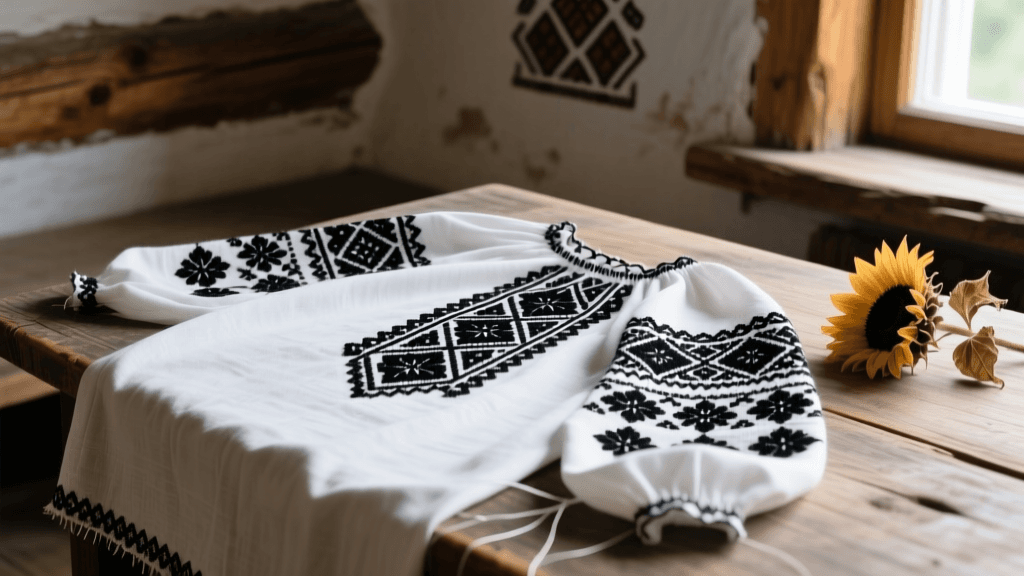
Within the rich tapestry of Eastern European folk dress, few textile traditions carry the emotional weight and striking visual contrast of Borshchivka embroidery. Originating from the Borshchiv district in the Ternopil Oblast of western Ukraine, this unique style is defined by its dense, intricate black thread work on white or unbleached linen. As we navigate the cultural revivals of 2026, the Borshchivka vyshyvanka (traditional embroidered shirt) has transcended its regional boundaries, becoming a global symbol of resilience, mourning, and ultimate strength.
The origins of the black thread are steeped in local legend. According to oral histories preserved by the Ukrainian Institute of National Memory, the tradition began centuries ago when the women of the Borshchiv region lost their husbands and sons to devastating wars and invasions. In their profound grief, the women swore to wear black embroidery on their shirts as a sign of mourning. Over generations, what began as an expression of sorrow evolved into a sophisticated, highly codified art form. Today, understanding Vyshyvanka heritage requires acknowledging this poignant history, as the dark threads represent not just loss, but the enduring strength of the women who kept their families and culture alive.
Symbolism in the Dark Threads
While the color palette of Borshchivka embroidery is restricted primarily to black (and occasionally dark blue or deep burgundy in neighboring villages), the geometric complexity more than compensates for the lack of chromatic variety. The patterns are heavily influenced by ancient Slavic agrarian and solar cults. In 2026, contemporary ethnographers and textile artists continue to decode these motifs:
- The Rhombus (Diamond): Representing a sown field, fertility, and the earth. Divided rhombuses with dots inside symbolize seeds and the promise of a bountiful harvest.
- The Eight-Pointed Star (Rozha): A solar symbol and a representation of the divine feminine, often placed at the center of chest compositions to protect the wearer's heart and soul.
- The Cross and Swastika (Svarog): Ancient symbols of the sun's movement across the sky, masculine energy, and the eternal cycle of life.
- Hops and Oak Leaves: Though less common in the strictly geometric Borshchivka style, stylized floral motifs occasionally appear on the sleeves, representing youth and vitality.
Essential Materials for the 2026 Artisan
Creating an authentic Borshchivka vyshyvanka in 2026 requires a careful selection of materials that honor the past while utilizing modern textile advancements. The interplay between the base fabric and the embroidery thread is critical to achieving the raised, textured effect characteristic of the region.
The Base Fabric
Historically, artisans used homespun hemp or linen. Today, the gold standard for modern practitioners is high-quality, even-weave linen. A 25-count or 28-count Zweigart Belfast or Edinburgh linen is highly recommended for 2026 projects. The fabric should be unbleached or naturally off-white to provide a warm, organic contrast to the stark black threads, mimicking the historical look before the advent of chemical bleaches.
The Embroidery Threads
Traditional Borshchivka embroidery utilized hand-spun black wool or linen threads, which gave the garments a matte, slightly fuzzy texture. In 2026, artisans have several premium options depending on the desired finish:
- Mercerized Cotton (DMC Cebelia or Anchor Pearl Cotton): Offers a beautiful, subtle sheen and incredible durability. Size 8 or 12 is typically used for the dense surface darning techniques.
- Black Silk (Madeira or Au Ver à Soie): For luxury, contemporary couture pieces, black silk thread provides a luminous, high-contrast finish that catches the light beautifully.
- Matte Cotton (DMC Soft Cotton): Best for historical purists who wish to replicate the matte, wool-like appearance of 19th-century originals without the itchiness of raw wool.
Mastering the Core Stitches
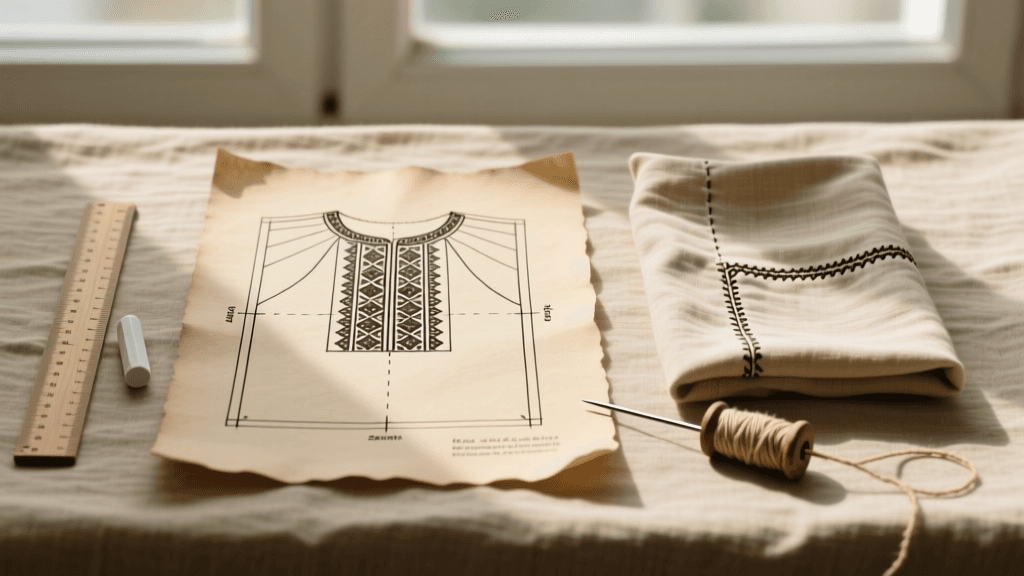
The visual density of Borshchivka embroidery is achieved through specific traditional embroidery techniques that create a reversible or near-reversible fabric. The stitches are not merely decorative; they are structural, reinforcing the garment's most vulnerable areas.
Nyzynka (Surface Darning)
This is the hallmark stitch of the Borshchiv region. Nyzynka is a surface darning stitch that is actually worked from the reverse side of the fabric. The artisan counts threads on the back, creating a geometric pattern that appears on the front. Because the black threads are woven tightly over and under the linen warp and weft, the resulting pattern on the front is incredibly dense, while the back shows the inverse colors (mostly white with black outlines). Mastering Nyzynka requires immense patience and perfect thread tension to prevent the linen from puckering.
Zavolikannya (Running Stitch)
Used primarily for the horizontal bands on the sleeves, Zavolikannya is a complex running stitch that mimics the look of woven fabric. The thread "drags" over a set number of warp threads, creating a ribbed, textured effect. In the Borshchiv tradition, these bands are exceptionally wide, sometimes covering the entire lower half of the sleeve in solid black geometric blocks.
Lishva (Hemstitching and Cutwork)
To provide visual relief from the heavy black blocks of Nyzynka, artisans incorporate Lishva—delicate openwork hemstitching. By withdrawing specific linen threads and wrapping the remaining ones, artisans create intricate lace-like columns that frame the heavy embroidery, allowing the skin to breathe and adding a delicate femininity to the bold garment.
Traditional vs. Contemporary 2026 Borshchivka
The revival of Eastern European folk dress has led to fascinating adaptations. Below is a comparison of how the Borshchivka vyshyvanka has evolved from its historical roots to its 2026 contemporary interpretations.
| Feature | Traditional (19th - Early 20th Century) | Contemporary 2026 Revival |
|---|---|---|
| Base Fabric | Homespun hemp or coarse linen (uneven weave) | High-count European even-weave linen, organic cotton blends |
| Thread Material | Hand-dyed black wool or unspun linen | Mercerized cotton, silk, matte bamboo blends |
| Garment Silhouette | Straight cut, gathered at the neck with a drawstring, very wide sleeves | Tailored fits, A-line dresses, modern blouses with subtle sleeve gathers |
| Color Palette | Strictly black (or very dark blue/burgundy) | Black base with occasional metallic gold or silver thread accents |
| Primary Usage | Sunday church, festivals, mourning periods | High fashion, cultural events, everyday streetwear, diplomatic functions |
Sourcing Authentic Patterns and 2026 Market Pricing
For collectors and artisans looking to acquire or create a Borshchivka vyshyvanka in 2026, the market has become highly specialized. Authentic, vintage shirts from the early 20th century are considered museum-grade textiles. In the current 2026 antiquities market, a verified, pristine Borshchivka shirt can fetch anywhere from $1,200 to over $3,500, depending on the density of the Nyzynka work and the condition of the linen.
For those commissioning new, hand-embroidered pieces from master artisans in Ukraine or the global diaspora, expect to pay between $400 and $900. The pricing reflects the hundreds of hours required to complete the dense surface darning. Digital archives provided by institutions like the Ivan Honchar Museum have made historical schematics accessible to the public, allowing modern embroiderers to download and chart traditional motifs using 2026 cross-stitch software, ensuring the survival of exact regional variations.
Caring for Black-Embroidered Linen
Maintaining the stark contrast of a Borshchivka vyshyvanka requires specific care. Black threads, especially natural dyes or older cottons, can bleed or fade if washed improperly. In 2026, textile conservators recommend the following protocol:
- Hand Wash Only: Use cool water (never exceeding 30°C) and a pH-neutral detergent designed for delicate textiles.
- Color Catchers: Always include a color-catching sheet in the wash basin to trap any loose black dye before it can settle into the white linen.
- Drying: Never wring the garment. Roll it in a clean, white cotton towel to absorb excess moisture, then lay it flat to dry away from direct sunlight, which can yellow the linen and degrade the black fibers.
- Ironing: Iron the garment face-down on a thick, padded towel. This preserves the three-dimensional texture of the Nyzynka and Zavolikannya stitches, preventing them from being crushed flat.
Styling the Borshchivka Vyshyvanka in 2026
The modern revival of Slavic and Balkan folk dress is not about wearing a costume; it is about integrating heritage into a contemporary wardrobe. The striking black-and-white palette of the Borshchivka vyshyvanka makes it incredibly versatile for 2026 fashion.
For a sophisticated daytime look, pair a tailored Borshchivka blouse with high-waisted, wide-leg charcoal linen trousers and minimalist leather loafers. The monochromatic synergy allows the intricate sleeve patterns to serve as the focal point of the outfit. For evening wear, contemporary Ukrainian designers are releasing Borshchivka-inspired midi dresses, where the black embroidery trails down the bodice and onto a flowing black silk skirt, creating a tonal, textural masterpiece that commands attention at any formal event.
Conclusion
The Borshchivka black embroidery tradition is a testament to the power of textile art to process grief, assert identity, and ultimately celebrate survival. As we embrace the 2026 revival of Eastern European folk dress, wearing and creating these garments connects us to a profound lineage of artisans. Whether you are charting your first Nyzynka pattern or investing in a master-crafted vyshyvanka, you are participating in the living, breathing continuation of a deeply moving cultural legacy.