Authentic Bavarian Tracht For Folk Dance Festivals 2026
The Renaissance of Authentic Alpine Tracht in 2026
The year 2026 marks a definitive turning point in the world of European folk dress. Across Bavaria, Austria, and the broader Alpine region, major cultural festivals and Oktoberfest venues are actively phasing out synthetic, mass-produced costumes in favor of authentic, historically accurate Tracht (traditional garments). For participants in folk dance troupes and festival-goers who wish to honor the heritage of the region, understanding the engineering, materials, and cultural codes of Alpine dress is no longer optional—it is essential.
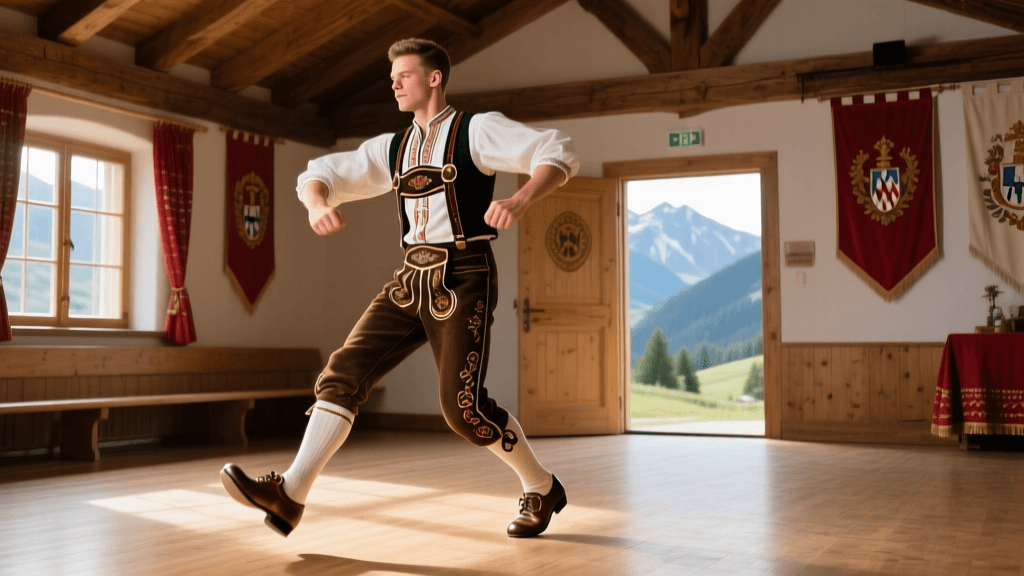
Whether you are preparing for a regional Gaufest (a traditional folk dance and music festival) or simply want to navigate the bustling tents of Munich with sartorial integrity, this guide breaks down the precise construction of Bavarian Tracht. We will focus specifically on garments engineered for the rigorous demands of the Schuhplattler, the iconic Alpine folk dance characterized by rhythmic stomping, leaping, and the striking of the thighs and soles of the feet.
The Schuhplattler Dance: Mobility and Material Engineering
The Schuhplattler is not merely a dance; it is a physical display of agility, stamina, and precision. Originating in the Alpine valleys of Bavaria and Tyrol, the dance requires the male dancer to perform high kicks and rhythmic slaps against his thighs and calves. According to the Bayerischer Trachtenverband (Bavarian Tracht Association), preserving the authenticity of the dance is inextricably linked to preserving the authenticity of the garments worn during the performance.
For a dancer, a standard pair of fashion Lederhosen will fail catastrophically. The leather must be supple enough to allow for a full range of motion in the hips and knees, yet durable enough to withstand thousands of forceful hand strikes. Furthermore, the acoustic resonance of the slap depends entirely on the thickness and tanning process of the hide.
Hirschleder: The Gold Standard for Dance
In 2026, the undisputed gold standard for authentic dance Lederhosen is Hirschleder (deer leather), specifically from red deer. Unlike cowhide, which is stiff and heavy, or sheepskin, which is too fragile, deerskin offers a unique cellular structure that is both incredibly tough and remarkably soft.
- Optimal Thickness: For folk dance, the leather should be split to exactly 1.0mm to 1.2mm. Thinner leather will tear under the friction of the dance; thicker leather will restrict the high kicks required for the Plattler.
- Tanning Process: Authentic artisan Lederhosen are brain-tanned or vegetable-tanned using natural fats and oak bark. This process gives the leather a slight 'pull-up' effect and a rich, earthy scent that synthetic chemical tanning cannot replicate.
- The Cut: Dance-specific Lederhosen feature a higher rise and a slightly wider cut through the thigh to accommodate the extreme lateral movements of the Schuhplattler. The traditional Hosentürl (drop-front) is secured with horn buttons and reinforced with hand-stitched linen thread.
The Dirndl: Engineering for Folk Dance and Festival Comfort
While the men perform the acrobatic Schuhplattler, the women execute the Dreher, a dizzying, high-speed spinning dance that requires the Dirndl skirt to flare out into a perfect, gravity-defying circle. The modern 'party Dirndl' sold in fast-fashion outlets—often featuring restrictive polyester bodices and narrow, stiff skirts—is entirely unsuited for traditional folk dance.
Skirt Circumference and Bodice Structure
An authentic dance Dirndl in 2026 is a marvel of textile engineering. The skirt (Rock) must have a minimum circumference of 3 to 4 meters (roughly 10 to 13 feet). This massive amount of fabric is tightly pleated (gereiht) into the waistband, allowing the skirt to remain flat against the body when standing still, but exploding outward into a magnificent bell shape during the spins of the Dreher.
The bodice (Mieder) is heavily structured with internal boning and lined with natural cotton or linen. Unlike the zippers found on mass-market costumes, an authentic bodice is laced at the front or fastened with a row of intricately cast pewter or silver hooks. This lacing system allows the dancer to adjust the tension of the bodice for optimal breathability and support during vigorous movement.
The Apron Code: Festival Etiquette
The Schürze (apron) is not just decorative; it is a vital communication tool at any 2026 folk festival. The placement of the apron bow signals the wearer's relationship status, a tradition strictly observed in traditional dance circles:
- Bow on the Left: Single and open to courtship.
- Bow on the Right: Taken, married, or in a relationship.
- Bow in the Center: Traditionally signifies virginity or a young, unmarried woman (though less commonly used today).
- Bow at the Back: Widowed, or working as a waitress/festival staff.
Comparison: Mass-Market vs. Artisan Bespoke Tracht (2026)
When investing in European folk dress for festivals, understanding the gap between commercial costumes and artisan Gwand is crucial. The following table outlines the differences you will encounter when shopping for the 2026 festival season.
| Feature | Mass-Market Costume (2026) | Artisan Bespoke Tracht (2026) | Impact on Folk Dance |
|---|---|---|---|
| Leather Material | PU Synthetic or stiff Cowhide | 100% Vegetable-Tanned Hirschleder | Artisan leather resonates acoustically and moves with the dancer; synthetic peels and restricts. |
| Skirt Circumference | 1.2 to 1.5 meters | 3.5 to 4.5 meters (Hand-pleated) | Mass-market skirts tangle around the legs during spins; artisan skirts create the traditional bell shape. |
| Embroidery (Stickerei) | Machine-printed or glued motifs | Hand-stitched Silk or Linen thread | Hand-stitched embroidery flexes with the leather without cracking or peeling over time. |
| Estimated Cost | €80 - €180 | €1,200 - €2,800 (Full Set) | Artisan Tracht is a lifetime investment, often passed down through generations of dancers. |
Essential Footwear: The Haferlschuh
No Alpine folk dress is complete without the proper footwear. For men, the Haferlschuh (literally 'oat shoe') is the mandatory choice for the Bavarian cultural heritage experience. Originally designed for navigating steep, rocky Alpine terrain, the Haferlschuh features a distinctive side-lacing system and a heavily studded leather sole.
For the 2026 festival season, look for Haferlschuhe crafted by traditional cordwainers using full-grain box calf leather. The side-lacing is not merely aesthetic; it prevents the laces from catching on brush or, in the case of folk dance, from coming untied during rapid footwork. Men must pair these shoes with thick, ribbed wool socks (Wollstrümpfe) that reach just below the knee, providing essential cushioning for the heavy stomping inherent in the Schuhplattler.
Women traditionally wear the Dirndlschuh, a sturdy, low-heeled leather pump or lace-up shoe with a rubber or leather sole, paired with white cotton or linen over-the-calf socks. In 2026, ergonomic insoles are increasingly being integrated into bespoke Dirndl shoes to support dancers who spend hours on their feet in festival tents.
Festival Guidelines and Sourcing in 2026
As the global appreciation for European folk dress grows, so does the enforcement of quality standards at major events. The Oktoberfest Official Guidelines and various regional tourism boards have spent the last few years actively campaigning against 'trashy' costumes, promoting a return to dignified, historically rooted Tracht. In 2026, several premium festival tents and exclusive Gaufest events explicitly require guests and performers to wear genuine wool, linen, and leather garments, denying entry to those in obvious synthetic costumes.
Tailoring and Care Tips for Longevity
Investing in authentic Tracht requires proper maintenance to ensure it survives decades of festival seasons and folk dances:
- Breaking in Hirschleder: Never wash authentic Lederhosen in water. To break them in for dancing, wear them during light physical activity. The natural oils from your skin will condition the leather, molding it perfectly to your body's unique contours.
- Dirndl Blouse Care: The Bluse (blouse) worn under the Dirndl is usually made of delicate cotton batiste or linen. Hand wash in cold water with a mild detergent and air dry to preserve the structural integrity of the lace and embroidery.
- Storing the Skirt: Never hang a heavily pleated Dirndl skirt by the waistband for long periods, as gravity will pull out the hand-stitched pleats. Instead, fold it carefully along the pleat lines and store it in a breathable cotton garment bag with cedar blocks to deter moths.
Conclusion: Honoring the Heritage
Choosing authentic Bavarian Tracht for folk dance and festivals in 2026 is an act of cultural preservation. By prioritizing the mobility required for the Schuhplattler, the structural elegance of the Dirndl, and the heritage craftsmanship of the Haferlschuh, you do more than just dress up—you participate in a living, breathing tradition that has defined Alpine culture for centuries. Whether you are spinning in a village square or raising a stein in Munich, genuine Tracht ensures you do so with respect, comfort, and undeniable style.