Drafting the Romanian Ie Altita Sleeve Pattern in 2026
Introduction to the Romanian Ie and the Altita Sleeve
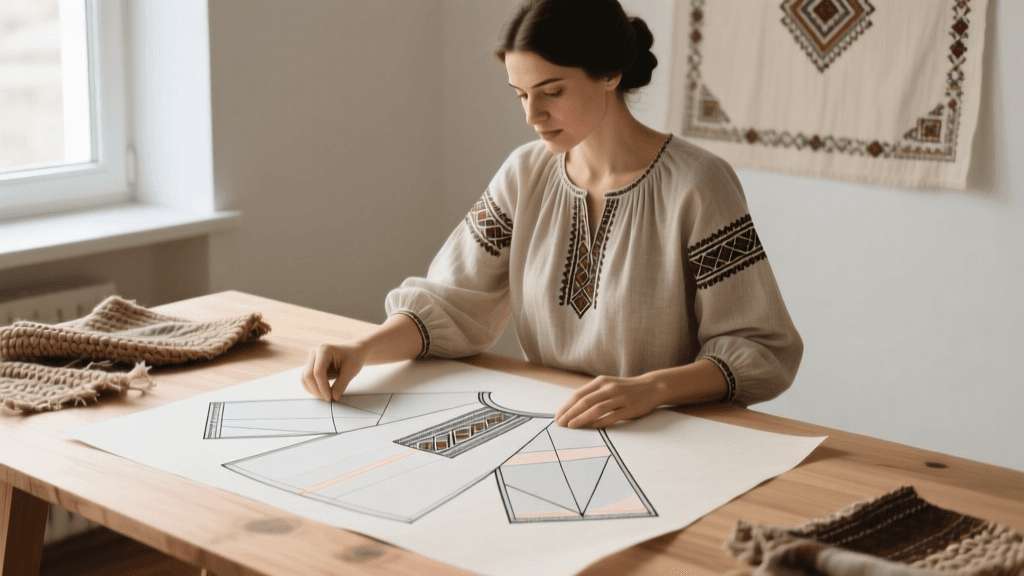
The traditional Romanian Ie (peasant blouse) is a masterclass in geometric pattern drafting, zero-waste construction, and profound cultural symbolism. Recognized globally for its intricate embroidery and structural ingenuity, the Ie is defined by its most iconic feature: the Altita. The Altita is a distinct, heavily embroidered rectangular block that connects the sleeve to the shoulder, serving both as a canvas for regional identity markers and as a structural hinge that allows for unparalleled arm mobility. In 2026, as the global fashion industry pivots heavily toward sustainable, zero-waste pattern cutting, historical European folk dress offers a blueprint for modern garment construction. This guide explores how to draft the traditional Romanian Ie Altita sleeve pattern using a blend of historical geometry and modern 2026 digital drafting techniques.
The Zero-Waste Philosophy in Historical European Dress
Long before the term 'zero-waste' entered the contemporary fashion lexicon, Eastern European peasants utilized every inch of handwoven fabric. Loom widths dictated pattern shapes, resulting in garments constructed entirely from rectangles, squares, and triangles. According to the textile archives at the National Museum of the Romanian Peasant, the traditional Ie was designed so that no fabric was discarded during the cutting process. The body panels, sleeves, and gussets (pava) were calculated based on the loom's width and the wearer's measurements, ensuring that the structural integrity of the cloth remained intact. In 2026, adapting these historical constraints into modern parametric design software allows independent designers to produce made-to-measure folk garments with a literal zero-waste footprint, aligning perfectly with the stringent sustainability benchmarks outlined in the latest Textile Exchange preferred fiber and zero-waste reports.
Essential Materials and Tools for 2026
To authentically recreate the Ie while adhering to modern ecological standards, material selection is paramount.
- Fabric: Traditional handwoven linen or hemp is ideal. In 2026, premium organic hemp-linen blends from Eastern European mills average $32 to $38 per yard. These fabrics offer the necessary crispness for smocking while providing modern durability and eco-certification.
- Thread: 100% linen or long-staple cotton thread for seams, and traditional wool or mercerized cotton for the Altita embroidery.
- Drafting Software: While traditional cardboard and rulers work, utilizing open-source parametric software like Seamly2D allows you to input custom body measurements and automatically generate the zero-waste rectangular layout, minimizing fabric waste during the prototyping phase.
- Notions: Traditional smocking requires no elastic. You will need strong, waxed gathering threads and a fine embroidery needle for the Incret (smocking) technique.
Step-by-Step Geometric Pattern Drafting
The beauty of the Ie lies in its strict adherence to straight grain lines. There are no curved armholes or shaped princess seams. The entire garment is a puzzle of interlocking rectangles.
1. The Main Body Rectangles
The front and back of the blouse are simple rectangles.
Width: (Chest Circumference / 2) + 10 cm for ease.
Length: Measure from the high point shoulder (HPS) to the desired hemline (traditionally hip or upper-thigh length to be worn over a skirt).
Cut two identical rectangles. A center-front slit is cut later for the neckline, preserving the zero-waste mandate by avoiding cut-out curves.
2. Drafting the Altita Block
The Altita is the structural bridge between the sleeve and the body.
Width: Typically 15 cm to 20 cm, depending on the desired breadth of the embroidered shoulder band.
Length: Equal to the sleeve width at the bicep.
Draft two identical Altita rectangles. In the 2026 digital drafting workflow, you can map your embroidery motifs directly onto this digital pattern piece to calculate exact thread yardage before cutting the fabric.
3. The Sleeve and the Pava (Gusset)
The sleeve is a long rectangle tapering slightly toward the wrist, or left completely wide for a bishop-sleeve effect.
The Pava: To allow the arm to lift without pulling the entire blouse upward, a square gusset (pava) is inserted at the underarm. Draft a perfect square, typically 12 cm x 12 cm or 15 cm x 15 cm. Cut two squares. The insertion of the pava requires precise Y-seam sewing techniques, a hallmark of advanced folk dress construction.
Construction Techniques: The Incret and Smocking
Once the geometric pieces are cut, the magic of the Ie happens during assembly through the Incret—the traditional smocking that gathers the wide rectangular pieces into the neckline and cuffs.
The Neckline Gathering
Instead of a curved neckline, the front, back, and sleeve tops are gathered into a narrow neckline band or a simple drawstring casing. The gathering ratio is traditionally 3:1 or 4:1. Using a running stitch with heavy, waxed linen thread, create two parallel rows of gathering stitches along the top edge of the body panels and the top edge of the sleeves (just below where the Altita will attach). Pull the threads to gather the fabric to the desired neckline circumference.
Attaching the Altita and Honeycomb Smocking
The Altita is sewn to the top of the sleeve using a flat-felled seam for durability. Below the Altita, the sleeve is often gathered using a surface honeycomb smocking stitch. This technique not only decorates the garment but provides immense elasticity, allowing the sleeve to expand and contract with the wearer's movements without the use of modern synthetic elastics, which degrade over time. In 2026, heritage sewing communities have revived the use of wooden smocking boards to perfectly space the gathering dots on thick linen before stitching.
Comparison Table: Traditional vs. Modern 2026 Drafting Methods
While the core geometry of the Ie remains unchanged, the tools used to draft and optimize these patterns have evolved significantly.
| Feature | Traditional Hand-Drafting | Parametric Digital Drafting (2026) |
|---|---|---|
| Measurement Base | Standardized loom widths and body estimation | Exact 3D body scan data or precise manual inputs |
| Pattern Layout | Chalk on fabric, constrained by physical loom limits | Automated zero-waste nesting algorithms |
| Grading | Rarely graded; made for a single specific wearer | Infinite parametric grading via formula-based constraints |
| Embroidery Mapping | Counted thread by eye on the physical fabric | Digital cross-stitch overlay mapped to fabric grid |
| Waste Generation | Near zero (historical necessity) | Absolute zero (calculated via digital markers) |
Mastering the Y-Seam Gusset Insertion
The most technically demanding aspect of constructing the Ie is inserting the pava (gusset). Because the garment lacks curved armholes, the underarm intersection forms a complex pivot point.
Step 1: Sew the side seam of the body panel and the underarm seam of the sleeve, stopping exactly at the seam allowance pivot point (usually 1 cm from the edge).
Step 2: Clip the seam allowance at the pivot point to allow the fabric to hinge.
Step 3: Pin one edge of the square gusset to the sleeve underarm seam, and the adjacent edge to the body side seam.
Step 4: Stitch carefully, pivoting precisely at the corners.
Step 5: Finish the interior seams with a hand-whipped overcast stitch or a modern serger, though traditionalists in 2026 continue to favor hand-felled seams to maintain the historical integrity and comfort of the garment against the skin.
Conclusion
Drafting the Romanian Ie and its iconic Altita sleeve is more than an exercise in historical costuming; it is a profound lesson in sustainable, zero-waste garment engineering. By marrying the ancient geometric constraints of Eastern European loom weaving with the parametric precision of 2026 digital drafting tools, modern makers can preserve the cultural identity of the Ie while pushing the boundaries of eco-conscious fashion. Whether you are hand-stitching the honeycomb smocking or utilizing open-source software to nest your rectangular patterns, the Ie remains a timeless testament to the ingenuity of European folk dress construction.