Romanian IA Blouse Styling: 2026 Workwear Trends & Ethical Brands
The Renaissance of the Romanian IA in 2026 Workwear
The traditional Romanian blouse, universally known as the IA (pronounced 'ee-ah'), has long been a symbol of Eastern European heritage, rural craftsmanship, and regional identity. However, as we navigate the fashion landscape of 2026, the IA has transcended its historical boundaries. No longer relegated solely to museum archives, summer solstice festivals, or national holiday parades, the IA has become a cornerstone of the 'Heritage Quiet Luxury' movement in contemporary European workwear. Driven by a post-pandemic desire for garments with profound storytelling, traceable supply chains, and artisanal imperfection, modern professionals are integrating these hand-embroidered masterpieces into their daily office wardrobes.
This revival is not merely a fleeting trend; it is a conscious cultural reclamation. Following its celebrated inscription on the UNESCO Representative List of the Intangible Cultural Heritage of Humanity, the global appreciation for the IA's intricate shoulder embroidery (the altiță) has surged. Yet, styling a deeply traditional, voluminous garment for a sleek, modern corporate or creative environment requires a nuanced understanding of proportion, fabric weight, and contemporary tailoring. In this guide, we explore how to seamlessly integrate the Romanian IA into your 2026 workwear rotation while honoring its artisanal roots.
The Anatomy of the IA: Adapting Tradition for the Office
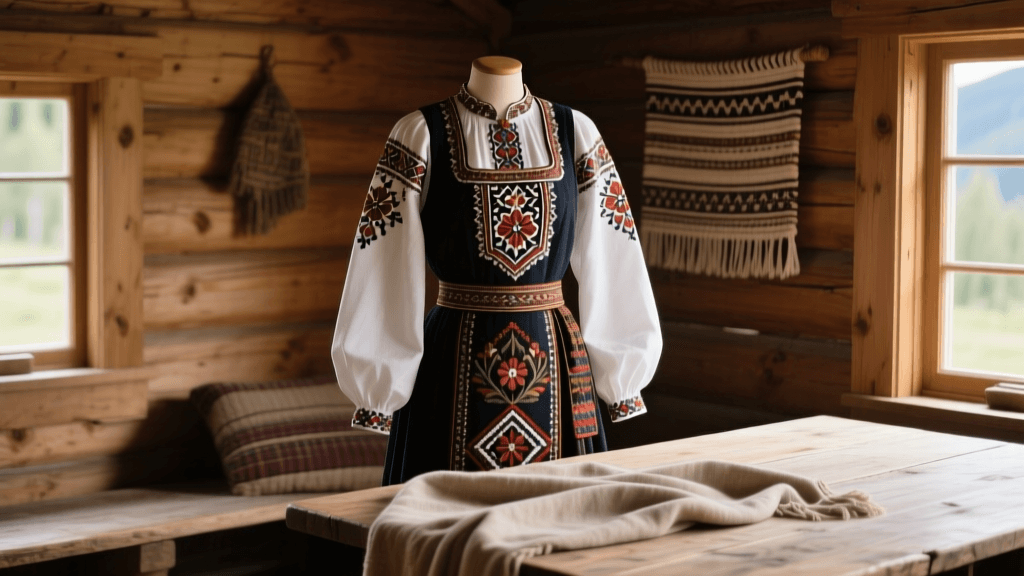
To style the IA effectively, one must first understand its architectural components. The classic blouse is defined by three main embroidered zones: the altiță (the dense, rectangular embroidery on the shoulder), the increț (the gathered, often heavily decorated neckline), and the râuri (the 'rivers' or vertical stripes of embroidery flowing down the sleeves and body).
While traditional festival blouses are characterized by stark white cotton or borangic (Romanian silk) with high-contrast black, red, and gold metallic threads, the 2026 contemporary office IA favors subtlety. Modern ethical designers and rural cooperatives are producing office-appropriate iterations using unbleached linen, raw hemp, and tonal embroidery. Imagine a deep indigo linen blouse with navy silk thread râuri, or an oatmeal hemp tunic with cream-colored wool embroidery. These tonal variations maintain the structural integrity and cultural significance of the garment while aligning with the muted, sophisticated palettes of modern professional environments.
Feature Comparison: Festival Heritage vs. 2026 Office Contemporary
| Feature | Traditional Festival IA | 2026 Contemporary Office IA |
|---|---|---|
| Base Fabric | Stark white cotton or borangic (silk) | Unbleached linen, raw hemp, matte cupro |
| Embroidery Palette | High-contrast (black, crimson, gold metallic) | Tonal (navy on indigo, cream on oat, rust on terracotta) |
| Silhouette & Ease | Voluminous, heavily gathered at neck and cuffs | Relaxed but tailored, moderate ease, structured cuffs |
| Sleeve Length | Often elbow-length or billowing full-length | Full-length with tailored taper or structured 3/4 length |
| Price Point (Ethical) | N/A (Usually heirloom or museum-grade) | €280 - €650 (Direct from artisan cooperatives) |
Contemporary Styling: 3 Outfit Formulas for 2026
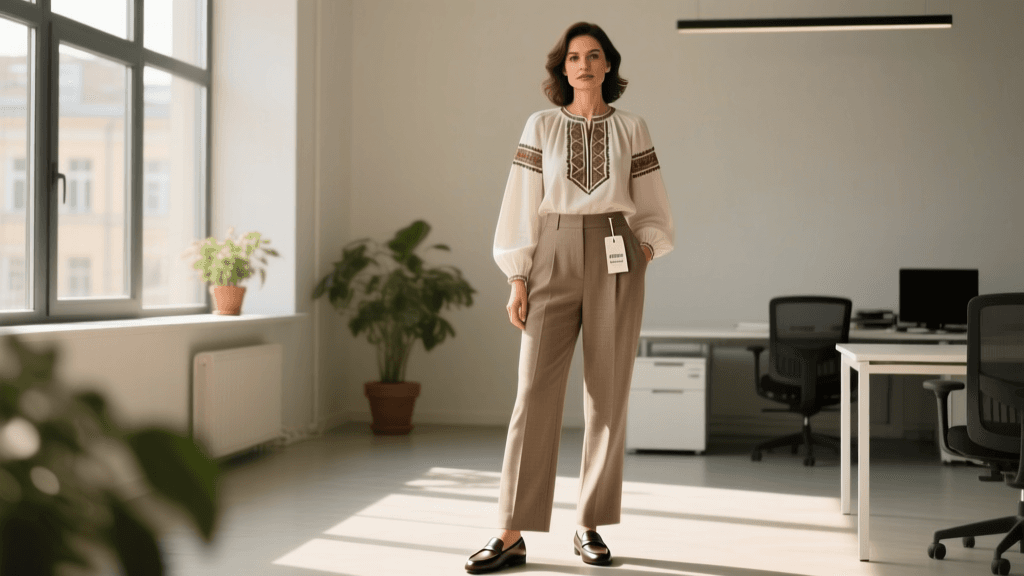
The key to wearing the IA in a professional setting is contrast. Because the blouse is inherently romantic, textured, and visually complex, it must be grounded with sharp, structured, and minimalist tailoring. Here are three actionable outfit formulas tailored for the 2026 workplace.
Formula 1: The Executive Heritage (Boardroom Ready)
For high-stakes meetings and corporate environments, the goal is to let the altiță serve as the focal point while the rest of the outfit projects authority.
- The Base: A tonal charcoal or deep plum IA in a medium-weight linen, featuring a structured, buttoned cuff rather than a traditional tassel tie.
- The Bottom: High-waisted, wide-leg wool trousers with a 32-inch inseam and a sharp front crease. The heavy drape of the wool balances the lightness of the linen blouse.
- The Outerwear: A collarless, minimalist structured blazer in a matching charcoal wool. The absence of lapels ensures the shoulder embroidery remains completely visible.
- Footwear & Accessories: Pointed-toe leather mules and a single, sculptural gold ear cuff to echo the historical metallic threads of traditional increț without overwhelming the look.
Formula 2: The Creative Director (Studio & Gallery)
Creative industries in 2026 embrace fluid silhouettes and a blend of historical references with avant-garde cuts.
- The Base: An oversized, raw-hemp IA in an unbleached ecru tone, featuring subtle geometric râuri in dark brown wool thread.
- The Bottom: A bias-cut, heavy silk slip skirt in a matching ecru or soft bronze, falling to mid-calf. The fluidity of the silk contrasts beautifully with the nubby texture of the hemp.
- The Outerwear: A longline, duster-style vest in vegan leather or structured cotton canvas, worn open to create vertical lines that elongate the voluminous blouse.
- Footwear & Accessories: Chunky, lug-sole loafers to add a modern, grounded edge, paired with a woven leather tote bag that mirrors the artisanal craftsmanship of the blouse.
Formula 3: The Monochromatic Academic (University & Research)
For educators, researchers, and academics, comfort and intellectual elegance are paramount.
- The Base: A navy blue cotton-poplin IA with tonal navy embroidery. The cotton poplin offers a crisper, less wrinkled finish than linen, ideal for long days at a desk.
- The Bottom: Tailored, straight-leg denim in a dark, uniform indigo wash with no distressing. Tuck the front of the IA in (the 'French tuck') to define the waist while allowing the back râuri to drape softly.
- The Outerwear: A cropped, boxy cardigan in a fine-gauge merino wool, worn draped over the shoulders and tied loosely at the chest.
- Footwear & Accessories: Classic leather oxfords and a pair of minimalist, tortoiseshell reading glasses.
Ethical Sourcing: Navigating the 2026 Market
As the demand for the IA has grown, so too has the market for fast-fashion knockoffs and culturally appropriated designs. In 2026, conscious consumers must prioritize ethical sourcing to ensure that the financial benefits of this revival reach the rural Romanian and Moldovan artisans who keep the tradition alive. According to guidelines championed by organizations like Fashion Revolution, transparency in the supply chain is non-negotiable when purchasing heritage garments.
When shopping for an authentic IA, look for the following markers of ethical production:
- Digital Provenance Passports: Many leading artisan cooperatives now utilize blockchain-backed QR codes sewn into the garment's side seam. Scanning the code reveals the name of the embroiderer, the village of origin, and the specific regional pattern (e.g., patterns from Vâlcea, Argeș, or Suceava).
- Imperfection as Authentication: Hand-embroidery takes anywhere from 40 to 120 hours per blouse. Turn the garment inside out; authentic hand-stitching will show slight variations in tension and the reverse of the stitches will be nearly as neat as the front, but distinctly human. Machine embroidery will have a uniform, synthetic backing.
- Direct-to-Artisan Platforms: Bypass mass-market retailers. Purchase directly from verified cultural NGOs, established ethical fashion platforms specializing in Eastern European textiles, or through direct commissions from recognized rural cooperatives. Expect to pay between €280 and €650 for a genuine, newly made hand-embroidered piece, which ensures a living wage for the artisan.
For those seeking vintage or antique pieces, consulting archives and experts at institutions like the Museum of the Romanian Peasant in Bucharest can provide invaluable context on regional variations and help authenticate 20th-century heirlooms before purchase.
Caring for Hand-Embroidered Heritage Garments
An authentic IA is an investment piece designed to outlive its wearer. Proper care is essential to preserve both the base fabric and the natural dyes often used in the embroidery threads (such as madder root for reds, walnut husks for browns, and woad for blues).
- Washing: Never machine wash or dry clean an authentic IA. Hand wash in cool water (below 30°C) using a pH-neutral detergent formulated for delicate wools and silks. Do not rub or wring the embroidered areas, as this will distort the altiță and cause the threads to bleed or fuzz.
- Drying: Roll the blouse in a clean, dry towel to gently press out excess moisture. Lay it flat on a mesh drying rack away from direct sunlight, which can fade natural dyes and weaken linen fibers over time.
- Ironing: Iron the garment while it is still slightly damp. Always iron on the reverse side over a thick, plush towel. This prevents the embroidery from being crushed flat and maintains the three-dimensional texture of the stitches.
- Storage: Store the IA folded, layered with acid-free tissue paper to prevent the embroidery threads from snagging on the base fabric. Avoid wire hangers, which can distort the delicate gathered neckline (increț) and stretch the shoulder seams.
Conclusion
The integration of the Romanian IA into 2026 workwear is a testament to the enduring power of folk dress when treated with respect and modern styling sensibilities. By pairing the intricate, soulful embroidery of the altiță and râuri with sharp, contemporary tailoring, we create a wardrobe that is not only visually striking but deeply meaningful. As we continue to champion ethical sourcing and artisanal craftsmanship, the IA remains a living, breathing garment—bridging the gap between centuries-old European heritage and the modern professional's daily life.