Romanian Ia Blouse Revival: Contemporary Styling & Sourcing 2026
The Global Resurgence of the Romanian Ia in 2026
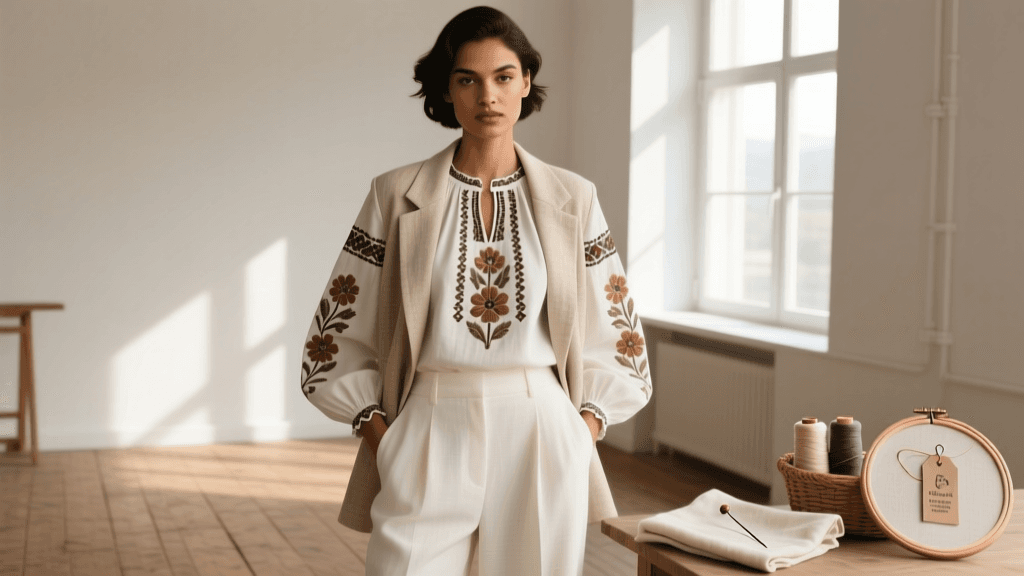
The traditional Romanian Ia (peasant blouse) has transcended its pastoral roots to become a cornerstone of the 2026 European folk dress revival. Once confined to museum archives and rural festivals, this hand-embroidered masterpiece is now a highly sought-after garment in contemporary capsule wardrobes. Driven by a global appreciation for slow fashion and heritage textiles, the modern wearer is reclaiming the Ia not as a costume, but as a statement of artisanal luxury and cultural appreciation. As noted by curators at the Victoria and Albert Museum's Fashion Collections, the integration of regional European folk garments into daily modern dress represents a vital shift toward sustainable, story-driven fashion in 2026.
However, styling a garment with such profound historical weight requires a nuanced approach. The 2026 revival is defined by minimalist pairings, architectural silhouettes, and a strict adherence to ethical sourcing. This guide explores how to authentically incorporate the Romanian Ia into your contemporary wardrobe while honoring the artisans who keep this UNESCO-recognized tradition alive.
Decoding the Anatomy of the Modern Ia
To style the Ia effectively, one must first understand its architecture. The traditional blouse is constructed from rectangular panels of hand-woven hemp, linen, or cotton, minimizing fabric waste—a principle that aligns perfectly with 2026 zero-waste fashion movements. The embroidery is not merely decorative; it is a complex semiotic language.
- Altița: The dense, rectangular embroidery block on the shoulder. Historically, this protected the wearer from evil spirits and signaled the wearer's regional identity and social status.
- Încreț: The small, intricate gather just below the altiță, often featuring geometric motifs in contrasting threads.
- Râuri (Rivers): The flowing, diagonal or vertical lines of embroidery that cascade down the sleeves, mimicking the flow of water and representing life and continuity.
- Washing: Never machine wash an authentic Ia. Hand wash in cool water using a pH-neutral, enzyme-free detergent specifically formulated for silk and wool. Do not wring or twist the fabric; instead, press the water out gently between two clean, dry towels.
- Drying: Lay the garment flat on a drying rack away from direct sunlight. UV exposure is the primary enemy of natural dyes and will cause the vibrant reds and blacks of the altița to fade prematurely.
- Ironing: Iron the blouse while it is still slightly damp, always on the reverse side. Place a clean cotton pressing cloth between the iron and the embroidery to prevent crushing the raised silk stitches.
- Storage: Store your Ia flat or loosely rolled in a breathable cotton garment bag. Stuff the sleeves and bodice with acid-free tissue paper to maintain the structural integrity of the gathers and prevent permanent creasing along the fold lines.
Contemporary designers in 2026 are adapting these elements by scaling down the râuri for a more subtle, everyday aesthetic, while preserving the altița as the focal point of the garment.
Regional Palettes: Choosing Your Heritage Aesthetic
The color palette of an Ia dictates its styling potential. In 2026, the most prominent regional variations dominating the revival market include:
Vrancea and Olt (The Dramatic Minimalist)
Characterized by dense, dark embroidery—often deep burgundy, black, and navy—on stark white or black linen. The motifs are highly geometric and angular. This high-contrast aesthetic pairs effortlessly with modern corporate tailoring and monochrome evening wear.
Neamț and Bukovina (The Soft Romantic)
Featuring delicate floral and vegetal motifs in pastel threads, including soft golds, muted greens, and pale blues. The fabric is often a finer, semi-sheer cotton or silk-blend. These blouses are ideal for spring layering and bohemian-inspired weekend styling.
Contemporary Styling Guide: Wearing the Ia Today
The key to wearing folk dress in 2026 without veering into costume territory is juxtaposition. Pairing the voluminous, hand-crafted textures of the Ia with sleek, modern, and structured garments creates a balanced, high-fashion silhouette.
Look 1: The Urban Corporate Minimalist
For a powerful boardroom or gallery-opening look, select a Vrancea-style Ia with heavy black and burgundy geometric embroidery. Tuck the blouse into high-waisted, wide-leg wool trousers in charcoal or deep plum. Secure the waist with a sleek, structured leather obi belt to manage the volume of the traditional gather. Finish with pointed-toe architectural loafers and minimalist gold hoop earrings. The structured trousers ground the ethereal volume of the blouse, creating a sophisticated, modern profile.
Look 2: The Neo-Bohemian Weekend
Embrace the softer Neamț floral Ia by layering it over a modern silk slip dress. Choose a slip dress in a muted, earthy tone like sage green or terracotta. Allow the delicate lace cuffs of the Ia to peek out from beneath the slip dress straps. Pair with knee-high leather riding boots and a slouchy, unstructured suede tote. This look plays with transparency and texture, perfectly capturing the 2026 trend of romantic layering.
Look 3: Evening Heritage Elegance
For formal events, opt for a vintage or meticulously reproduced Ia crafted from sheer hand-woven hemp with metallic silver or gold thread accents. Pair it with a tailored, floor-length velvet midi skirt in midnight blue. Keep accessories intentionally sparse—let the altița serve as your necklace. A sleek, low chignon and a bold, matte lip will ensure the focus remains entirely on the heritage craftsmanship of the shoulder embroidery.
Ethical Sourcing and Authentic Artisans in 2026
As the popularity of the Ia has surged, so has the proliferation of fast-fashion knockoffs. Mass-produced, machine-embroidered replicas not only exploit cultural heritage but also undercut the rural artisans who rely on this craft. The 2026 market has seen a strong push toward blockchain-verified artisan textiles and direct-to-consumer cooperative models. When sourcing an authentic Ia, look for cooperatives based in regions like Vrancea, Olt, and Neamț, where the UNESCO Intangible Cultural Heritage frameworks actively protect and promote traditional techniques.
2026 Sourcing and Price Comparison Chart
| Source Type | Price Range (USD) | Primary Material | Lead Time | Ethical & Cultural Impact |
|---|---|---|---|---|
| Fast-Fashion Replicas | $30 - $60 | Synthetic Poly-blends | Immediate | Negative: Cultural appropriation, exploits designs, zero artisan support. |
| Authentic Artisan Cooperatives | $250 - $600 | Hand-woven Linen/Hemp, Silk Thread | 4 - 12 Weeks | High: Directly sustains rural economies, preserves UNESCO-recognized techniques. |
| Contemporary Luxury Designers | $800 - $1,500+ | Organic Cotton, Upcycled Vintage Textiles | 2 - 6 Weeks | Medium-High: Elevates the craft to high fashion, often partners with artisan guilds. |
Investing in an authentic cooperative piece ensures that your garment is a genuine artifact of European folk dress, carrying the unique imperfections and soul of hand-stitchery that machines simply cannot replicate. For further research on the preservation of historical garments and textile archives, the Metropolitan Museum of Art's Costume Institute offers extensive resources on the construction and historical context of Eastern European dress.
Caring for Hand-Embroidered Heritage Textiles
An authentic Ia is an investment that, with proper care, will outlast modern garments by decades. The natural fibers and silk threads require specific maintenance protocols in 2026 to prevent degradation.
The Future of Folk Dress
The 2026 revival of the Romanian Ia proves that traditional European folk dress is not a relic of the past, but a dynamic, living art form. By understanding its anatomy, respecting its regional variations, and committing to ethical sourcing, contemporary wearers can seamlessly integrate this masterpiece of textile heritage into their modern lives. The Ia is more than a blouse; it is a wearable archive of history, a triumph of slow fashion, and a testament to the enduring power of human craftsmanship.