Romanian Camasa Alita Zero-Waste Pattern Drafting Guide 2026
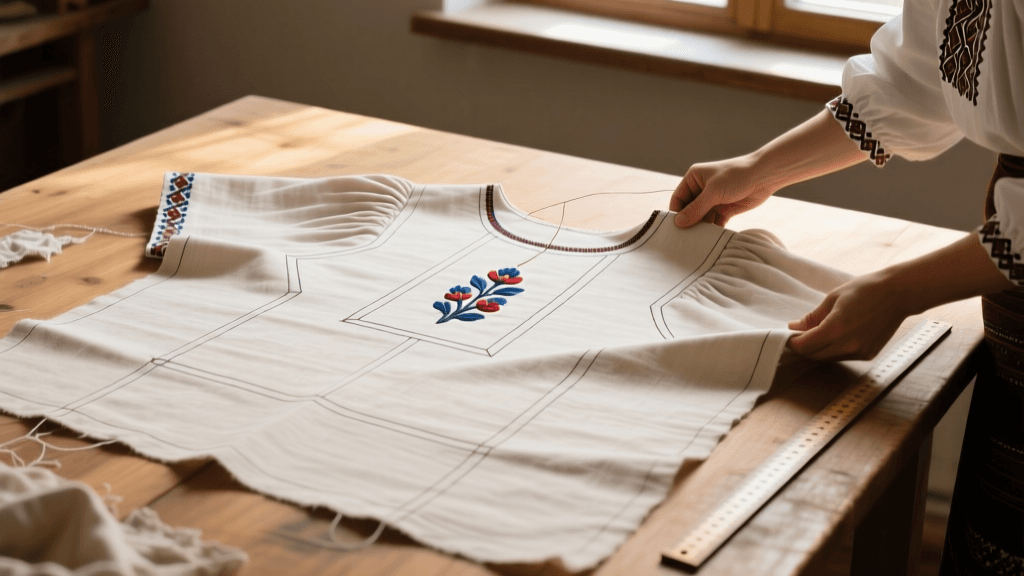
The Renaissance of Zero-Waste European Folk Construction
In 2026, the global fashion industry is under unprecedented pressure to eliminate textile waste, yet the ancestors of European folk dress solved this problem centuries ago. Traditional peasant garments were masterclasses in zero-waste pattern drafting, born from the necessity of utilizing every single thread of hand-loomed linen. Among the most structurally fascinating and visually stunning of these garments is the Romanian Cămașă cu altiță (the traditional blouse with a decorated shoulder band).
Unlike modern commercial patterns that rely on curved armholes and bias-cut facings, the Cămașă cu altiță relies entirely on geometric rectangles, squares, and triangles. This construction method not only ensures zero fabric waste but also creates a highly modular garment that can be easily adjusted, repaired, and passed down through generations. According to the UNESCO Intangible Cultural Heritage registry, which officially inscribed the traditions of the Romanian blouse with the altiță shoulder embroidery, this garment represents a profound connection between agricultural rhythms, geometric cosmology, and sustainable textile practices.
This comprehensive guide will walk you through drafting, cutting, and assembling your own Cămașă cu altiță using traditional loom-width zero-waste techniques, adapted with 2026 sourcing and digital drafting methodologies.
The Philosophy of Loom-Width Zero-Waste Construction
To understand the pattern of the Cămașă, you must first understand the tool that created it: the traditional wooden loom. Historically, Romanian weavers produced linen cloth in narrow widths, typically ranging from 50 cm to 90 cm. Cutting curves into this hard-won fabric was considered a sin against the labor of growing, harvesting, spinning, and weaving the flax.
Therefore, the pattern is a puzzle of orthogonal shapes. The body is formed by two large rectangles. The sleeves are formed by narrower rectangles. The underarm gusset (known as the pavă) is a square or diamond that provides three-dimensional mobility to a completely flat, two-dimensional garment. The altiță is a distinct rectangular band sewn onto the top of the shoulder, serving as the structural anchor for the sleeve and the primary canvas for the garment's most complex geometric embroidery.
Essential Materials and 2026 Sourcing
Authenticity in folk dress begins with the textile. While modern sewists might be tempted to use lightweight cotton voile, the structural integrity of the zero-waste gathers requires a fabric with more body.
- Fabric: 100% European Flax Linen. In 2026, high-quality, medium-weight Baltic linen (180–200 GSM) retails for approximately $28 to $35 per yard. You will need 4.5 meters of fabric based on a 140 cm commercial width.
- Thread: For construction, use 100% linen or long-staple cotton thread (Tex 30). For embroidery, traditional silk or high-merge cotton floss is preferred.
- Tools: A rotary cutter, a clear acrylic quilting ruler (essential for maintaining strict 90-degree angles), and a 2026 digital tablet with a grid-based charting app like StitchSketch or PatternMaker Pro for mapping your altiță motifs.
Step-by-Step Pattern Drafting: The Rectangular System
Because this is a zero-waste pattern, we do not draft on paper and cut out tissue templates. Instead, we measure and mark directly onto the fabric, utilizing the commercial 140 cm width to simulate traditional loom widths while ensuring the offcuts are used for secondary components.
Below is the cutting layout for a standard modern size (US 8 / EU 38), designed to leave absolutely no scrap fabric behind.
| Garment Component | Geometric Shape | Dimensions (cm) | Quantity Required | Cutting Notes for 140cm Wide Linen |
|---|---|---|---|---|
| Front & Back Body | Rectangle | 90 x 120 | 2 | Cut two 90cm wide panels. The remaining 50cm width is reserved for sleeves. |
| Main Sleeve | Rectangle | 50 x 60 | 2 | Cut from the 50cm offcut of the body panels. |
| Altiță (Shoulder Band) | Rectangle | 25 x 40 | 2 | Cut from the remaining sleeve offcuts. |
| Pavă (Underarm Gusset) | Square | 15 x 15 | 2 | Cut from the narrow selvage strips left over from the altiță. |
| Neckline Binding & Tie | Long Strip | 5 x 100 | 1 | Cut from the final remaining horizontal strip. |
| Cuff (Bentiță) | Rectangle | 8 x 25 | 2 | Cut from the very last边角 (corner) scraps. |
As demonstrated in the table, every single centimeter of the 4.5 meters of fabric is allocated to a structural or functional part of the garment. This mathematical precision is what makes European folk dress a marvel of sustainable engineering.
Mapping the Altiță and Rânduri Embroidery
Before any sewing takes place, the embroidery must be completed. The Romanian Peasant Museum archives emphasize that the embroidery is not merely decorative; it is a protective language of symbols. The altiță (shoulder) features the densest geometric patterns, often representing solar symbols, wheat, or ram's horns. Below the altiță is the încreț (a lattice-like gathering stitch), and below that, the rânduri (vertical bands of embroidery running down the sleeve).
2026 Digital Charting Workflow:
- Photograph a historical reference garment from the Textile Research Centre digital archives.
- Import the image into a vector grid program to isolate the repeating geometric motifs.
- Generate a cross-stitch chart mapped to the exact thread count of your 180 GSM linen (typically 28-count).
- Transfer the grid to your fabric using a water-soluble, eco-friendly marking pen.
Master Weaver's Tip: Always embroider the altiță and the front bodice panel before cutting the fabric. The tension of the embroidery can slightly distort the linen grain; embroidering on a larger, uncut piece of fabric allows you to block and press the linen back to a perfect 90-degree grid before cutting your precise rectangles.
Gathering and Neckline Construction
The Cămașă does not use darts or curved seams to fit the body. Instead, the massive width of the 90 cm body panels and the 50 cm sleeves are gathered into a narrow neckline binding. This creates the iconic voluminous silhouette that allows for air circulation in the summer and layering in the winter.
The traditional technique for this is a form of smocking or honeycomb gathering. In 2026, while elastic is widely available, purists and historical reconstructionists use a technique called încrețire pe ață (gathering on thread).
- Run three parallel rows of heavy, waxed linen basting thread along the top edge of the front, back, and sleeve panels.
- Pull the threads simultaneously, creating dense, uniform pleats.
- Wrap the 5 cm wide neckline binding strip around the gathered edge, securing it with a blind slip-stitch on the inside.
- Leave a 30 cm extension on the binding strip to serve as the traditional braided tie (the cheiță) at the center front slit.
Assembly Sequence: The Puzzle Comes Together
Because there are no curved seams, the assembly of the Cămașă cu altiță is highly logical, but the order of operations is critical to ensure the gussets are set cleanly without puckering.
Step 1: The Altiță to Sleeve Connection
Attach the embroidered altiță rectangle to the top edge of the main sleeve rectangle using a flat-felled seam. This encloses the raw edges and provides immense durability, a hallmark of folk construction meant to withstand years of manual agricultural labor.
Step 2: Setting the Gusset (Pavă)
This is the most technically demanding step. The 15x15 cm square gusset is sewn to the side seam of the body panel and the underarm edge of the sleeve. To prevent the inner corner from tearing under tension, reinforce the corner with a tiny piece of scrap linen on the wrong side before pivoting your needle at the exact 90-degree intersection.
Step 3: Side Seams and Sleeve Seams
Once the gusset is set, you can sew the continuous side seam of the body down to the hem, and the continuous underarm seam of the sleeve out to the cuff. Use a French seam or a traditional run-and-fell seam for a clean, zero-fray interior.
Step 4: Hemming and Cuffs
The bottom hem is finished with a simple double-fold hem, often accentuated with a single row of geometric cross-stitch or a delicate lace trim. The sleeve cuffs (bentiță) are attached in the same manner as the neckline binding, gathering the bottom of the sleeve into a tight, embroidered wristband.
Contemporary Styling and Care in 2026
The beauty of the zero-waste rectangular pattern is its modularity. If the cuffs fray after a decade of wear, the bentiță can be unpicked, the sleeve trimmed by two centimeters, and a new cuff attached, extending the garment's life indefinitely.
When washing your finished Cămașă, avoid modern agitators. Hand wash in cool water with a pH-neutral detergent, and lay flat to dry. The linen will naturally soften over time, while the geometric embroidery will remain rigid, creating a beautiful textural contrast that defines the authentic Romanian folk aesthetic. By mastering these historical zero-waste techniques, modern makers are not just sewing a garment; they are participating in a living, sustainable heritage that remains radically relevant in the fashion landscape of 2026 and beyond.