Top Renaissance Brocades for Houppelande Making 2026
The 2026 Revival of the Burgundian Houppelande
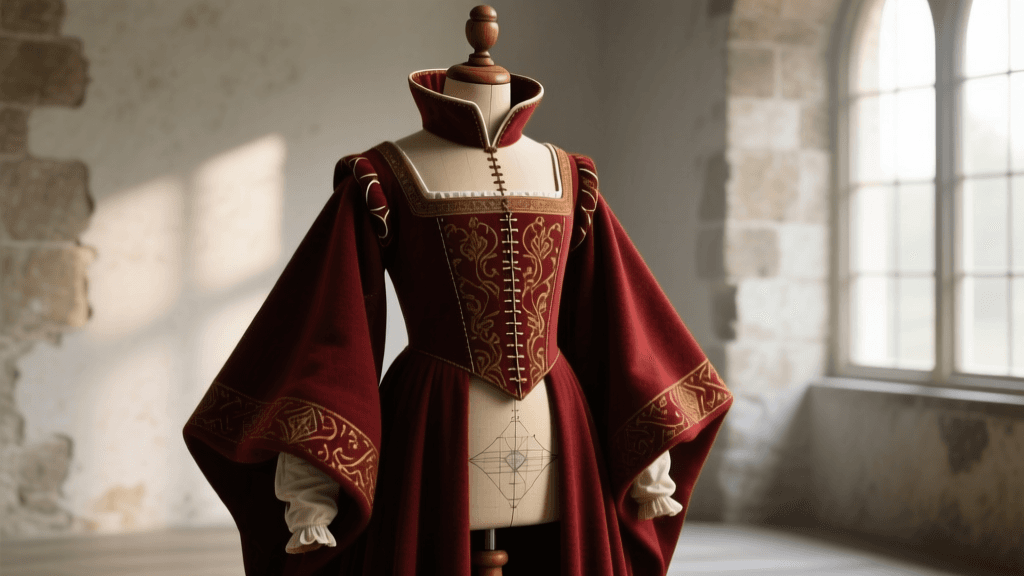
The landscape of historical European reenactment and traditional garment reconstruction has evolved dramatically as we move through the 2026 season. Today's makers, historians, and textile artists are no longer satisfied with approximate theatrical costumes; the demand is for museum-quality, historically accurate reconstructions. At the pinnacle of this movement is the 15th-century Burgundian houppelande, a garment characterized by its massive, floor-sweeping bombard sleeves, high stiffened collar, and voluminous, tubular folds. Reconstructing this iconic piece of medieval and early Renaissance fashion requires not only a deep understanding of historical tailoring techniques but also access to the correct materials. In 2026, the global textile market has seen a resurgence in heritage weaving, making it easier than ever to source period-correct silk damasks, lampas weaves, and voided velvets. This comprehensive guide will walk you through the best materials, modern drafting techniques, and essential tailoring tools required to build an authentic houppelande this year.
Understanding the Historical Silhouette and Fabric Requirements
Before sourcing materials, it is crucial to understand the engineering behind the houppelande. Emerging in the late 14th century and dominating the courts of Europe through the mid-15th century, the garment was designed to display immense wealth through the sheer volume of fabric used. According to the Metropolitan Museum of Art's Heilbrunn Timeline of Art History, the transition from the fitted cotehardie to the flowing houppelande represented a major shift in European sartorial culture, emphasizing heavy, draped textiles over tailored body-conforming garments.
To achieve the correct structural drape in 2026, makers must avoid lightweight, modern apparel silks. The houppelande requires fabrics with significant weight and body. The outer shell was typically constructed from heavy silk brocades, wool broadcloth, or velvet, while the lining was often made of contrasting silk, linen, or even fur for winter garments. The characteristic deep folds of the skirt and sleeves are entirely dependent on the weight and weave of the chosen textile.
Sourcing Authentic Silk Damasks and Brocades in 2026
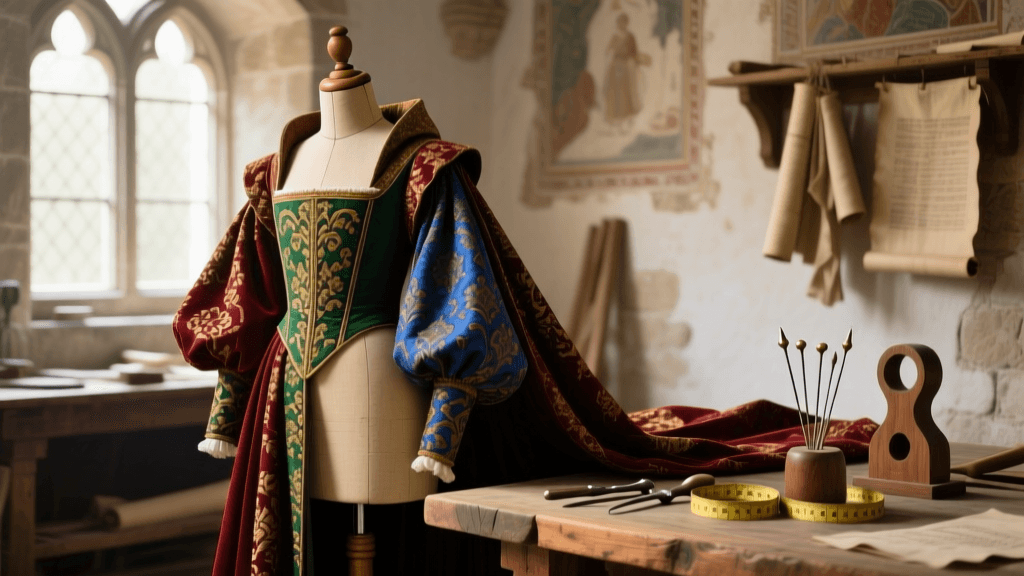
The 2026 historical textile market is dominated by specialized European mills that utilize computerized Jacquard looms programmed with exact 15th-century pattern drafts. The most sought-after motif for a high-status Burgundian houppelande is the pomegranate or artichoke design, which originated in Italian weaving centers like Venice and Lucca before spreading across Europe.
When shopping for historical brocades this year, look for the following specific weaves:
- Silk Lampas: A complex weave with a ground weave and a supplementary weft pattern. It offers a beautiful drape and a subtle sheen, perfect for the main body of the garment.
- Silk Damask: A reversible fabric where the pattern is created by the contrast in light reflection between the warp and weft. It is slightly lighter than lampas but excellent for linings or contrasting sleeves.
- Voided Velvet: Featuring a pattern where the velvet pile is cut away to reveal a satin or twill ground. This is the most luxurious and historically accurate choice for high nobility impressions, though it comes at a premium price point in 2026.
2026 Historical Textile Market Comparison Chart
The following table outlines the current market averages for period-correct fabrics available from specialized heritage weavers and historical textile merchants in 2026.
| Fabric Type | Historical Accuracy | 2026 Avg. Price (Per Yard) | Weight & Drape Quality | Best Garment Application |
|---|---|---|---|---|
| Pure Silk Lampas (Italian Motif) | Excellent | $140 - $185 | Heavy, structured, excellent tubular folds | Primary outer shell for nobility |
| Silk/Rayon Voided Velvet | Good (Rayon blend) | $95 - $120 | Very heavy, plush, stiff drape | Winter houppelandes, high collars |
| 100% Linen Damask | Excellent | $65 - $85 | Medium weight, crisp, breathable | Summer garments, contrast linings |
| Worsted Wool Broadcloth | Excellent | $55 - $75 | Heavy, dense, holds dagged edges perfectly | Outer shell, sleeve linings, hoods |
| Cotton/Silk Brocade Blend | Fair (Modern blend) | $40 - $60 | Medium, lacks historical stiffness | Budget-friendly practice garments |
Drafting the Bombard Sleeve and High Collar
The defining feature of the houppelande is the bombard sleeve—a massive, bell-shaped sleeve that often touched the floor. In 2026, many tailors are utilizing 3D body scanning and digital draping software like CLO 3D to map out the enormous circular cuts required for these sleeves before committing to expensive silk. This digital-first approach minimizes fabric waste, which is critical when working with $150-per-yard heritage brocades.
The high collar, another hallmark of the Burgundian style, requires internal stiffening. Historically, this was achieved using multiple layers of heavily starched linen or early forms of buckram. For modern reconstructions, tailors in 2026 are returning to traditional methods, using custom-milled linen buckram and hand-pad-stitching to create a collar that stands rigidly against the neck without the use of modern synthetic interfacing or plastic boning, which can melt or warp under the heat of outdoor summer reenactment events.
The Art of Dagging: Historical Edge Finishing
Dagging—the practice of cutting decorative patterns into the hems of sleeves and skirts—was incredibly popular in the 15th century. The feasibility of dagging depends entirely on your fabric choice. If your houppelande features wool broadcloth sleeves or a wool lining, the fulled nature of the wool prevents fraying, allowing you to cut intricate castellations, oak leaves, or scallops directly into the raw edge using sharp embroidery scissors or historical replica chisels. However, if you are using silk lampas or velvet, the edges must be hemmed, lined, or bound with silk ribbon to prevent catastrophic unraveling. Modern laser-cutting services are available in 2026 for synthetic blends, but purists and high-level reenactors continue to insist on hand-cut dagging for authentic wool garments.
Essential Tailoring Supplies for the Modern Historical Maker
To construct a houppelande that will pass the scrutiny of the most stringent historical accuracy panels, your sewing kit must reflect period-correct methodologies. While a modern sewing machine can be used for long, hidden structural seams, all visible stitching and edge finishing must be done by hand. Sourcing hand-forged needles and period-correct linen thread from specialists like Burnley & Trowbridge remains essential for the serious historical tailor in 2026.
Your 2026 Essential Tailoring Kit Should Include:
- Waxed Linen Thread: Sourced in 35/2 and 18/2 weights. Beeswax is mandatory to strengthen the thread and prevent tangling during heavy wool construction.
- Silk Buttonhole Twist: For constructing the intricate, cloth-covered buttons and thread shanks that close the front of the garment and the cuffs of the sleeves.
- Carbon Steel Tailor's Shears: Heavy-duty, 10-inch shears capable of slicing through multiple layers of wool and buckram without jagged edges.
- Wooden Tailor's Clapper: Essential for pressing open thick wool seams and flattening the high collar buckram using steam and pressure.
Historical Context and Academic References
Understanding the cultural context of the houppelande elevates a reconstruction from a mere costume to a piece of living history. The garment was heavily regulated by sumptuary laws, which dictated the length of the garment, the width of the sleeves, and the types of fabrics and furs that different social classes were permitted to wear. For deep dives into the evolution of medieval silhouettes and the socio-economic impact of the 15th-century silk trade, the Medievalists.net clothing archives offer a wealth of peer-reviewed articles and primary source translations that are invaluable for planning your next project.
Furthermore, studying the portraiture of the era—such as the works of Jan van Eyck and Rogier van der Weyden—provides critical visual evidence of how these heavy fabrics draped over the human form, how belts were positioned to hike up the skirts, and how the elaborate headwear (like the hennin or chaperon) interacted with the high collar of the houppelande.
Garment Care and Preservation in 2026
A historically accurate silk and wool houppelande is a significant financial and temporal investment. Proper storage in 2026 requires moving away from plastic garment bags, which can trap moisture and cause irreversible damage to natural fibers. Instead, store your completed garment in a breathable, unbleached cotton canvas bag or an archival-grade textile box. Use acid-free tissue paper to stuff the bombard sleeves and the high collar to maintain their structural shape and prevent deep creases from setting into the silk lampas. When cleaning is required, avoid modern dry cleaning chemicals; instead, rely on traditional spot-cleaning methods, gentle brushing, and professional textile conservation services that specialize in historical garments.
Conclusion
Reconstructing a 15th-century Burgundian houppelande in 2026 is a deeply rewarding endeavor that bridges the gap between historical research and tangible craftsmanship. By investing in heritage-woven silk lampas, utilizing digital drafting to manage massive fabric volumes, and committing to period-correct hand-finishing techniques, modern makers can bring the breathtaking elegance of the medieval court back to life. Whether you are preparing for a high-level historical exhibition, a museum demonstration, or an elite reenactment gathering, the dedication to authentic materials and techniques will ensure your garment stands as a masterpiece of European folk and historical dress.