2026 Guide To Crafting A 15th-Century Burgundian Houppelande
The Resurgence of the Burgundian Houppelande in 2026
As the historical reenactment and living history communities move through the 2026 season, the demand for extreme sartorial accuracy has never been higher. Among the most coveted and visually striking garments of the late Middle Ages is the Burgundian houppelande. Dominating the courts and wealthy merchant classes of the 15th century, this sweeping, voluminous gown represents the pinnacle of medieval tailoring. For modern costumers, historical sewists, and reenactors, crafting an authentic houppelande requires a deep understanding of historical silhouettes, period-accurate textiles, and traditional hand-sewing techniques. This comprehensive guide will walk you through the process of drafting, sourcing, and constructing a museum-quality 15th-century Burgundian houppelande in 2026.
Historical Context and the Defining Silhouette
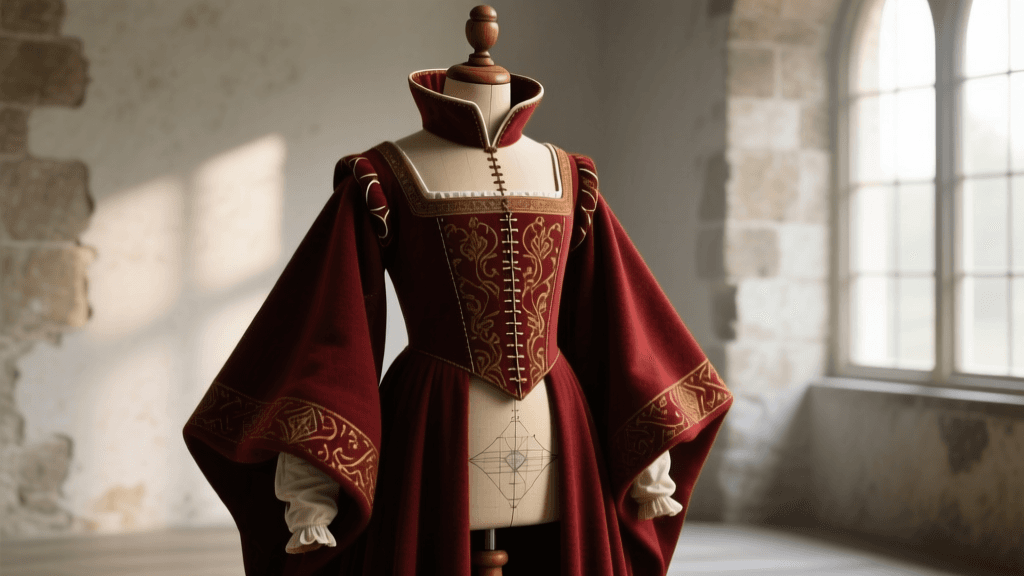
Originating in the late 14th century and reaching its zenith in the 1400s, the houppelande was an outer garment worn by both men and women, though the floor-length, high-waisted female version is the most iconic. According to the Metropolitan Museum of Art's Heilbrunn Timeline, the garment was characterized by its immense volume, a high standing collar, and enormous, flowing sleeves that often trailed to the ground. The waist was cinched high, just below the bust, with a wide, ornate belt known as a ceinture.
The silhouette was designed to project wealth and status. The sheer amount of fabric required to create the deep, tubular folds of the skirt and the dramatic sweep of the sleeves meant that only the elite could afford the finest wools and silks. As noted in Encyclopedia Britannica's history of European dress, sumptuary laws in various European courts frequently attempted to regulate the length of the sleeves and the amount of fur used to line these garments, highlighting their role as potent status symbols.
Sourcing Authentic Materials in 2026
The foundation of any credible historical garment is the textile. In 2026, the market for historically accurate reproduction fabrics has expanded, allowing sewists to access materials that closely mimic medieval weaves and dyes.
Wool Broadcloth and Fulled Wools
The primary fabric for a winter or formal houppelande is wool broadcloth. Unlike modern suiting wools, medieval broadcloth was woven wide, then heavily milled (fulled) and sheared to create a dense, weather-resistant fabric with a soft, velvet-like nap. For a 2026 project, seek out heavy-weight Melton wool or custom-fulled wools from heritage mills in Yorkshire, UK, or specialized historical textile vendors in Europe. Look for a weight of at least 16 to 20 ounces per yard to ensure the garment drapes into the deep, characteristic folds.
Silk Damask and Linings
For spring or summer variations, or for the wealthy merchant class, silk damask and heavy silk twills were highly prized. When sourcing silk in 2026, avoid modern synthetic brocades. Instead, look for 100% mulberry silk damasks woven on traditional jacquard looms, featuring period-appropriate motifs like pomegranates, thistles, or artichokes. For the lining, use a medium-weight, naturally colored linen to provide structure and breathability.
Fur and Faux Alternatives
Historically, the high collar and sleeve cuffs were heavily trimmed with fur, such as sable, marten, or miniver (white squirrel belly). Today, ethical considerations and modern wildlife protection laws mean that most reenactors use high-quality vintage furs, upcycled antique coats, or premium modern faux furs that mimic the dense undercoat and long guard hairs of period pelts.
2026 Material Requirements and Cost Breakdown
Constructing a houppelande is a significant investment in both time and materials. Below is a structured estimate for a standard women's floor-length houppelande, based on 2026 market pricing for high-quality, historically accurate textiles.
| Material Component | Required Yardage | 2026 Estimated Cost (USD) | Notes |
|---|---|---|---|
| Outer Wool Broadcloth | 7 - 9 yards | $315 - $540 | Heavy weight (16oz+), fulled finish |
| Linen Lining | 6 - 8 yards | $120 - $180 | Medium weight, natural or bleached |
| Silk Trim / Collar | 1 - 2 yards | $45 - $90 | Contrasting silk taffeta or damask |
| Faux Fur / Vintage Fur | 2 - 3 pelts/strips | $80 - $250 | For collar and sleeve bag-lining |
| Historical Sewing Thread | 4 - 6 spools | $40 - $60 | Silk and linen threads for hand-sewing |
| Brass Belt Hardware | 1 set | $35 - $75 | Cast brass buckle and chape |
Pattern Drafting and Measurements
Unlike modern patterns that rely on complex darts and fitted bodices, the 15th-century houppelande is a masterclass in geometric draping. The garment is typically constructed from a series of long, triangular gores that radiate from the shoulders, creating immense volume at the hem while remaining relatively fitted across the upper chest.
To draft your pattern, start with a basic fitted kirtle block as your undergarment foundation. The houppelande should fit snugly across the shoulders and upper chest, with the high waistline sitting just below the bust. From the high waist down, the fabric must flare out dramatically. A common historical method is to use four to six massive gores, each measuring up to 60 inches wide at the hem. This ensures the deep, tubular folds seen in Victoria and Albert Museum's fashion archives and contemporary 15th-century tapestries.
Drafting the Grande Assiette Sleeve
The most challenging aspect of the houppelande is the sleeve. The 15th-century 'grande assiette' (great armhole) sleeve is cut as a single, massive piece that extends from the high collar, down the side of the body, and out to the wrist or floor. This provides incredible freedom of movement despite the garment's bulk. When drafting the sleeve, ensure the back seam curves deeply into the side seam of the bodice. The wrist or hem of the sleeve should be cut wide enough to accommodate dagging—decorative, scalloped, or leaf-shaped edges that were highly fashionable in the Burgundian court.
Historical Construction and Hand-Sewing Techniques
While modern sewing machines offer speed, achieving a truly authentic drape and finish requires historical hand-sewing techniques. The thick, fulled wool used for a houppelande responds beautifully to hand-stitching, which allows the fibers to mold to one another.
Seam Assembly and Flat-Felling
Begin by assembling the main body gores using a historical running stitch with heavy, waxed linen thread. For a running stitch, aim for 6 to 8 stitches per inch. Once the main seams are joined, trim one side of the seam allowance and fold the other over it, securing it flat against the garment using a fine silk whipping stitch. This flat-felled seam is incredibly strong and lies perfectly flat, which is essential when working with thick wool.
Bag-Lining the Sleeves
The massive sleeves are typically lined in silk or fur. To do this historically, sew the outer wool sleeve and the inner lining sleeve together at the hem and the dagged edges, right sides facing. Turn the sleeve right-side out and baste the top edges together before setting it into the armhole. This 'bag-lining' technique ensures that no raw edges are visible and gives the sleeve a luxurious, heavy drape.
Stiffening the High Collar
The iconic standing collar of the Burgundian houppelande must be stiffened to frame the face properly. In the 15th century, this was achieved through heavy interlining, multiple layers of linen, and tight pad-stitching. Cut your collar from the outer wool and line it with two layers of heavy linen canvas. Use a dense pad-stitch (diagonal running stitches) to bind the layers together, which will force the collar to curve and stand upright when worn.
Accessories: The Ceinture and the Chaperon
A houppelande is incomplete without its defining accessories. The high waist is cinched with a wide leather or woven silk ceinture. In 2026, custom leatherworkers and historical metal casters offer stunning reproductions of 15th-century brass and silver buckles. Ensure your belt is wide enough (at least 2 to 3 inches) to support the heavy gathers of the wool skirt, and allow the ends of the belt to hang down past the knees, weighted with decorative metal chapes.
For headwear, the female houppelande is traditionally paired with a hennin (the iconic steeple headdress) or a bourrelet (a padded, horned roll). For men, the garment is paired with a chaperon—a complex, draped turban-like hat made from a long strip of wool, featuring a liripipe (tail) and dagged edges that mirror the sleeves of the gown.
Conclusion
Crafting a 15th-century Burgundian houppelande in 2026 is a rewarding journey into the heart of medieval tailoring. By prioritizing historically accurate textiles like fulled wool and silk damask, utilizing geometric pattern drafting, and committing to traditional hand-sewing methods, you can create a garment that not only looks authentic but behaves and moves exactly as it did in the courts of Philip the Good. Whether you are preparing for a high-end living history exhibition or a museum-quality photoshoot, the time and investment poured into this magnificent garment will yield a breathtaking piece of wearable history.