The Sacred Threads: A Comprehensive History of Religious Vestments
Throughout human history, the desire to connect with the divine has manifested in countless ways, from the construction of towering cathedrals to the composition of transcendent music. Yet, one of the most intimate and enduring expressions of this spiritual yearning is found in the garments worn during sacred rituals. Religious vestments are far more than mere uniforms; they are woven theology, tangible expressions of faith, and masterpieces of artisanal heritage. At The Garment Atlas, we recognize that to study the history of sacred clothing is to trace the evolution of human devotion, artistry, and cultural identity. The transition of everyday garments into sacred vestments represents a fascinating intersection of history and spirituality, where the temporal is elevated to the eternal.
The Origins and Evolution of Sacred Garb
To understand the history of religious vestments, one must look back to the classical antiquity of the Greco-Roman world. Many of the foundational garments used in Western liturgical traditions did not originate in the temple or the church, but in the secular wardrobes of the late Roman Empire. The chasuble, for instance, evolved from the paenula, a common, poncho-like traveling cloak worn by citizens of all classes to protect against the elements. Similarly, the dalmatic and the stole were derived from the secular tunics and scarves of Roman magistrates and scholars.
As the Roman Empire fractured and secular fashions evolved during the early Middle Ages, the clergy conservatively retained the older, dignified styles of the imperial era. Over centuries, these garments ceased to be worn in daily life and became exclusively associated with the sacred liturgy. This phenomenon of fossilized fashion is a cornerstone of vestment history. By freezing a specific moment in secular fashion and dedicating it entirely to the divine, religious institutions created a visual language of timelessness. The garments became a bridge between the earthly realm and the heavenly, signaling to the congregation that the wearer was stepping out of ordinary time and into a sacred mystery. For a deeper dive into how ancient garments influenced later styles, explore our archive on antique garment evolution.
Cultural Significance and Theological Symbolism
The cultural significance of religious vestments extends far beyond their historical origins; they are deeply embedded with theological symbolism. Every fold, color, and motif is intentionally chosen to reflect spiritual truths and the liturgical calendar. In the Christian tradition, the language of color is paramount. White signifies purity, joy, and resurrection; red evokes the fire of the Holy Spirit and the blood of martyrs; purple denotes penance, preparation, and royalty; while green represents the enduring hope of ordinary time.
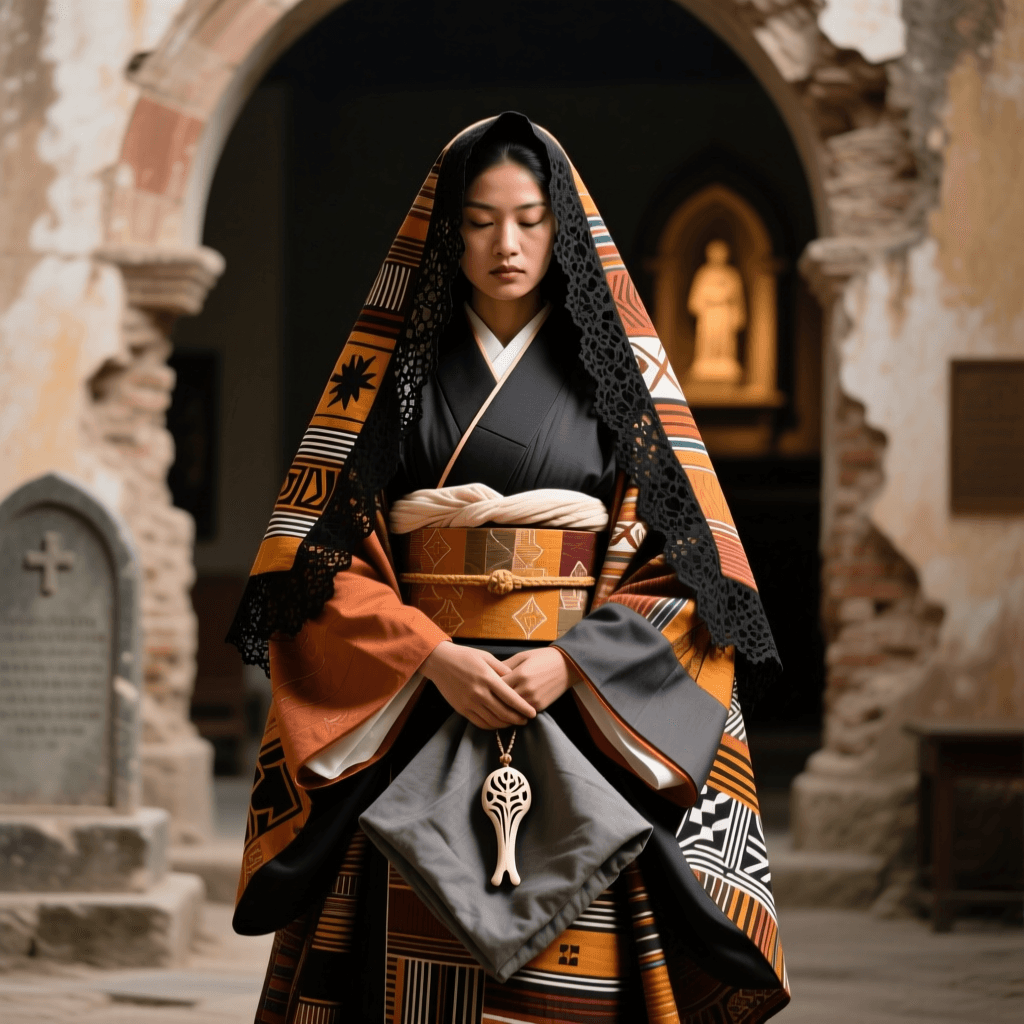
Beyond color, the very act of vesting is a ritual of transformation. In many traditions, the donning of sacred garments is accompanied by specific prayers, transforming the physical act of dressing into a spiritual armoring. The heavy, enveloping nature of a cope or a phelonion obscures the individual physique of the wearer, subsuming their personal identity into the collective, timeless role of the priesthood or the monastic order.
In Eastern Orthodox traditions, the symbolism is even more explicitly cosmic. The bishop's sakkos and omophorion are designed to reflect the majesty of the Byzantine emperor and, by extension, the glory of the heavenly Jerusalem. The intricate geometric patterns and depictions of seraphim woven into the textiles serve as a visual catechism, teaching the faithful about the celestial hierarchy. The cultural weight of these garments is immense, acting as a unifying force that connects contemporary worshippers with generations of ancestors who prayed in the very same styles.
Masterful Craftsmanship and Liturgical Textiles
The creation of religious vestments has historically driven some of the most significant advancements in textile production and textile craftsmanship. Because these garments were intended for the glory of the divine, no expense or effort was spared in their creation. Monasteries, royal workshops, and specialized guilds dedicated countless hours to weaving, dyeing, and embroidering fabrics of unparalleled quality.
One of the most celebrated examples of this devotion to craft is Opus Anglicanum, or English work, a style of luxury embroidery that flourished in medieval Europe. Using split-stitch techniques, artisans created incredibly detailed, painterly scenes of saints and biblical events using silk threads and precious metals. Gold and silver threads were not merely metallic imitations; they were often created by wrapping incredibly thin strips of actual gold or silver around a silk core. The resulting vestments were breathtakingly beautiful, catching the flickering candlelight of medieval sanctuaries and creating an aura of divine radiance.
The role of female artisans in creating these masterpieces cannot be overstated. Nuns and laywomen in specialized workshops spent countless hours bent over embroidery frames, executing stitches so fine they are difficult to see with the naked eye. The dyes used were equally remarkable, sourced from global trade routes. Madder root provided deep reds, woad yielded rich blues, and weld produced vibrant yellows, all fixed with complex mordants to ensure longevity.
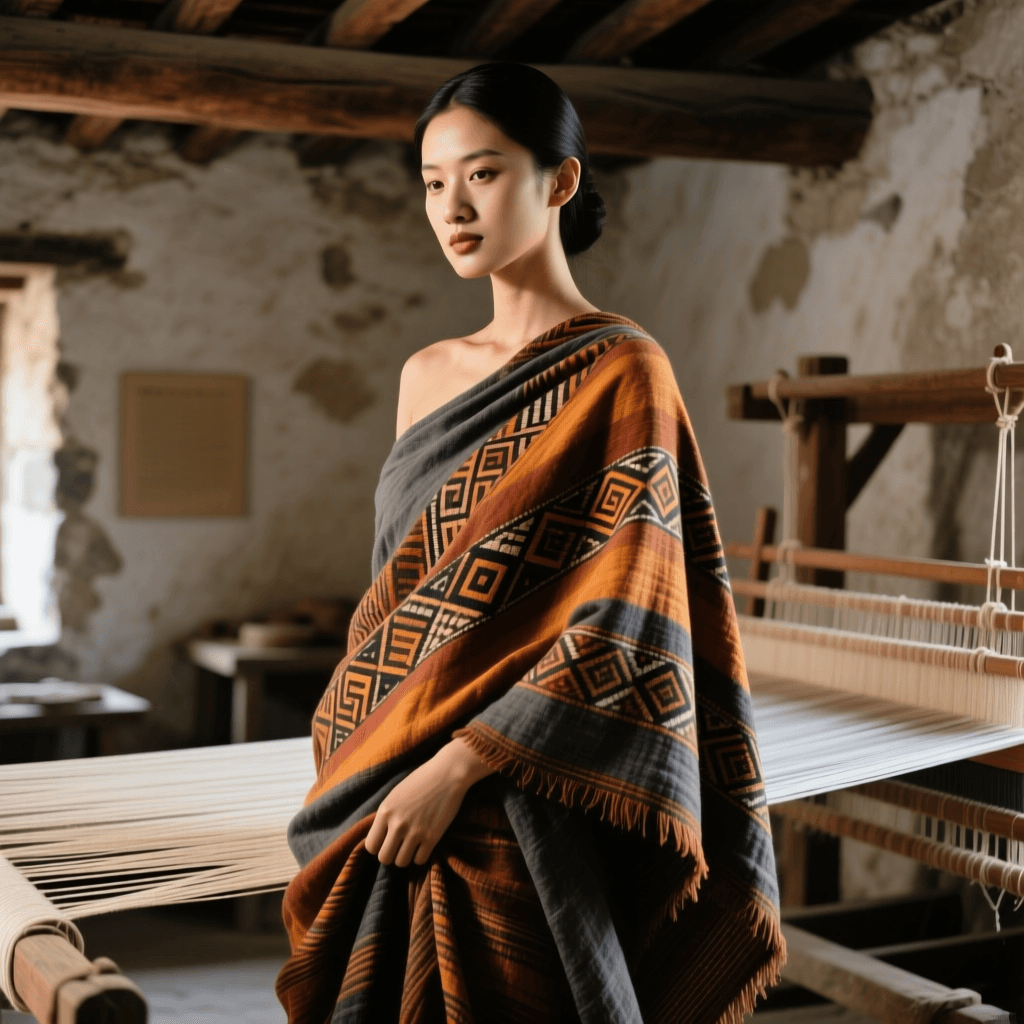
The weaving of liturgical silks also pushed the boundaries of the loom. Complex damasks, brocades, and lampas weaves were developed to incorporate large-scale motifs like the pomegranate, the fleur-de-lis, and the cross. The pomegranate, with its many seeds held within a single rind, became a ubiquitous motif in Renaissance vestments, symbolizing the unity of the church and the fullness of suffering and resurrection. The physical weight of these garments was substantial, often requiring the wearer to move with a slow, deliberate, and processional grace that enhanced the solemnity of the ritual. To understand the materials that made this possible, read our comprehensive guide to liturgical fabrics.
Regional Variations Across Global Faiths
While Western Christianity provides a well-documented lineage of vestment history, the use of sacred garb is a universal human phenomenon, manifesting in diverse and beautiful ways across global faiths.
In Judaism, the history of sacred garments is deeply tied to the ancient Temple in Jerusalem, where the High Priest wore elaborate, jewel-encrusted vestments as described in the Book of Exodus. Following the destruction of the Temple, the focus shifted from the centralized priesthood to the communal and personal observance of the faith. The tallit (prayer shawl) with its tzitzit (fringes) serves as a deeply personal, tactile reminder of the commandments, wrapping the wearer in a physical embrace of the law during prayer. The kittel, a simple white robe worn on the High Holy Days and during the Passover Seder, symbolizes purity, mortality, and the equality of all souls before the divine.
In the Islamic tradition, the concept of sacred clothing is most profoundly expressed in the Ihram, the seamless white garments worn by pilgrims during the Hajj. Stripped of all markers of wealth, status, and regional identity, the Ihram enforces a radical equality among millions of worshippers. Conversely, the everyday clerical robes and turbans worn by scholars in various Islamic cultures often reflect regional textile heritage, from the intricate ikat weaves of Southeast Asia to the fine wools of the Middle East.
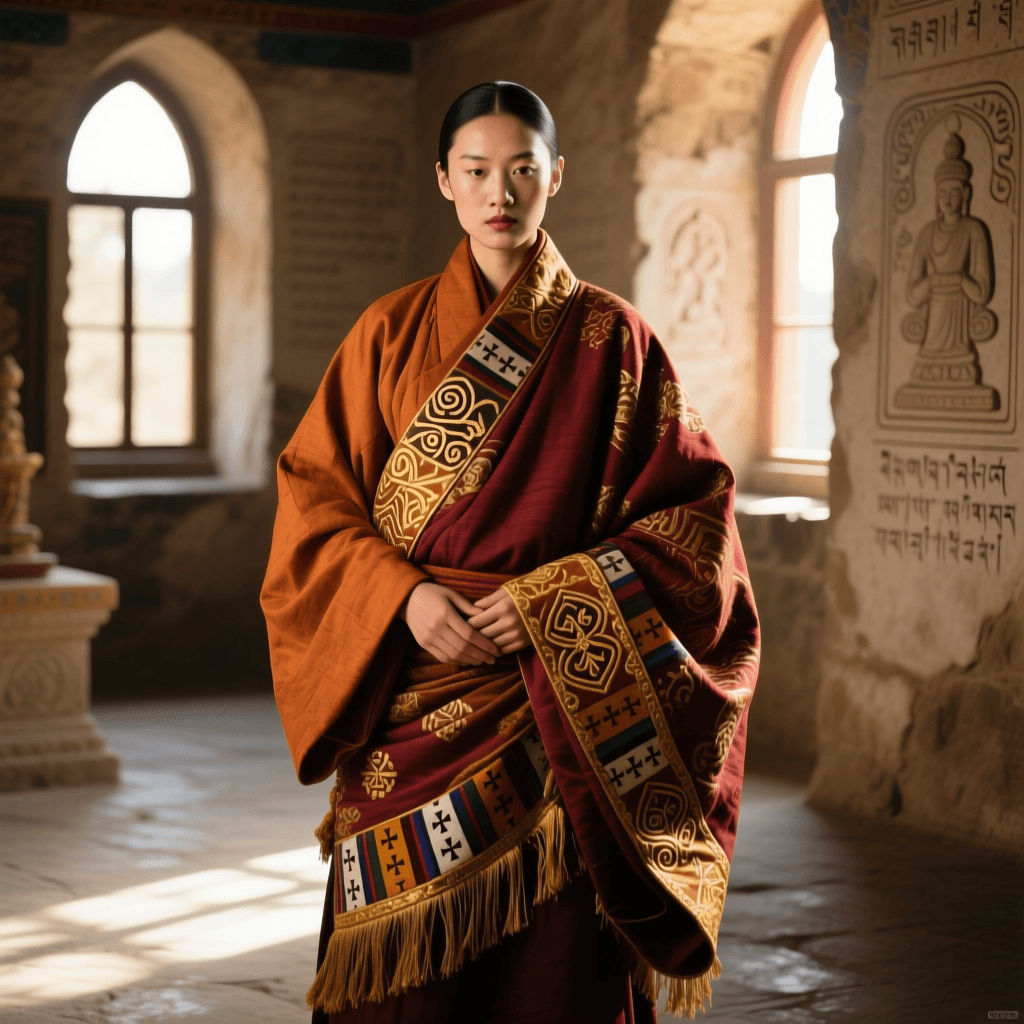
Eastern traditions, such as Buddhism, offer a starkly different philosophy of sacred dress. The kasaya, the traditional robe of Buddhist monastics, originated as a patchwork garment made from discarded rags scavenged from charnel grounds and trash heaps. This humble origin was a deliberate rejection of materialism and a physical embodiment of non-attachment. Over centuries, as Buddhism spread across Asia, the kasaya evolved. In Japan, the kesa became a highly structured, intricately pieced garment made from sumptuous silks, often donated by wealthy patrons, yet retaining the visual memory of its humble, patchwork roots.
In Hinduism, the concept of ritual purity heavily influences sacred dress. In many traditional temples, particularly in South India, priests and devotees entering the innermost sanctum are required to wear unstitched garments, such as the silk dhoti and the angavastram (shoulder cloth). Stitched clothing is historically viewed in certain orthodox contexts as less pure, making the drape and weave of the fabric paramount to the spiritual experience. For more on how geography shapes sacred dress, explore our study on Silk Road textiles and their influence on monastic robes.
Modern Preservation and the Future of Heritage Vestments
The preservation of antique religious vestments presents a unique and formidable challenge for modern conservators. The very materials that made these garments so magnificent—metallic threads, weighted silks, and organic dyes—are inherently unstable over long periods. Gold threads can tarnish or break, silk can shatter due to the metallic salts used in historical dyeing processes, and the heavy embroidery can cause the foundational fabric to tear under its own weight.
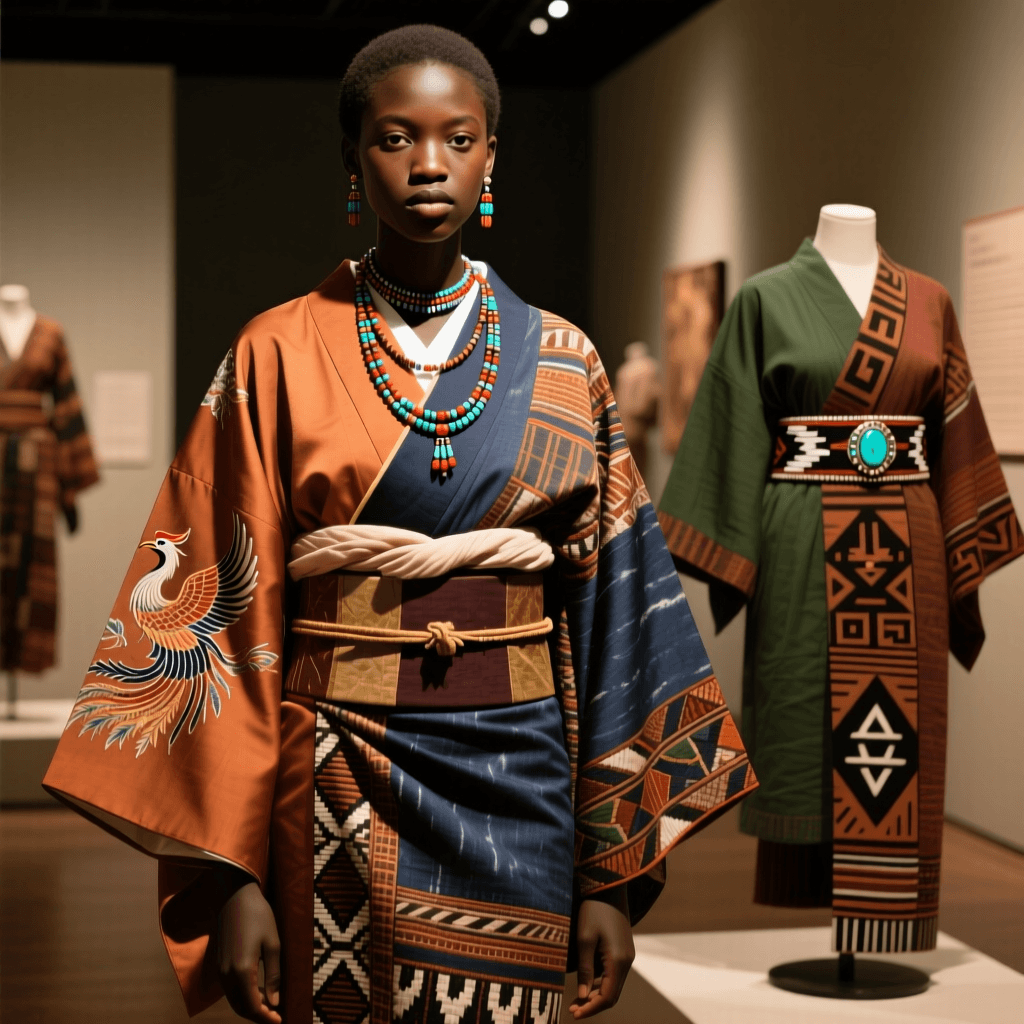
Contemporary museums and ecclesiastical archives employ rigorous environmental controls to halt the degradation of these sacred artifacts. Temperature, humidity, and light exposure are meticulously monitored. Vestments are no longer hung on standard hangers, which stress the shoulder seams; instead, they are stored flat in acid-free tissue paper within climate-controlled vaults. When exhibited, they are often supported by custom-built, padded mannequins that distribute the weight of the heavy textiles evenly.
This brings up a profound ethical dilemma in the field of textile conservation: the tension between preserving an object as a static museum artifact and respecting its original, living purpose. For many faith communities, a vestment is not merely a historical relic but a vital tool for worship. Beyond the museum environment, there is a growing movement within religious communities to preserve and restore their own living heritage. Rather than discarding damaged historical vestments in favor of mass-produced modern alternatives, many parishes and dioceses are partnering with specialized textile conservators to repair and stabilize their antique garments. This ensures that the tangible link to the past remains unbroken, allowing these masterpieces of faith and craftsmanship to continue serving their original, sacred purpose. Discover more about the intersection of history and modern wardrobes in our exploration of ceremonial attire.
Frequently Asked Questions
What is the oldest surviving religious vestment?
While fragments of ancient Coptic and Byzantine textiles survive from the early centuries of the first millennium, the oldest largely intact, identifiable liturgical vestments generally date to the early Middle Ages. Notable examples include the intricate silk and linen garments preserved in European cathedral treasuries, such as the chasubles and albs dating back to the eleventh and twelfth centuries, which were often preserved as relics associated with early saints and bishops.
Why are specific colors used in liturgical garments?
Liturgical colors serve as a visual calendar and theological shorthand for the faithful. They align the visual environment of the sanctuary with the spiritual focus of the season. For example, violet is used during Advent and Lent to signify penance and anticipation, while white and gold are reserved for the highest feasts of the year, symbolizing triumph, purity, and divine light. This color-coding helps orient the congregation to the rhythms of the sacred year.
How are antique vestments preserved today?
Modern preservation relies on preventive conservation. Antique vestments are stored flat in dark, climate-controlled environments to prevent light damage and fiber degradation. Conservators avoid harsh chemical cleaning, opting instead for gentle surface vacuuming through fine mesh screens. When displayed, garments are supported by custom-molded, acid-free forms that prevent stress on ancient seams and fragile metallic embroidery.
What is the difference between a chasuble and a cope?
Both are outer vestments worn by clergy, but they differ significantly in shape and historical function. The chasuble is a sleeveless, poncho-like garment that drapes over the shoulders and falls to the wrists, primarily worn by the celebrant during the Eucharist. The cope, conversely, is a large, semi-circular cloak that fastens at the front with a decorative clasp known as a morse. Historically, the cope was a processional garment worn by all ranks of clergy and choir members, rather than being restricted to the altar.
Do all world religions utilize specialized sacred garments?
While not all faiths require specialized clothing for everyday worship, most major world religions utilize distinct garments for specific rituals, pilgrimages, or clerical roles. From the seamless Ihram of Islamic pilgrimage to the patchwork kasaya of Buddhist monastics and the fringed tallit of Jewish prayer, sacred garments universally serve to separate the profane from the holy, marking the wearer's transition into a state of spiritual focus and devotion.