Regional Japanese Garments: Okinawan Ryusou and Ainu Attus
Beyond the Mainland: Japan’s Diverse Sartorial Heritage
When discussing traditional Japanese clothing, the mainstream image is almost exclusively dominated by the mainland kimono, yukata, and hakama. However, Japan’s vast archipelago encompasses distinct indigenous and regional cultures with their own profound textile histories. From the tropical, typhoon-swept Ryukyu Islands in the south to the subarctic, snow-covered expanses of Hokkaido in the north, regional variations in Japanese garments reveal a masterful adaptation to local climates, resources, and spiritual beliefs. For collectors, cultural enthusiasts, and travelers, understanding these regional garments—specifically the Okinawan Ryusou and the Hokkaido Ainu Attus—offers a richer, more nuanced perspective on Asian sartorial traditions.
Okinawan Ryusou and the Vibrancy of Bingata
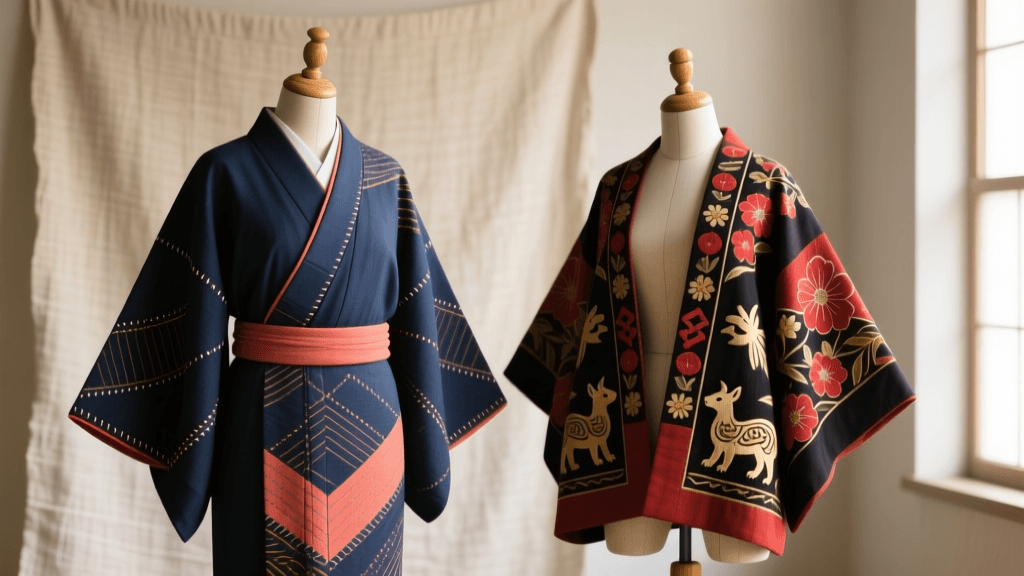
The traditional garment of Okinawa, known as Ryusou, evolved during the Ryukyu Kingdom era (1429–1879). Unlike the heavily layered and restrictive mainland kimono, Ryusou is designed for a subtropical climate. It features a looser fit, wider sleeves, and is typically worn without the stiff, restrictive obi belts found in mainland Japan. Instead, garments are often secured with a simple, lightweight sash or tied internally, allowing for maximum airflow in high humidity.
Textile Mastery: Bashofu and Bingata
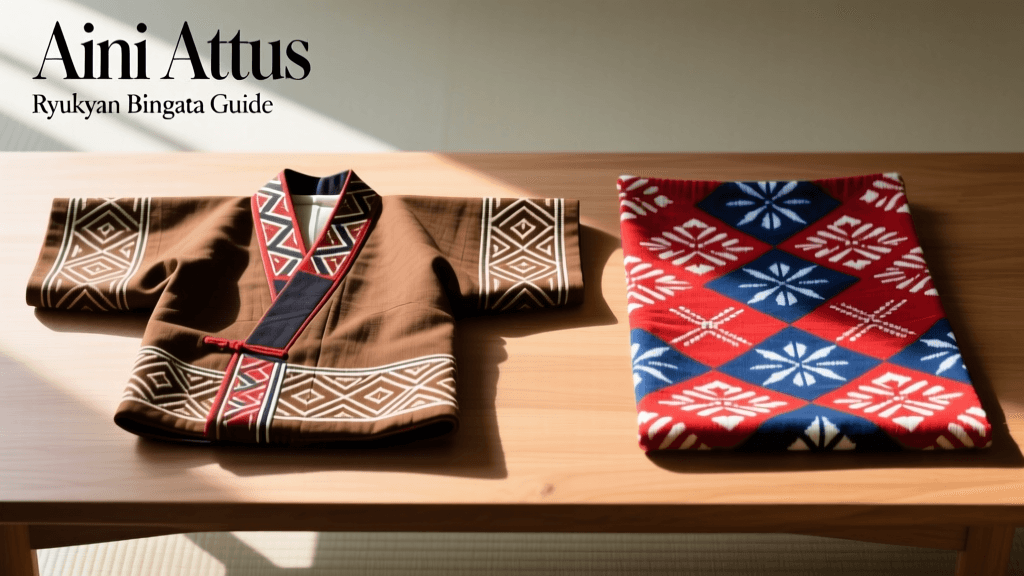
Okinawa’s textile heritage is anchored by two highly prized techniques: Bashofu and Bingata. Bashofu is a remarkably lightweight, breathable fabric woven from the fibers of the Japanese banana plant (Musa basjoo). It requires immense labor; producing enough thread for a single adult garment can take months of stripping, boiling, and hand-twisting. Bingata, conversely, is a vibrant resist-dyeing technique utilizing stencils and natural pigments, historically reserved for royalty and the warrior class. The motifs feature southern flora, fauna, and Chinese-influenced clouds and dragons, reflecting Okinawa's historical role as a maritime trading hub.
Actionable Guide: Sourcing and Wearing Ryusou
If you are looking to acquire authentic Okinawan garments or textiles, understanding the market, pricing, and tailoring metrics is essential.
- Bashofu Garments: True, hand-woven Bashofu kimono are exceedingly rare and expensive. Expect to pay between ¥800,000 and ¥2,000,000 ($5,500–$14,000 USD) for a full, authentic bolt tailored into a garment. For a more accessible option, look for Bashofu-woven table runners or small pouches, which start around ¥15,000.
- Bingata Dyeing: Authentic hand-dyed Bingata silk obi or kimono can range from ¥300,000 to ¥1,000,000. For visitors, participating in a Bingata stencil-dyeing workshop in Naha or the Tsuboya district is highly recommended. These sessions cost between ¥5,000 and ¥10,000 and allow you to dye your own furoshiki (wrapping cloth) or tote bag.
- Measurements & Tailoring: Mainland kimono are woven on standard tanmono bolts measuring roughly 38 cm (15 inches) in width. Okinawan textiles, particularly older or artisanal Bashofu, may vary slightly in width (often 35-40 cm). When commissioning a Ryusou, ensure the tailor understands the traditional drop-shoulder and wider sleeve measurements, which require approximately 10-12 meters of fabric compared to the standard 11 meters of a mainland kimono.
Timing Your Visit: Festivals and Harvest Seasons
To truly understand these garments, timing your travel around regional craft cycles is highly recommended. In Okinawa, the harvesting of the Musa basjoo plant for Bashofu occurs primarily between autumn and early winter. Visiting the village of Kijoka in Ogimi during November allows you to witness the communal boiling and scraping of the banana fibers. Meanwhile, the Okinawa Prefectural Government Cultural Promotion bureau frequently updates schedules for public weaving demonstrations and Bingata drying sessions, which are heavily dependent on the region's intense summer sunlight and low humidity.
Hokkaido’s Ainu Attus: Bark Cloth Mastery
Far to the north, the indigenous Ainu people of Hokkaido, Sakhalin, and the Kuril Islands developed a completely distinct sartorial tradition suited for harsh winters and a hunter-gatherer lifestyle. The most iconic traditional Ainu garment is the Attus, a robust, water-resistant workwear robe woven from the inner bark fibers of the Manchurian elm tree (ohyo).
Craftsmanship and Spiritual Significance
The creation of Attus is a labor-intensive process. Bark is harvested in early summer when the sap is flowing, soaked, peeled into thin layers, dried, and then split into fine threads by hand. The resulting fabric is incredibly durable, breathable in summer, and retains heat when layered in winter. While Attus was historically everyday workwear, ceremonial garments like the Minsi (cotton robes with intricate appliqué and embroidery) were worn for rituals. The geometric patterns on Minsi, such as the moreu (swirl) and aiushi (thorns), are not merely decorative; they serve as spiritual talismans to ward off evil spirits from entering the body through the garment's openings.
Sourcing Authentic Ainu Textiles
Acquiring authentic Ainu garments requires navigating a niche market centered around Hokkaido.
- Where to Buy: The town of Nibutani in Biratori, Hokkaido, is the epicenter of Ainu craft. The Nibutani Ainu Culture Museum and local cooperatives sell authentic, locally made Attus and Minsi. Avoid mass-produced 'souvenir' items in generic tourist shops, which often use synthetic blends and inaccurate motifs.
- Cost Expectations: A fully hand-woven, traditional Attus robe is a museum-grade collector's item and can cost upwards of ¥500,000. However, modern Ainu artisans create contemporary accessories using Attus weaving techniques. Neckties, small bags, and wallet cases made from authentic elm bark fiber typically range from ¥8,000 to ¥25,000.
- Care and Maintenance: Attus fiber is highly susceptible to mold in humid environments. Store Ainu bark-cloth garments in a cool, dry place with desiccants. Never machine wash; instead, gently brush off dirt and air them out in the shade. According to the National Ainu Museum and Park (Upopoy), proper preservation of these organic fibers is critical for their longevity.
Regional Garment Comparison Chart
To understand how these regional garments compare to the mainstream mainland kimono, refer to the structured breakdown below:
| Feature | Mainland Kimono | Okinawan Ryusou | Ainu Attus / Minsi |
|---|---|---|---|
| Primary Climate | Temperate (Four seasons) | Subtropical (Hot, humid) | Subarctic (Cold, snowy) |
| Core Materials | Silk, Hemp, Cotton | Banana fiber (Bashofu), Silk, Ramie | Elm bark fiber, Cotton, Bear/Deer hide |
| Silhouette & Fit | Straight, cylindrical, restrictive | Loose, flowing, wide sleeves | Boxy, layered, heavy winter robes |
| Fastening Method | Thick, stiff Obi belt | Thin sash or internal ties | Simple woven sashes, wrapped layers |
| Starting Cost (Authentic) | ¥150,000+ | ¥300,000+ (Bingata/Bashofu) | ¥8,000 (Accessories) to ¥500,000+ (Robes) |
Preservation and Contemporary Relevance
The survival of these regional traditions relies heavily on government designation and modern adaptation. The Japanese Ministry of Economy, Trade and Industry (METI) officially recognizes specific regional crafts, providing a framework for authenticity and artisan support. As noted by the Traditional Craft Products Industry Promotion Association, designating crafts like Okinawan Bingata and Nibutani Ita (woodcarving often paired with Ainu textiles) ensures that master artisans can pass down their techniques to apprentices, safeguarding intangible cultural properties.
Furthermore, contemporary Japanese fashion designers are increasingly looking outside the mainland for inspiration. Modern interpretations of Bingata patterns are now featured on mainland silk obi, while Ainu geometric motifs have been incorporated into high-end streetwear and winter outerwear collaborations. For the culturally conscious consumer, investing in these regional garments is not merely a fashion choice; it is a direct contribution to the survival of indigenous and minority cultures within Japan.
“To wear a garment born of the Ryukyu winds or the Hokkaido snow is to wear the geography and spirit of the people who shaped it. True sartorial appreciation demands we look beyond the capital.” — Textile Historian's Journal, Asian Traditions Archive.
Final Thoughts for Collectors and Travelers
Whether you are planning a textile-focused trip to Naha to witness the rhythmic clacking of a Bashofu loom, or traveling to the snowy villages of Biratori to feel the rough, enduring texture of Ainu elm bark, Japan’s regional garments offer a profound departure from the mainstream. When purchasing, always ask for the artisan’s name, the specific village of origin, and the material certification. By prioritizing authenticity and understanding the distinct environmental needs that shaped these garments, you help preserve a vital, diverse chapter of Asian textile history.