Hakama and Samue: Martial Arts and Tea Ceremony Uniform Guide
The Intersection of Budo and Chado: Understanding Traditional Uniforms
In the study of Japanese traditional arts, the garments worn by the practitioner are never mere afterthoughts; they are integral tools that dictate movement, instill discipline, and reflect the philosophy of the practice. This is especially true when examining the intersection of Budo (martial arts) and Chado (the way of tea). While one is inherently physical and combative and the other is meditative and hospitable, both share a profound reliance on traditional uniforms—most notably the hakama and the samue. According to The Metropolitan Museum of Art, traditional Japanese dress is deeply intertwined with social status, occupation, and the formalization of cultural rituals. For modern practitioners of Aikido, Kendo, Iaido, and the Japanese tea ceremony, understanding the nuances of these garments is essential for both respect for the art and practical performance.
The Hakama: Pleats of Virtue and Movement
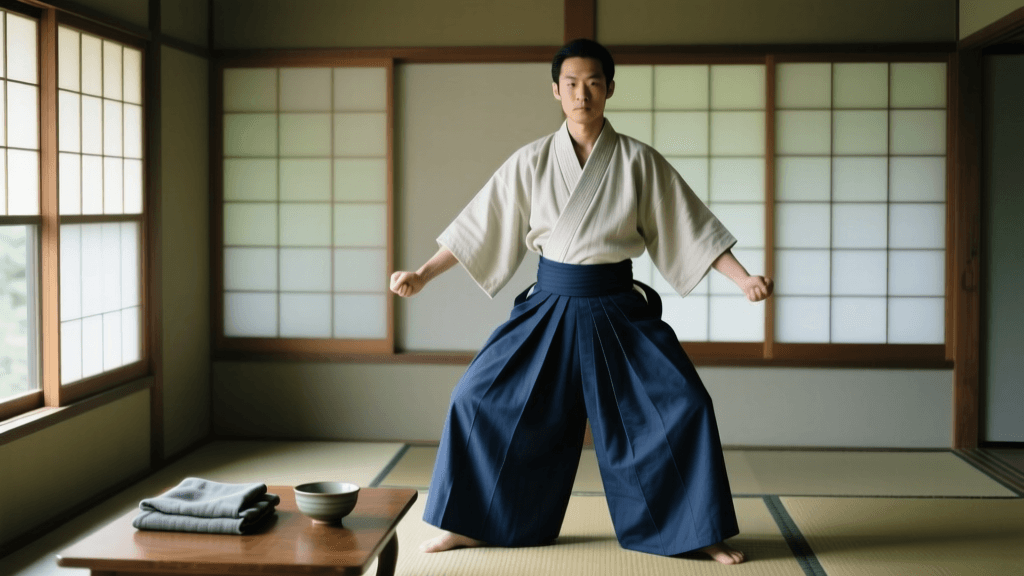
The hakama is a pleated, divided skirt-like garment worn over a kimono or martial arts gi. Historically worn by samurai to protect their legs while riding horses, the hakama evolved into a symbol of scholarly and martial prestige. Today, it is the defining uniform for advanced practitioners of Aikido and Kendo, as well as a formal requirement for high-ranking tea ceremony hosts and guests. The standard formal hakama features exactly seven deep pleats—two in the back and five in the front. These pleats are widely interpreted to represent the seven virtues of Bushido (the samurai code):
- Jin (Benevolence)
- Gi (Justice and Righteousness)
- Rei (Courtesy and Etiquette)
- Chi (Wisdom)
- Shin (Sincerity)
- Chu (Loyalty)
- Ko (Filial Piety)
While the silhouette remains consistent across disciplines, the fabric, color, and construction of a hakama vary wildly depending on whether it is destined for the dojo or the tearoom.
Martial Arts Hakama: Built for the Dojo
In martial arts like Aikido and Kendo, the hakama must withstand rigorous physical exertion, frequent washing, and the friction of tatami mats.
Fabric Choices: The most common material for Aikido hakama is Tetron, a proprietary blend of 65% polyester and 35% rayon. Tetron is highly prized because it is lightweight, resists wrinkling, and holds its pleats exceptionally well even after machine washing. For Kendo practitioners, heavy-weight indigo-dyed cotton is the standard. The thick cotton absorbs sweat and provides a degree of protection, while the natural indigo dye is historically believed to have mild antibacterial properties.
Colors: Aikido hakama are traditionally black or navy blue, though white is sometimes worn by high-ranking instructors or during specific summer seminars. Kendo hakama are almost exclusively deep indigo navy.
Cost: A standard Tetron Aikido hakama ranges from $60 to $120, while a high-quality, hand-dyed Kendo hakama can cost between $150 and $350.
Tea Ceremony Hakama: Elegance in the Tearoom
In Chado, the hakama is worn by male practitioners during formal tea gatherings (chaji) and by both men and women during graduation or certification ceremonies. The tea ceremony prioritizes subtlety, seasonal awareness, and refined aesthetics, which is reflected in the garment's construction. As noted by the Victoria and Albert Museum, the evolution of Japanese formal wear emphasizes the harmony between textile patterns and the specific social occasion.
Fabric Choices: Tea ceremony hakama are typically crafted from high-grade silk, linen, or Sendai-hira (a stiff, tightly woven silk fabric). Unlike martial arts hakama, the pleats in a silk tea hakama are often sewn down at the hem to maintain their pristine shape during the slow, deliberate kneeling movements (seiza) required in the tearoom.
Colors and Patterns: Subdued, elegant stripes (shima) are the most traditional choice. The stripes should be narrow and in muted tones like charcoal, navy, or olive green, ensuring the host's attire does not visually overpower the tea utensils or the scroll in the alcove.
Cost: Authentic silk or Sendai-hira tea hakama are significant investments, typically ranging from $250 to over $800 for artisan-woven pieces.
The Samue: The Zen Practitioner’s Workwear
While the hakama is reserved for formal practice and combat, the samue is the ultimate garment for preparation, labor, and meditation. Translating literally to 'work clothes,' the samue originated as the daily uniform for Zen Buddhist monks performing samu (physical labor such as sweeping, farming, and chopping wood). Today, it is the standard uniform for the mizuya (the tea preparation room) and is frequently worn by martial artists during warm-ups, dojo cleaning, or informal Zen meditation sessions.
A samue consists of a wrap-around jacket (uwagi) and loose-fitting trousers (zubon). The jacket is secured with simple tie strings, allowing for unrestricted movement and easy adjustment.
Seasonality and Fabric Weights: The samue is highly adaptable to the seasons, a core tenet of Japanese aesthetics.
For Summer, practitioners wear samue made from Kurume-gasuri, a breathable, lightweight cotton featuring traditional indigo splash patterns, or sheer linen blends.
For Winter, heavier fabrics like tsumugi (pongee) or waffle-weave cotton are utilized to trap body heat while working in unheated traditional wooden structures.
Cost: Entry-level cotton samue can be purchased for $30 to $50. However, artisan-crafted samue featuring genuine Kurume-gasuri weaving or natural indigo dyeing will cost between $120 and $250.
Sizing and Measurement Guide
Purchasing traditional Japanese garments online requires an understanding of non-Western sizing metrics. Unlike Western clothing, which is sized by chest and waist, hakama and samue are sized primarily by height and specific body landmarks.
How to Measure for a Hakama
To find your correct hakama size, you must measure your koshita (waist/hip) to your ankle.
1. Tie a string around your waist exactly where you intend to wear the hakama (for martial arts, this is typically at the navel or slightly below; for tea ceremony, it is at the natural waist).
2. Measure from the string down to the prominent bone on the outside of your ankle (kurubushi).
3. Compare this measurement in centimeters to the manufacturer's sizing chart. A measurement of 95cm typically corresponds to a size 24, while 105cm corresponds to a size 28.
How to Measure for a Samue
Samue sizing is generally more forgiving due to the wrap-around nature of the jacket and the elastic or drawstring waists of the trousers. They are usually sold in standard sizes (S, M, L, LL) based on overall height. If you are between sizes, it is customary in Japanese workwear to size up, as a slightly loose fit allows for better air circulation and unrestricted movement during physical tasks.
Comparative Analysis: Hakama vs. Samue
To help practitioners decide which garment is appropriate for their specific daily activities, refer to the comparison table below.
| Feature | Hakama | Samue |
|---|---|---|
| Primary Use | Formal practice, grading, ceremonies, combat | Preparation, cleaning, meditation, informal labor |
| Silhouette | Pleated, wide-legged skirt/divided skirt | Two-piece wrap jacket and loose trousers |
| Mobility | High for sweeping leg movements; restrictive for kneeling if not tailored | Excellent for bending, lifting, and crouching |
| Fastening | Complex tying of front and back himo (cords) | Simple fabric ties and elastic/drawstring |
| Maintenance | High (requires meticulous folding to preserve pleats) | Low (machine washable, hang dry) |
Care, Folding, and Maintenance
The way a practitioner treats their uniform is considered a direct reflection of their respect for the art. In both Aikido and the tea ceremony, learning to fold the hakama is a mandatory foundational skill. According to cultural resources detailed on Japan Talk, the meticulous folding of the hakama is a meditative practice in itself, designed to calm the mind after rigorous training or a formal gathering.
The Art of Folding the Hakama
Folding a hakama involves aligning the seven pleats perfectly, smoothing the fabric with the palms, and tying the himo (cords) in a specific knot that prevents creasing.
1. Lay the hakama flat on a clean surface, front side down.
2. Align the outer seams and fold the sides inward to match the width of the koshi-ita (the rigid backboard).
3. Ensure all seven pleats are perfectly stacked and smooth them with your hands.
4. Fold the garment in thirds from the bottom up.
5. Cross the front cords over the back, wrap them around the folded bundle, and tie them in a flat, secure knot. Never fold the hakama while it is damp, as this will permanently set incorrect creases into the fabric.
Washing Instructions
Tetron/Polyester Hakama: Can be machine washed on a gentle, cold cycle. Place the garment in a large mesh laundry bag to prevent the ties from tangling. Never use bleach, and hang dry away from direct sunlight to prevent fading.
Indigo Cotton Hakama: Must be hand-washed in cold water with a mild, pH-neutral detergent. Expect some indigo dye bleed during the first few washes; wash separately from other garments. Roll the hakama in a towel to press out excess water before hanging.
Silk Tea Hakama: Dry clean only. Attempting to wash silk Sendai-hira at home will ruin the stiffening agents used to maintain the pleats.
Samue: Cotton samue are highly durable and can be machine washed warm. Tumble drying on low is acceptable, though line drying is preferred to extend the life of the cotton fibers and prevent shrinkage.
Conclusion
Whether you are stepping onto the tatami mat to practice Iaido, entering the mizuya to prepare matcha for your guests, or simply engaging in morning meditation, the garments you wear set the tone for your practice. The hakama demands a level of formality, awareness, and respect for tradition, while the samue offers a grounded, practical connection to the physical realities of maintaining a dojo or tea space. By selecting the appropriate fabrics, understanding the correct measurements, and dedicating time to the proper care of these garments, practitioners honor the deep historical lineage of both Budo and Chado.