Japan's Regional Garments: Okinawan Bingata to Tohoku Kogin
Introduction to Japan's Prefectural Textile Diversity
When the world envisions traditional Japanese clothing, the mind immediately conjures the silk kimono of Kyoto or the indigo-dyed yukata of Tokyo. However, the Japanese archipelago spans over 3,000 kilometers from the subarctic northern island of Hokkaido to the subtropical southern reaches of Okinawa. This extreme geographical and climatic diversity has birthed profoundly distinct regional garments, textiles, and fashion customs that differ radically from mainland traditions. For textile enthusiasts, cultural historians, and conscious travelers, exploring Japan through its prefectural wardrobes offers a far richer narrative than the standardized national dress.
In this comprehensive guide, we journey across Japan's regional traditions, examining the vibrant Ryusou of Okinawa, the resilient Kogin-zashi of the Tohoku region, and the sacred bark-cloth Attus of the Ainu people in Hokkaido. We also provide actionable advice on where to source authentic pieces, what to expect regarding costs, and how to respectfully engage with these living traditions.
Okinawa: The Vibrant World of Ryusou and Bingata
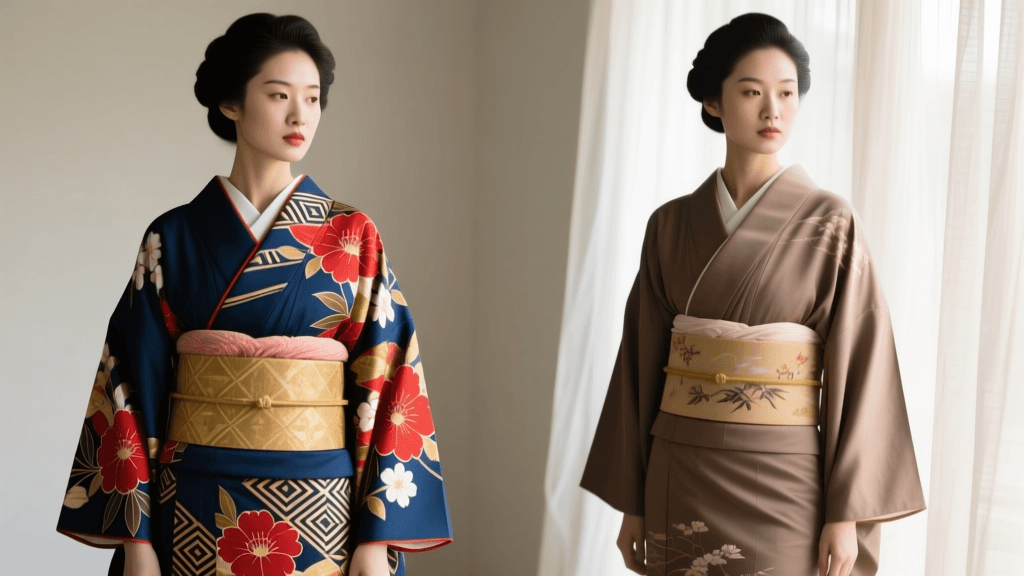
Long before it was a Japanese prefecture, Okinawa was the heart of the Ryukyu Kingdom, an independent maritime trading empire that connected Japan, China, and Southeast Asia. This cosmopolitan history is woven directly into the region's traditional garment, the Ryusou. Unlike the restrictive, tightly bound mainland kimono, the Ryusou is designed for a humid, subtropical climate. It features wider, open sleeves for ventilation, a softer silhouette, and is traditionally tied with a wide, soft sash rather than the rigid, heavily structured mainland obi.
The most iconic textile associated with Okinawan dress is Bingata, a vivid resist-dyeing technique utilizing hand-cut mulberry paper stencils and natural pigments. Historically, specific colors and motifs were strictly regulated by the Ryukyuan royal court, with yellow reserved exclusively for royalty and bold floral motifs representing the island's lush flora. Additionally, Okinawa is famous for Bashofu, a lightweight, breathable cloth woven from the fibers of the Japanese banana plant, historically worn by commoners and nobility alike during the sweltering summer months.
Actionable Guide: Experiencing and Sourcing Bingata
- Where to Visit: The Eijun Shiroma Bingata Studio in Naha offers incredible insights into the stencil-carving process. For a broader historical context, the Okinawa Convention & Visitors Bureau recommends the Okinawa Prefectural Museum, which houses royal Ryusou garments and historic Bashofu weaving tools.
- Costs & Measurements: A fully authentic, hand-dyed Bingata silk kimono is a luxury investment, typically starting around 300,000 JPY (approx. $2,000 USD) and taking up to three months to complete. For accessible souvenirs, look for Bingata-dyed tenugui (hand towels, approx. 35cm x 90cm) or table runners, which range from 2,500 to 6,000 JPY.
- Timing Your Visit: Plan your trip around early May to witness the Naha Hari (Dragon Boat Festival) or the Ryukyu Lantern Festival in December, where locals proudly don vibrant Ryusou and Bingata textiles in public parades.
Tohoku Region: Resilience in Kogin-zashi and Sashiko
Traveling to the northernmost tip of Japan's main island, Honshu, the climate shifts dramatically to harsh, snow-heavy winters. During the Edo period (1603-1867), strict sumptuary laws forbade the peasant farming classes of the Tsugaru domain (modern-day Aomori Prefecture) from wearing cotton or silk. They were forced to wear coarse, locally woven hemp, which offered virtually no insulation against freezing temperatures.
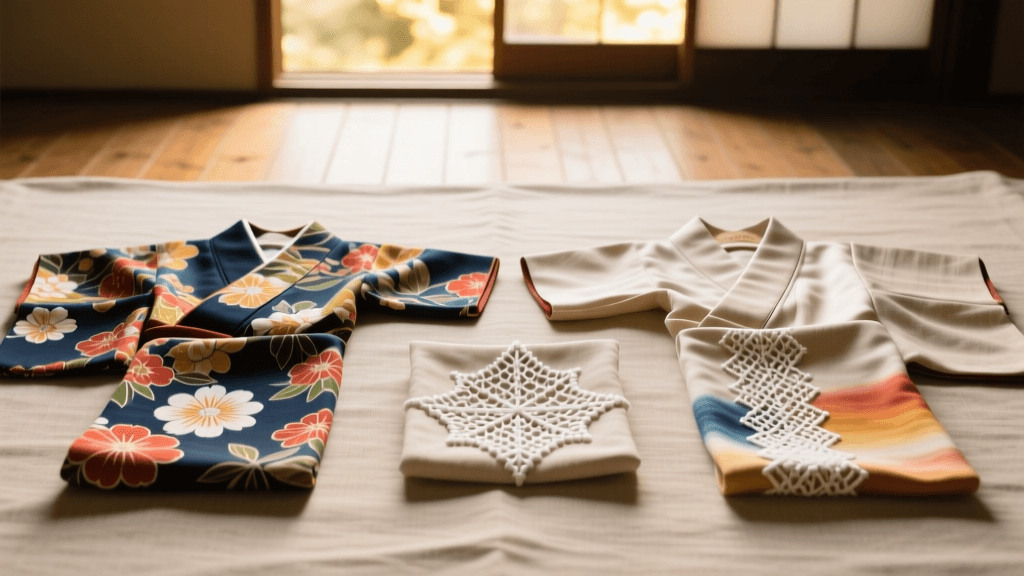
To survive, the women of Tohoku developed Kogin-zashi, a meticulous running-stitch embroidery technique. By stitching thick cotton thread in dense, geometric patterns over the hemp fabric, they not only reinforced the structural integrity of the garments but created vital pockets of trapped air for thermal insulation. According to cultural archives documented by the Japan National Tourism Organization, Kogin patterns are strictly mathematical, categorized by the number of warp threads they cross: multiples of three, five, or seven. Neighboring Iwate Prefecture developed a similar but distinct technique known as Nanbu Hishizashi, which utilizes diamond-shaped patterns and allows for more freestyle, non-counted stitching compared to the rigid grid of Tsugaru Kogin.
Practical Advice: Sourcing Authentic Kogin Wear
Today, Kogin-zashi has evolved from a survival necessity into a celebrated contemporary craft. While you can find modern Kogin accessories globally, sourcing authentic, regionally made pieces requires visiting the artisan hubs of Hirosaki and Goshogawara.
- Garment Types: Look for Kogin vests (sleeveless jackets) which are highly practical for modern layering over turtlenecks or linen shirts. A handmade artisan vest costs between 25,000 and 45,000 JPY.
- Workshops: The Tsugaru Kogin Institute in Hirosaki offers half-day workshops (approx. 4,000 JPY) where you can learn to stitch a traditional moyou (pattern) onto a coaster or small pouch, utilizing the traditional 5-count grid system.
- Care Instructions: Authentic hemp and indigo-dyed cotton Kogin garments should never be machine washed. Spot clean with a damp cloth and store away from direct sunlight to prevent the natural indigo from fading.
Hokkaido: The Ainu Attus and Bark Cloth Traditions
Hokkaido, Japan's northernmost prefecture, is the ancestral homeland of the Ainu, an Indigenous people with a culture, language, and textile tradition entirely distinct from the Yamato Japanese. The traditional Ainu garment is the Attus, a remarkably durable cloth woven from the inner bark fibers of the Manchurian elm tree (ohyo-ni).
The process of creating Attus is incredibly labor-intensive. The bark is harvested in spring, soaked in hot spring water or muddy swamps to break down the tough lignins, beaten, and then hand-twisted into continuous threads. The resulting fabric is highly water-resistant, breathable, and incredibly strong, perfectly suited for the Ainu's hunting and gathering lifestyle in subarctic forests. Over time, trade with mainland Japan introduced cotton, leading to the creation of Minsa—cotton robes adorned with distinctive geometric appliqué patterns meant to ward off evil spirits.
'The patterns on Ainu garments are not merely decorative; they are spiritual armor. The thorn-like motifs along the hems and cuffs are designed to prevent malevolent spirits from entering the body through the garment's openings.' — Curatorial notes from the Upopoy National Ainu Museum and Park.
Engaging with Ainu Textile Culture
Unlike mainland kimono, authentic Attus garments are rarely sold as commercial fashion items due to their sacred cultural significance and the scarcity of materials. However, visitors can deeply engage with this tradition.
- Where to Go: Visit Upopoy (the National Ainu Museum and Park) in Shiraoi. Here, master weavers demonstrate the bark-stripping and loom-weaving processes daily on traditional backstrap looms.
- Purchasing Ethically: Support Ainu artisans by purchasing contemporary adaptations, such as elm-bark woven coasters, small pouches, or modern jewelry incorporating traditional motifs. Expect to pay 3,000 to 8,000 JPY for these ethically sourced, artisan-made items.
Comparative Guide: Regional Textiles at a Glance
To help travelers and collectors navigate Japan's diverse textile landscape, refer to the comparison chart below detailing the functional and aesthetic differences across these three distinct regions.
| Region / Prefecture | Primary Garment / Textile | Base Material | Climate Function | Avg. Cost (Accessible Souvenir) |
|---|---|---|---|---|
| Okinawa (South) | Ryusou / Bingata / Bashofu | Silk, Banana Fiber, Cotton | Ventilation, UV protection, Royalty display | 3,500 JPY (Stencil Towel) |
| Tohoku / Aomori (North Honshu) | Kogin-zashi / Sashiko | Hemp, Cotton thread | Thermal insulation, Fabric reinforcement | 4,500 JPY (Embroidered Pouch) |
| Hokkaido (Far North) | Attus / Minsa | Elm Bark, Trade Cotton | Water resistance, Windproofing, Spiritual warding | 5,000 JPY (Woven Coaster/Strap) |
Conclusion: Traveling Beyond the Standard Kimono
While renting a silk kimono in Kyoto remains a beloved rite of passage for visitors to Japan, venturing into the prefectural heartlands reveals the true ingenuity of Japanese textile arts. Whether you are marveling at the sun-drenched brilliance of Okinawan Bingata, tracing the mathematical survival stitches of Tohoku's Kogin, or respecting the sacred elm-bark weaves of the Ainu, you are participating in the preservation of Japan's most authentic regional identities. When planning your next Japanese itinerary, look beyond the capital, and let the diverse threads of the archipelago guide your journey.