Regional Japanese Dress: Ainu Attus and Okinawan Ryusou
Introduction to Japan's Regional Sartorial Diversity
When the world envisions traditional Japanese clothing, the image that almost universally comes to mind is the mainland silk kimono, complete with a tightly bound obi and tabi socks. However, Japan is an expansive archipelago stretching from the subarctic latitudes of Hokkaido to the subtropical islands of Okinawa. This vast geographical and climatic diversity has birthed a rich tapestry of regional and ethnic garments that differ radically from the Yamato (mainland) tradition. For textile collectors, cultural historians, and enthusiasts of global fashion, understanding these regional variations is essential.
This guide explores the extreme northern and southern poles of Japanese traditional dress: the robust, intricately embroidered Attus and Morew of the indigenous Ainu people in Hokkaido, and the breezy, vibrantly dyed Ryusou of the Ryukyuan people in Okinawa. We will also provide actionable advice on sourcing, sizing, and caring for these unique regional textiles.
The Northern Frontier: Ainu Attus and Morew
The Ainu, the indigenous people of Hokkaido, Sakhalin, and the Kuril Islands, developed a material culture perfectly adapted to harsh, snowy winters and cool summers. According to the Foundation for Research and Promotion of Ainu Culture, Ainu clothing is deeply intertwined with their animistic beliefs, where every natural element possesses a spirit (kamuy).
Attus: The Elm Bark Cloth
The most iconic Ainu textile is Attus, a durable, water-resistant fabric woven from the inner bark of the Ohiyo (Manchurian elm) tree. The bark is harvested in spring, soaked in rivers, and split into fine threads before being woven on a backstrap loom. Attus is naturally breathable, highly durable, and provides excellent insulation. Historically, it was used for everyday workwear, but today, it is reserved for ceremonial garments and high-end artisanal fashion.
Morew and Upshor: Cotton and Appliqué
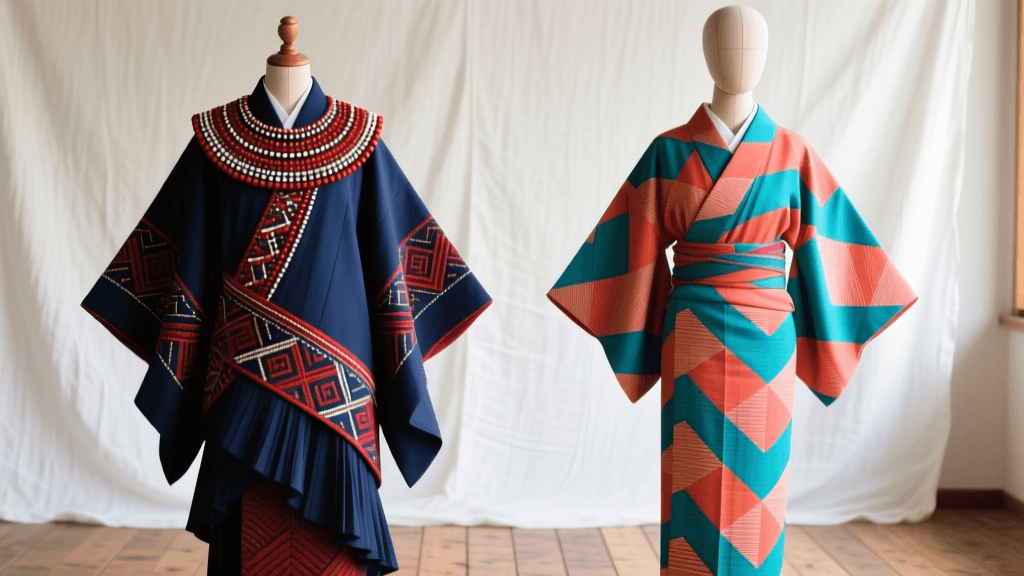
With the introduction of trade goods from mainland Japan and Russia, the Ainu began incorporating cotton. The Morew is a cotton robe featuring striking, symmetrical appliqué and embroidery known as Upshor. The patterns are not merely decorative; they serve a spiritual function. The swirling moreu (whirlpool) and thorn-like aiushi patterns are strategically placed at the garment's openings—hem, cuffs, and collar—to ward off evil spirits from entering the body.
Actionable Advice: Sourcing Ainu Garments
- Where to Buy: The town of Biratori (specifically the Nibutani district) in Hokkaido is the epicenter of Ainu craftsmanship. Visit local cooperatives or the Nibutani Ainu Culture Museum shop.
- Cost Expectations: A vintage, mid-20th-century cotton Morew in good condition typically ranges from $250 to $600 USD. Modern, hand-woven ceremonial Attus robes crafted by certified artisans can easily exceed $1,500 to $3,000 USD due to the hundreds of hours required for bark processing.
- Authentication Tip: Authentic vintage Morew will show slight irregularities in the cotton weave and hand-spun appliqué threads. Mass-produced tourist souvenirs often use machine-embroidered synthetic felt, which lacks the spiritual and historical weight of true cotton Upshor.
The Southern Subtropics: Okinawan Ryusou and Bingata
Traveling 1,500 miles south to the Ryukyu Islands (modern-day Okinawa), the climate shifts dramatically to subtropical. The traditional garment here is the Ryusou, which evolved during the Ryukyu Kingdom era (15th–19th centuries) through a synthesis of indigenous practices, Chinese Ming Dynasty influences, and mainland Japanese aesthetics. The Okinawa Prefectural Museum & Art Museum extensively documents how Ryukyuan dress prioritizes airflow, humidity management, and vibrant natural dyes.
Bashofu and Miyako Jofu: Tropical Fibers
Unlike the heavy silks of Kyoto, Ryusou is traditionally crafted from plant fibers suited for high heat and humidity. Bashofu is woven from the fibers of the Japanese fiber banana (Musa basjoo). It is incredibly lightweight, crisp, and possesses a natural sheen. Another prized textile is Miyako Jofu, a finely woven ramie cloth from Miyako Island, known for its cooling properties and intricate kasuri (ikat) patterns.
Bingata: The Stencil-Resist Masterpiece
The crowning glory of Ryukyuan textile art is Bingata, a vibrant stencil-resist dyeing technique. Using brass stencils and a soybean milk resist, artisans apply vivid mineral and botanical pigments—such as Ryukyuan indigo, yellow from the fukugi tree, and red from cinnabar or cochineal. The motifs feature southern flora and fauna: hibiscus, banana leaves, koi fish, and dragons. A Bingata obi or outer robe is a masterpiece of color gradation (shirozome) and crisp, cheerful aesthetics.
Actionable Advice: Sourcing Ryukyuan Textiles
- Where to Buy: Naha City in Okinawa is home to historic Bingata studios like the Chinen and Shiroma families, who have maintained their craft since the days of the Ryukyu Kingdom.
- Cost Expectations: Authentic, hand-dyed Bingata Nagoya obi start around $1,200 and can reach $4,500+ for master-dyer pieces. Vintage Bashofu kimono are rare and highly sought after by collectors, often auctioning between $800 and $2,500 USD.
- Authentication Tip: True Bingata dye penetrates the fabric. Always inspect the reverse side of the textile; if the colors are faint but visible, it is authentic hand-dyed Bingata. If the back is stark white, it is likely a modern screen-printed imitation.
Comparative Analysis: Mainland vs. Regional Garments
Understanding the structural and material differences between mainland and regional garments is crucial for collectors and wearers. The table below outlines the primary distinctions.
| Feature | Mainland Silk Kimono | Ainu Attus & Morew | Ryukyuan Ryusou |
|---|---|---|---|
| Primary Fiber | Mulberry Silk | Elm Bark (Attus), Cotton (Morew) | Banana Fiber (Bashofu), Ramie (Jofu) |
| Climate Adaptation | Four seasons; layered for winter | Subarctic; wind and water-resistant | Subtropical; highly breathable, moisture-wicking |
| Fastening Method | Wide, tightly bound Obi | Simple sash or tied at the front | Loose drape, thin sash, no tight binding |
| Average Cost (USD) | $300 - $5,000+ | $250 - $3,000 | $800 - $4,500+ |
| Maintenance | Specialized dry cleaning / Arai-hari | Spot clean, gentle hand wash, no harsh chemicals | Specialized Okinawan Arai-hari required |
Practical Guide to Sizing, Styling, and Care
If you intend to wear or collect these regional garments, you must adapt your expectations regarding sizing and maintenance, as they do not conform to mainland kimono standards.
Sizing and Measurements
Mainland kimono are measured by Yuki (center back to wrist) and Mitake (back length). Ainu garments, however, are cut with a straighter, more boxy silhouette. A vintage Morew will often have a shorter hemline than a mainland kimono because it was historically worn over animal skin or cotton leggings (konci) and mittens. When styling a Morew today, embrace the cropped, utilitarian look by pairing it with modern wide-leg trousers or hakama, rather than attempting to force a traditional mainland obi over it.
Ryusou is designed to drape loosely to allow air circulation. The mitake (back length) is often cut slightly shorter to prevent the hem from dragging in humid, muddy environments. When wearing Ryusou, the collar is crossed loosely, and a thin, lightweight sash is used. Do not attempt to wear a heavy, stiff mainland maru-obi with a delicate Bashofu Ryusou; the friction and weight will damage the fragile banana fibers.
Timing Your Purchases
For Ainu textiles, plan a trip to Hokkaido in late summer (August) to coincide with regional craft fairs in Biratori, where artisans sell directly to the public. For Okinawan textiles, purchase in early spring (March to April). Avoid buying and shipping natural fibers like Bashofu or vintage cotton during the tsuyu (rainy season in June), as the extreme ambient humidity can lead to mold growth during transit if not packed with industrial desiccants.
Specialized Care Instructions
According to guidelines supported by the Agency for Cultural Affairs of Japan, preserving regional natural dyes requires specialized knowledge. Never dry-clean Ainu Attus or vintage Morew; the harsh solvents will strip the natural oils from the elm bark and cause the antique cotton to shatter. Instead, air them out in the shade and spot-clean with distilled water. Bingata and Bashofu require a traditional Okinawan washing technique called arai-hari, where the garment is unstitched, washed in specialized alkaline solutions, stretched on bamboo frames, and re-sewn. Only send these pieces to cleaners who explicitly advertise Ryukyuan textile expertise.
Conclusion
The homogenization of 'Japanese traditional dress' does a disservice to the incredible ingenuity of the archipelago's diverse cultures. From the protective, spiritually embroidered elm bark of the Ainu to the vibrant, sweat-wicking banana fibers of the Ryukyu Islands, regional garments are masterclasses in environmental adaptation and cultural resilience. By understanding the unique fibers, motifs, and construction methods of these regional textiles, collectors and wearers can help preserve these vital threads of Japan's multifaceted heritage.