Top Hanfu Fabrics for Qigong & Meditation in 2026: Wellness Guide
The Intersection of Hanfu and Wellness in 2026
As we navigate the wellness landscape of 2026, a profound shift has occurred in how practitioners approach mindful movement. The concept of 'somatic dressing'—the idea that what we wear directly impacts our nervous system, posture, and energy flow—has moved from niche holistic circles into mainstream global wellness. At the forefront of this movement is the integration of traditional Hanfu with Chinese wellness practices like Qigong, Tai Chi, and seated meditation. No longer viewed merely as historical reenactment garments or festival attire, specific cuts and fabrics of Hanfu are now being actively recommended by wellness coaches and Qigong masters to enhance the practitioner's connection to their internal energy, or Qi.
This evolution is deeply rooted in traditional Chinese medicine (TCM) and philosophy, which has long understood the body as a complex network of meridians. In 2026, modern biometric wearables and somatic tracking devices have finally caught up to ancient wisdom, proving that restrictive clothing increases cortisol levels, restricts lymphatic drainage, and impedes deep diaphragmatic breathing. By returning to the flowing, unstructured silhouettes of traditional Chinese garments, practitioners are finding deeper states of meditation and more effective Qigong sessions. The National Qigong Association frequently highlights the importance of unrestricted physical movement and relaxed, natural breathing, both of which are inherently supported by the architectural design of authentic Hanfu.
The Philosophy of Qi and Garment Flow
To understand why Hanfu is experiencing a renaissance in the 2026 wellness community, one must understand the traditional Chinese concept of Qi (vital energy). In TCM, Qi flows through specific pathways called meridians, many of which run along the surface of the skin and through the joints. Modern Western fashion, with its emphasis on tailored fits, elastic waistbands, and structured shoulders, often creates physical constrictions that traditional practitioners believe cause energetic stagnation.
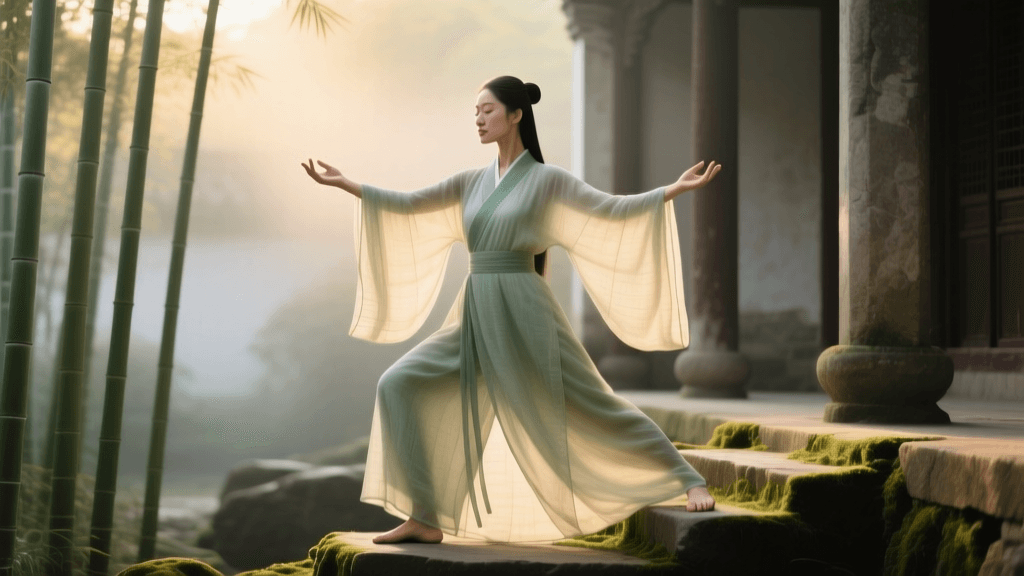
Hanfu, conversely, is traditionally constructed using a flat-cutting technique. Unlike Western tailoring, which cuts fabric to conform to the three-dimensional curves of the body, Hanfu is cut in straight lines and draped over the body. This creates a microclimate of air between the skin and the fabric, allowing for thermal regulation and ensuring that no external pressure is applied to the meridians. When practicing Qigong movements like 'Parting the Wild Horse's Mane' or 'Cloud Hands,' the flat-cut sleeves and wide skirts of a Hanfu move in a delayed, fluid motion that visually and physically reinforces the concept of moving through water or thick air—a core visualization technique in internal martial arts.
Top Fabrics for Meditative Movement
The material of your practice wear is just as critical as the cut. In 2026, the sustainable textile market has seen a massive revival of ancient, eco-friendly weaving techniques that offer unparalleled benefits for somatic practices. Here are the top three fabrics dominating the Hanfu wellness space this year.
1. Ramie (Xia Bu): The Breathable Armor
Ramie, often referred to as 'China grass,' is one of the oldest textile crops in the world. As documented by the Metropolitan Museum of Art's overview of Chinese textiles, the weaving of ramie and hemp has been a cornerstone of Chinese material culture for millennia. For modern Qigong practitioners, especially those who practice outdoors in the early morning sun, hand-woven Ramie (Xia Bu) is the gold standard. It possesses natural antibacterial properties, wicks moisture away from the body instantly, and has a crisp, structured drape that helps the practitioner maintain an awareness of their physical boundaries and posture. The 2026 market has seen a surge in enzyme-washed Ramie Hanfu, which softens the traditionally stiff fabric while retaining its structural integrity.
2. Xiangyunsha (Gambiered Canton Gauze): The Grounding Silk
For indoor meditation and deep restorative Yin Qigong, Xiangyunsha is the premier luxury choice in 2026. This unique silk is dyed using the juice of the Dioscorea cirrhosa tuber and coated with iron-rich mud from the Pearl River Delta, a process that results in a dark, rustling fabric that feels cool to the touch. The slight weight of Xiangyunsha provides a gentle, grounding somatic pressure, similar to a weighted blanket, which has been shown to down-regulate the sympathetic nervous system. The rustling sound it makes during slow movements also serves as an auditory focal point for moving meditations.
3. Organic Linen-Hemp Blends: The Everyday Essential
For daily, accessible practice, 2026 has popularized organic linen-hemp blends. These fabrics offer the softness of washed linen with the durability and energetic 'earthing' properties of hemp. They are highly forgiving, easy to care for, and perfect for the dynamic, sweat-inducing movements of Ba Duan Jin (Eight Brocades) Qigong.
2026 Hanfu Fabric Comparison for Wellness Practices
| Fabric Type | Breathability | Weight & Drape | Best Practice Environment | 2026 Avg. Price (USD) |
|---|---|---|---|---|
| Ramie (Xia Bu) | Exceptional | Lightweight, crisp | Hot, humid outdoor Qigong | $85 - $140 |
| Xiangyunsha Silk | High | Medium, fluid & heavy | Indoor meditation, retreats | $250 - $450 |
| Organic Linen-Hemp | Very High | Medium, structured | Everyday morning routines | $60 - $110 |
| Raw Mulberry Silk | Moderate | Light, luxurious | Cool climate static meditation | $180 - $300 |
Best Hanfu Silhouettes for Unrestricted Energy
Selecting the right fabric is only half the equation; the silhouette dictates how the garment interacts with your body's biomechanics during practice.
The Daopao: The Ultimate Meditation Robe
The Daopao (Taoist Robe) is a wide-sleeved, cross-collared gown that wraps securely around the waist. In 2026, wellness retreats across Asia and Europe have adopted the Daopao as the standard uniform for silent meditation retreats. Its voluminous sleeves allow for complete freedom of the shoulder joints, which is vital for opening the 'Heart Meridian' during chest-expanding Qigong exercises. The wrap-style closure also allows the practitioner to adjust the tightness around the Dan Tian (the body's energetic center located just below the navel), providing a gentle reminder to breathe deeply into the lower abdomen.
Songku: Grounding Through the Lower Meridians
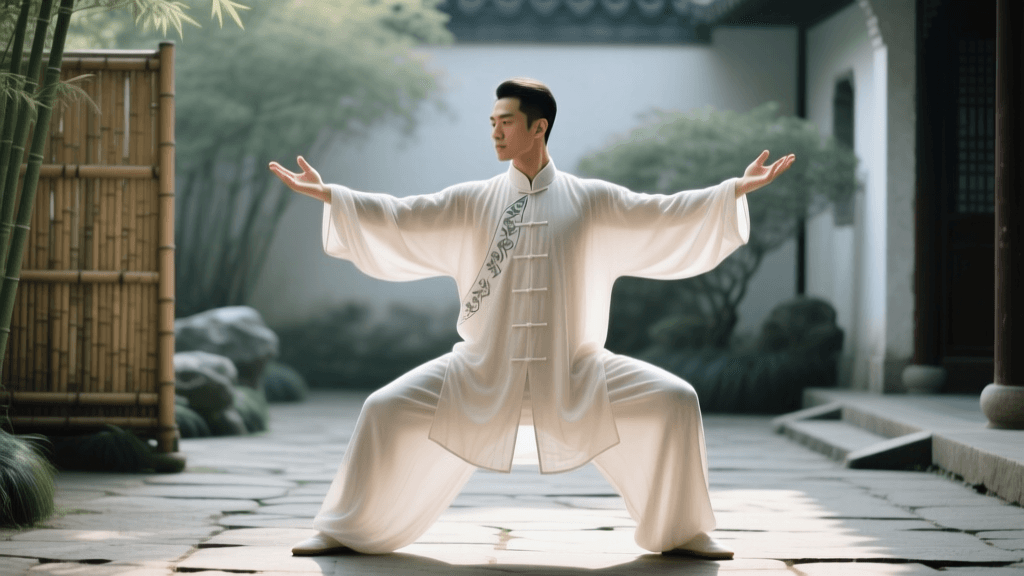
While the top half of the body requires flow, the lower half requires stability. The Songku (wide-leg trousers) of the Song Dynasty have become the preferred bottom for Qigong practitioners. Unlike modern joggers or leggings that compress the calves and thighs, the wide, straight cut of the Songku allows for deep stances, such as the 'Horse Stance' (Ma Bu), without any fabric resistance. The hem typically rests just above the ankle, preventing the practitioner from stepping on the fabric while ensuring the ankle joints remain completely free to articulate.
Your 2026 Morning Qigong Dressing Routine
Integrating Hanfu into your wellness routine is not just about putting on clothes; it is a transitional ritual that signals to your brain that it is time to shift from the mundane to the meditative. Follow this actionable routine to maximize your practice:
- The Cleansing Breath: Before touching your garments, stand in your practice space and take three deep diaphragmatic breaths, setting an intention for your session.
- Layering for Climate: In cooler 2026 mornings, start with a thin, raw silk Zhongyi (inner garment) to trap body heat. As you generate Qi and your body temperature rises during movement, the silk will wick moisture without clinging.
- Securing the Dan Tian: When wrapping your cross-collared top or Daopao, ensure the fabric crosses snugly over your lower abdomen. Tie the sash firmly but comfortably; this physical boundary helps contain and focus your internal energy.
- The Sleeve Check: Raise your arms above your head and perform a gentle torso twist. If the fabric pulls at the shoulders or restricts the armpits, adjust your inner layers. True Hanfu flat-cutting should allow a full range of motion without the hemline rising significantly.
- Grounding the Stance: Step into your Songku trousers and tie the waistband. Feel the fabric brush against your legs as you settle into a neutral, shoulder-width stance, preparing for your first movement.
Conclusion: The Future of Traditional Somatic Wellness
The integration of Hanfu into modern Qigong and meditation practices represents a beautiful synthesis of ancient material culture and contemporary wellness science. By choosing garments that respect the body's natural geometry and energy pathways, practitioners in 2026 are unlocking deeper, more profound states of physical and mental harmony. The World Health Organization's fact sheet on traditional medicine notes the increasing global integration of holistic, traditional practices into primary wellness and preventative care, validating what Qigong masters have known for centuries: true healing requires an environment—both internal and external—that allows energy to flow without obstruction. As the somatic dressing movement continues to grow, the timeless wisdom woven into every thread of the Hanfu will remain an essential tool for the modern seeker of balance.