Best Hanfu Styles for Qigong and Meditation Practice 2026
The Intersection of Hanfu and Chinese Wellness in 2026
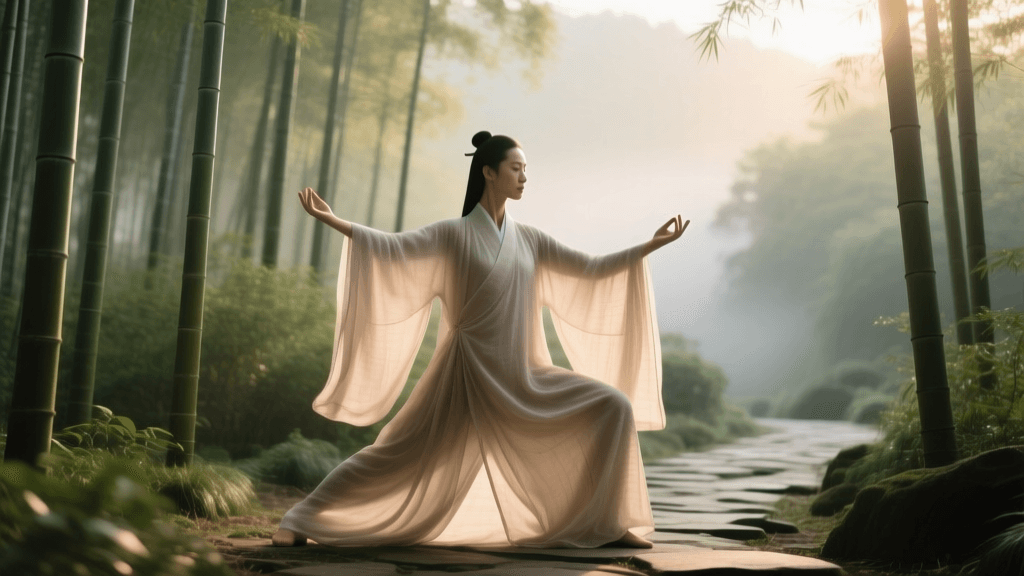
As the global wellness economy continues to evolve in 2026, practitioners of traditional Chinese mindfulness arts are increasingly turning to authentic cultural garments to deepen their practice. Hanfu, the traditional clothing of the Han Chinese, is no longer reserved solely for historical reenactments, photography, or festive celebrations. Today, it is recognized as a vital tool for facilitating the flow of Qi (vital energy) during Qigong, Tai Chi, and seated meditation. The intersection of traditional Chinese medicine (TCM) principles and mindful movement has brought the structural and material benefits of Hanfu to the forefront of the modern wellness movement.
Unlike contemporary activewear, which often relies on synthetic, compressive fabrics that can restrict circulation and trap heat, authentic Hanfu is designed around the concept of energetic harmony. According to the National Center for Complementary and Integrative Health (NCCIH), mindfulness and meditation practices require an environment of physical ease to foster deep mental focus and physiological relaxation. By removing physical constraints, traditional garments allow the mind to settle and the body's meridian system to function without obstruction.
The Philosophy of Flat Cutting and Meridian Flow
To understand why Hanfu is superior for wellness practices, one must examine its foundational construction method: Pingmian Caizhi, or flat-pattern cutting. Western garment construction relies heavily on darts, curved seams, and tailored fits designed to contour the body. While aesthetically pleasing, these structural elements often press against key acupuncture points and meridians, particularly around the joints, armpits, and waist.
Hanfu, conversely, is cut from flat planes of fabric with minimal seaming. The garments drape naturally over the body, held in place by gravity and tied sashes rather than tight elastic or rigid zippers. This unstructured drape ensures that the flow of blood and Qi remains uninterrupted. When practicing slow, deliberate Qigong forms or sitting in prolonged lotus positions for meditation, the absence of restrictive seams prevents the stagnation of energy, allowing practitioners to achieve a deeper state of physical and spiritual alignment.
Top Hanfu Silhouettes for Mindfulness and Movement
Selecting the right silhouette is crucial depending on the specific wellness practice you are undertaking. Here are the most effective Hanfu styles for mindfulness and movement in 2026.
The Daopao (道袍) for Deep Meditation
The Daopao, historically associated with Taoist scholars and monks, is the ultimate garment for seated meditation and static Qigong. Characterized by its cross-collar, wide sleeves (often exceeding 50cm in width), and side slits that reveal inner layers, the Daopao creates a bell-like silhouette when seated. This shape grounds the practitioner, creating a physical and energetic 'tent' that traps warmth and fosters a sense of deep internal focus. The generous sleeve width allows the arms to rest comfortably on the knees in mudra positions without pulling the fabric taut across the shoulders or back.
The Qixiong Ruqun (齐胸襦裙) for Seated Breathwork
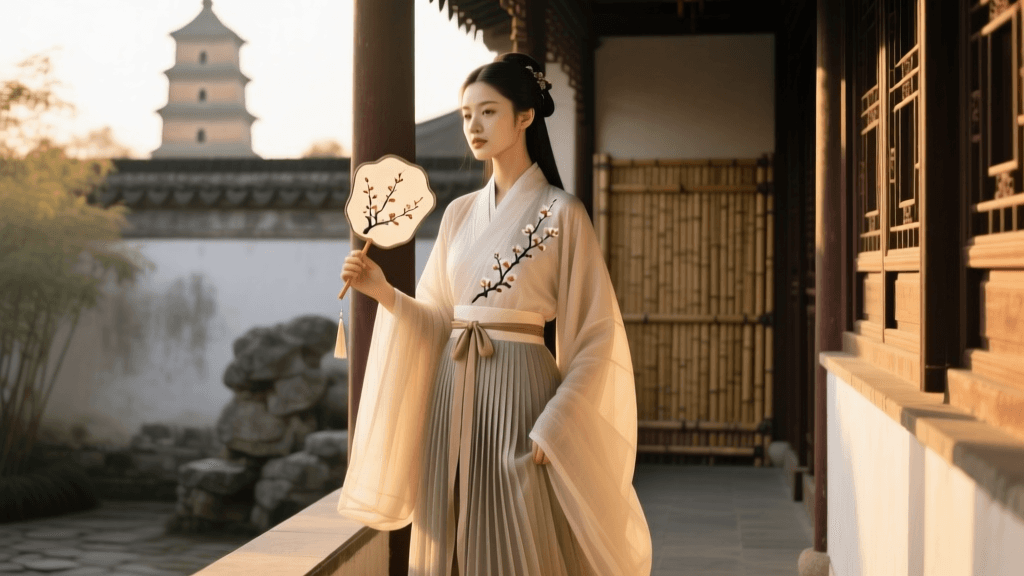
For practitioners focusing on Pranayama or Taoist abdominal breathing, the Qixiong Ruqun (chest-high skirt ensemble) is highly recommended. Because the skirt is tied above the bust rather than at the natural waist, it leaves the diaphragm and lower abdomen completely unrestricted. This is essential for deep, diaphragmatic breathing techniques where the belly must expand fully. Paired with a lightweight, loose-fitting upper garment (Shan), this style ensures that the vital organs are never compressed during intense breathwork sessions.
The Duanhe (短褐) for Active Tai Chi and Martial Qigong
While flowing robes are ideal for stillness, active practices like Tai Chi or Ba Duan Jin (Eight Brocades) require a different approach. The Duanhe consists of a short, cross-collared jacket and loose-fitting trousers. In 2026, modern wellness enthusiasts favor Duanhe sets made from washed ramie or organic linen. The trousers feature a wide gusset and a drawstring waist, allowing for deep stances (Ma Bu) and high kicks without resistance. As noted by Harvard Medical School, Tai Chi provides profound cardiovascular and balance benefits, but these benefits are maximized when the practitioner can move through the full range of motion without fighting their clothing.
2026 Fabric Guide: Choosing the Right Material for Qi
The material of your Hanfu is just as important as the cut. In traditional Chinese philosophy, different fabrics carry different energetic properties and interact with the body's microclimate in unique ways. Below is a comparison chart of the best fabrics for wellness practices in 2026.
| Fabric | Breathability | Weight | Best Practice | TCM Energetic Property |
|---|---|---|---|---|
| Ramie (夏布) | Excellent | Light-Medium | Summer Qigong, Active Tai Chi | Cooling, clears excess heat and dampness |
| Mulberry Silk (桑蚕丝) | High | Light | Seated Meditation, Indoor Breathwork | Nourishing, balances Yin energy, protects skin |
| Organic Linen (亚麻) | Very High | Medium | Outdoor Movement, Walking Meditation | Grounding, promotes circulation |
| Bamboo Cotton (竹棉) | High | Light | Restorative Yoga, Evening Wind-down | Soothing, calms the Shen (spirit) |
For practitioners in warmer climates, Ramie is the undisputed champion. Known as 'summer cloth' in China, it possesses natural antibacterial properties and a stiff yet breathable drape that keeps the fabric away from the skin, allowing air to circulate and cool the body during vigorous Qigong routines.
The Mind-Body Connection of Eco-Friendly Natural Dyes
In 2026, the wellness community has become acutely aware of the toxic burden placed on the body by synthetic chemical dyes. The skin is the body's largest organ, and wearing garments dyed with heavy metals and azo compounds can disrupt the skin's microbiome and introduce toxins that hinder the body's natural detoxification processes during sweating.
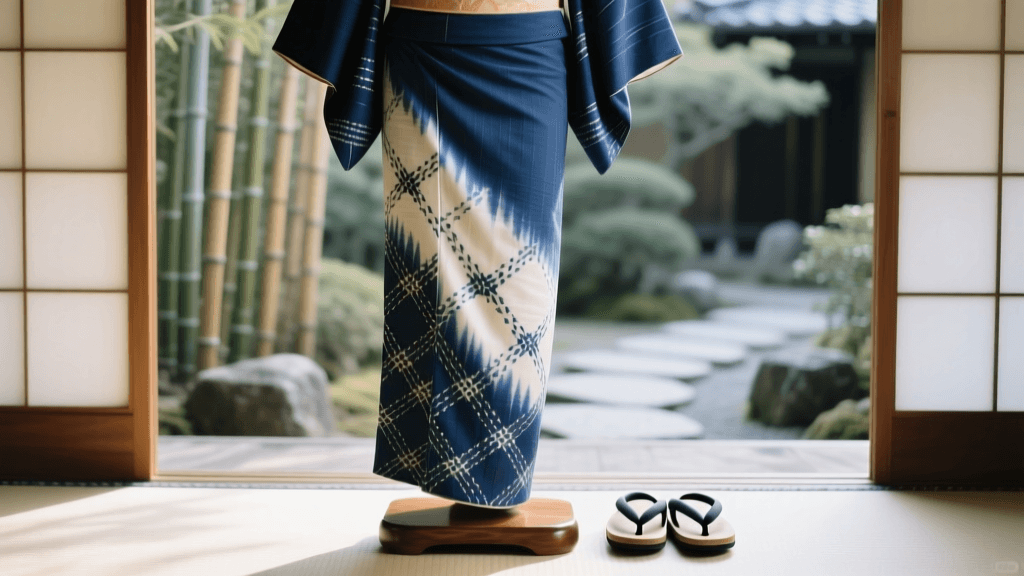
Authentic wellness Hanfu utilizes traditional, eco-friendly plant-based dyes. Indigo (derived from Indigofera tinctoria) is highly prized not only for its beautiful, living blue hue that fades gracefully over time, but also for its historical use in traditional medicine to reduce inflammation and cool the blood. The Royal Botanic Gardens, Kew highlights the deep historical and botanical significance of true indigo, noting its complex extraction process and enduring legacy in global textile history. Other common natural dyes include madder root (for grounding reds), tea leaves (for calming earth tones), and gardenia (for uplifting yellows). Wearing naturally dyed Hanfu connects the practitioner to the earth, reinforcing the Taoist principle of harmony between humanity and nature.
How to Dress for Your Morning Qigong Routine
Building a functional wellness Hanfu wardrobe requires an understanding of layering, especially for outdoor morning practices where temperatures fluctuate. Here is a practical, step-by-step guide to dressing for a 2026 spring morning Qigong session:
- The Base Layer: Start with a lightweight, unbleached organic cotton or bamboo Zhongyi (inner garment). This layer sits directly against the skin, wicking away morning dew and light perspiration while protecting your outer silk or ramie layers from body oils.
- The Core Layer: Don a Ramie Duanhe (jacket and trouser set). The ramie will provide structure and allow for unrestricted movement during your warm-up and active forms.
- The Outer Layer: Keep a lightweight, natural-dyed silk Beizi (open-front coat) nearby. During the initial, cooler stages of your practice, the Beizi provides warmth to the shoulders and lower back (protecting the vital Mingmen point). As your body heat rises and Qi begins to circulate, simply untie the Beizi and let it drape open, or remove it entirely.
- Footwear: Avoid thick, rubber-soled modern sneakers that disconnect you from the earth. Opt for traditional cotton-soled Buxie (cloth shoes) or practice barefoot on natural grass or wooden surfaces to facilitate grounding and electrical exchange with the earth.
Sourcing Authentic Wellness Hanfu
When shopping for wellness-specific Hanfu, scrutinize the product details. Avoid any garments that incorporate spandex, polyester blends, or hidden elastic waistbands, as these modern shortcuts defeat the purpose of traditional energetic flow. Look for artisans and brands that specify 'flat-cut construction,' 'natural plant dyes,' and '100% natural fibers.' Pay attention to the sleeve cuffs; while ceremonial Hanfu features excessively long sleeves, wellness Hanfu should have sleeves that terminate at the wrist or mid-hand to prevent tripping during active forms, while still maintaining the traditional wide, flowing aesthetic.
Conclusion
The integration of Hanfu into Qigong and meditation is more than a stylistic choice; it is a return to the holistic roots of Chinese wellness. By honoring the traditional flat-cutting techniques, selecting breathable, natural fibers like ramie and silk, and embracing the grounding power of eco-friendly plant dyes, practitioners in 2026 can significantly elevate their mind-body connection. When your clothing works in harmony with your breath and movement, the boundary between the garment and the body dissolves, leaving only the pure, uninterrupted flow of Qi.